A Helipad Safety Net is not a decorative edge feature. It is part of a broader fall-protection plan, shaped by the platform, exposure, access routes, and maintenance needs. This guide compares common options, including fixed perimeter nets and removable systems, and explains what to check before selection. Mesh size matters. So do attachment points, weather resistance, inspection access, and compatibility with the helipad structure. Product labels alone cannot settle those questions.
A useful principle is simple: “Choose for the actual hazard, then verify the installation.” This is an editorial safety principle, not a quotation attributed to a named expert; no verifiable expert source was provided. A qualified designer or safety professional should confirm the required performance for the specific site. A net that looks robust in a product photo may not suit a narrow platform, exposed corner, or frequently serviced edge. Small details count. Even so, no net makes poor planning safe, and that point deserves more attention than it often gets.
The sections ahead outline leading helipad safety net types, their practical strengths, and their limitations. They also provide a decision framework covering materials, fixing methods, inspection, and site conditions. The aim is not to declare one system universally best. It is to help readers ask sharper questions, compare evidence, and avoid choosing by price or appearance alone. Verify the details before installation.
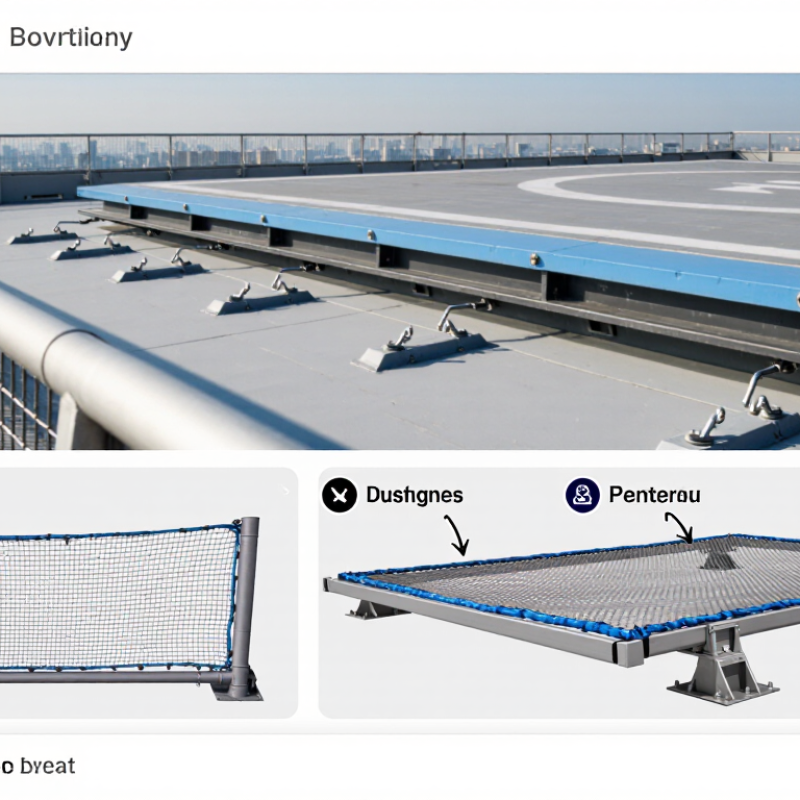
Helipad safety nets are engineered mesh barriers fitted around exposed landing-area edges or beneath vulnerable work zones. Depending on their design, they can discourage a misstep or catch a person who falls. They are not all alike. Mesh size, net depth, edge-rope strength, and attachment points must suit the site and the intended use. A net that looks sturdy from the deck may still fail if its supports are poorly anchored.
Their purpose is simple: interrupt a fall before someone reaches a lower level. Picture a technician carrying a tool case near a windy roof edge. A properly installed net can provide a secondary layer of protection if footing is lost. Rotor wash, sharp edges, weather, and nearby equipment can affect how a system performs. The weak point is often the connection, not the mesh. Regular checks should look for frayed strands, loose fixings, corrosion, and blocked clearance beneath the net. No net removes every risk. I would also question any setup that treats netting as a replacement for safe access, training, or other suitable fall protection.
Helipad safety nets generally fall into perimeter fall-protection nets and containment nets. Perimeter nets sit around the deck edge, where they can help catch a person who slips beyond the landing area. Their shape, attachment points, and clearance from the deck should match the helipad’s structure and design requirements. Details matter. A net that looks taut from above may still have weak connections or obstruct access for rescue.
Containment nets use a finer mesh to help retain loose tools or small objects, especially during maintenance. They are not a substitute for a properly designed personnel safety net. Some installations use fixed nets; others use removable or modular sections where access and maintenance needs change. Not every site needs both. Salt spray, sunlight, fuel exposure, mesh opening, and inspection access all affect material choice and service life. I would not choose by mesh size alone. Check load ratings, fixing details, and manufacturer guidance with a qualified helipad designer. Even then, inspection records can be messy, and missed wear near a fitting is easy to overlook. A practical selection starts with the hazards at that specific deck, not a catalog image.
2026 Top Helipad Safety Net Types: How to Choose?
Materials affect lifespan, handling, and inspection needs. UV-stabilized synthetic rope is relatively light and resists outdoor exposure, while metal mesh offers rigidity but adds weight and needs careful corrosion control. Check the full assembly, not just the net: edge ropes, connectors, and anchors carry loads too. Small details matter. A poorly protected connector can become the weak point.
Mesh design must catch a person without creating a foothold or trapping loose equipment. FAA Advisory Circular 150/5390-2D provides a useful elevated-heliport benchmark: safety netting should extend five feet beyond the platform edge and support 25 pounds per square foot. Treat this as design guidance, not a substitute for site-specific engineering. Mesh openings, net tension, and clearance beneath the deck should be reviewed together.
Performance also depends on drainage, UV exposure, wind, and repeated loading. Specify documented load testing and clear inspection criteria; the EN 1263-1 safety-net standard covers testing and product requirements, though it is not a helipad-specific approval. Look for abrasion at contact points, faded fibers, loose stitching, and corrosion around fixings. Still, no material is maintenance-free. Real installations may reveal awkward access or hidden wear, so inspection plans should reflect the actual site.
Approximate material density for common safety-net material families (kg/m³)
HDPE and nylon are much lighter than steel, while steel options are substantially denser. Density is only a material property—not a measure of net strength or suitability. Choose a helipad safety net by checking the complete system’s rated loads, mesh openings, edge-rope and anchor design, corrosion and UV resistance, and applicable project requirements. Actual values vary by grade and formulation.
Choosing a helipad safety net starts with the site, not the product label. Measure each exposed edge and check the supporting structure, anchor points, and available clearance. A net that fits on paper may still clash with access routes or nearby equipment. Details matter.
Next, match the net to local conditions. Strong sun can weaken some synthetic fibers, while salt air and frequent rain can accelerate corrosion in metal components. Ask for documented load ratings, material specifications, and inspection guidance. Mesh size and tension also matter: openings should suit the intended protection, and loose sections can create hazards in rotor wash. Do not guess.
Consider installation and upkeep before deciding. Confirm that anchors can be inspected and replaced, and that the system will not obstruct drainage or routine access. Compare flexible netting with rigid or wire-based options using the site’s exposure, structure, and maintenance capacity. A site assessment by a qualified safety professional can catch problems that a catalogue cannot. Even a careful choice may need revision after the first inspection, especially if the net shifts, wears, or collects debris.
| Safety Net Type | Typical Configuration | Suitable Site Conditions | Key Advantages | Important Considerations | Best Fit When... |
|---|---|---|---|---|---|
| Horizontal Perimeter Catch Net | A projecting net installed around the outside edge of an elevated helipad or helideck. | Rooftop or raised platforms where a person could fall from an exposed perimeter. | Can provide a fall-arrest or fall-containment measure without creating a solid wall around the landing area. | Requires an engineered support structure and secure edge connections. The projection, clearance, and arrangement must not create hazards for aircraft operations. | The site needs perimeter fall protection while keeping the surrounding edge visually and physically open. |
| Inclined Perimeter Net | A net mounted at an outward or downward angle from the platform edge, subject to the approved design. | Elevated sites where the edge layout or available structure does not suit a horizontal net. | Can be adapted to certain edge geometries and may help contain a fall near the platform perimeter. | Its angle and support arrangement affect how it performs. Check clearances, structural loads, drainage, wind exposure, and access for inspection. | The platform has unusual edge geometry and a competent designer confirms that an inclined system is appropriate. |
| Modular or Removable Net Panels | Sections of netting attached to a fixed perimeter frame or approved connection points, with planned removal for maintenance. | Sites that need controlled access to edges, equipment, or building services. | Individual sections may be easier to inspect, replace, or remove for authorized work than a single continuous assembly. | Panels must be reinstalled and secured correctly after work. Define access controls and inspection checks so temporary removal does not leave an unprotected edge. | Maintenance access is frequent and the site can manage panel removal under a documented procedure. |
| Permanent Tensioned Mesh System | Durable mesh held in a designed perimeter frame or tensioned support arrangement. | Permanent installations exposed to regular weather and repeated operational use. | A fixed arrangement can provide consistent coverage and may simplify routine visual checks. | Material, mesh construction, fixings, corrosion resistance, UV exposure, and design loads must suit the site environment and intended safety function. | The helipad is a long-term installation and a permanent, maintainable system is preferred. |
| Temporary or Portable Safety Net | A net assembly designed for temporary work or a short-duration installation, using designated supports and attachment points. | Construction, repair, or other controlled work where permanent protection is unavailable or temporarily removed. | Can support a temporary work-at-height plan when properly designed, installed, and inspected for that purpose. | It is not automatically suitable for routine helipad operations. Confirm compatibility, anchorage, setup, inspection, and removal procedures before use. | Protection is required for a defined temporary task and a competent person has approved the arrangement. |
| Net Used with a Guardrail System | A safety net combined with a separately designed perimeter guardrail or other edge-protection measure. | Sites where the risk assessment identifies a need for layered protection or where work activities create additional exposure. | Combines distinct protective measures and may address different fall hazards when each component is correctly designed. | Guardrails and netting can affect access, visibility, airflow, and aircraft clearance. The combined system must be assessed as a whole. | The site risk assessment or applicable requirements call for additional edge protection and the combined layout is approved. |
| Selection checklist: Identify the fall hazard and intended users; verify the support structure and attachment points; assess wind, weather, corrosion, UV exposure, and maintenance access; confirm that the system does not obstruct aircraft operations, access routes, drainage, or required clearances; and establish inspection, repair, and replacement procedures. Check the applicable aviation, building, occupational-safety, and fire requirements for the site. A safety net is not a substitute for required guardrails or an approved helipad design. | |||||
Helipad safety nets may be perimeter barriers or catch nets, and their installation needs differ. Confirm the net type, design loads, attachment points, and clearance with a qualified aviation-safety professional. Installers should secure every connection to the specified structure, keep the surface taut, and check that the net does not obstruct drainage or access. A loose edge can become a hazard in strong wind.
Inspect the net before use and after severe weather, impact, or nearby maintenance work. Look for torn fibers, frayed seams, corroded fittings, loose anchors, and changes in tension. Record findings, repairs, and inspection dates; clear records help reveal gradual wear. Replace damaged components according to the system’s approved instructions, not by improvising a patch. Small defects are easy to dismiss. That is a mistake I would rather catch early.
Tips: Use a checklist and inspect from both sides when safely accessible. Photograph defects beside a scale, then restrict access if the net’s integrity is uncertain. Keep inspection records together. A missed note can matter later.
Measure every exposed edge, supporting structure, anchor point, and clearance area. A paper fit may still block access or equipment. Do not guess.
UV-stabilized synthetic rope is lighter and resists outdoor exposure. Metal mesh is more rigid but heavier. It also needs corrosion control.
Mesh openings should catch a person without creating footholds. They should not trap loose equipment. Review mesh size, tension, and deck clearance together.
A common elevated-platform benchmark uses a five-foot extension beyond the edge. It also references 25 pounds per square foot. Site-specific engineering remains necessary.
Strong sunlight can weaken synthetic fibers. Salt air and rain can accelerate corrosion. Wind, drainage, and repeated loading also affect performance.
Inspect the net, edge ropes, connectors, anchors, and stitching. Look for faded fibers, frayed seams, loose anchors, and corroded fittings. Small parts matter.
Inspect it before use and after severe weather, impact, or nearby maintenance work. Record dates, defects, repairs, and tension changes. A missed note can matter.
Restrict access when its integrity is uncertain. Replace damaged parts according to approved instructions. Improvised patches may hide a larger weakness.
Use a checklist and photograph defects beside a scale. Keep records together. Trends can reveal gradual wear, although real sites may surprise you.
Yes. A qualified safety professional can check loads, anchors, clearance, drainage, and access. A catalogue cannot show every site problem.
A Helipad Safety Net is a protective barrier designed to help reduce the risk of falls around exposed edges and other elevated areas of a helipad. Different net types suit different site layouts, exposure levels, and operational needs. Choosing between perimeter nets, modular systems, or other configurations depends on the edge geometry, available fixing points, expected conditions, and how the area is used.
Materials, mesh size, strength, and resistance to weather and wear all affect a net’s performance. To select a suitable system, assess the site carefully and confirm that the net can be securely installed without obstructing access or operations. Regular inspections should check for loose fittings, damaged mesh, corrosion, and signs of deterioration. Prompt repairs, routine cleaning, and documented maintenance help keep the system dependable over time.

LvXing