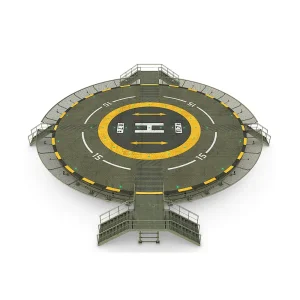
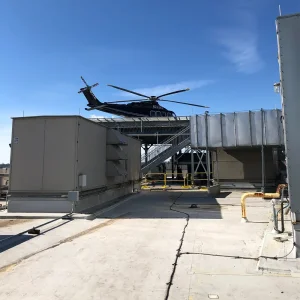
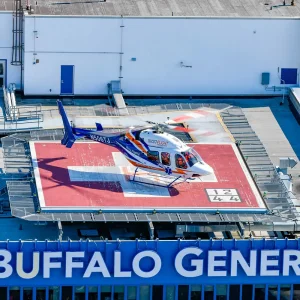
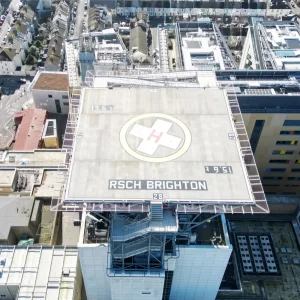
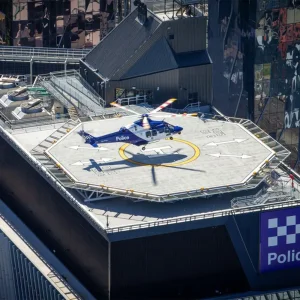
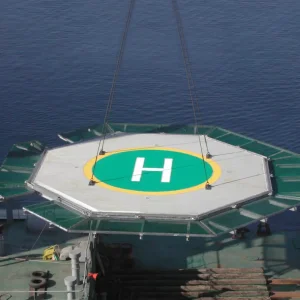
Explore our premium product portfolio designed for marine, offshore energy, military, and urban vertical transport infrastructures.
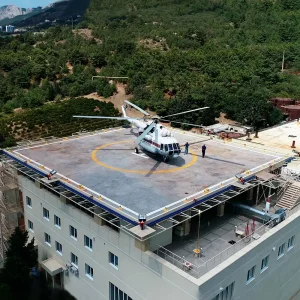
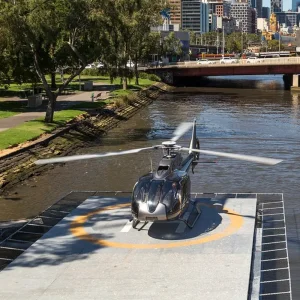
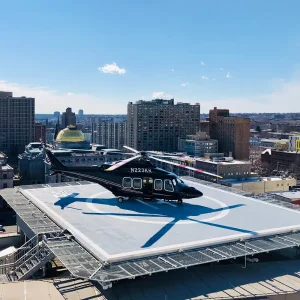
In the modern era of commercial aviation, offshore energy extraction, and rapid emergency medical response, the importance of reliable helideck structures has reached unprecedented heights. Helicopter landing systems serve as critical access points in high-risk environments, requiring robust, non-corrosive construction that guarantees structural safety under all climate conditions.
The global shift toward offshore wind energy development and deep-water oil rigs in places like the North Sea, the Gulf of Mexico, and the South China Sea has driven a surge in demand for lightweight, high-performance structural systems. Standard steel decks are increasingly replaced with marine-grade aluminum alloys. These alloys reduce dead weight, cut maintenance costs, and resist harsh saltwater corrosion over decades of operation.
At the same time, safety guidelines set by regulatory authorities—including the UK Civil Aviation Authority's CAP 437, the International Civil Aviation Organization (ICAO Annex 14), and the Federal Aviation Administration (FAA)—require rigorous installation of perimeter safety nets around all elevated helipads to prevent personnel and equipment falls.
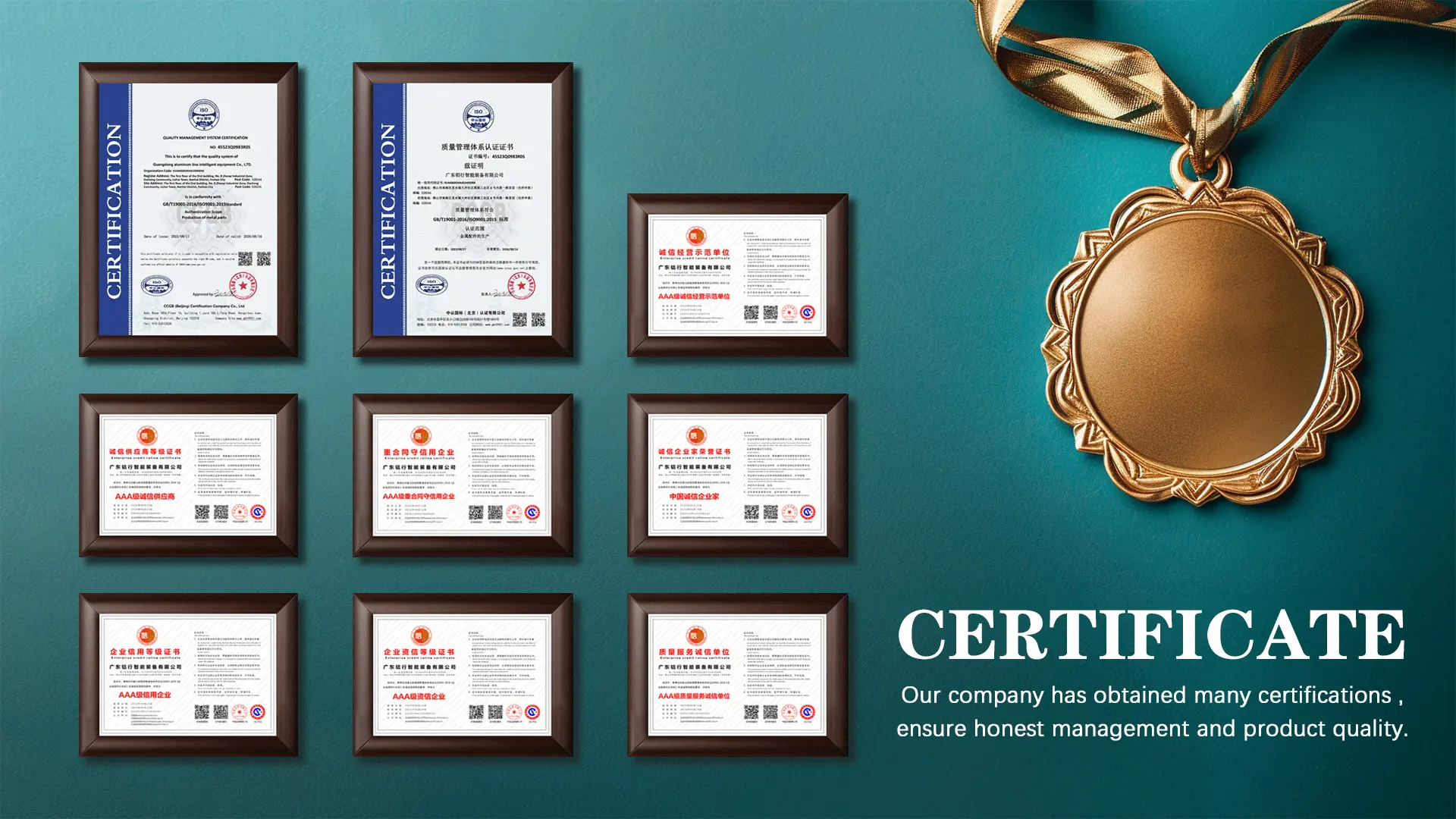
LVXING Intelligent Equipment Co., Ltd. leads the industry by combining high-grade metallurgical processes with rigorous quality standard controls.
Established in 2015 and located in Foshan City, Guangdong, LvXing Intelligent Equipment Co., Ltd. boasts a skilled R&D team with extensive experience. We leverage exceptional technical expertise to effectively transform customers' ideas into reality, consistently meeting their precise requirements.
We utilize premium Fenglu aluminum, offering a diverse range of profiles for flexible applications. Our extrusion lines, ranging from 800T to 20,000T, accommodate alloys 1xxx, 2xxx, 3xxx, 5xxx, 6xxx, and 7xxx, allowing us to produce shaped products with section dimensions up to 1.2 meters in width and 28 meters in length. These products are recognized for their precision and meticulous processing, finding broad application in aerospace, military, medical, and industrial sectors.
Our commitment to excellence is evident throughout the manufacturing process, rigorous quality control, thorough packaging, and efficient shipping procedures. This dedication has earned us recognition as a national excellent and honest enterprise, along with quality system certification in accordance with GB/T19001-2016/ISO9001:2015 standards.
Our engineered safety structures and helipad products conform to critical aviation and marine safety guidelines, including:
Engineered performance backed by state-of-the-art metallurgical capability and robust design support.
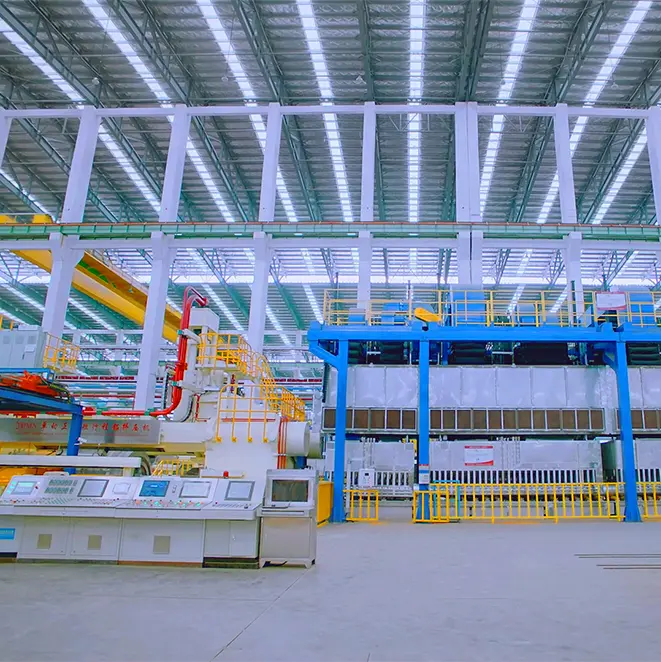

We have obtained the "Special Aluminium Materials for Aerospace" Certificate.
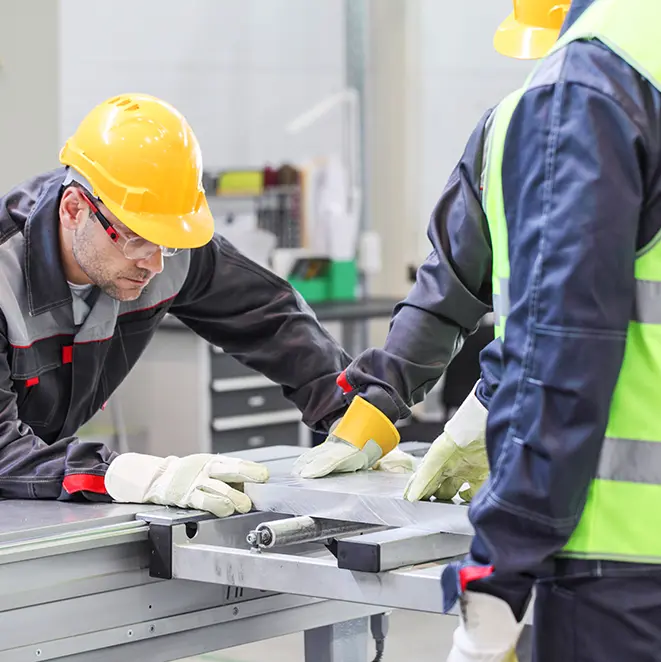

We provide and utilize high-quality Fenglu aluminum profiles. With extrusion lines ranging from 800T to 20,000T, we can produce alloys 1xxx, 2xxx, 3xxx, 5xxx, 6xxx, and 7xxx. We can manufacture fully shaped products with section dimensions up to 1.2 meters in width or 28 meters in length.
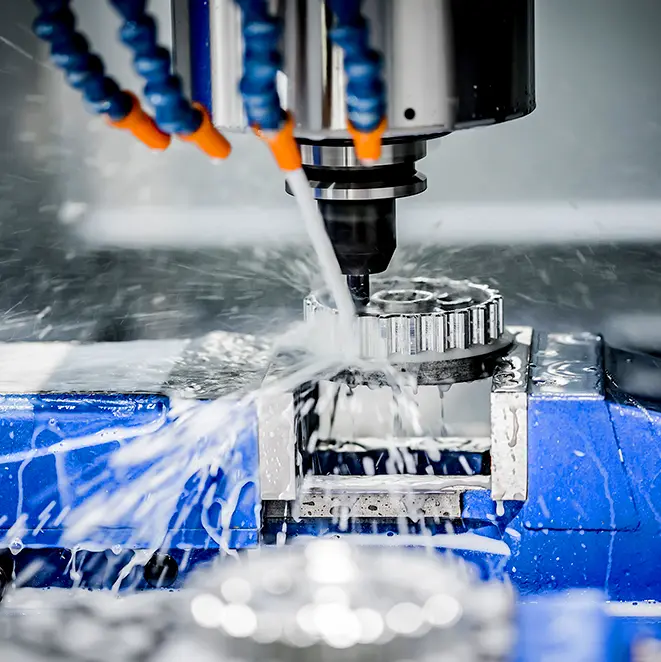

We have a team of technicians with 15 years of invaluable experience. Our deep understanding of customer requirements allows us to identify potential issues and offer practical insights, turning customer ideas into tangible products that meet specific needs.
Foshan City, Guangdong is recognized as the world's most concentrated industrial hub for aluminum metallurgy and custom extrusion processing. By sourcing raw materials locally from premium manufacturers like Fenglu Aluminum, we eliminate high transport overheads and leverage deep local expertise.
Our strategic position within China's premier industrial manufacturing zone enables us to offer unmatched structural reliability at competitive pricing. The cost advantages do not stem from compromising quality, but rather from integrated supply chains, automated CNC processing, and the massive scale of the Fenglu extrusion infrastructure.
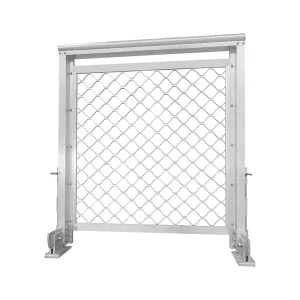
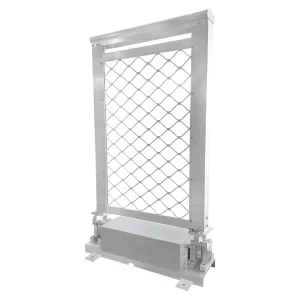
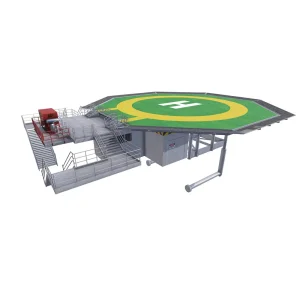
Whether you require custom electric perimeter safety nets, square helipads, or customized ship deck systems, our engineers translate your architectural drawings into structurally sound aluminum components. With extrusion lines scaleable up to 20,000 tons, we eliminate the need for segmented welding on oversized profiles. This produces longer continuous spans, resulting in a stronger structural deck with fewer mechanical failure points.
Review our typical structural and mechanical configurations tailored for maritime and land installations.
| Specification Parameter | Aluminum Deck Details | Safety Net Details |
|---|---|---|
| Primary Alloys | Alloy 6005A-T6, 6082-T6, 6061-T6 (Marine Grade) | Stainless steel 316, Grade 6082-T6 Frame |
| Structural Standards | CAP 437, ICAO Annex 14, US FAA AC 150/5390-2B | Drop-tested with 100 kg mass (minimum 2.3 kJ impact energy) |
| Corrosion Resistance | Passivated, Anodized to Class 20/25 specifications | Fully resistant to marine salt mist spray |
| Width/Length Capabilities | Widths up to 1.2 meters, continuous lengths up to 28 meters | Custom sizing to fit any perimeter design |
| Control Systems | N/A | Available in Manual deployment or Electric folding configurations |
| Life Expectancy | Greater than 30 years in standard marine environments | Greater than 20 years with low maintenance |
Find technical answers regarding regulations, structural calculations, material selections, and international shipping.
Under CAP 437 guidelines, perimeter safety nets must be installed around all raised helidecks. They must project at least 1.5 meters outward from the deck edge and slope slightly upward. They must be drop-tested to withstand an impact energy of at least 2.3 kilojoules (comparable to dropping a 100 kg weight from a height of 2.3 meters) without failing or creating a trampoline effect that could propel a person back off the edge.
Marine-grade aluminum alloys, such as 6082-T6 and 6005A-T6, offer significant advantages over steel. They have an excellent strength-to-weight ratio, reducing deck weight by up to 60%. This is critical for offshore platforms and vessels where top-heavy weight affects stability. Aluminum also self-passivates by forming a natural oxide layer that protects it from saline corrosion, eliminating the need for regular sandblasting and repainting.
Yes. With extrusion lines ranging from 800T to 20,000T, we can extrude non-standard shapes and alloys across the 1xxx to 7xxx series. We can manufacture components with section widths up to 1.2 meters and continuous lengths up to 28 meters. This capability minimizes joints and fasteners, enhancing structural integrity and simplifying on-site assembly.
Manual safety nets require staff to physically lower or lift the perimeter frames during maintenance or when clearing flight pathways. Electric perimeter safety nets use centralized mechanical systems to fold or unfold the frames. This system is ideal for high-frequency helipads, marine vessels, or cold climates where manual deployment is difficult.
We are certified in accordance with GB/T19001-2016 and ISO9001:2015 quality standards. From billet sourcing (using high-quality Fenglu aluminum) to extrusion, machining, anodizing, and packing, every step is logged and inspected. We also hold the "Special Aluminium Materials for Aerospace" certificate, reflecting our capability to meet stringent military and commercial aerospace standards.
Direct from factory sourcing solutions for urban medical, commercial hospitality, and marine emergency services.
 LvXing