Choosing a Customized Helideck Safety Net supplier in 2026 requires more than comparing prices or attractive product photographs. Offshore operators need equipment that matches deck geometry, helicopter operations, environmental exposure, and maintenance routines. A net may look strong on a warehouse floor, yet perform differently after months of salt spray, ultraviolet exposure, and repeated impact loading.
Captain Peter Tait, an offshore aviation safety consultant, has emphasized, “The safest helideck is one where equipment, procedures, and people work together.” This principle guides our review of the 2026 Top Customized Helideck Safety Net Suppliers. The comparison considers material strength, rope construction, edge protection, attachment systems, drainage clearance, corrosion resistance, and documented testing. Supplier experience also matters. Can the manufacturer interpret unusual deck drawings? Can it provide traceable materials and practical installation guidance? These questions often reveal more than a polished catalogue.
Details matter.
A reliable supplier should explain inspection intervals, replacement indicators, and cleaning requirements clearly. It should also acknowledge design limitations instead of promising universal performance. That honesty is important, especially when a helideck has irregular boundaries, restricted access, or harsh weather conditions. Some suppliers may offer excellent engineering but weak after-sales support. Others may provide fast customization but limited evidence of testing. Therefore, this guide evaluates both strengths and gaps, helping buyers identify products that support safer operations, consistent maintenance, and responsible long-term investment. No shortlist replaces a qualified site assessment, but it can make that assessment more focused and practical.
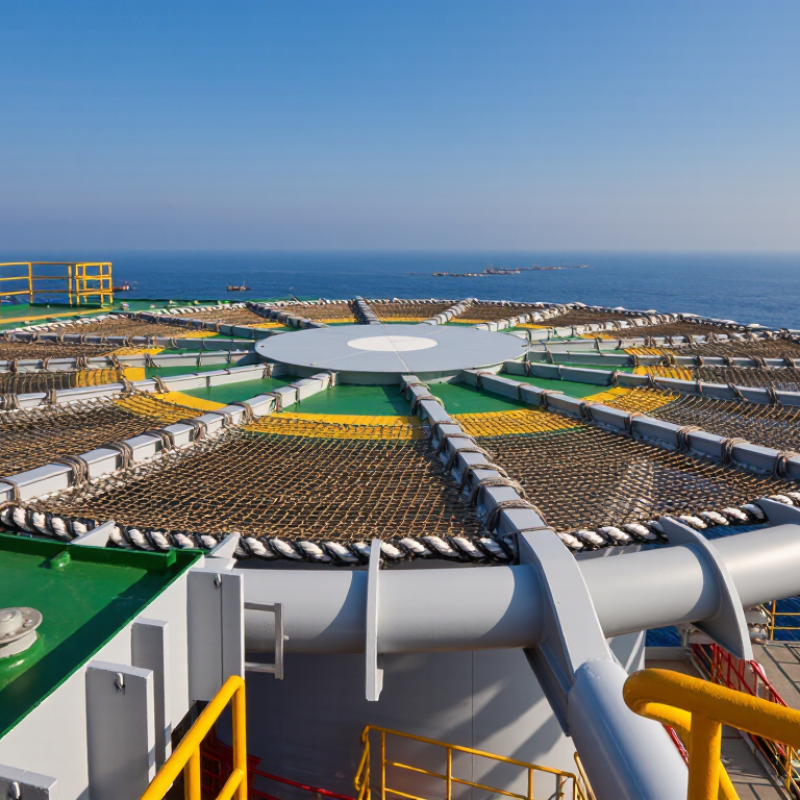
What Are Customized Helideck Safety Nets and Why Are They Important?
2026 Top Customized Helideck Safety Net Suppliers?
Customized helideck safety nets are engineered perimeter systems made for a specific deck, aircraft operation, and marine environment. Unlike standard nets, they match the helideck’s dimensions, edge geometry, anchor points, and access areas. Their mesh size and rope strength must support controlled containment without creating dangerous snagging points.
Their mesh size and rope strength must support controlled containment without creating dangerous snagging points.
During deck inspections, technicians often find that small gaps cause major concerns. A properly fitted net helps prevent personnel, tools, and loose equipment from leaving the deck. It also provides a visible boundary during low-light operations.
Materials should resist salt spray, ultraviolet exposure, fuel contact, and repeated tensioning. Stainless fittings, reinforced borders, and secure attachment points improve service reliability.
Customization is not simply cutting a net to size. Engineers should review deck drawings, expected loads, drainage routes, nearby equipment, and evacuation paths. Installation records and scheduled inspections matter just as much as material selection.
A net may look strong yet lose performance when its edge protection is poorly tensioned. That detail is easy to overlook.
In practice, a perfect drawing can still meet an imperfect installation. Suppliers with documented testing, traceable materials, and experienced technicians offer stronger evidence of dependable performance. Operators should also request replacement guidance, inspection criteria, and clear maintenance intervals before approving the system.
Key Safety Standards for Helideck Safety Net Design and Installation
Customized helideck safety nets must begin with the aircraft, deck layout, and operating environment. Designers should follow applicable aviation authority guidance, such as CAP 437 where it is adopted. Local regulations may require additional controls. The net should protect personnel without blocking drainage, lighting, markings, or emergency access.
Material selection matters offshore. Use corrosion-resistant, UV-stable, and flame-resistant components suitable for salt spray and fuel exposure. Net mesh, edge cables, supports, and fasteners should match the expected loads. The perimeter should remain continuous, with no sharp gaps near ladders or equipment. Dimensions and clearances must follow the governing standard and aircraft category.
Installation quality often decides real performance. Check anchor spacing, cable tension, deck penetrations, and the net’s final height. A loose section can become a trip hazard. An over-tensioned section may transfer excessive force to the deck edge.
Not perfect yet. Wind, heat, vibration, and repeated maintenance can change the original condition, so documented inspections are essential. Load testing should use an approved method and competent personnel. Records should identify test dates, defects, repairs, and responsible inspectors.
One overlooked detail is access during maintenance. Technicians need safe routes that do not require stepping across the net. Customized suppliers should provide installation drawings, material certificates, inspection guidance, and replacement procedures before delivery.
How to Define Custom Helideck Safety Net Requirements
2026 Top Customized Helideck Safety Net Suppliers?
How to Define Custom Helideck Safety Net Requirements
A custom helideck safety net begins with the deck, not a catalog size. Record the helideck diameter, perimeter shape, edge height, access gaps, lighting, drainage, and nearby equipment. A small obstruction can change the required net layout. Measure twice.
Specify the operating environment in detail. Offshore decks need materials that resist salt spray, ultraviolet exposure, strong wind, fuel contact, and repeated temperature changes. State the required mesh size, net width, rope diameter, edge reinforcement, attachment points, and expected service life. Include helicopter type, landing frequency, crew movement, and maintenance access. These details help qualified suppliers prepare a practical design rather than a generic quotation.
Request engineering drawings, material certificates, load-test evidence, installation instructions, and inspection records. Ask how the net remains secure during high winds and how damaged sections can be replaced. The attachment system must suit the deck structure without creating trip hazards or interfering with firefighting equipment. A competent supplier should explain testing limits clearly, not hide behind vague compliance language. Local aviation and marine requirements still need confirmation from the responsible authority. Real sites are rarely perfect. Existing bolts may be misaligned, and corners may need adjustment after installation. Allow a documented site survey and final measurement before production.
How to Evaluate the Top Helideck Safety Net Suppliers in 2026
2026 Top Customized Helideck Safety Net Suppliers?
How to Evaluate the Top Helideck Safety Net Suppliers in 2026
Evaluating a helideck safety net supplier requires more than comparing prices. Start with verified experience in offshore, marine, and rooftop aviation environments. Ask for project records, inspection photos, and references from similar deck sizes. A reliable supplier should explain how it selects rope construction, mesh spacing, edge reinforcement, and attachment hardware. These details affect containment, drainage, and crew movement during real operations.
Request test reports for tensile strength, ultraviolet exposure, salt spray, abrasion, and fire performance. Reports should identify test methods, dates, samples, and laboratories. Check whether the proposed design matches your deck drawings, landing area, obstacle zones, and local aviation requirements. Custom dimensions matter. A poorly fitted corner can create dangerous gaps. Measure twice.
Supplier quality also depends on traceability. Each net should have identifiable materials, production records, and clear installation instructions. Confirm whether technicians can inspect anchor points and tension after installation. Ask about replacement sections, cleaning methods, storage, and inspection intervals. Practical support often reveals more than polished sales documents.
Do not accept vague claims about “heavy duty” protection. Require calculations or documented performance for the intended configuration. Speak with the technical team, not only a salesperson. Their answers should remain consistent across drawings, certificates, and quotations. I would also allow time for an independent review, because even experienced teams can overlook drainage paths or awkward access points. That small delay may prevent an expensive redesign.
Emerging Materials and Technologies in Helideck Safety Nets
2026 Top Customized Helideck Safety Net Suppliers?
Emerging Materials and Technologies in Helideck Safety Nets
Helideck safety nets are becoming lighter, stronger, and easier to inspect. New systems use high-tenacity polyester, aramid blends, and UV-stabilized fibers. These materials resist salt spray, sunlight, abrasion, and repeated movement. However, material selection should follow verified test data, not marketing language.
Customized suppliers now measure deck geometry, edge clearance, wind exposure, and maintenance access before production. Modular panels can fit unusual shapes and simplify replacement after localized damage. Some designs include low-profile tensioning hardware and embedded identification tags. Digital inspection records can show installation dates, test results, and repair history. Smart load sensors are promising, but their readings still require trained human review. I have seen technology create confidence before it creates reliability.
Tips:
Request sample certificates, installation drawings, and service procedures. Check seams, anchors, and tension points during routine inspections. Keep a clear replacement schedule. Recycled fibers may reduce environmental impact, but only after safety performance is independently validated. Salt-heavy locations often need more frequent checks than expected. Small details matter. Suppliers should also explain failure limits in plain language, including how the net behaves after heat, impact, or prolonged weather exposure. A practical trial installation can reveal fitting problems that drawings miss. Safety teams should record those lessons and revise future specifications.
FAQS
It is a perimeter net designed for a specific deck, aircraft operation, and marine environment. It matches dimensions, corners, access gaps, and anchor points. Standard sizes may leave unsafe openings. Measure twice.
It helps contain personnel, tools, and loose equipment near the deck edge. It also creates a visible boundary during low-light operations. Small gaps matter.
Offshore nets should resist salt spray, ultraviolet exposure, strong wind, abrasion, fuel contact, and temperature changes. Stainless fittings and reinforced borders can improve service life. Materials still need inspection.
Provide deck dimensions, perimeter shape, edge height, drainage routes, lighting, nearby equipment, and access areas. Include helicopter type, landing frequency, crew movement, and maintenance needs. Existing bolts may be misaligned.
Attachment points must suit the deck structure and maintain even tension. They should not create trip hazards or obstruct evacuation and firefighting paths. A strong net can still fail at weak edges.
Request engineering drawings, material certificates, load-test reports, installation instructions, and inspection records. Test documents should identify methods, dates, samples, and laboratories. Vague claims are not enough.
Review similar marine or rooftop projects, inspection photographs, references, and traceable production records. Compare technical answers, not only prices. A polished quotation proves little.
Technicians should inspect anchor points, tension, corners, drainage, and access routes. Keep installation records and schedule regular inspections. Replace damaged sections promptly. Real sites are rarely perfect.
Conclusion
Customized Helideck Safety Net systems are essential protective installations designed to match the dimensions, layout, and operational needs of offshore platforms, rooftop helipads, and other landing areas. This article explains how these nets help reduce fall risks, improve personnel protection, and support safer helicopter operations. It also outlines the key factors involved in design and installation, including load capacity, edge protection, attachment methods, drainage, fire performance, corrosion resistance, and compatibility with applicable aviation and workplace safety requirements.
The guide also presents a practical method for defining project requirements, such as helideck size, environmental exposure, expected traffic, maintenance access, and service life. It discusses how to evaluate leading suppliers in 2026 by reviewing material quality, engineering expertise, customization capabilities, testing documentation, installation support, delivery reliability, and after-sales service. Finally, it explores emerging developments, including lightweight high-strength fibers, improved coatings, modular construction, digital inspection tools, and smarter monitoring solutions that may enhance durability, safety, and lifecycle performance.

 LvXing