What Are the Best Perimeter Safety Nets from China?

Time:2026-09-18 Author:Henry
0%

Choosing the best Perimeter Safety Nets from China requires more than comparing prices or product photos. These nets protect workers, tools, and materials around construction edges, bridges, warehouses, and elevated platforms. A reliable selection begins with practical questions: What height must the net cover? What impact can it resist? How will installers anchor it?

Chinese manufacturers offer many options, including vertical debris nets, edge protection systems, and custom-mesh solutions. In my experience, the strongest evaluations focus on measurable details. Ask for mesh dimensions, rope thickness, fabric weight, seam quality, UV resistance, and tested load performance. Request clear technical documents, not vague promises. A close inspection should reveal reinforced borders, evenly tied knots, durable webbing, and corrosion-resistant fittings.

Small details matter.

A professional supplier should explain production controls, inspection procedures, packaging methods, and installation guidance. Factory experience is useful, but it does not automatically prove product reliability. Independent testing, traceable materials, and consistent batch records provide stronger evidence. Buyers should also verify whether the product suits local workplace safety requirements and project conditions.

There is no universal best net. A lightweight net may suit temporary indoor work, while exposed sites need stronger UV-stabilized materials and secure anchoring. Wind, rain, falling-object risks, and repeated installation can change the decision. Some online descriptions may sound impressive yet remain incomplete. That deserves caution.

This guide examines leading Chinese options through safety performance, material quality, customization, supplier credibility, and long-term value. It also highlights limitations, because honest evaluation includes what a product may not handle well.
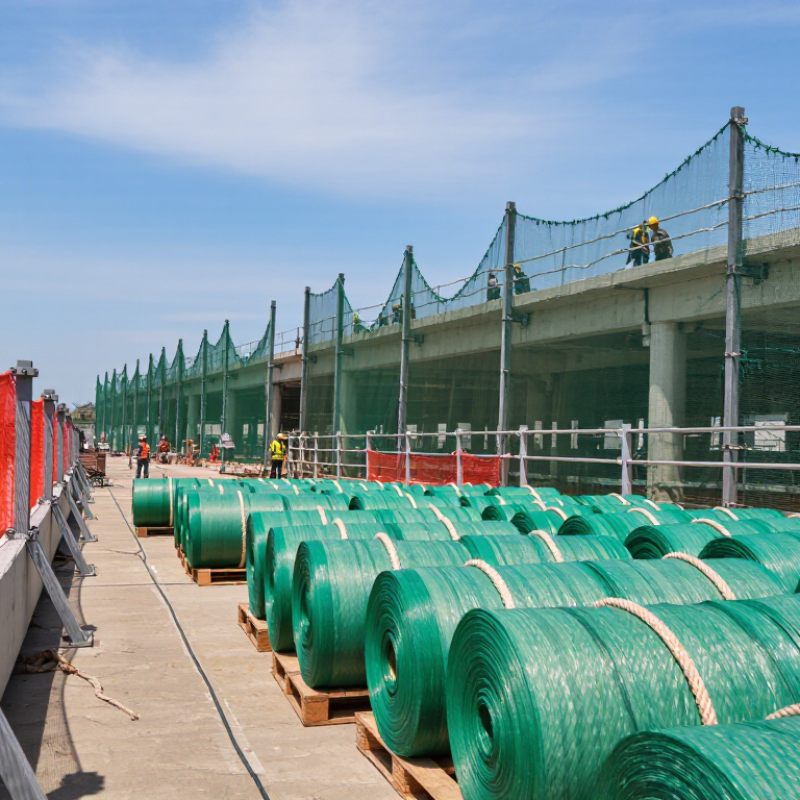
What Are the Best Perimeter Safety Nets from China?

Define “Best”: EN 1263-1 Compliance, 2.3 kJ Energy, and Mesh Size

The best perimeter safety nets from China should be judged by evidence, not production volume or attractive pricing. EN 1263-1 provides a useful technical benchmark for safety net design, testing, marking, and inspection. Ask the manufacturer for current test reports, material specifications, and traceable batch records. A certificate without matching product identification is weak evidence.

Energy absorption matters near active edges. A net rated for 2.3 kJ should demonstrate this performance through recognized testing, not a sales statement. Check the test configuration, net dimensions, aging conditions, and laboratory details.

Mesh size also requires careful attention. Smaller openings can help retain tools and reduce passage risks, while larger meshes may affect visibility, handling, and installation time. The chosen size must match the hazard assessment and the approved system design.

On site, inspect ropes, knots, borders, stitching, and connection points before installation. I have found that damaged edge ropes are easier to miss than torn mesh. That weakness is often underestimated. Confirm the net remains correctly tensioned and does not contact sharp steel, unfinished concrete, or moving equipment. Installation records should show dates, locations, competent personnel, and follow-up inspections. Chinese suppliers can be reliable partners when they provide consistent documentation and controlled manufacturing. Still, “compliant” should remain a question until the actual net, markings, and test evidence agree.

Compare Chinese Net Systems: S, T, U, and V Under EN 1263-1

What Are the Best Perimeter Safety Nets from China?

Compare Chinese Net Systems: S, T, U, and V Under EN 1263-1

Chinese perimeter safety nets should be compared by system purpose, not price alone. EN 1263-1 identifies four main arrangements. System S is a large horizontal net for open floors. System T projects outward from a slab edge. System U protects vertical openings, such as stairwells. System V uses fork-shaped supports near building perimeters. Each system needs tested mesh, suitable rope strength, correct installation, and visible identification.

The choice depends on geometry and falling distance. System S suits wide floor areas but requires strong anchors and controlled deflection. System T can catch workers outside the façade line, where space is limited. System U works well beside open edges, although gaps can appear during relocation. System V offers perimeter coverage, yet its support spacing must match the structural design. OSHA’s 2023 construction data recorded 421 fatal falls among 1,069 construction deaths. That figure reinforces the need for engineered protection, not improvised netting.

Tips: Ask for EN 1263-1 test records, inspection logs, mesh dimensions, energy data, and installation drawings. Check every knot and anchor after strong wind. A certificate alone is not enough. On real sites, unclear access often causes mistakes. That part deserves more attention. Use a competent installer who can verify edge distances, support capacity, and rescue access before work begins.

Evaluate Materials: HDPE or Polyamide, UV Stability, and Tensile Strength

When evaluating perimeter safety nets from China, start with the finished net, not the polymer label. HDPE usually offers good moisture resistance, low density, and stable outdoor performance when UV stabilizers are correctly compounded. Polyamide can provide strong knot performance and flexibility, but it absorbs moisture and may lose strength faster under sunlight. Material choice is not simple.

EN 1263-1:2014 classifies safety nets by energy absorption, including 2.3 kJ and 4.4 kJ levels. A supplier should provide test results for the complete net, mesh, ropes, and seams. Resin data alone is insufficient. Ask for tensile-strength results in both machine and cross directions. Also check elongation, mesh size, edge-rope strength, and knot slippage. Small details matter.

UV resistance needs evidence. ISO 4892-3 can support accelerated UV testing, but exposure hours do not directly equal service years on a Chinese coastal site. Salt air, dust, and repeated folding can change performance. An independent laboratory report should identify the exposure cycle, retained tensile strength, and failure condition. In practice, batch sampling is essential because recycled content or uneven additives may affect results. One weakness remains: many datasheets report new-net strength only. That figure may look impressive, yet it says little about a net after months of sunlight, abrasion, and installation stress.

Verify Installation: 2.5 m Support Spacing and 2 m Net Overlap

Choosing perimeter safety nets from China requires more than comparing fabric color or quoted price. Ask for test records, material specifications, edge-rope details, and traceable production documents. A dependable supplier should explain mesh strength, UV resistance, and inspection procedures clearly. Request samples before shipment. They reveal stitching quality quickly.

On site, verify every support post is spaced no more than 2.5 meters apart. Measure with a tape, not by eye. Mark each position on the slab or working platform. Posts should stand plumb, with secure bases and tight connections. Check the net line for sagging, torn mesh, and sharp contact points. Small gaps matter. A dropped tool can find them.

Each adjoining net panel should overlap by at least 2 meters. Secure the overlap so wind cannot separate the layers. Do not rely on loose ties or one connection point. An experienced supervisor should record measurements, photos, and corrective actions before work continues. I have seen teams check spacing carefully, then forget the overlap at corners. That mistake is easy to repeat. Recheck after strong wind, impact, relocation, or structural changes. Chinese manufacturing can provide consistent quality, but installation evidence remains essential. A certificate cannot correct a poorly fitted net.

Rank Suppliers by Testing, Traceability, OSHA 200 lb, and CE Compliance

The best perimeter safety nets from China should be ranked by evidence, not catalog photos or low prices. In practice, a supplier’s testing system reveals more than its sales claims. Request reports identifying mesh type, rope construction, energy absorption, dimensions, and test dates. Independent laboratory records are stronger than internal inspection sheets. Evidence matters.

Traceability deserves equal attention. Each roll should carry a batch code linked to production records, raw-material certificates, inspection results, and packing details. Ask whether the supplier can trace one delivered panel back to its yarn lot and machine operator. A clear answer shows operational control. Vague paperwork is a warning sign.

For projects requiring an OSHA 200 lb criterion, confirm the exact test method, impact height, load form, and acceptance result in writing. Do not treat “OSHA tested” as a complete certification. The project engineer should verify the applicable requirement. For CE compliance, look for the relevant harmonized standard, test report, Declaration of Conformity, and permanent product marking. Documents must match the actual net design and factory. This is where many evaluations become imperfect; a recent report may describe an older material or a different mesh size. Suppliers should also provide installation instructions, inspection guidance, repair limits, and replacement recommendations. A practical ranking places verified testing first, traceability second, and price only after technical evidence is complete. Small documentation gaps can become serious site problems.

What Are the Best Perimeter Safety Nets from China? - Rank Suppliers by Testing, Traceability, OSHA 200 lb, and CE Compliance

Evidence Rank Anonymous Supplier Profile Testing Documentation Traceability System OSHA 200 lb Requirement Review CE Compliance Evidence Typical Product Data to Verify Overall Evidence Score Procurement Recommendation
1 Supplier Profile A
Complete technical-documentation package
Verified Documentation
Provides current laboratory reports referencing EN 1263-1, product identification, test method, sample description, and test date.
Strong
Individual label or batch code linked to production date, raw-material lot, inspection record, and shipment documents.
Correctly Interpreted
Does not claim that “OSHA 200 lb” is a safety-net certification. Separately provides installation and impact-test information for the applicable OSHA provisions.
Documentation Required
Supplies a Declaration of Conformity and identifies the applicable EU legislation. EN 1263-1 is not treated as automatic proof of CE marking.
Mesh size, net dimensions, border-rope specification, energy-absorption class, UV-resistance data, stitching details, and installation instructions are listed on controlled documents. 92 / 100 Preferred for projects requiring an auditable compliance file and pre-shipment document review.
2 Supplier Profile B
Good testing records with partial regulatory evidence
Generally Acceptable
Provides test reports for material strength, mesh construction, and product performance, but report scope should be checked against the exact purchased model.
Good
Batch numbers and production records are available; independent verification of every shipment should be requested.
Conditional
Can provide load and installation data, but the buyer must confirm that the proposed system meets the project-specific OSHA requirements.
Partial
CE-related files are available on request, but the notified-body or conformity route and product scope must be confirmed before purchase.
Product data normally includes mesh dimensions, panel size, rope construction, joining method, allowable installation arrangement, and inspection interval. 84 / 100 Suitable after a technical submittal review and confirmation that the test report applies to the supplied configuration.
3 Supplier Profile C
Strong manufacturing controls with limited third-party testing
Partially Verified
Internal quality records and material certificates are available, while independent performance testing is limited or not current for all models.
Good
Uses batch coding, incoming-material inspection, in-process checks, and final visual inspection.
Buyer Verification Needed
The supplier should not use a generic 200 lb statement as proof of OSHA compliance. Site-specific engineering and installation controls remain necessary.
Not Sufficiently Demonstrated
A CE logo or marketing statement alone is not adequate; request the applicable Declaration of Conformity and supporting technical file.
Factory records may cover yarn type, mesh opening, rope diameter, seam appearance, dimensions, packing, and defect limits. 73 / 100 Consider for price-sensitive projects only after commissioning additional independent testing or document validation.
4 Supplier Profile D
Catalogue-led supplier with basic factory records
Limited
Provides catalogue specifications and selected quality certificates, but the test laboratory, test date, sample identity, and standard edition may be unclear.
Basic
Batch identification may appear on cartons, but product-level traceability and retained production records require confirmation.
Not Demonstrated
No reliable evidence should be inferred from a “200 lb safety net” sales description without a standard-specific test report.
Unverified
CE claims should be treated as unverified until the applicable conformity documents and product scope are supplied.
Catalogue information may include nominal mesh size, available dimensions, color, rope type, and packaging, but not necessarily verified performance values. 58 / 100 Use only for preliminary comparison; do not approve for installation until testing and regulatory documents are complete.
5 Supplier Profile E
Price-focused supplier with insufficient compliance evidence
Insufficient
Provides photographs, general claims, or undated certificates without confirming the exact product model and test standard.
Weak
No reliable link between raw materials, production batches, inspection records, and delivered product.
Not Accepted
A stated 200 lb capacity is not a substitute for the applicable OSHA safety-net criteria, installation requirements, or documented performance testing.
Not Demonstrated
A CE mark shown on packaging or a website is not sufficient evidence of lawful conformity.
Basic dimensions and colors may be available, but verified mesh strength, energy absorption, aging resistance, and inspection data are missing. 34 / 100 Do not approve for safety-critical perimeter protection without a complete independent verification package.
Important compliance note: OSHA does not use “200 lb” as a standalone certification label for perimeter safety nets. Under OSHA construction rules, safety-net compliance depends on the applicable system requirements, installation conditions, location, clearance, inspection, and performance testing. The commonly referenced OSHA safety-net impact test uses a 400 lb sandbag under the specified test conditions, not a generic 200 lb claim.
Minimum documents to request before purchase: EN 1263-1 test report or equivalent project-approved test evidence; product specification sheet; batch or serial traceability record; raw-material certificate; factory inspection checklist; installation and inspection instructions; aging or UV-resistance information; Declaration of Conformity where CE marking is legally applicable; and written confirmation of the exact model covered by each document.

FAQS

What are the four main perimeter safety net systems?

System S covers large horizontal floor areas. System T projects outward from a slab edge. System U protects vertical openings. System V uses fork-shaped supports near building perimeters.

How should a project choose between these systems?

Choose according to building geometry, edge conditions, and possible falling distance. Price alone is not enough. Measure the available space first.

Where is System S most suitable?

System S suits wide, open floors. It needs strong anchors and controlled deflection. Check the net’s lowest point after loading.

When can System T provide better protection?

System T projects beyond the façade line. It can catch workers outside the building edge. This arrangement helps when ground space is limited.

What should installers check for Systems U and V?

System U needs careful relocation because gaps may appear beside openings. System V requires support spacing that matches structural design. Check every connection.

What installation spacing should be verified on site?

Support posts should be no more than 2.5 meters apart. Use a measuring tape. Mark each position on the slab.

How much overlap should adjoining net panels have?

Adjacent panels should overlap by at least 2 meters. Secure the overlap against wind separation. One loose tie is not enough.

Which documents should buyers request before shipment?

Request test records, mesh dimensions, rope details, energy data, installation drawings, and inspection logs. Ask for traceable production information. Samples can reveal weak stitching.

How should suppliers be evaluated beyond price?

Rank verified testing first and traceability second. Check batch codes, raw-material records, inspection results, and packing details. Low prices can hide documentation gaps.

What inspections are needed after installation?

Check knots, anchors, sagging, torn mesh, sharp contact points, and support bases. Reinspect after strong wind, impact, relocation, or structural changes. Small gaps matter.

Is a certificate alone enough to confirm safety?

No. A certificate cannot correct poor installation. The project team should verify measurements, structural capacity, rescue access, and actual product details. That part is often missed.

Conclusion

Choosing the best Perimeter Safety Nets from China requires more than comparing prices or appearance. A reliable system should meet EN 1263-1 requirements, provide resistance to a 2.3 kJ test energy, and use an appropriate mesh size for the intended construction hazard. The main system types—S, T, U, and V—should be compared according to their support method, edge protection performance, flexibility, and suitability for different building structures.

Material quality is equally important. HDPE can offer good weather resistance and durability, while polyamide may provide strong flexibility and impact absorption when properly treated for outdoor use. Buyers should verify UV stability, tensile strength, test reports, and production traceability. Correct installation is essential, including support spacing of approximately 2.5 meters and at least 2 meters of net overlap where sections are joined. Supplier evaluation should focus on independent testing, clear documentation, OSHA 200 lb performance where applicable, CE-related conformity, and consistent quality control.


Henry

Henry

Henry is a dedicated marketing professional with a profound expertise in the company's offerings. With years of experience in the industry, he possesses an impressive understanding of the market dynamics and consumer behaviors that drive success. Henry is committed to sharing his insights through......