Choosing a Perimeter Safety Net is not a cosmetic decision. It is a practical risk-control decision made above people, tools, and unfinished edges. The right system must match the building height, working platform, opening size, expected impact, and installation sequence. A net that looks strong may still perform poorly when its supports are weak or its mesh is unsuitable.
Safety expert Herbert W. Heinrich wrote, “The unsafe acts of persons are responsible for most accidents.” His statement remains influential, although modern safety research shows that design, supervision, and equipment conditions also matter. That nuance deserves attention. Workers should not carry the entire burden of protection. A properly selected Perimeter Safety Net can reduce fall exposure, catch limited falling materials, and create a visible boundary around elevated work areas.
This guide examines the details that are easy to overlook. Check the net’s rated performance, rope strength, mesh dimensions, edge reinforcement, and fixing points. Ask who will install it, who will inspect it, and what happens after a fall. Look for test records from a credible manufacturer. Do not rely only on product photographs.
Small gaps matter.
A loose corner can become a serious weakness. Wind, sharp edges, repeated handling, and nearby machinery can also damage the system. Project conditions change, sometimes faster than the safety plan. Therefore, selection should include a site-specific assessment, competent installation, regular inspection, and clear replacement criteria. Perfection is unlikely. Careful verification is still achievable.
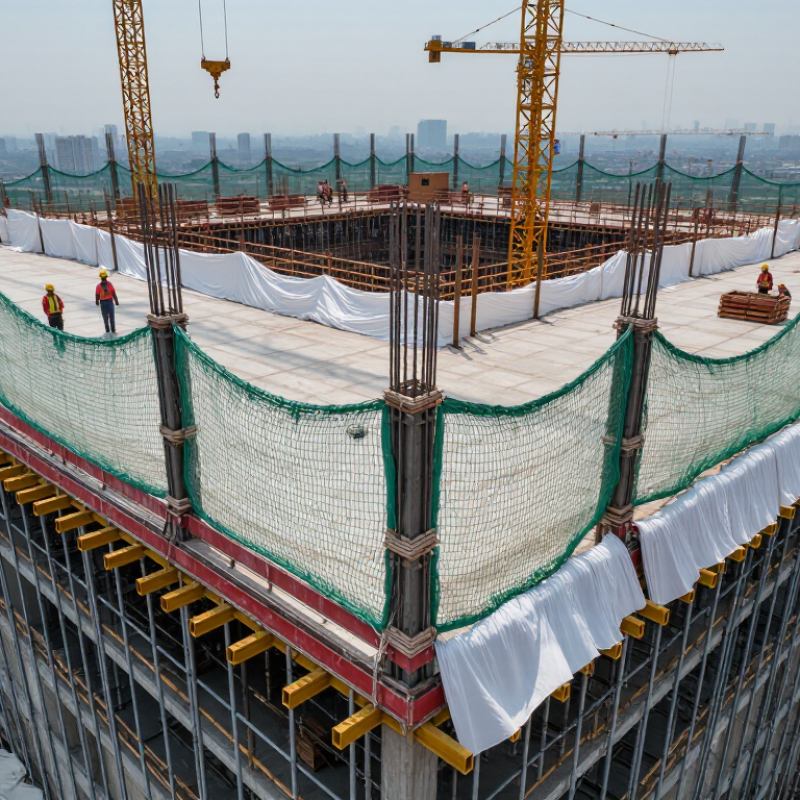
How to Choose a Perimeter Safety Net for Your Project?
Project Hazards That Require a Perimeter Safety Net
Open edges on roofs, floors, and platforms create serious fall hazards. A perimeter safety net can help when workers operate near unprotected sides. It also reduces the chance of tools, materials, and small debris falling onto people below. This matters around loading zones, pedestrian routes, and busy access points. A dropped wrench can travel farther than expected.
Consider the building height, edge shape, working distance, and possible impact energy. Nets near concrete slabs may face different loads than nets beside lightweight temporary structures. Check the mesh size, rope strength, fixing points, and allowable deflection. A qualified safety professional should verify the design against current local requirements. Never rely on appearance alone.
Wind creates another hazard. A loose net can flap, chafe, or pull against its anchors. Wet materials may also increase weight. Inspect every connection before work begins, especially after storms, structural changes, or contact with equipment. The net is not a magic fix. Guardrails, controlled access, safe work procedures, and suitable personal protection may still be necessary. I have learned that installation drawings can look perfect while site conditions change underneath them. A practical inspection often reveals a missing anchor, an awkward gap, or an access point nobody considered. That small detail can decide whether the system performs properly.
Check compliance with EN 1263-1 or the applicable local standard. Confirm classification, mesh size, energy absorption, test methods, and identification labels. Request current certificates and installation guidance. Do not trust “heavy duty” alone.
Measure the complete exposed edge, including corners, overlaps, and movement points. The net must cover openings without dangerous gaps. Allow suitable height for falling tools and materials. Avoid excessive slack.
Polypropylene often suits outdoor work because it resists moisture and remains flexible. Polyester may provide better dimensional stability and abrasion resistance. Sunlight, chemicals, and repeated handling can change performance. Check technical data. Assumptions can fail.
Select tested strength suitable for the expected load and installation height. Verify mesh size, tear resistance, UV protection, and edge reinforcement. The required strength depends on the complete system, not the net alone. Strong material is not enough.
Measure the working height, exposed edge, and available anchorage points. Identify whether the support is concrete, steel, or a temporary platform. Use fixing methods suitable for that surface. Wind, rain, dust, and temperature changes also matter.
Anchors must transfer loads safely into the structure. Verify their capacity with a structural engineer. Inspect posts, brackets, cables, clamps, ropes, and connectors. Avoid improvised ties or mixed components with unknown strength. Small gaps matter.
A competent person should inspect it before use, after relocation, and after significant impact. Inspect again after severe weather, structural changes, or accidental contact. Look for loose sections, damaged ropes, broken knots, and weak fixing points. Photograph each inspection and record corrective actions.
Confirm that the net will not block lifting routes, scaffolding, emergency paths, or façade work. Keep it away from hot work, sharp steel edges, and chemical contamination. Allow clearance for deflection beneath the working edge. Site conditions change quickly. Rechecking is sensible.
Pause installation and request clarification about standards, fixings, spacing, and clearance. Check whether drawings include temporary structures and changing site conditions. Replace damaged sections promptly. Guessing may seem faster, but it can create a hidden fall path.
Choosing the right Perimeter Safety Net is essential for protecting workers, equipment, and the public from falls and dropped objects around building edges, rooftops, platforms, and other elevated work areas. Begin by identifying the project’s specific hazards, including open sides, fragile surfaces, changing work levels, and exposure to wind or falling materials. Verify that the selected system meets applicable safety standards and performance requirements, such as adequate load capacity, energy absorption, mesh design, durability, and proper labeling or documentation.
The net’s material, dimensions, strength, and edge construction should match the site conditions and expected risks. Before installation, assess fixing points, support structures, clearances, access routes, weather exposure, and compatibility with the building or temporary works. Installation must be completed by competent personnel and checked for secure connections and correct tension. Regular inspections should look for tears, deformation, loose fittings, contamination, UV damage, and other signs of weakening. Any damaged or questionable component should be removed from service, and the entire system should be replaced when it no longer provides reliable protection.

 LvXing