7 Tips for Buying Aluminum Profiles for Glass Doors?

Time:2026-09-08 Author:Ethan
0%

Buying aluminum profiles for a glass door looks simple until the first panel feels too heavy or the frame begins to rattle. Aluminum Profiles For Glass Door must match the glass weight, opening size, hardware, and installation environment. A narrow profile may look elegant in a showroom. It may also flex under daily use. That detail is easy to miss. This guide presents seven practical tips for choosing reliable profiles with greater confidence. It considers alloy quality, wall thickness, surface treatment, drainage, measurements, and supplier support. These factors affect safety, appearance, service life, and installation costs.

Start with the project conditions, not the catalog photograph. Measure the opening carefully, including uneven walls and floor slopes. Confirm whether the door is used indoors, near a pool, or beside the coast. Moisture and salt can expose weak finishes quickly. Ask suppliers for alloy specifications, profile drawings, load information, and compatible accessories. A sample corner joint can reveal more than polished sales language. Check whether rollers, hinges, seals, locks, and glass thickness fit together without forced adjustments. I once underestimated the importance of drainage channels; that small oversight created maintenance concerns later. Good buying decisions allow room for correction. Compare at least two suppliers, inspect actual samples, and question claims that lack test evidence. The best profile is not always the cheapest or thinnest. It is the one that performs consistently after years of opening, closing, cleaning, and seasonal movement.
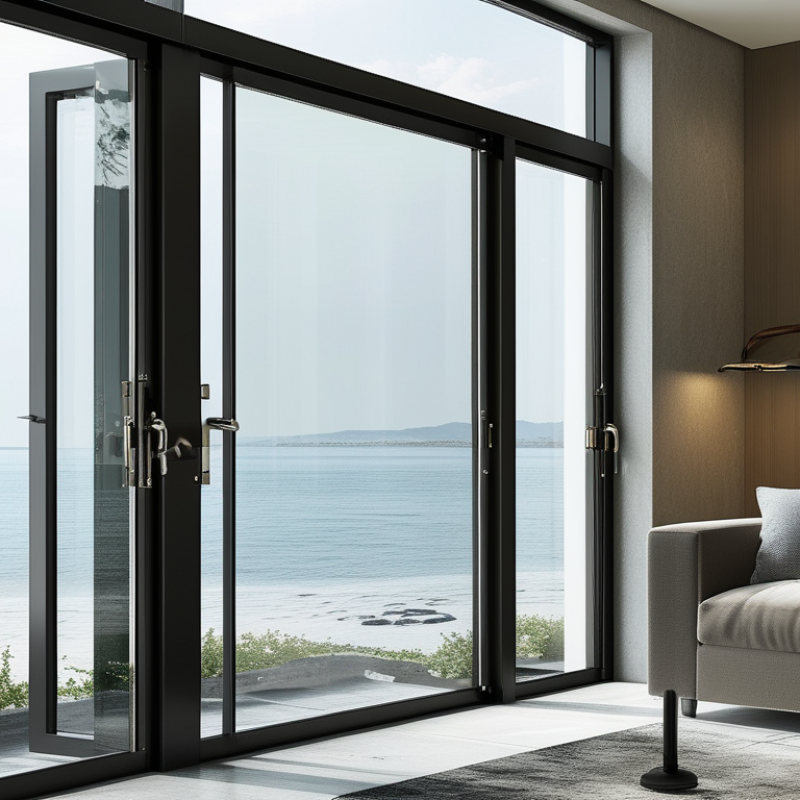
7 Tips for Buying Aluminum Profiles for Glass Doors?

Define Glass Door Requirements Before Choosing Aluminum Profiles

7 Tips for Buying Aluminum Profiles for Glass Doors?

Define Glass Door Requirements Before Choosing Aluminum Profiles

A reliable glass door begins with clear requirements, not a profile catalog. Measure the opening width, height, and wall condition carefully. Record the glass thickness, panel weight, opening direction, and expected daily use. A heavy entrance door needs stronger profiles than a quiet interior partition. Wind exposure also matters, especially for wide doors near balconies or coastal areas. Ask a qualified professional to verify structural loads and local building requirements. Small measurement errors can create expensive installation problems.

Tip 1: Match the profile to the complete door system. Check compatibility with hinges, rollers, locks, seals, and glass gaskets. Do not judge strength by appearance alone. A slim section may look elegant but lack sufficient stiffness. Tip 2: Consider drainage and weather sealing before choosing a finish. Water paths, corner joints, and brush seals affect long-term performance. Aluminum profiles should also suit the selected glass type and thickness. This step is often rushed.

Tip 3: Request technical drawings, load data, and installation guidance from the supplier. Compare tolerances, surface treatment, and replacement options. A good profile should be practical to cut, join, and maintain. Think about cleaning access around the glass edges. I have seen attractive doors fail because the hardware was chosen too late. Recheck every dimension before ordering. That extra check is worth it.

Check Profile Materials, Strength, and Surface Treatments

7 Tips for Buying Aluminum Profiles for Glass Doors

Material quality affects every later decision. Ask for the alloy, temper, and test certificate, not only a polished sample. 6063-T5 is common for architectural profiles, but heavy doors may require a stronger temper or alloy. Under EN 755-2, typical 6063-T5 profiles can show a minimum 0.2% proof strength near 110 MPa. The exact value depends on thickness and supply condition. Do not treat this figure as a universal guarantee.

Strength also depends on span, glass weight, rollers, screw joints, and corner connections. A thick-looking profile can still twist if its internal geometry is weak. Request calculations or test results for the complete door assembly. ASTM B221 and EN 755 provide useful references for extrusion requirements. In practice, profile walls should be checked beside drainage channels and screw grooves. These areas are often thinner than expected. Small details matter.

Surface treatment protects appearance and long-term performance. Anodizing should state its coating class and measured thickness, such as 15 microns under ISO 7599 classifications. Powder coating should identify the relevant performance grade, including AAMA 2604 or AAMA 2605, where applicable. The International Aluminium Institute reports that recycled aluminium uses about 5% of the energy required for primary aluminium production. That supports recycled content, but certification still matters. One uncomfortable point: a recycled profile is not automatically strong. Ask for batch traceability, coating records, and independent inspection. Photos are not enough.

Match Profile Dimensions With Glass Thickness and Door Hardware

Buying aluminum profiles for glass doors is not only a finish decision. It is a fit-and-load decision. The profile must match the glass thickness, panel weight, hinge capacity, lock position, and installation tolerance. A narrow channel may look elegant, but it can twist under a heavy panel. I have seen this mistake create uneven gaps within weeks.

Tip 1: Confirm glass thickness before ordering profiles. A 10 mm panel needs a different gasket, channel depth, and fixing method than an 8 mm panel. Never force oversized glass into a narrow profile. Ask for the supplier’s tested glass-and-profile combination, not only a dimensional drawing. The International Energy Agency’s Buildings 2023 analysis reports that buildings use about 30% of global final energy. Properly fitted door systems can support better envelope performance, although the profile alone cannot solve poor installation.

Tip 2: Match profile dimensions with door hardware. Check hinge plates, rollers, locks, handles, and reinforcement zones together. Hardware often needs hidden clearance inside the aluminum section. Tip 3: Measure finished openings at several points. Walls are rarely perfectly square. Leave the specified adjustment space for shims, seals, and thermal movement. The U.S. Department of Energy notes that windows can represent 25–30% of residential heating and cooling energy use. That figure is not a direct guarantee for glass doors, but it shows why sealing details matter. One overlooked gasket can weaken the whole assembly.

7 Tips for Buying Aluminum Profiles for Glass Doors? - Match Profile Dimensions With Glass Thickness and Door Hardware

Tip Dimension or Specification to Check Typical Reference Data Why It Matters Recommended Buying Action
1. Confirm the Glass Thickness Match the profile glazing channel and gasket system with the actual glass build-up. Common monolithic tempered glass thicknesses: 6, 8, 10, and 12 mm.
Common laminated glass nominal thicknesses: 6.38, 8.38, 10.38, and 12.38 mm.
A channel that is too narrow can damage the glass or prevent installation. An oversized channel may allow movement, rattling, or poor sealing. Provide the supplier with the exact glass thickness, including interlayers and coatings, and request the compatible gasket size.
2. Check the Profile Glazing Pocket Review the clear internal pocket width, gasket compression area, rebate depth, and glass insertion depth. Many dry-glazed systems are designed for a specific glass range, such as 6–8 mm, 8–10 mm, or 10–12 mm. Exact ranges vary by profile design. The profile, gasket, setting blocks, and glass must work as one system to control movement and distribute loads. Do not select a profile from the visible face width alone. Ask for a section drawing showing the internal glazing dimensions.
3. Match Profile Dimensions to the Door Layout Compare the profile face width, overall depth, wall thickness, and available space for seals or reinforcement. Common architectural aluminum door profiles may have visible face widths of approximately 25–50 mm and overall depths of approximately 30–60 mm; these are general starting ranges, not universal standards. Profile size affects appearance, stiffness, hardware clearance, sightlines, and the amount of usable opening width. Choose the smallest profile that meets the required structural, glazing, sealing, and hardware requirements rather than choosing only by appearance.
4. Verify Door Hardware Compatibility Check hinge or pivot type, fixing method, glass cut-outs, edge clearances, fastener locations, and maximum supported door weight. Hardware is commonly specified for particular glass thicknesses, such as 8, 10, or 12 mm. Some fittings require drilled holes or shaped cut-outs before tempering. A profile may fit the glass but still be unsuitable if the hinge, pivot, lock, or handle cannot be fixed safely. Select the hardware first or at the same time as the profile, then confirm all required glass processing dimensions with the fabricator.
5. Calculate the Glass and Door Weight Use the glass area, thickness, frame weight, hardware weight, and the manufacturer's allowable load rating. Approximate glass weight: 2.5 kg per m² for every 1 mm of glass thickness.
Example: a 0.9 m × 2.1 m door using 10 mm glass weighs approximately 47.3 kg for the glass alone.
The total load affects profile deflection, hinge or pivot performance, fixing strength, and long-term door alignment. Add the estimated weight of aluminum and hardware, then select a system with a suitable safety margin and verified load capacity.
6. Allow for Installation Tolerances Measure the opening width, height, diagonals, plumb, level, and finished floor condition at several points. Measure at least three points across the width and height. Final clearance values must follow the selected system's installation instructions; they are not universal. Insufficient clearance can cause binding, while excessive clearance can reduce sealing, stability, and visual quality. Take site measurements after the main finishes are established and obtain the profile manufacturer's recommended fabrication and installation gaps.
7. Select the Finish for the Environment Consider indoor or outdoor exposure, humidity, salt air, cleaning chemicals, color consistency, and surface durability. Common aluminum finishes include anodized and powder-coated surfaces. Coastal or high-humidity locations require a finish and maintenance program suitable for corrosive exposure. The correct finish helps protect the profile and maintain its appearance during service. Specify the intended environment, surface finish, color reference, coating requirements, and cleaning instructions before ordering.

Note: The dimensional ranges above are general reference values. Always confirm the final profile section, glass compatibility, hardware load rating, fabrication tolerances, and installation requirements with the selected system manufacturer or qualified installer.

Compare Thermal Performance, Safety Features, and Maintenance Needs

7 Tips for Buying Aluminum Profiles for Glass Doors?

Thermal performance starts with the profile design, not the aluminum finish. Choose systems with a continuous thermal break to reduce heat transfer across the frame. Ask for tested U-values, but check how the figure was measured. Glass thickness, spacers, seals, and installation can change real results. A cheaper frame may perform poorly beside high-quality glazing. That mistake is easy to miss.

Safety needs practical verification. Confirm that the profile accepts the required safety glass thickness and weight. Check hinge, roller, lock, and handle load ratings together, not separately. Look for secure glazing channels and firm corner joints. Tempered or laminated glass can reduce injury risks when correctly specified. Follow local building requirements. Small gaps matter. Poor drainage can also create slippery floors near entrances.

Maintenance should influence the purchase before installation. Select profiles with accessible drainage paths and replaceable weather seals. Smooth surfaces collect less dust, while deep grooves may need frequent brushing. Ask whether the finish resists moisture, salt air, and common cleaning products. Avoid abrasive pads; they can damage protective coatings. Inspect corners, fasteners, and seals during seasonal cleaning. I would not rely only on sales samples. A beautiful section can still hide weak joints or difficult repairs. Allowing for future adjustment is wiser, although many buyers overlook it.

7 Tips for Buying Aluminum Profiles for Glass Doors

Compare thermal performance, safety features, and maintenance needs before selecting an aluminum profile system.

The chart uses practical 1–10 comparison scores based on common profile characteristics: thermal-break systems reduce heat transfer, enhanced systems typically provide more room for seals and stronger hardware, and powder-coated or anodized aluminum generally requires less maintenance than painted steel. Higher scores indicate better overall performance or easier maintenance. Final selection should still be checked against project-specific U-values, glass specifications, local safety codes, and hardware requirements.

Evaluate Suppliers, Certifications, Pricing, and Customization Options

When buying aluminum profiles for glass doors, evaluate the supplier before comparing prices. The International Aluminium Institute reported 70.6 million tonnes of primary aluminum production in 2023. Large supply does not guarantee consistent alloy quality. Ask for alloy designation, temper, extrusion tolerance, and batch traceability. Request recent test reports for load performance, corrosion resistance, coating thickness, and glass compatibility. Certifications matter, but verify certificate numbers with the issuing body. The ISO Survey 2023 recorded 1,265,216 ISO 9001 certificates worldwide, so a certificate alone is not proof of excellent production control.

Compare three like-for-like quotations. Include alloy, profile weight, finish, packaging, tooling, minimum order quantity, and delivery terms. CRU market analysis shows that aluminum billet premiums vary by region, alloy, and energy costs. Therefore, an unusually low price deserves questions. Ask whether the quote uses recycled content, thinner walls, or a lower-grade coating. Those changes may remain invisible until installation. Calculate the complete cost, including cutting, machining, freight, rejects, and replacement delays. A cheap profile can become expensive.

Customization should be practical, not decorative. Provide drawings with dimensions, tolerances, drainage paths, screw channels, and glass thickness. Confirm whether new dies require separate charges and ownership terms. Request a sample section and one finished corner before mass production. I would also check color consistency under daylight. Small differences are obvious beside clear glass. Leave time for revisions; drawings are often imperfect. A supplier that welcomes technical questions is usually safer than one that only promises speed.

FAQS

: What material details should I request before buying aluminum profiles?

: Ask for the alloy, temper, test certificate, and batch traceability. A polished sample proves very little. A common architectural option is 6063-T5, but heavy doors may need stronger material. Do not treat one strength figure as a universal guarantee.

Is a thick-looking aluminum profile always stronger?

No. Internal geometry, wall thickness, span, glass weight, and corner joints also matter. Check areas beside drainage channels and screw grooves. These sections may be thinner than expected. Small details matter.

How should I match the profile to the glass?

Confirm glass thickness before ordering. An 8 mm panel and a 10 mm panel need different gaskets and channel depths. Request a tested glass-and-profile combination. Never force thick glass into a narrow channel.

Which hardware details must fit inside the profile?

Check hinges, rollers, locks, handles, screws, and reinforcement zones together. Hidden hardware needs enough internal clearance. A narrow section may twist under a heavy panel. Elegant can become unstable.

How can I check the finished door opening?

Measure the opening at several points, including the top, middle, and bottom. Walls are rarely perfectly square. Allow space for shims, seals, adjustment, and thermal movement. One overlooked gasket can weaken the whole assembly.

What surface treatment should I compare?

Compare anodizing class, measured coating thickness, and powder-coating performance grade. Ask for coating records and inspection results. A typical anodized thickness may be around 15 microns. Photos are not enough.

How can I judge a supplier beyond price?

Request alloy details, extrusion tolerances, load tests, corrosion results, and coating measurements. Verify certificates with the issuing organization. Compare three equivalent quotations. A certificate alone does not prove consistent production.

What costs should a quotation include?

Check profile weight, finish, packaging, tooling, minimum order quantity, freight, machining, and delivery terms. Ask whether thin walls or lower-grade coatings reduce the price. Calculate replacement delays and rejected parts too. Cheap may become expensive.

What should I confirm before custom production?

Provide drawings showing dimensions, tolerances, drainage paths, screw channels, and glass thickness. Confirm die charges and ownership terms. Request a sample section and one finished corner. Drawings can be imperfect. Leave time for revisions.

Conclusion

Choosing the right Aluminum Profiles For Glass Door begins with clearly defining the door’s purpose, size, opening style, location, and expected level of use. Consider whether the door is intended for interior or exterior installation, as this affects the required strength, weather resistance, and thermal performance. Review the profile material, wall thickness, surface treatment, corrosion resistance, and overall durability. The profile dimensions must also match the glass thickness, hinges, locks, rollers, seals, and other hardware to ensure a secure and smooth installation.

Safety and long-term maintenance are equally important. Look for profiles with suitable structural support, protective finishes, stable connections, and features that reduce heat transfer or improve insulation when needed. Compare suppliers based on manufacturing quality, certifications, customization capabilities, delivery reliability, and after-sales support rather than price alone. Request clear specifications, samples, and quotations to evaluate the total cost, including accessories and installation. A careful comparison will help ensure the finished glass door is attractive, reliable, safe, and suitable for its intended environment.


Ethan

Ethan

Ethan is a seasoned marketing professional with a deep expertise in our company's innovative product line. With a passion for sharing knowledge and insights, he takes the lead in regularly updating our corporate blog, where he explores industry trends, product features, and effective marketing......