Choosing among the top LED aluminum profile manufacturers requires more than comparing prices or polished product photographs. A reliable supplier must prove thermal performance, extrusion consistency, surface quality, and delivery capability. This guide examines manufacturers serving global buyers through practical purchasing criteria. It considers alloy grades, wall thickness, anodizing quality, diffuser fit, machining accuracy, and packaging protection.
James R. Brodrick, a recognized solid-state lighting specialist, has emphasized a principle that remains highly relevant: “Thermal management is central to LED performance.” A well-designed Led Aluminum Profile moves heat away from the strip, protects component life, and supports steadier brightness. Small details matter. A profile with uneven walls may appear acceptable but create hot spots during continuous operation. Poorly fitted covers can also produce visible light bands.
The manufacturers discussed here are assessed through technical documentation, sample inspection, project experience, and after-sales responsiveness. Their ability to provide drawings, photometric data, material specifications, and production samples matters greatly. Certifications and test reports should be verified, not simply displayed on a website. Global shipping experience also deserves attention, especially when long extrusions require reinforced cartons and careful loading.
No ranking is flawless. Buyer priorities differ.
Some projects need custom lengths. Others need fast delivery, deep recesses, or outdoor protection. A supplier that excels in architectural lighting may not suit heavy-duty industrial installations. Therefore, this overview should support due diligence rather than replace it. Request samples, test the fit, and question unclear claims before placing a large order. Reliable decisions begin with evidence, not impressive promises.
What Are LED Aluminum Profiles and Why Do Global Buyers Need Them?
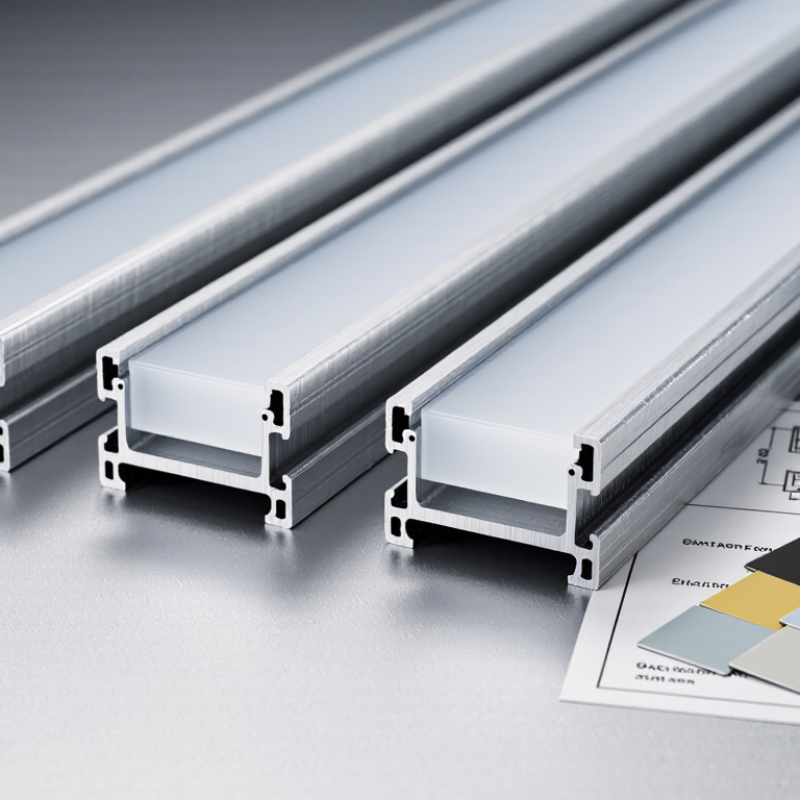
LED aluminum profiles are protective channels designed to house linear LED strips. They usually include an aluminum body, diffuser, end caps, and mounting accessories. The aluminum body helps transfer heat away from the LEDs. This can support longer performance and more stable light output.
Global buyers use these profiles for homes, retail displays, offices, hotels, and outdoor projects. They create cleaner lines than exposed LED strips. A recessed profile can disappear into a ceiling or wall. A surface-mounted version can form a visible lighting feature. Different depths and diffuser materials also affect brightness, glare, and appearance.
Experienced buyers should check more than the profile shape. They should review aluminum thickness, surface treatment, diffuser quality, and installation method. Compatibility with the chosen LED strip matters too. Small size differences can cause fitting problems. We have seen attractive samples fail during installation because the diffuser was too tight. That detail is easy to overlook.
Tips: Request technical drawings and sample pieces before large orders. Test heat control, diffuser fit, and corner connections. Confirm packaging strength for long-distance shipping. Ask for material specifications and quality inspection records. Do not judge quality by weight alone. A heavier profile is not always better. Consider the project environment, maintenance access, and expected lighting effect before selecting a model.
LED aluminum profiles are extruded aluminum channels that protect LED strips, improve heat dissipation, and support diffuser covers for a cleaner, more durable installation. Diffuser finish directly affects light transmission and visual softness, making it an important specification for global buyers.
Typical representative light-transmission values: clear diffusers approximately 90%, frosted diffusers approximately 70%, and opal diffusers approximately 50%. Actual performance varies by diffuser material, thickness, LED density, and product design.
How to Compare Leading LED Aluminum Profile Manufacturers
Comparing LED aluminum profile manufacturers requires more than checking catalog photos. I examine alloy grade, wall thickness, extrusion tolerance, and surface treatment. A precise profile should fit covers, clips, and LED strips without forcing. Small gaps matter. Ask for evidence.
Request samples from different production batches, not only a polished showroom piece. Inspect anodizing under direct light, then check corners for scratches, stains, or uneven color. Experienced suppliers can explain inspection points and acceptable tolerances clearly. Vague answers deserve caution. I once overlooked packaging quality, and several profiles arrived with damaged edges. That mistake changed my supplier checklist.
Thermal performance also deserves practical testing. Ask for heat-dissipation data, LED strip compatibility, and installation guidance for each profile shape. Review drawings showing dimensions, mounting methods, diffuser options, and load limits. Reliable manufacturers usually provide material certificates, inspection records, and traceable batch information. Verify whether testing covers the requirements of your target market. Factory capacity matters, but stable quality matters more than impressive machinery. Compare sample approval procedures, minimum order quantities, lead times, and replacement policies in writing. Communication speed is useful, though clear technical answers are more valuable. A lower quotation can hide thinner walls, inconsistent finishes, or weak protective packaging. Do not assume a familiar profile is automatically suitable for every project. Test it under real lighting conditions.
Top LED aluminum profile manufacturers for global buyers must prove more than attractive catalogs. Material choice affects heat, strength, and finish. Extruded 6063-T5 aluminum remains practical for many linear lighting systems. It offers reliable thermal transfer and accepts anodizing well. Recycled content also matters. The International Aluminium Institute reports that recycling aluminum can save about 95% of the energy used for primary production. However, suppliers should disclose alloy grades and recycled-content percentages. Vague sustainability claims deserve scrutiny.
Design details decide installation quality. A good profile should keep the LED strip firmly against the metal surface. Look for smooth channels, consistent wall thickness, and diffusers that resist yellowing. Deep profiles can improve thermal performance, but they may complicate recessed installation. IP-rated sealing helps in damp areas. Yet, an IP rating does not guarantee long-term outdoor durability. UV exposure, drainage, and fastener corrosion still require testing.
Manufacturing standards provide useful evidence. ISO 9001 supports controlled production, while IEC 60598-1 addresses luminaire safety requirements. IEC 62471 helps evaluate photobiological risks. LED performance claims should reference LM-80 testing and TM-21 projections, not only laboratory marketing sheets. The U.S. Department of Energy reports that LED lighting uses at least 75% less energy than incandescent lighting. That benefit weakens when poor thermal design accelerates lumen depreciation. Ask for extrusion tolerances, coating thickness, thermal test results, and independent inspection records. Some specifications look impressive. They still need field verification.
Top LED Aluminum Profile Manufacturers for Global Buyers
Choosing an LED aluminum profile manufacturer requires more than comparing catalog prices. Experienced suppliers discuss alloy grade, wall thickness, heat dissipation, and installation conditions before quoting. They can adjust profile dimensions, diffuser clarity, surface finish, mounting clips, and LED channel space for a specific project. Small details matter. A two-millimeter change can affect both light output and installation speed.
Reliable manufacturers provide samples, technical drawings, and production tolerances before mass manufacturing. Buyers should request material certificates, photometric data, and test reports for the complete assembly. Certification requirements vary by destination and product design, so responsible suppliers identify applicable standards instead of making broad promises. Documents may include RoHS declarations, CE-related records, or safety reports requested by local authorities. Traceable batch records also help when a shipment includes thousands of meters.
International orders need practical support. Export packaging should protect long profiles from bending, while clear labels simplify warehouse receiving. Suppliers with export experience explain minimum order quantities, lead times, payment terms, and shipping responsibilities in plain language. They should also confirm whether custom tooling is required and who owns the tooling. A prototype may still need revision after a real installation. That is normal. In practice, one diffuser can look excellent in a showroom but appear uneven on a long ceiling. Careful manufacturers welcome this feedback and adjust the design, though improvements may add time or cost. Clear communication prevents most unpleasant surprises.
Choosing among top LED aluminum profile manufacturers requires more than comparing catalog prices. Match the supplier’s extrusion capability to your design, installation method, and target market. Ask for aluminum alloy details, wall-thickness tolerances, anodizing specifications, and diffuser light-transmission data. A reliable manufacturer should provide clear drawings, test records, and consistent samples before mass production.
Check practical performance, not only polished samples. Test a one-meter section with your intended LED strip, connector, and power load. Inspect heat dissipation after several hours. Review cut accuracy, surface finish, corner joints, and packaging strength. For international projects, confirm production capacity, lead times, export documentation, and the standards required in your destination market. Communication matters too. Slow replies may become costly during installation.
Tips: Request two or three samples from different production batches. Compare them under identical lighting. Ask how defects are handled and whether replacement parts are available. Clarify minimum order quantities and payment stages in writing. A lower quote can hide weaker alloy, thinner walls, or expensive tooling. I have seen project plans change after the first installation test; allowing time for revisions is wiser than assuming every drawing is final. Ask difficult questions early.
It is a protective channel for linear LED strips. The aluminum body helps move heat away from the LEDs. A diffuser softens bright points and reduces glare. End caps and mounting clips complete the system.
They suit homes, offices, hotels, retail displays, and outdoor areas. A recessed model can hide inside a ceiling or wall. A surface-mounted model creates a visible lighting line. The setting affects the best profile depth and finish.
A sample reveals fit, brightness, heat, and surface quality. Test a one-meter section with the intended LED strip. Run it for several hours. Then check the temperature and diffuser alignment.
Check alloy information, wall thickness, surface treatment, and diffuser transmission. Confirm the channel fits the selected LED strip. A two-millimeter difference can slow installation. Small mistakes become expensive across thousands of meters.
Request technical drawings, tolerances, samples, and inspection records. Ask for material documents and complete assembly test reports. Compare samples from two or three production batches. A polished sample alone proves very little.
Confirm minimum quantities, lead times, payment stages, and shipping responsibilities. Check export documents and destination-market requirements. Ask whether custom tooling is necessary. Clarify tooling ownership in writing.
Strong packaging should limit bending, scratches, and crushed corners. Clear labels help warehouses receive mixed lengths quickly. Inspect packaging strength before a large shipment. Long cartons need careful handling.
A diffuser may fit too tightly or look uneven on a long ceiling. Corner joints may not align perfectly. A sample can look excellent in a showroom, yet fail onsite. That possibility deserves honest planning.
This guide explains what a Led Aluminum Profile is and why it has become an important solution for global lighting projects. By protecting LED strips, improving heat dissipation, and creating a clean architectural finish, these profiles support applications ranging from residential interiors to commercial and industrial spaces. Global buyers can use this overview to understand key product categories, including recessed, surface-mounted, suspended, corner, and waterproof designs, while identifying the performance features that best match their project requirements.
The article also outlines how to compare leading manufacturers by evaluating aluminum quality, profile dimensions, surface treatments, diffuser performance, production consistency, and quality-control standards. It highlights the importance of customization services, technical support, packaging, certification documentation, and reliable international order management. By reviewing a supplier’s production capabilities, communication, lead times, minimum order policies, and after-sales support, buyers can select a dependable partner that delivers suitable products for their market, installation conditions, and long-term lighting goals.

LvXing