Why Choose T Slot Aluminum Profile for Your Project?

Time:2026-11-05 Author:Sienna
0%

A project frame must do more than hold parts together. It should fit the workspace, support the expected load, and allow practical changes later. A T Slot Aluminum Profile can meet these needs through its grooved design, which accepts compatible fasteners, brackets, and panels. Builders use these profiles for machine guards, workbenches, display frames, and automation equipment. The same basic system can support very different layouts. That flexibility is useful. It can also make a design feel deceptively simple.

Before selecting a profile, consider its dimensions, alloy, wall thickness, connector type, and the forces the frame will face. A light fixture and a moving machine assembly do not need the same support. Check manufacturer load data and connection guidance rather than relying on appearance alone. Measure carefully, too; small errors can complicate assembly. In many builds, profiles can be cut and reconfigured with ordinary workshop tools, but cutting quality and secure joints still matter. The slots may collect dust, and exposed edges may need attention in busy spaces. There is no universal profile for every project. Sometimes, a steel frame or a custom-fabricated part is the better choice. That deserves a second look. This guide examines the practical reasons to choose a T Slot Aluminum Profile, the limits to consider, and the details that help a frame stay useful after the first assembly.
Why Choose T Slot Aluminum Profile for Your Project?

What Defines a T-Slot Aluminum Profile

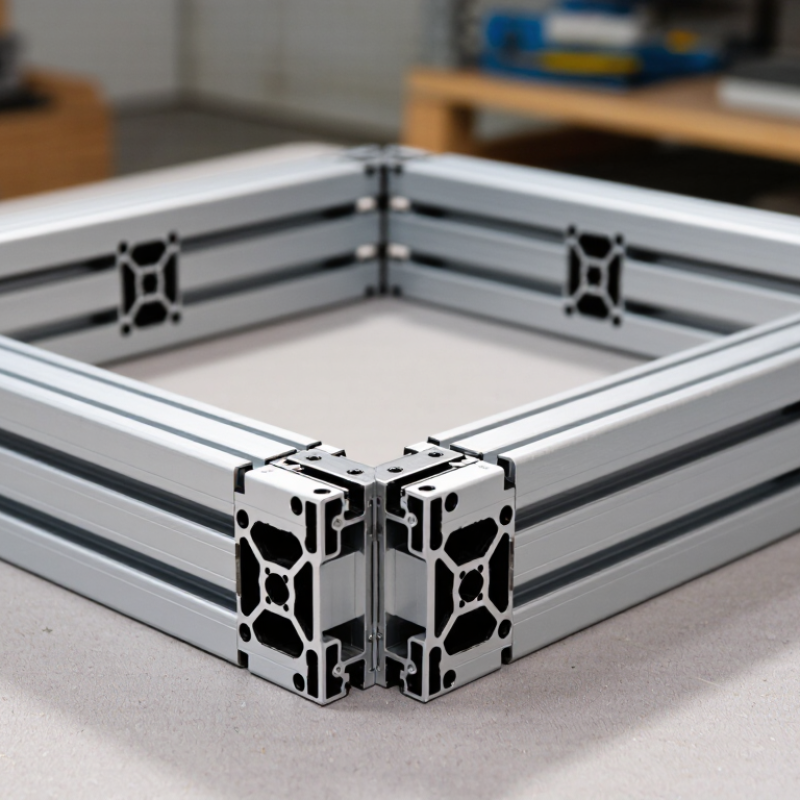
A T-slot aluminum profile is an extruded structural section with long grooves shaped like the letter T. These slots run along the profile, creating attachment points without requiring holes to be drilled through every face. The extrusion’s walls and internal ribs provide stiffness while keeping the section relatively light.

That detail matters.

A compatible T-nut slides into a slot and turns or tightens to hold a bolt in place. This lets builders connect brackets, panels, feet, and other components, then reposition them as a frame changes. For example, a small workbench frame can be assembled with corner brackets and adjusted when a shelf or guard needs to move. Slot widths and profile dimensions vary, so parts that look similar may not fit together.

The profile’s shape defines more than its appearance. It affects how loads travel through a frame, how easily components can be added, and how much room the assembly takes up. Before selecting one, check the slot dimensions, wall thickness, and expected load. A heavier profile is not automatically the right choice; connection details and unsupported spans matter too. It is easy to focus on modularity and overlook rigidity. A test assembly can reveal wobble before the full structure is built.

How T-Slot Profiles Connect and Form Structures

Why Choose T Slot Aluminum Profile for Your Project?
How T-Slot Profiles Connect and Form Structures

A T-slot profile connects through its open channels: slide a T-nut into the slot, align a bracket, then tighten a bolt. The nut’s head bears against the channel lips, while the bracket joins two profiles at a corner or across a span. This creates adjustable joints without drilling every connection point. For a simple workbench, for example, you can shift a crossbar to clear a drawer, then retighten it. Small detail. Keep the profiles square during assembly; a slightly twisted frame can make panels and doors difficult to fit.

The joint’s capacity depends on more than the profile’s alloy. Bolt size, bracket thickness, slot engagement, tightening torque, and load direction all matter. ASTM B221/B221M’s tables list 6063-T5 extrusions with minimum tensile strength of about 160 MPa and yield strength of about 110 MPa for specified product conditions. These material values are not connection ratings. Check the supplier’s profile and fastener data for the actual joint, especially under vibration or repeated loading. I would not assume a snug hand-tightened bolt is enough; and published figures may not reflect your exact frame. One useful habit is to test a representative corner joint before building the full structure.

Why Choose T Slot Aluminum Profile for Your Project? - How T-Slot Profiles Connect and Form Structures

Profile or connection type Typical slot / hardware details How it connects Example structure Selection note
20 × 20 mm profile family Often uses a slot opening around 6 mm; matching fasteners are system-specific and may use M5 threads. A compatible T-nut slides into the slot and is tightened with a bolt, securing a bracket or another profile. Light-duty frames, small guards, instrument mounts, and compact enclosures. Useful where low weight and compact dimensions matter. Check the profile’s load rating and support spacing.
30 × 30 mm profile family Often uses a slot opening around 8 mm; compatible hardware may use M6 threads. An angle bracket can join profiles at 90°. T-nuts and bolts allow the joint to be repositioned before final tightening. Workstations, machine guards, shelving, and medium-duty equipment frames. A versatile size for many modular frames. Bracket thickness and joint layout affect rigidity.
40 × 40 mm profile family Often uses a slot opening around 10 mm; compatible hardware may use M8 threads. Heavy-duty corner brackets, gussets, or internal joining connectors can link the members; additional bracing can reduce frame movement. Larger machine bases, equipment stands, and load-bearing work frames. Choose based on calculated loads, spans, and deflection limits—not profile size alone.
Corner bracket and T-nut Bracket, T-nut, and bolt must match the profile’s slot geometry and thread specification. The T-nut engages inside the slot; a bolt passes through the bracket and tightens into the nut to form an external corner joint. Right-angle frame corners and adjustable cross-members. Easy to assemble and adjust. Use suitable bracing where the structure may rack or twist.
Internal joining connector Connector shape and access-hole requirements depend on the profile system; some joints require machining. A concealed connector pulls two profiles together from inside or through a prepared access point. Clean-looking butt joints, extensions, and frames with limited external clearance. Provides a less visible joint, but may require more preparation and careful alignment.
Joining plate or gusset Plate holes and fasteners must align with the slots and profile faces being joined. A plate spans the joint and is fastened to one or more profile faces; a gusset reinforces a corner against movement. Large rectangular frames, panels, and assemblies requiring extra corner support. Can improve joint stability. Verify fastener engagement and account for the plate when planning clearances.
System compatibility and load planning Slot dimensions, nut shapes, thread sizes, and profile tolerances vary among systems. Confirm that profiles, connectors, and fasteners are designed to work together before assembly. Any modular structure, from a small fixture to a machine frame. The slot-opening and hardware examples above are common conventions, not universal standards. Consult supplier drawings and load data for the selected system.

Benefits of T-Slot Aluminum in Project Design

T-slot aluminum profiles make project design easier to revise. Their grooves accept sliding nuts, brackets, and panels, so a frame can be adjusted without drilling a new pattern. For example, a workbench can gain a monitor arm or tool shelf using the same uprights. That saves time during prototypes, when dimensions often change. No welding required. The open slots also make cable routing and sensor placement more accessible. A single profile can serve several functions, though extra brackets may add cost and weight.

The International Aluminium Institute reports that recycling aluminum uses about 5% of the energy required to produce primary aluminum. That is a roughly 95% energy saving, making material recovery relevant to long-lived project designs. Reusable frames can also be dismantled and adapted instead of discarded when layouts change. Still, modularity is not magic. Slot joints can loosen under vibration, and long spans may need engineering checks for deflection. In practice, confirm load, fastener torque, and environmental exposure before assembly. The profile looks simple; the joint details matter.

Why Choose T-Slot Aluminum Profile for Your Project?

Typical density values show that 6063 aluminum—the alloy commonly used for T-slot profiles—is much lighter than steel for the same volume. This can help reduce frame weight and make assemblies easier to handle. Actual profile weight depends on its dimensions and internal geometry.

Common Applications Across Industries

Why Choose T Slot Aluminum Profile for Your Project?
Common Applications Across Industries

T-slot aluminum profiles appear in factory workstations, machine guards, conveyor frames, and adjustable automation cells. Their slots accept brackets and fasteners, so technicians can reposition sensors or add a shelf without welding. The International Federation of Robotics reported 541,302 industrial robot installations worldwide in 2023, with 4,281,585 robots in operation. These figures describe automation growth, not profile sales, but they help explain demand for adaptable machine structures. Small changes matter.

In packaging and logistics, profiles can support workbenches, picking stations, and lightweight conveyor sections. Laboratories and training facilities use them for equipment stands and modular test rigs. Solar and electronics workshops may use profiles for assembly tables or inspection frames. Fit depends on the load, vibration, environment, and required cleanliness; open slots can collect dust, and lightweight framing is not automatically suitable for heavy loads. That trade-off is easy to overlook.

Tips: Check load tables and connection strength before building. For a clean or damp area, assess slot covers, surface finish, and cleaning access. Leave room for future adjustments, but avoid adding weight without recalculating the frame.

How to Select the Right Profile for Your Project

Choosing a T-slot aluminum profile starts with the job it must do. Estimate the load, the distance between supports, and how often the frame may be adjusted. A light sensor stand needs less stiffness than a long machine guard. For longer spans or heavier loads, check the profile maker’s deflection and load tables rather than relying on appearance. A thicker-looking profile is not always the best fit.

Tips: Measure the slot width before ordering connectors. Check that bolts, brackets, and end fasteners match the profile series. Small details matter. Leave room for tools to reach screws, especially inside corners.

Consider the working environment, too. Dust, moisture, vibration, and frequent cleaning can affect your choice of hardware and finish. Plan cable routes and access points before cutting the rails; adding them later can be awkward. Cut length and squareness also matter, since small errors can make a frame twist during assembly. It is tempting to choose one profile size for every section, but mixed sizes may reduce weight or cost when loads differ. Still, too many sizes complicate assembly and spare-part storage. A simple layout drawing helps reveal those trade-offs before you order.

FAQS

What is a T-slot aluminum profile?

It is an extruded section with long, T-shaped grooves. The grooves provide attachment points along the frame.

How do T-nuts connect parts to a profile?

A T-nut slides into a slot and holds a bolt when tightened. It can secure brackets, panels, or feet. No drilling through every face.

Can a frame be adjusted after assembly?

Yes. Components can often be repositioned along the slots. A workbench might gain a shelf or monitor arm later. Check that the hardware fits.

How should I choose a profile size?

Estimate the load and distance between supports. Check load and deflection tables for longer spans. Appearance alone can be misleading.

Do similar-looking profiles use the same connectors?

Not always. Slot widths and profile dimensions vary. Measure the slot and check the connector series before ordering.

What details can affect frame stability?

Wall thickness, unsupported spans, and joint design all matter. Loose joints may wobble. A small test frame can reveal problems early.

What should I plan before cutting the rails?

Draw the layout and mark cable routes and access points. Leave tool space near screws, especially inside corners. I still find this easy to miss.

Is aluminum recovery useful for long-lived projects?

The article reports that recycling aluminum uses about 5% of the energy needed for primary production. Reusable frames can also be adapted instead of discarded.

Can one profile size work for every section?

It can, but mixed sizes may save weight or cost where loads differ. Too many sizes complicate assembly and spare-part storage. A trade-off, really.

Conclusion

A T Slot Aluminum Profile is an extruded aluminum component with slots along its surface, designed to make building adaptable frames and structures straightforward. Specialized connectors, brackets, and fasteners fit into the slots, allowing profiles to be joined, adjusted, and rearranged without extensive machining. This modular connection system makes it possible to create everything from simple supports to complex enclosures while keeping assembly and future modifications manageable.

For project design, T-slot aluminum offers a useful balance of strength, light weight, durability, and flexibility. It is commonly used for machine frames, workstations, equipment guards, display structures, and automation systems across a range of industries. Choosing the right profile means considering the structure’s load, dimensions, operating environment, connection requirements, and potential for later expansion. Matching these factors to an appropriate profile and compatible components helps create a practical, stable structure that suits the project’s needs.


Sienna

Sienna

Sienna is a skilled marketing professional with a deep expertise in our company’s core products and services. With a passion for innovation and detail, she plays a pivotal role in crafting insightful blog posts that not only highlight the unique features of our offerings but also provide valuable......