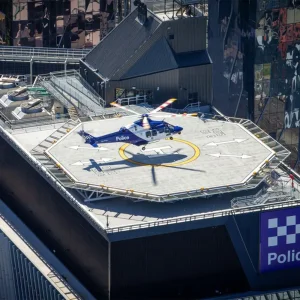
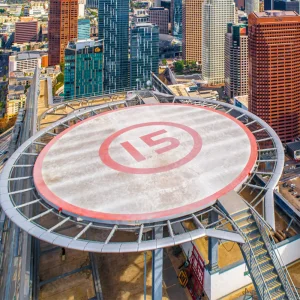
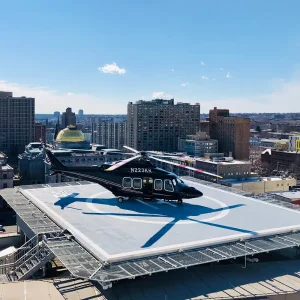
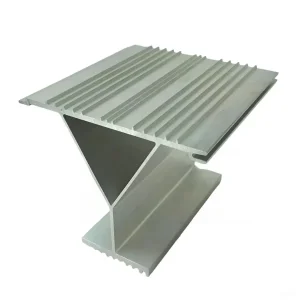
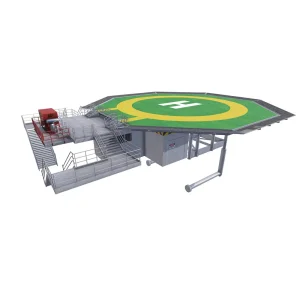
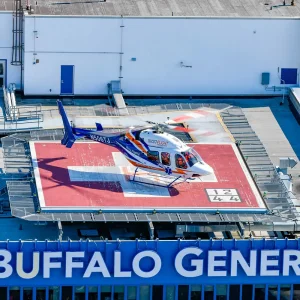
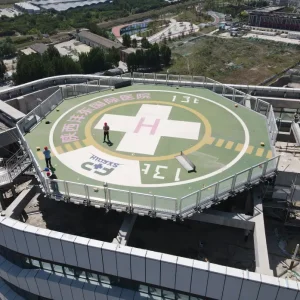
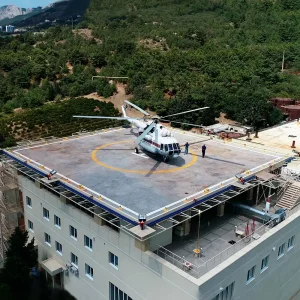
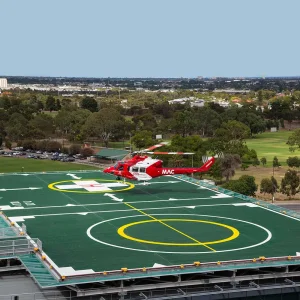
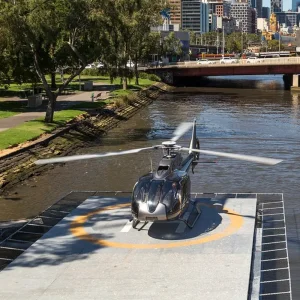
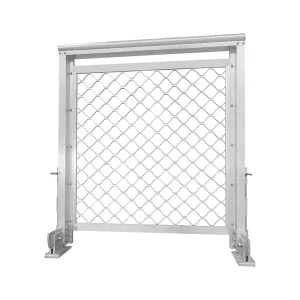
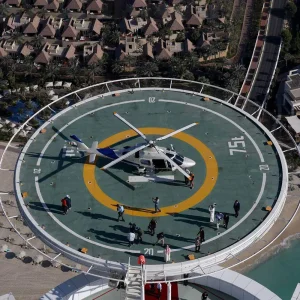
In the demanding sector of aviation infrastructure, a helipad's safety features are not mere decoration; they are life-saving structures designed under strict physical and aerodynamic parameters. The Helipad Perimeter Safety Net (often termed the helideck safety mesh) forms the final line of defense against catastrophic falls for personnel working on elevated landing zones, offshore platforms, hospital rooftops, and military vessels. Global standards, notably set by the International Civil Aviation Organization (ICAO) Annex 14 and the United Kingdom's Civil Aviation Authority CAP 437, demand rigorous drop-testing and corrosion-resistance profiles for these structural perimeter systems.
A primary concern for structural engineers and EPC contractors is sourcing safety net frames and infills that can withstand the severe dynamic impact of a falling person or cargo (typically tested using a 100 kg mass dropped from a height of 1 meter to verify kinetic energy absorption of at least 2.3 kJ), while simultaneously resisting the corrosive environments of offshore salt sprays and high-altitude weather dynamics. Here, aluminum alloy extrusions (specifically marine-grade 6xxx series alloys) have replaced heavy steel variants due to their remarkable strength-to-weight ratio, structural frangibility compliance, and natural corrosion resistance.
Established in 2015 and located in the industrial heart of Foshan City, Guangdong, LvXing Intelligent Equipment Co., Ltd. has grown to become a benchmark supplier of bespoke structural aluminum systems. Boasting a highly skilled R&D team with over 15 years of deep industry expertise, we specialize in converting conceptual layouts into high-tolerance, functional aluminum extrusions that meet strict aerospace and industrial regulations.
We partner with Fenglu Aluminum—a global leader in premium raw aluminum materials—to source exceptional billets. This ensures that every perimeter net frame we manufacture possesses uniform grain structures, high mechanical properties, and predictable yield strengths under load.
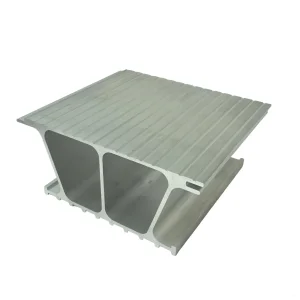
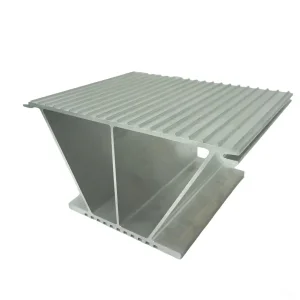
Our state-of-the-art facility features a range of extrusion lines spanning from 800T to 20,000T. This immense pressing capacity allows us to manipulate alloys across the 1xxx, 2xxx, 3xxx, 5xxx, 6xxx, and 7xxx series, giving us the capability to fabricate profiles measuring up to 1.2 meters in section width and 28 meters in continuous length.
With press capacities ranging from 800T to 20,000T, we achieve unmatched structural density in our custom profiles. This ensures optimal grain alignment, critical for absorbing shear forces during impact on a helideck edge.
Utilizing specific tempers like 6061-T6, 6082-T6, and high-strength 7xxx series alloys, we engineer components tailored to endure high-load wind currents, mechanical impacts, and high salt concentrations.
We can manufacture large-format structural frames up to 1.2m in width and 28m in length. This limits the number of assembly weld joints, which are typical structural weak points in high-vibration maritime environments.
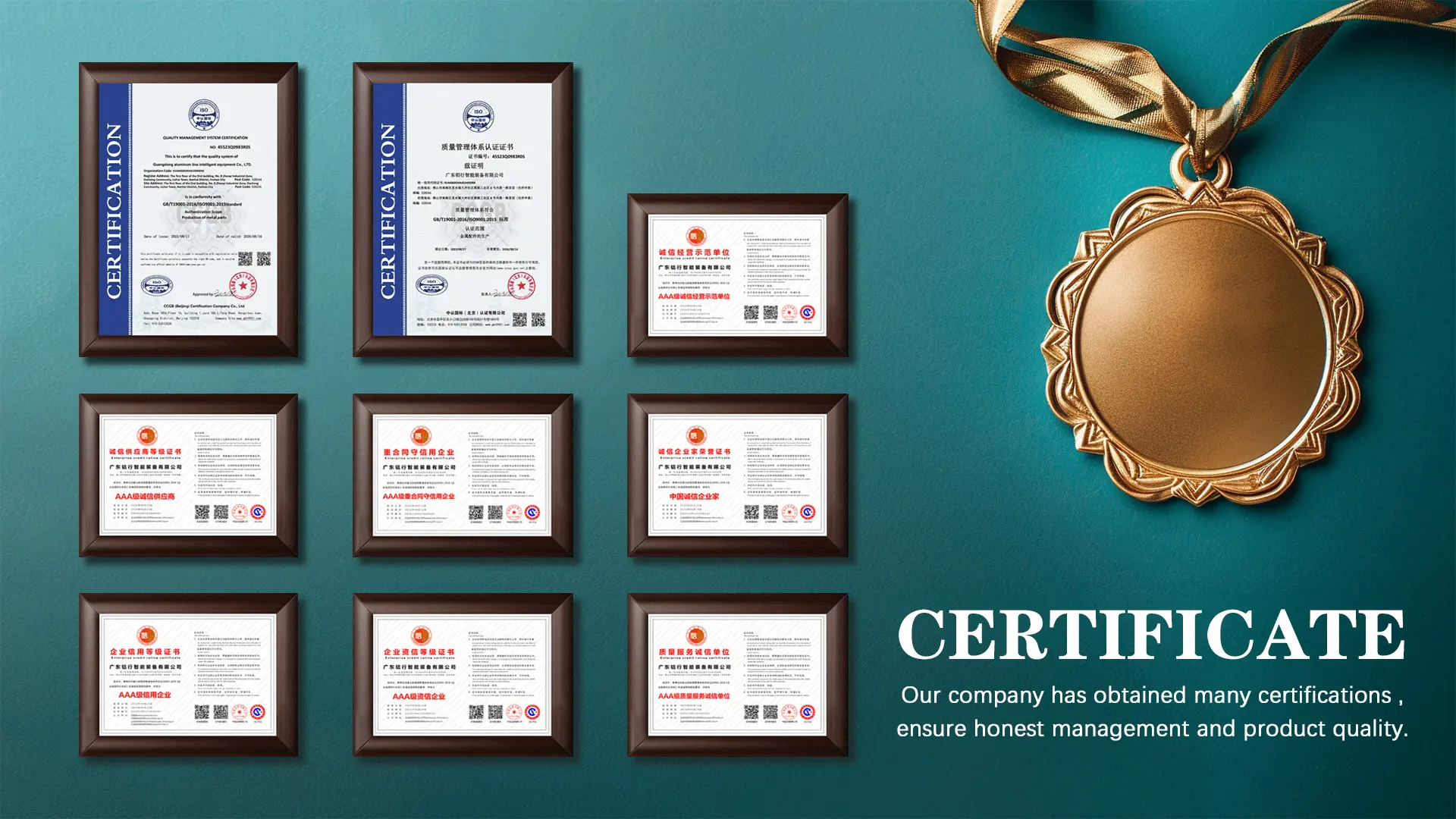
To ensure we remain at the cutting edge of global supply chains, our factory is fully certified under the GB/T19001-2016/ISO9001:2015 quality system. Additionally, our specialized processing techniques have earned us the coveted “Special Aluminium Materials for Aerospace” Certificate, solidifying our reputation as a trusted partner for military, aerospace, and high-altitude emergency infrastructure projects.
We are among the few regional manufacturers in China that have obtained the “Special Aluminium Materials for Aerospace” Certificate. This ensures that the grain structure, chemical configuration, and yield limits of our profiles comply with the requirements of civil aviation and marine helideck operations. Under ISO 9001:2015 protocols, every batch of profiles is systematically traced, ensuring consistent and reproducible mechanical performance.
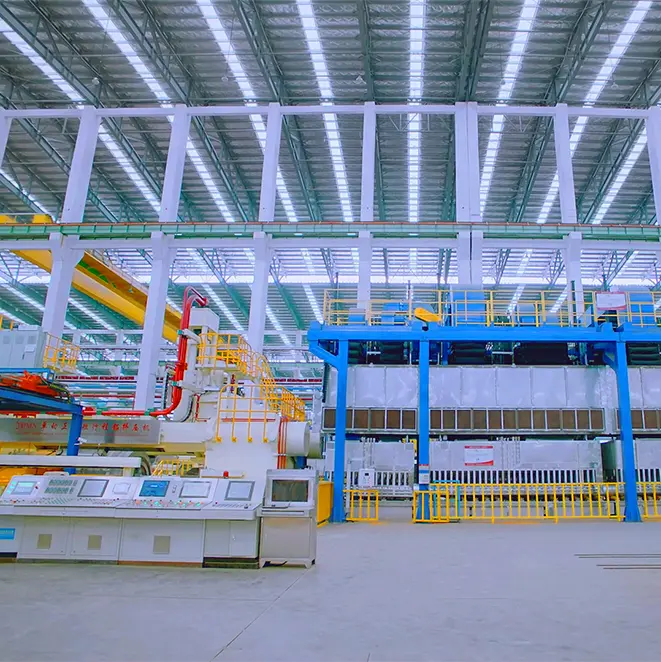

We utilize premium Fenglu aluminum profiles. With extrusion lines ranging from 800T to 20,000T, we can produce alloys in the 1xxx, 2xxx, 3xxx, 5xxx, 6xxx, and 7xxx series. This allows us to manufacture fully shaped products with section dimensions up to 1.2 meters in width or 28 meters in length, providing unparalleled structural integrity across large expanses.
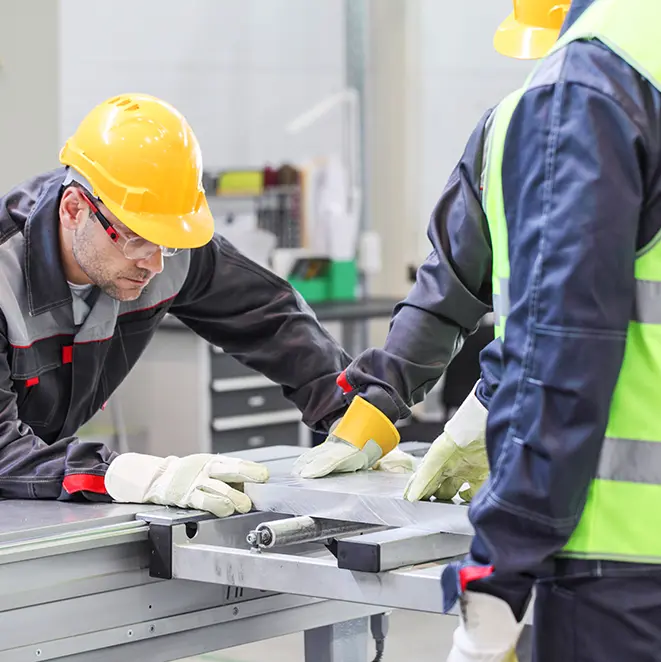

Our engineering staff has 15 years of experience in aluminum profile design and structural calculation. When architects present complex heliport projects (e.g., custom curved perimeters, hospital rooftop integration), our engineering team anticipates challenges like wind loads, shear stress, galvanic corrosion, and deck run-off routing to deliver a system optimized for long-term safety and performance.
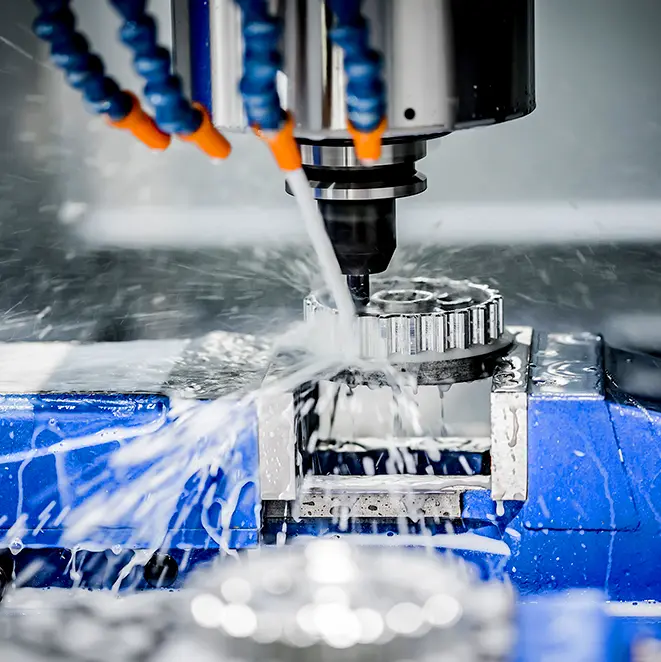

Procurement departments of multinational oil and gas enterprises, EPC firms, and defense contractors face complex choices when sourcing helideck perimeter safety nets. Key search queries focus on finding CE Certified Helipad Safety Net Manufacturers who can offer detailed test documentation verifying adherence to ICAO and CAP 437 standards.
Lvxing bridges the gap between cost efficiency and technical compliance. Traditional suppliers in Europe and North America often carry high premiums, which can squeeze budgets on multi-million dollar offshore or hospital projects. By leveraging the advanced industrial base of Foshan and sourcing billets directly from Fenglu, Lvxing offers competitive pricing alongside rigorous compliance testing, trace certifications, and Finite Element Analysis (FEA) reports.
Offshore wind substations and petroleum drilling rigs demand systems that can withstand high winds, saltwater exposure, and severe vibrations. Our custom marine-grade aluminum perimeter systems prevent degradation from corrosion while keeping weight to a minimum.
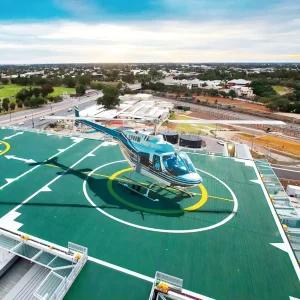
Rooftop emergency helipads require lightweight structural solutions that do not exceed the building's load-bearing limits. Lvxing designs slim-profile, high-strength aluminum net systems that integrate cleanly with emergency escape ramps and structural expansion joints.
Modern skyscrapers feature emergency and executive helipads that must satisfy local building codes alongside civil aviation standards. We provide aesthetically clean and structurally sound perimeter profiles that blend with the architectural design of high-end commercial properties.
Each scenario presents unique installation constraints. Hospital pads often require manual fold-down mechanisms for maintenance access, whereas offshore helidecks typically specify fixed, high-tension safety nets to withstand persistent gale-force winds. Lvxing works directly with design offices to customize extrusion profiles, mounting brackets, and mesh attachment mechanisms to fit these specific needs.
As UAVs (Unmanned Aerial Vehicles), eVTOL (electric Vertical Takeoff and Landing) aircraft, and urban air mobility networks expand, landing deck safety requirements are evolving rapidly. Future heliports will face diverse operational stresses, prompting a transition toward "smart" safety systems.
Lvxing's Technical Development Focus:
Delivering structural systems internationally requires deep familiarity with global logistics and localized standards. Lvxing offers end-to-end export support, managing packaging, custom sea freight crates, and local customs documentation to ensure smooth delivery.
Our engineering team provides comprehensive mechanical CAD blueprints and structural calculation notes. These documents can be integrated directly into our clients' submittals to local authorities (such as the FAA in the US, EASA in Europe, or regional Civil Aviation Authorities). Additionally, we provide localized installation manuals, clear step-by-step videos, and remote engineering consultations to support local contractors during installation and commissioning.
 LvXing