CE Certification Customized Helicopter Landing Pad Nets Supplier & Pricelist

Providing Globally Certified Aluminium Perimeter Safety Systems for Critical Offshore, Rooftop, & Industrial Heliports

20,000T
Max Extrusion Press
15+
Years Technical Expertise
1.2m
Max Section Width
100%
CE & ISO 9001 Compliant

1. Executive Summary: Helicopter Perimeter Safety Ecosystem

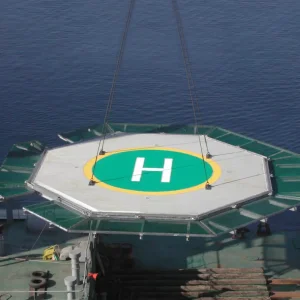
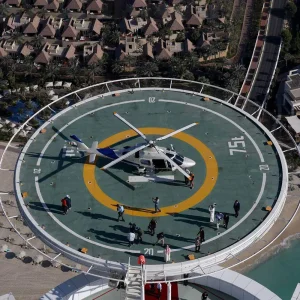
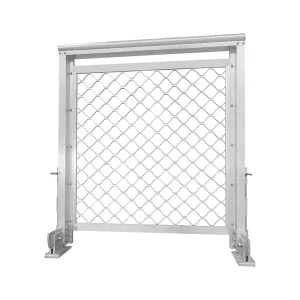
In the rapidly changing landscape of municipal aviation, maritime commerce, and search-and-rescue services, helideck operations demand the most rigorous physical safeguards available. The CE Certified Helicopter Landing Pad Net—frequently categorized as a perimeter safety mesh—serves as the primary barrier preventing personnel, cargo, and equipment from falling off elevated takeoff and landing platforms. Because these systems are deployed in incredibly harsh environments such as offshore drilling platforms, container ships, military cruisers, and skyscraper rooftops, their structural reliability must be absolute.

This whitepaper addresses the design paradigms, material composition, international regulatory compliances, and pricing methodologies governing custom-engineered aluminum helipad nets. Engineered by Lvxing Intelligent Equipment Co., Ltd. using high-strength aluminum alloys (ranging from the versatile 6xxx to the ultra-tough 7xxx series), our safety solutions are designed to deliver long-term corrosion resistance, lightweight structural support, and energy absorption capabilities that exceed international aviation safety requirements.

Material Performance & Metallurgy

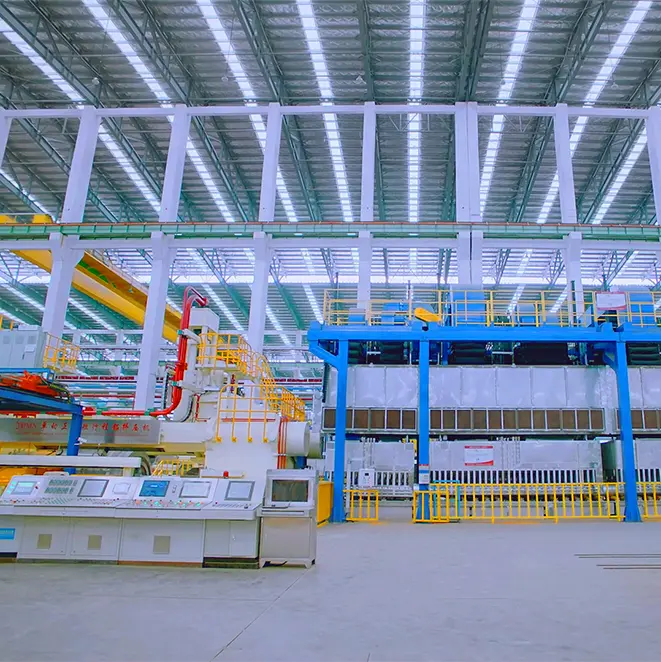
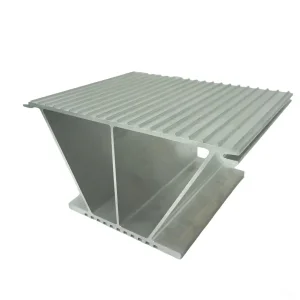
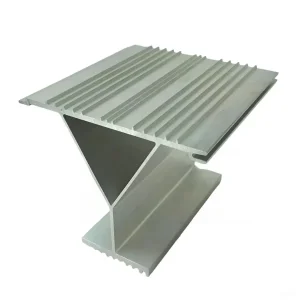
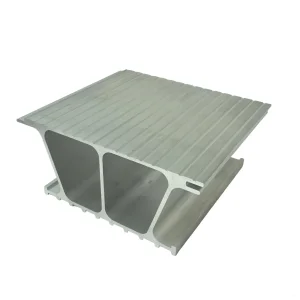
The foundation of our helicopter landing pad safety nets lies in utilizing premium raw material feeds, specifically Fenglu aluminum. Lvxing operates with advanced extrusion setups starting from 800 Tons and extending up to an industrial-scale 20,000 Tons press. This extrusion capacity enables the manufacturing of profiles with cross-sectional widths reaching 1.2 meters and single-run lengths of up to 28 meters.

By shifting away from traditional, heavy stainless steel nets to marine-grade aluminum alloys, engineers can achieve up to a 60% reduction in system weight. This reduction minimizes the structural load on cantilevered deck structures while offering outstanding corrosion resistance against salt spray, atmospheric oxidation, and chemical exposure.

Advanced Energy Dissipation Systems

Helideck perimeter safety nets are not merely physical barriers; they are dynamic energy dissipation systems. In the event of a personnel fall or equipment slide, the safety net must absorb kinetic energy without producing a trampoline bounce-back effect that could push the object or individual back into the path of rotating helicopter blades.

Our custom aluminum mesh is engineered to yield predictably under dynamic loads. Combined with high-grade continuous geared hinges (like our LX-H02 and LX-H04 series), the outer support framework rotates outward during high-force impacts, safely containing the falling mass within the safety perimeter.

Comparative Matrix: Material Systems for Helipad Safety

Performance Metrics Lvxing Marine-Grade Aluminum Net (6xxx/7xxx) Standard AISI 316 Stainless Steel Net Synthetic Fiber/Nylon Safety Webbing
Weight Class (kg/m²) Ultra-light (approx. 1.8 - 2.5 kg) Heavy (approx. 4.5 - 6.0 kg) Ultra-light (approx. 0.8 - 1.2 kg)
Corrosion Lifetime 30+ Years (Anodized & Passivated) 15-20 Years (Subject to Crevice Corrosion) 3-5 Years (Severe UV Degradation)
Drop Test Performance Excellent (Elongates and deforms predictably) Good (Rigid, high rebound factor) Variable (Fibers decay, high risk of sudden rupture)
Maintenance Overhead Minimal (Periodic visual inspections only) Moderate (Rust treatment required) High (Frequent replacement needed due to weathering)
Regulatory Approvals CE Compliant, CAP 437, ICAO Annex 14 Varies by manufacturer Rarely meets CAP 437 long-term test protocols

Welcome to Lvxing

LVXING, SPECIALIZES IN ALUMINUM SOLUTIONS.

Established in 2015 and located in Foshan City, Guangdong, LvXing Intelligent Equipment Co., Ltd. boasts a skilled R&D team with extensive experience. We leverage exceptional technical expertise to effectively transform customers' ideas into reality, consistently meeting their precise requirements.

We utilize premium Fenglu aluminum, offering a diverse range of profiles for flexible applications. Our extrusion lines, ranging from 800T to 20,000T, accommodate alloys 1xxx, 2xxx, 3xxx, 5xxx, 6xxx, and 7xxx, allowing us to produce shaped products with section dimensions up to 1.2 meters in width and 28 meters in length. These products are recognized for their precision and meticulous processing, finding broad application in aerospace, military, medical, and industrial sectors.
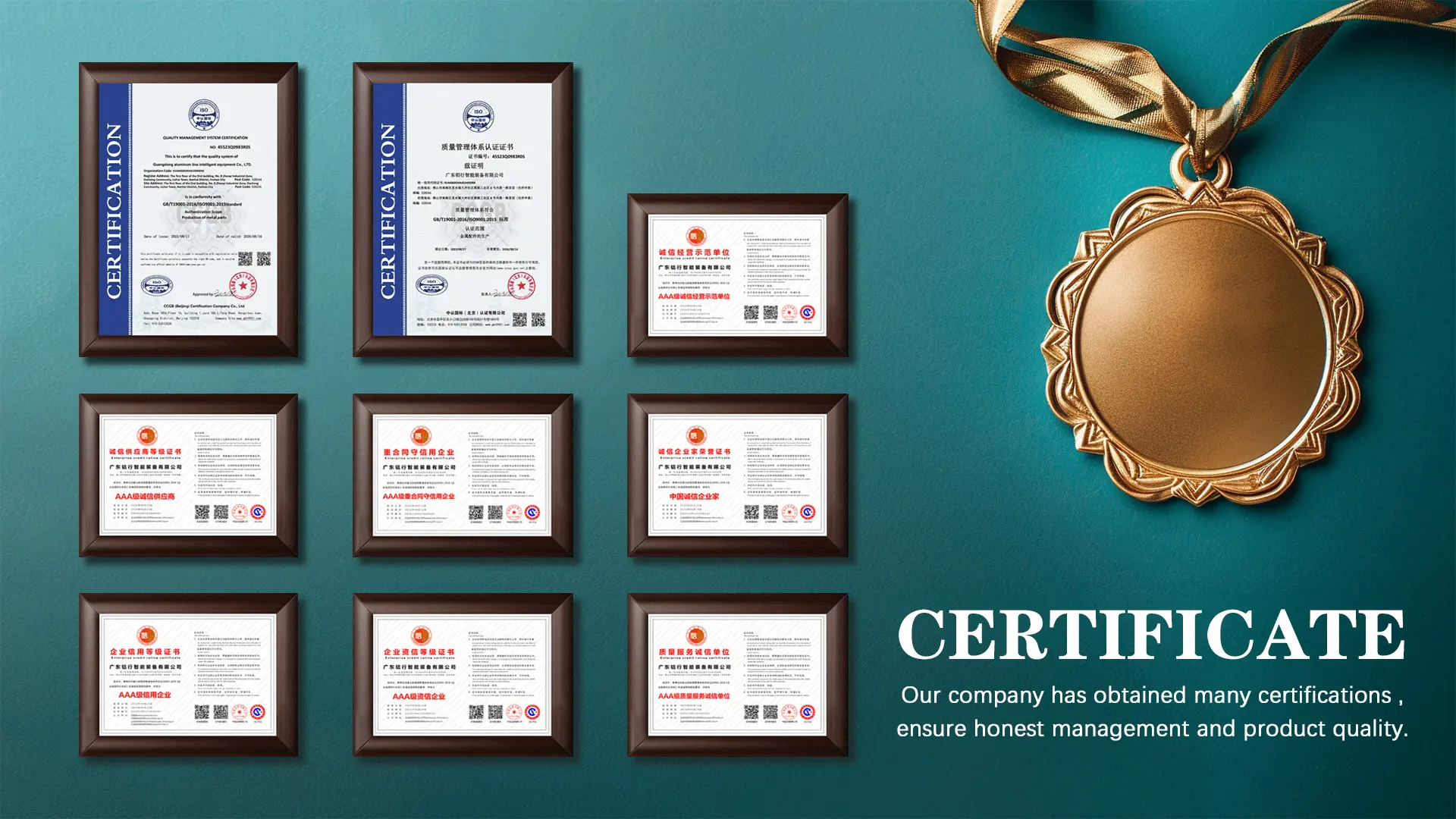
Our commitment to excellence is evident throughout the manufacturing process, rigorous quality control, thorough packaging, and efficient shipping procedures. This dedication has earned us recognition as a national excellent and honest enterprise, along with quality system certification in accordance with GB/T19001-2016/ISO9001:2015 standards.

We aspire to be your trusted business partner and warmly invite you to visit our factory.

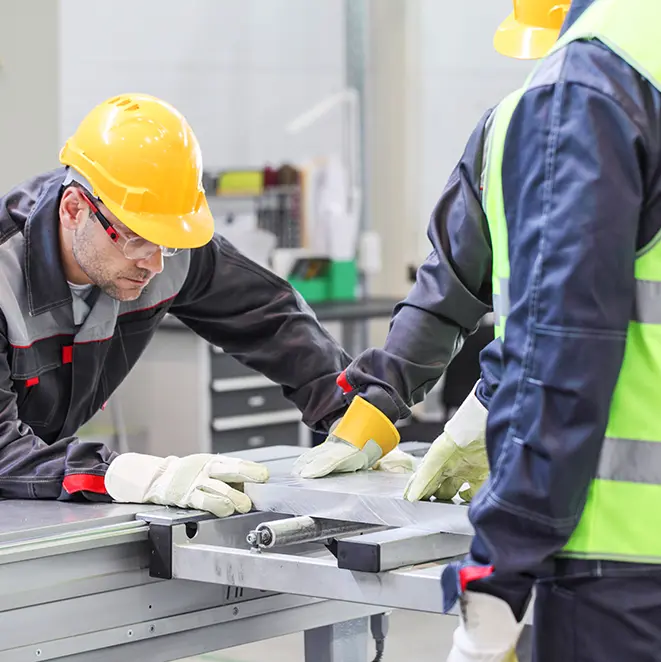
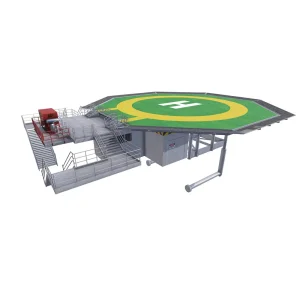
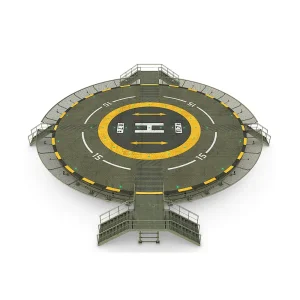
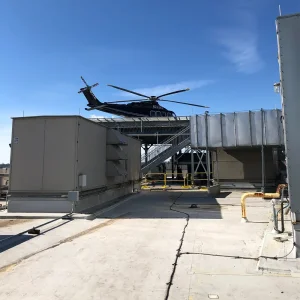
Lvxing Corporate and Helipad Assembly Show

Our Competitive Edge

Why aerospace, marine, and commercial developers choose Lvxing's aluminum extrusions and structural engineering services.

Special Aluminium Materials for Aerospace
Aerospace Certification Icon

We have obtained the “Special Aluminium Materials for Aerospace” Certificate.

Advanced Extrusion Capabilities
Production Power Icon

We provide and utilize high-quality Fenglu aluminum profiles. With extrusion lines ranging from 800T to 20,000T, we can produce alloys 1xxx, 2xxx, 3xxx, 5xxx, 6xxx, and 7xxx. We can manufacture fully shaped products with section dimensions up to 1.2 meters in width or 28 meters in length.

R&D Engineering Team
15 Years Experience Icon

We have a team of technicians with 15 years of invaluable experience. Our deep understanding of customer requirements allows us to identify potential issues and offer practical insights, turning customer ideas into tangible products that meet specific needs.

2. Global Regulatory Landscapes & Compliance Standards

Meeting stringent aviation requirements including ICAO Annex 14, CAP 437, and CE EN standards.

CAP 437 (UK CAA)

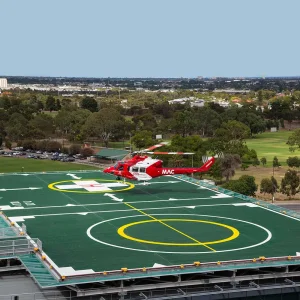
Recognized as the global standard for offshore helicopter landing areas, CAP 437 dictates that perimeter safety nets must be constructed of materials that are virtually impervious to harsh marine conditions. The net must extend at least 1.5 meters outward from the edge of the helideck, display a slight upward slope, and withstand drop-test criteria without structural failure.

ICAO Annex 14

The International Civil Aviation Organization (ICAO) specifies standard configurations for rooftop and elevated heliports. Specifically, safety nets must be designed to withstand a drop of a 100 kg test mass from a height of 1.0 meter, simulating a worker falling over the landing deck perimeter. The net mesh must not snap or suffer permanent structural failure during this test.

CE Marking & EN Standards

CE certification ensures that the structural aluminum profiles, mesh panels, and connecting hardware (such as geared hinges) comply with European health, safety, and environmental protection standards. This certification is critical for any public or private development within the EEA, confirming that all components meet EN 1999 (Eurocode 9: Design of Aluminium Structures).

3. Macro Industry Solutions & Localized Applications

Customized helicopter landing pad safety systems engineered for specific high-risk, high-reward applications.

Offshore Energy Platforms (Oil, Gas & Wind)

Offshore environments are characterized by constant exposure to saltwater, high winds, and extreme temperatures. Traditional steel systems suffer from accelerated pitting and crevice corrosion, leading to costly maintenance shutdowns.

Lvxing's custom marine-grade aluminum mesh assemblies provide a maintenance-free solution. Pre-assembled frame sections are designed for rapid bolt-on installation to the existing helideck structure. This eliminates the need for hot-work permits or welding on-site, which is crucial for operating gas platforms.

Commercial Rooftop & EMS Heliports

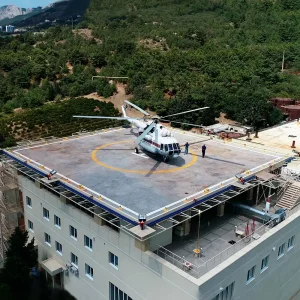
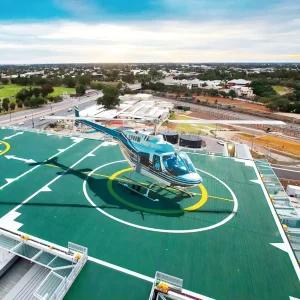
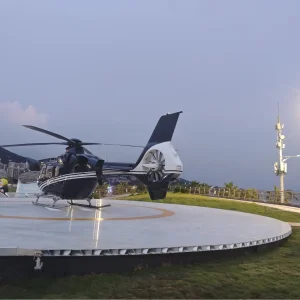
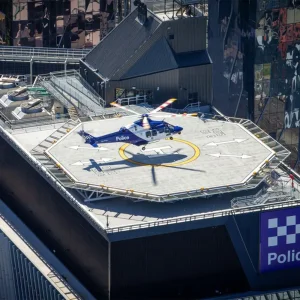
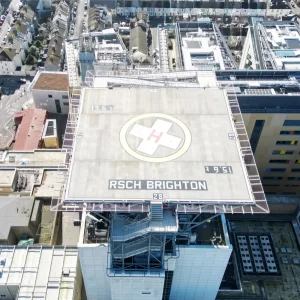
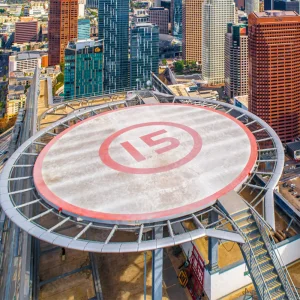
Rooftop heliports on skyscrapers and municipal hospitals face strict structural weight limits. The overall weight of the helipad deck, lighting systems, fire suppressors, and safety nets must be kept to a minimum to comply with building safety codes.

Our custom aluminum profiles optimize structural weight, helping developers meet strict engineering load requirements. Additionally, our non-reflective anodized finishes prevent glare from building windows and helipad searchlights, ensuring pilots maintain optimal visibility during night approaches.

Custom Engineering & Technical Specs

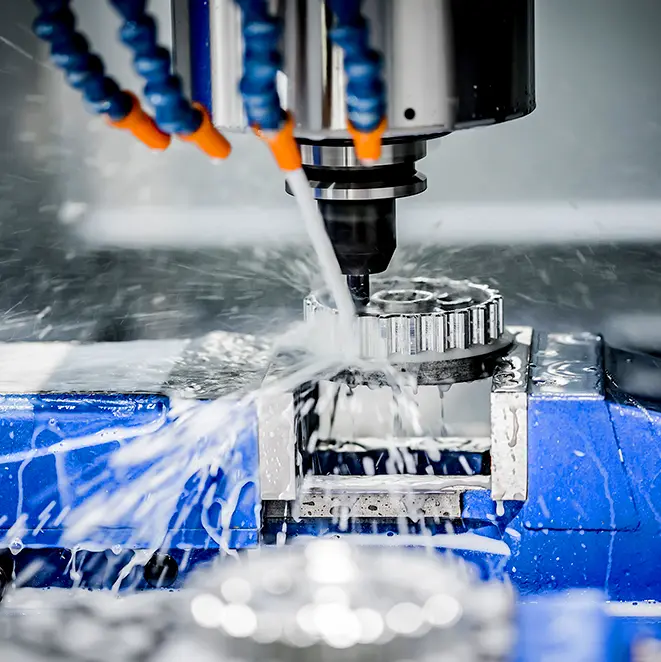
Lvxing operates a state-of-the-art manufacturing facility equipped with large CNC machining centers, automated welding bays, and specialized surface treatment lines. We customize every landing net to meet the client's specifications. This includes adjusting the mesh opening dimensions, specifying the load rating (up to 200 kg dynamic point load), and selecting the optimal finish, such as standard marine-grade anodizing or durable thermosetting polyester powder coating.

Our continuous geared hinge systems, including the customized LX-H02 and LX-H04, ensure the perimeter frames can be folded down or tilted outward for regular maintenance, cleaning, or emergency deck clearance.

4. Customized Heliport Net Pricelist & Procurement Blueprint

Factors influencing global project costs and budget estimates for customized aluminum netting systems.

Determining the cost of customized helicopter safety nets involves several structural and material variables. Because every landing platform operates under different regulatory and geographic constraints, Lvxing provides tailored pricing structures based on specific performance criteria:

System Type & Profile Specification Material Alloy & Surface Coating Regulatory Standard Certification Estimated Base Price Range (USD/m)
Standard Static Net System (LX-HP01) Al6063-T6 / Silver Anodized GB/T19001-2016 Compliant $180 - $240 per linear meter
Enhanced Tension Net System (LX-HP04) Al6005A-T6 / Hard Anodized (20µm) CE Certified / ICAO Annex 14 compliant $250 - $350 per linear meter
Heavy-Duty Folding Net System (LX-H02 Geared Hinge) Al6082-T6 / Marine Grade Polyurethane Coating CE / CAP 437 / ABS Type Approval $380 - $550 per linear meter
Extreme Load Military / Naval Deck System Al7075-T651 / Dual-layered Chrome-free conversion CE / MIL-DTL / Lloyd’s Register Certified Custom Quote Required (Project specific)

Key Factors Driving Net Project Costs:

  • Alloy Surcharges: Market fluctuations in aluminum ingot pricing, particularly for specialized alloys containing magnesium, silicon, and zinc (6082, 7075).
  • Surface Treatments: Standard clear anodizing is cost-effective, while custom PVDF coatings or hard anodization (for maximum abrasion resistance) add to the baseline cost.
  • Structural Testing Requirements: Projects requiring certified dynamic third-party drop testing (witnessed by agencies like DNV, ABS, or Lloyd's Register) require custom setup fees.
  • Custom Hinging Mechanics: Integrating continuous geared hinges (such as our LX-H02 and LX-H04 series) to enable folding or collapsible capabilities adds to the cost but significantly reduces long-term maintenance overhead.

5. Future Technological Roadmap & Innovation

Where helideck safety is going: Smart systems, drone compliance, and eco-friendly aluminum.

IoT Integrated Smart Tension Sensors

As part of our research and development, we are designing smart aluminum netting systems with embedded fiber-optic or piezoelectric sensors. These sensors monitor structural tension in real-time, sending immediate alerts to building or vessel management systems if an impact occurs or if environmental stresses compromise structural integrity.

eVTOL & Drone Port Safety Nets

The rise of Urban Air Mobility (UAM) and cargo drone networks requires specialized landing infrastructure. eVTOL ports call for smaller, highly rigid safety nets designed to prevent light cargo and small components from falling into busy urban streets below. Lvxing is actively designing low-profile micro-mesh systems tailored for these applications.

Sustainable Green Aluminum Production

Reducing environmental impact is a core focus for modern engineering. By sourcing primary aluminum processed via low-carbon hydropower smelting and designing all mesh assemblies to be 100% recyclable, Lvxing helps global clients meet their sustainability goals while maintaining exceptional material performance.

Frequently Asked Questions (Heliport Safety Nets)

Clear, technical answers to common questions about helicopter landing pad perimeter systems.

What is the standard life expectancy of an anodized aluminum landing net?
When treated with a marine-grade hard anodized finish (20-25 microns thick), a structural aluminum net (6005A-T6 or 6082-T6) has an operational lifespan exceeding 30 years in standard maritime environments. This performance far outlasts traditional stainless steel systems, which are vulnerable to localized crevice corrosion and pitting.
How do Lvxing's nets meet CAP 437 dynamic drop test regulations?
Our safety nets are engineered and manufactured in compliance with CAP 437 protocols. They are structurally rated to absorb a dynamic drop impact of a 100 kg weight released from a height of 1 meter without structural failure. This safety margins ensure personnel fall energy is fully dissipated within the net frame structure.
Can you provide customized profiles using our existing engineering drawings?
Yes. With an in-house engineering and R&D team with over 15 years of industry experience, we specialize in converting CAD and BIM designs into finished aluminum extrusions. Our production lines, which scale up to 20,000 Tons, can extrude profiles to your exact geometries and structural load requirements.
What is the standard lead time for global shipments of customized helipad nets?
Lead times depend on the size of the project and customization requirements. Standard profiles can be manufactured and processed for surface coating within 3 to 4 weeks. Highly customized configurations requiring new extrusion dies and third-party certifications typically ship in 6 to 8 weeks.