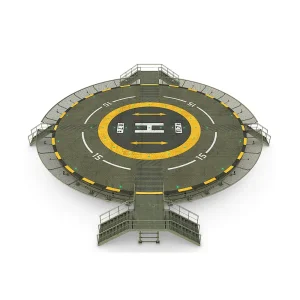
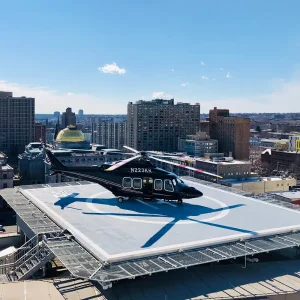
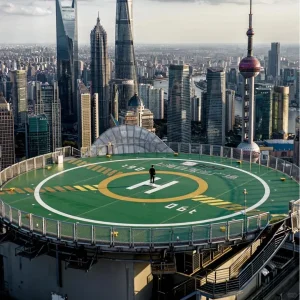
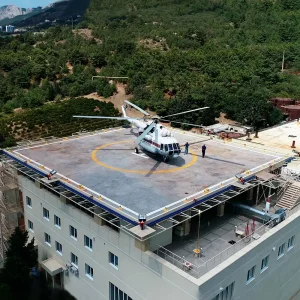
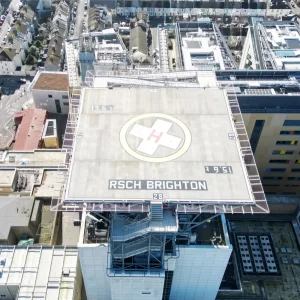
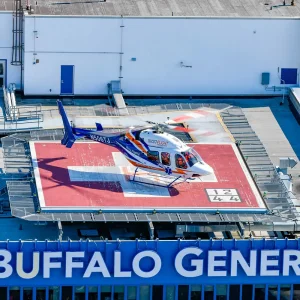
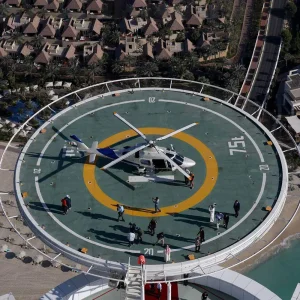
Explore our industrial aluminum alloy profiles and certified perimeter safety mesh engineered to meet extreme environmental and load-bearing parameters.
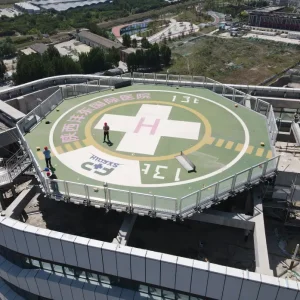
In modern aviation architecture and offshore structure design, the helipad perimeter safety net is a critical life safety asset rather than a simple barrier. Designed to catch personnel in the event of an accidental fall or slide during take-offs and landings, these safety nets are subject to strict regulatory framework guidelines globally. Crucially, regulations like CAP 437 (Standards for Offshore Helicopter Landing Areas) issued by the UK Civil Aviation Authority, alongside Federal Aviation Administration (FAA) advisory circulars, set the structural and dynamic load expectations for safety nets operating under marine and extreme rooftop conditions.
According to CAP 437, helideck perimeter safety nets must possess specific flexible yielding capacities to absorb kinetic energy without producing a trampoline effect, which could throw a casualty back onto the landing deck or into the sea. The system must project outward and upward (typically 1.5 meters horizontally, inclined upward at about 10 degrees) to intercept falling bodies. The material selections—specifically 316 marine-grade stainless steel or customized high-tensile structural aluminum alloys—must be highly resilient to saline atmospheres, industrial carbon soot, acid rain, and UV degradation.
Deploying safety systems that strictly match regulatory criteria: dynamic impact load resistance, energy absorption curves, and structural frame geometry that ensures maximum protection without interfering with helicopter rotor blades or thermal imagery equipment.
Leveraging high-tensile 6000-series alloy structural components combined with stainless steel mesh elements. Our material composition delivers unparalleled strength-to-weight ratios to prevent excessive deck loads.
Established in 2015 and strategically located in Foshan City, Guangdong Province, LvXing Intelligent Equipment Co., Ltd. has established itself as an industry-leading manufacturer of high-precision aluminum structures and helipad safety systems. Driven by a highly experienced R&D department, we translate sophisticated client drawings and architectural concepts into precise, field-ready structural modules that perform under extreme conditions.
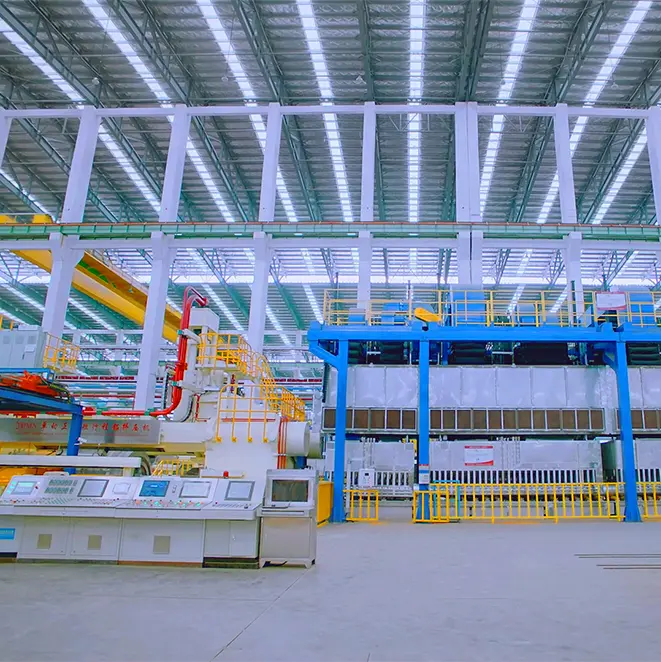
Our core metallurgical capability relies on the exclusive utilization of premium Fenglu Aluminum. Fenglu is renowned for its chemical purity, precise crystalline structure, and consistent tensile strength. We operate state-of-the-art extrusion production lines ranging in capacity from 800T to 20,000T. This expansive tooling capacity allows us to manufacture complex profiles across a vast range of alloys, including the 1xxx, 2xxx, 3xxx, 5xxx, 6xxx, and 7xxx series. Our facility can output fully integrated, custom-shaped products measuring up to 1.2 meters in section width and 28 meters in length. This structural capacity minimizes joints and connections in the field, reducing structural vulnerability points on offshore helidecks and skyscraper rooftops.
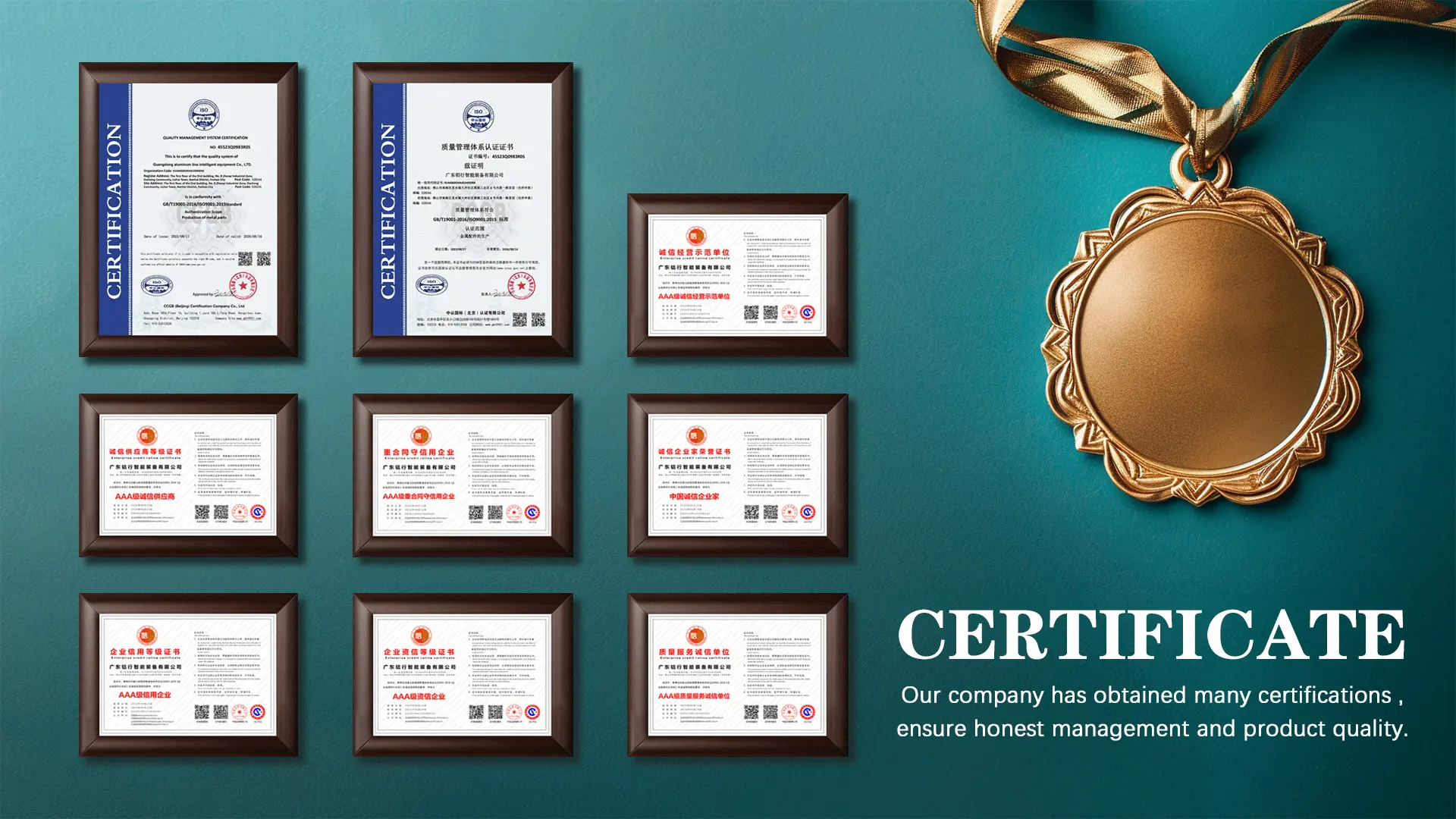
LvXing Intelligent Equipment is dedicated to total quality management, certified under the rigorous GB/T19001-2016 / ISO9001:2015 international quality system standards. Reflecting our elite material handling and engineering reliability, we hold the prestigious "Special Aluminium Materials for Aerospace" Certificate. This ensures that every helipad perimeter safety net and extrusion profile leaving our factory meets the demanding standards of space-grade safety, durability, and stress tolerance.

We have obtained the “Special Aluminium Materials for Aerospace” Certificate.
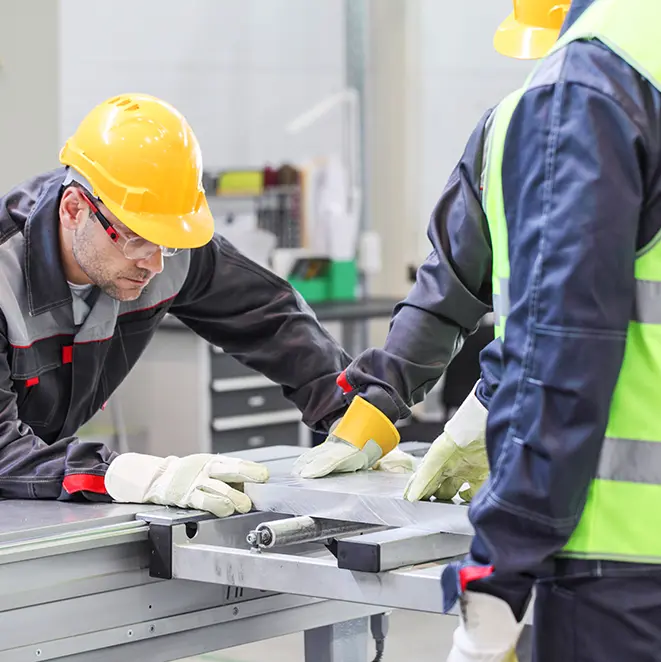

We provide and utilize high-quality Fenglu aluminum profiles. With extrusion lines ranging from 800T to 20,000T, we can produce alloys 1xxx, 2xxx, 3xxx, 5xxx, 6xxx, and 7xxx. We can manufacture fully shaped products with section dimensions up to 1.2 meters in width or 28 meters in length.
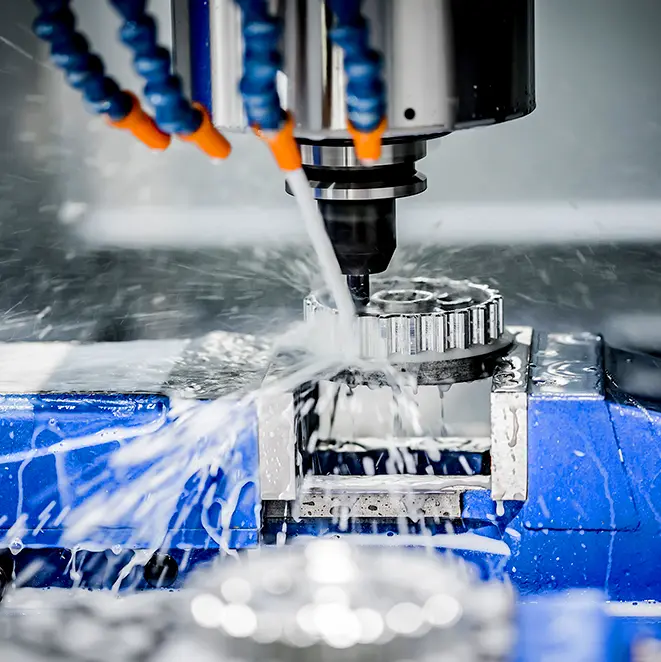

We have a team of technicians with 15 years of invaluable experience. Our deep understanding of customer requirements allows us to identify potential issues and offer practical insights, turning customer ideas into tangible products that meet specific needs.
In the global procurement landscape, purchasing managers look for manufacturers that can merge speed, cost-effectiveness, and international quality standards. China’s industrial ecosystem—specifically Foshan City, the world’s leading hub for aluminum processing—provides a massive competitive edge for global civil engineering and maritime projects. By sourcing from a specialized Chinese factory like LvXing, procurement departments benefit from integration across the entire manufacturing cycle: from raw bauxite refining, alloy development, and large-scale structural extrusion, to precision CNC machining and automated surface treatment.
Access to premier domestic supply chains, such as Fenglu Aluminum, guarantees consistent mechanical properties. Chemical compositions (silicon, magnesium, manganese ratios) are strictly controlled to prevent pitting and stress corrosion cracking in aggressive maritime settings.
Operating a 20,000T extrusion line allows us to press profiles with extreme cross-sections. This is a capability very few factories worldwide can replicate. It significantly reduces the necessity of welding and structural splicing, which are weak links under mechanical load.
Our industrial production facilities can run continuous extrusion cycles to deliver large infrastructure orders in fractions of the time required by Western fabricators, maintaining strict ISO-compliant inspection protocols at every step.
Additionally, local custom fabrication capabilities mean that safety nets can be built specifically to match the structural architecture of individual projects. Whether working on retrofitting projects for older offshore oil drilling platforms or constructing architectural landmarks in metropolitan business centers, our design team adapts frame styles, mesh dimensions, tension configurations, and connection plates to deliver simple, drop-in on-site installations.
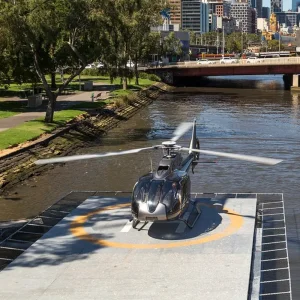
Helipad perimeter safety nets are deployed in complex, high-risk environments. Depending on the installation location, safety systems must withstand varying challenges, from high wind loads to intense structural vibrations. Below is an overview of how our structural solutions adapt to different environments:
In deep-sea environments, salt-spray corrosion is an ongoing issue. Our offshore solutions pair 316-grade stainless steel wire mesh with marine-grade 6082-T6 extruded aluminum framing profiles. This configuration resists galvanic corrosion and high ocean winds, keeping the safety system structurally sound for years without requiring intensive maintenance.
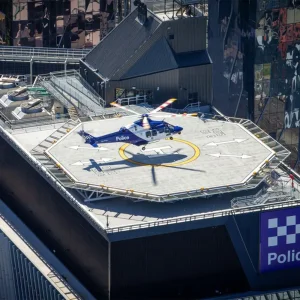
Metropolitan skyscrapers and police station buildings must prioritize thermal performance, wind load ratings, and building load limits. Our light, strong custom-extruded aluminum frames provide robust safety containment without overloading the building's edge supports.
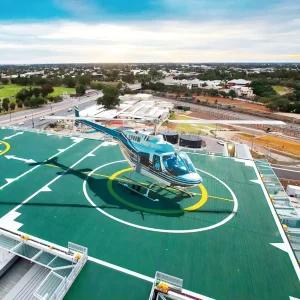
EMS helipads require rapid access and reliable safety containment. Our modular, lightweight panels are engineered for fast installation and manual servicing, ensuring zero interference with life-saving transport operations while keeping staff safe.
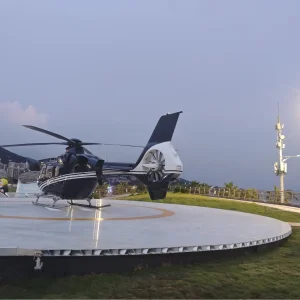
Naval operations demand heavy-duty components capable of resisting helicopter exhaust heat, structural vibrations, and intense impact scenarios. Our "Special Aluminium Materials for Aerospace" certification proves that our products deliver the necessary structural security.
Purchasing a helipad safety net system is an investment in long-term safety and asset protection. To ensure complete alignment with project needs, engineering teams and global procurement offices should evaluate suppliers against these key technical and quality standards:
1. Verifiable Dynamic Load Testing: Confirm the manufacturer can show certified test reports detailing drop tests. For example, a 100kg sandbag dropped from a height of 2.4 meters should confirm the system can absorb at least 2.3 kilojoules (kJ) of kinetic energy without structural failure.
2. Structural Grade Alloys: Ensure the extrusion profiles utilize structural alloys with clear performance tracking. For instance, AL6063-T6 or AL6082-T6 alloys provide the required tensile strength and yield performance for structural frames.
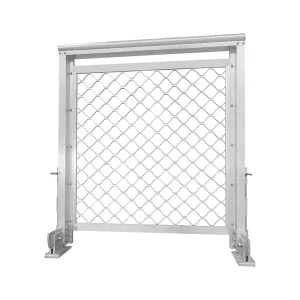
3. Low Maintenance Mesh Systems: Look for mesh systems made of high-quality stainless steel wire rope or marine-grade aluminum wire mesh. These materials must be highly resistant to corrosion and keep their tension over time without sagging.
4. Design Modular Integration: Modular designs allow safety nets to be pre-assembled into lightweight panel frames at the factory. This simplifies the final installation process on-site, minimizing crane operating hours and lowering labor costs.
Find technical answers about standards compliance, material selection, installation steps, and customization options for helideck safety nets.
The primary global standards are UK CAA CAP 437, ICAO Annex 14 Volume II, and FAA Advisory Circulars. These guidelines outline the width (minimum 1.5m projection), dynamic impact capability (withstanding a minimum drop force equivalent to 2.3 kJ), inclination angle (10 degrees upward), and non-trampoline profile requirements for perimeter safety systems.
High-grade aluminum extrusion alloys (like 6000 series) deliver an excellent strength-to-weight ratio. This reduces the deadweight load on cantilevers and building structures. Aluminum is also highly resistant to atmospheric and marine corrosion, lowering maintenance and painting costs over its lifetime.
Our quality process starts with premium Fenglu aluminum billets. We run manufacturing under GB/T19001-2016 / ISO9001:2015 standards, utilizing large extrusion press lines (up to 20,000T) for structural uniformity. Additionally, we hold an Aerospace Materials Certificate, ensuring that our products meet the highest safety and stress tolerances.
Yes. Our engineering division creates custom mount brackets and frame modules to attach to existing steel or concrete deck beams. This makes it straightforward to update older helipads to match current CAP 437 safety regulations with minimal structural changes on-site.
With our extrusion lines ranging up to 20,000T, we can extrude individual structural profiles up to 1.2 meters in width and 28 meters in length. We fabricate frames, mesh patterns, tension parameters, and finish coatings (anodized, powder-coated, or polished) to match your custom specifications.
Complete your project sourcing with our certified all-aluminum helipads, custom-engineered profiles, and safety mesh assemblies designed for international safety standards.
 LvXing