Explore our high-performance architectural and marine structural components engineered for extreme structural stability and long-term security.
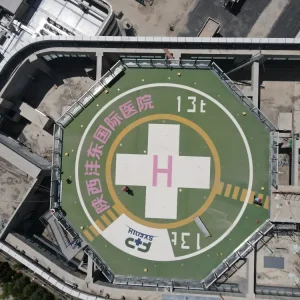
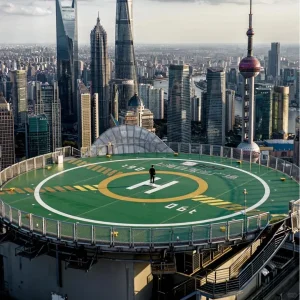
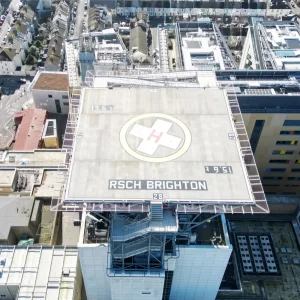
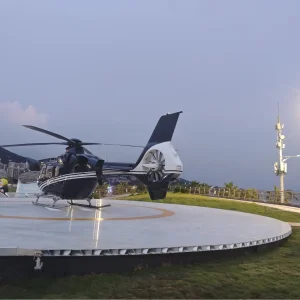
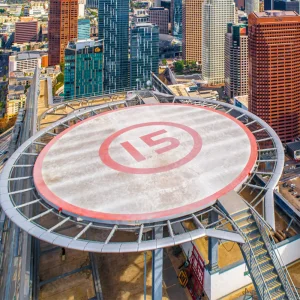
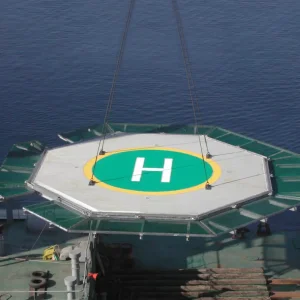
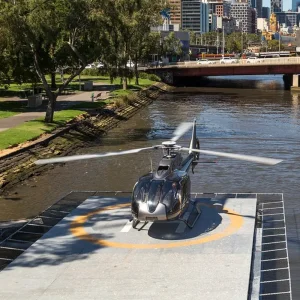
Established in 2015 and located in Foshan City, Guangdong, LvXing Intelligent Equipment Co., Ltd. boasts a highly skilled R&D team with extensive experience in structural engineering. We leverage exceptional technical expertise to effectively transform customers' blueprints and designs into structural reality, consistently meeting precise parameters required for critical high-altitude landing installations.
We utilize premium Fenglu aluminum, offering a diverse range of high-performance profiles for flexible applications. Our heavy industrial extrusion lines, ranging from 800T to 20,000T, accommodate high-strength alloys across 1xxx, 2xxx, 3xxx, 5xxx, 6xxx, and 7xxx series. This allows us to produce complex shaped profiles with section dimensions reaching up to 1.2 meters in width and 28 meters in length.
"Our technical team holds over 15 years of design experience. This deep engineering base allows us to perform aerodynamic simulations, structural load calculations, and corrosion resistance configurations for skyscraper helipads."
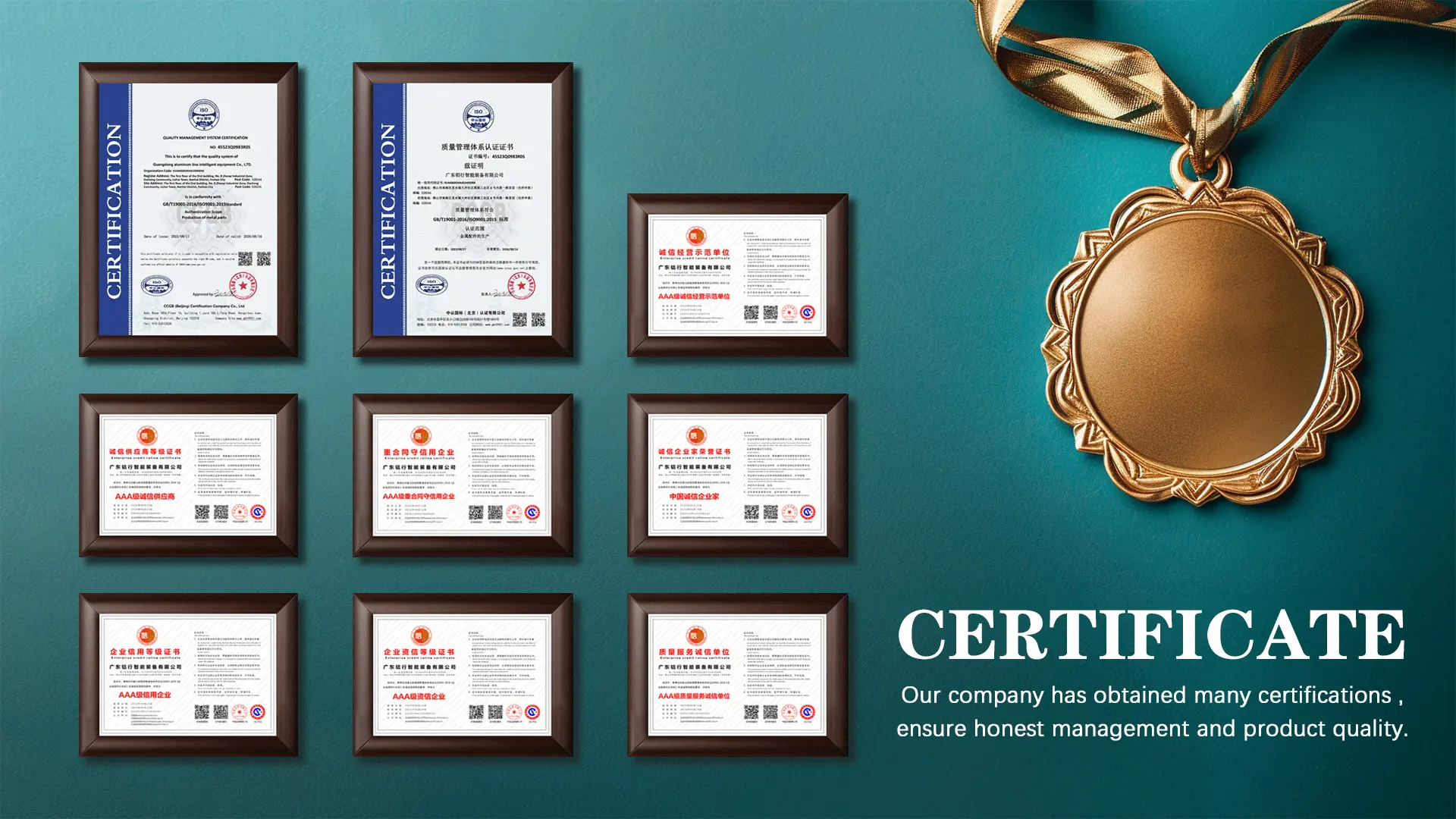
Combining heavy industry production lines, premium materials, and professional certifications to guarantee failure-proof perimeter safety barriers.
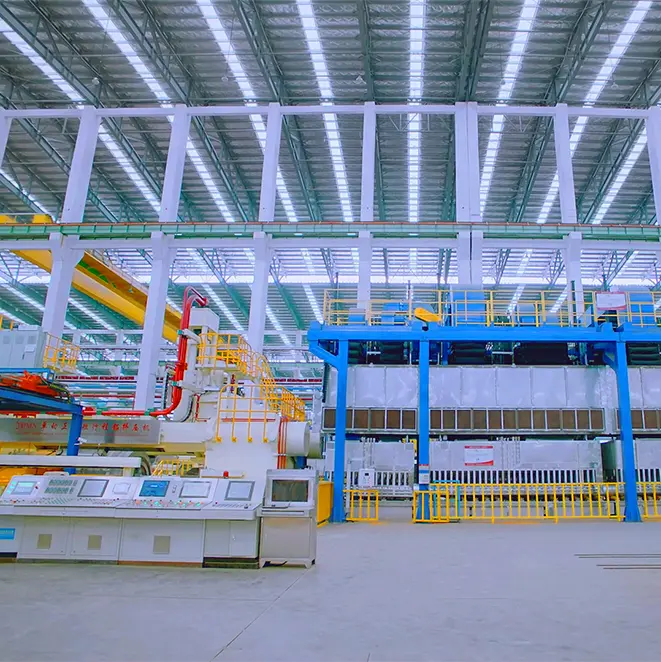
We have proudly obtained the “Special Aluminium Materials for Aerospace” Certificate. This ensures that every extrusion profile and safety mesh element meets stringent metallurgical consistency requirements necessary for high-impact rescue pads.
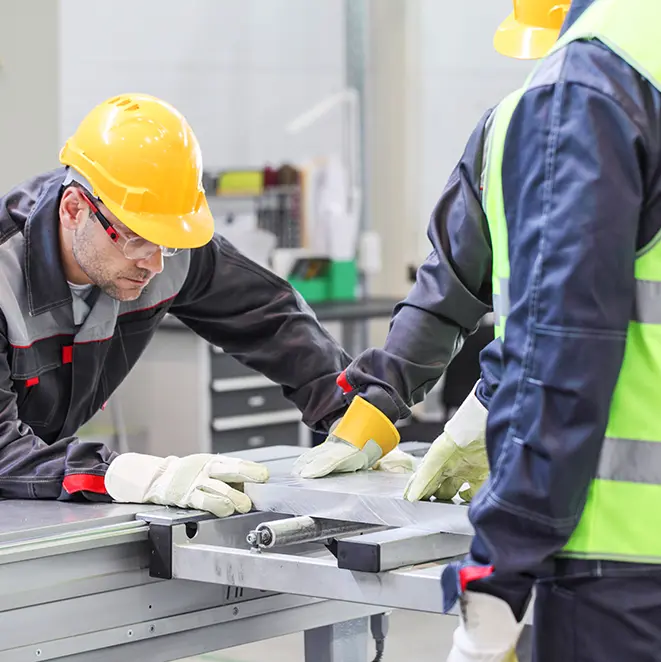
Utilizing premier Fenglu aluminum profiles. With extrusion lines scale from 800T up to 20,000T, we accommodate alloys 1xxx, 2xxx, 3xxx, 5xxx, 6xxx, and 7xxx. We produce single-piece sections up to 1.2m wide or 28m long for continuous, weld-free structures.
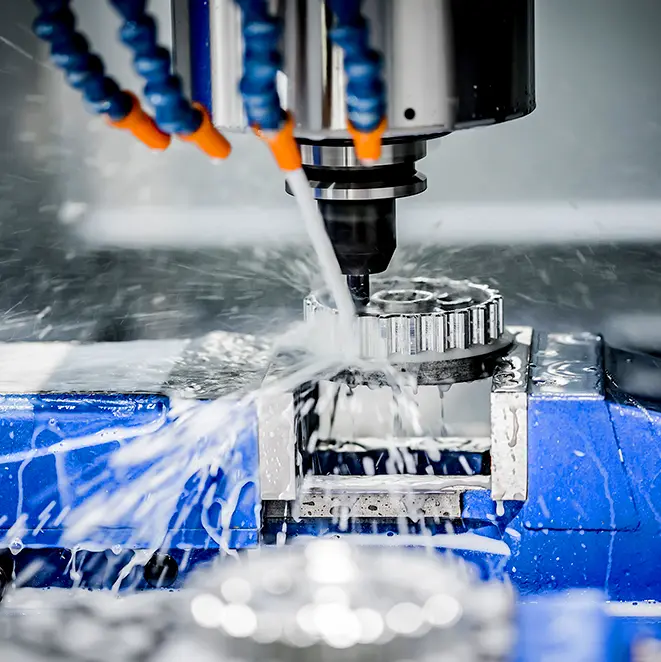
Our dedicated structural technician team brings 15 years of invaluable experience. Deep domain knowledge enables us to preemptively spot high-altitude structural problems, optimize wind drainage, and transform CAD models into compliant, rugged systems.
Our structures and deck nets are verified by national and international testing bureaus, meeting certifications across multiple structural safety codes.

Aerospace Quality Standard
Compliance certification for dynamic impact tolerance in structural elements.

Alloy Material Profiles
Full traceabiliy on Fenglu 6061-T6 and 6082-T6 marine/architectural grades.

15-Year Field Service
Turnkey advisory from conceptual planning to final FAA/CAP 437 inspections.
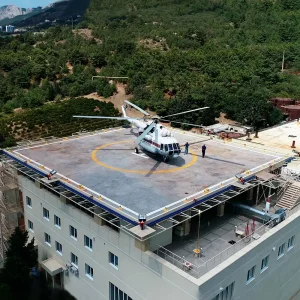
As modern urban environments scale vertically, rooftop helipads (elevated helidecks) have transitioned from luxury assets to critical municipal infrastructure. They provide vital routes for emergency medical services (EMS), search and rescue (SAR) missions, executive transport, and disaster evacuation operations. However, high-altitude landing environments are subjected to severe aerodynamic disruptions, micro-burst wind shear, extreme thermal gradients, and intense structural vibration.
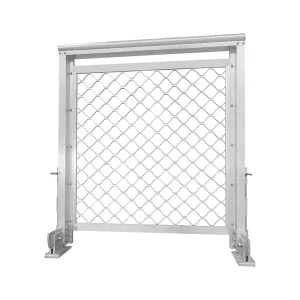
A primary element of rooftop helipad safety is the perimeter safety net (often designated as helideck safety mesh). Under guidelines established by the International Civil Aviation Organization (ICAO), United Kingdom Civil Aviation Authority (CAP 437), and the Federal Aviation Administration (FAA), rooftop helipads must feature an outward-sloping safety net system to catch personnel, equipment, or debris in the event of an accidental fall over the helideck edge.
EPC (Engineering, Procurement, and Construction) companies and architectural engineers sourcing safety nets globally must align with several high-performance variables:
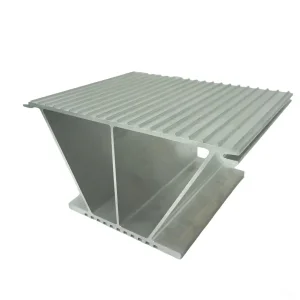
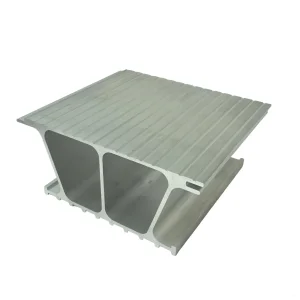
Modern rooftop helipads rely on the optimization of both the deck structure (extruded aluminum profiles) and the catch nets. Standard configurations require a framework of aluminum profiles that act as the structural base, onto which the stainless-steel mesh is tensioned.
Alloy Class Selection: LvXing uses 6082-T6 and 6061-T6 alloys for helipad structural frames. These heat-treated alloys possess a high yield strength of up to 260 MPa, combined with exceptional ductility. They exhibit high mechanical toughness, preventing fractures even during landing shock loading or heavy wind deflection.
| Property / Material Spec | Alloy 6061-T6 (Frame) | Alloy 6082-T6 (Structure) | AISI 316 Stainless Steel (Net Mesh) |
|---|---|---|---|
| Yield Strength (MPa) | ≥ 240 | ≥ 260 | ≥ 290 |
| Tensile Strength (MPa) | ≥ 260 | ≥ 310 | ≥ 580 |
| Corrosion Resistance Rating | High (Marine Rated) | Excellent (Industrial Rated) | Maximum (Chloride Resistant) |
| Anodizing Coating Depth | ≥ 15μm | ≥ 20μm | Electropolished finish |
| Acoustic / Vibration Dampening | Good | Excellent | Elastic Mesh absorption |
Rooftop installations cannot be designed as isolated components. They must interface directly with the building's core column structure. The integrated solution combines:
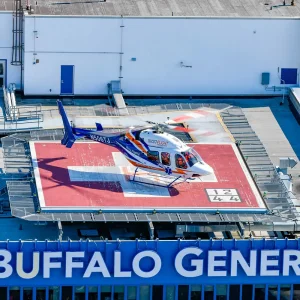
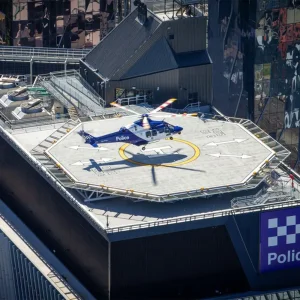
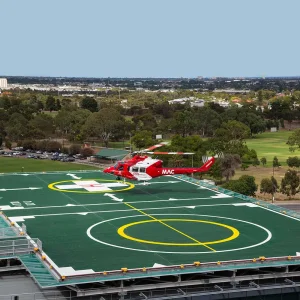
Our engineering division designs safety solutions tailored for specific industrial and commercial requirements across diverse geographical environments.
Engineered for instant deployment. Our systems minimize building vibration, allowing emergency operations to proceed on lower floors without acoustic or physical disruption from landing helicopters.
Tackling high-altitude wind shear. Our perimeter nets are designed with aerodynamic apertures, preventing high-speed winds from generating structural instability at tower peaks.
Anti-corrosive, salt-water-resistant safety nets that survive harsh open-ocean spray. Optimized for ships and drilling rigs with continuous swell movement and chemical exposure.
Sourcing helideck perimeter nets from China requires absolute certainty in standard compliance. Many builders face compliance delays due to incorrect load ratings, bad weld joints, or raw materials that cannot pass independent third-party checks. LvXing bypasses these roadblocks by adhering strictly to global frameworks.
We provide global delivery supported by local implementation. By offering detailed CAD drawings, Finite Element Analysis (FEA) reports, and localized installation kits (pre-assembled frames, stainless steel fasteners, and custom tensioning tools), we make on-site assembly fast and simple. Our engineering team provides direct support to local structural teams to ensure smooth sign-off from civil aviation and municipal fire rescue authorities.
Get professional answers to technical questions commonly raised by structural engineers and procurement specialists.
Explore our premium structural product range, engineered to meet the demands of safety-critical architectural and industrial applications.
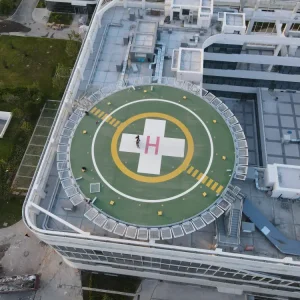
Connect with our engineering team for dynamic load calculations, material grade consultation, and project-specific quotations.
Contact Our Engineering Experts LvXing