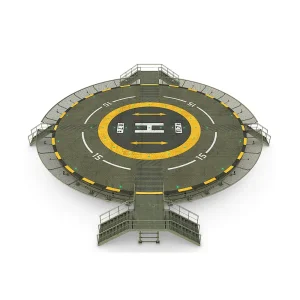
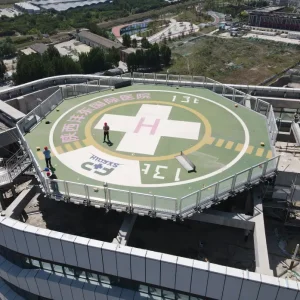
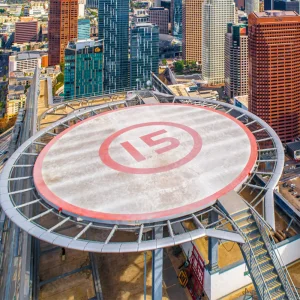
Explore our premium product line, fully customizable to global architectural and aviation safety standards.
Established in 2015 and located in Foshan City, Guangdong, LvXing Intelligent Equipment Co., Ltd. boasts a skilled R&D team with extensive experience. We leverage exceptional technical expertise to effectively transform customers' ideas into reality, consistently meeting their precise requirements.
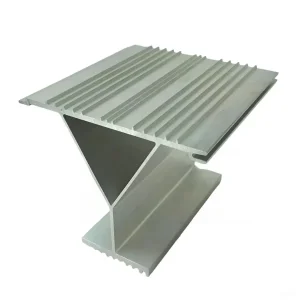
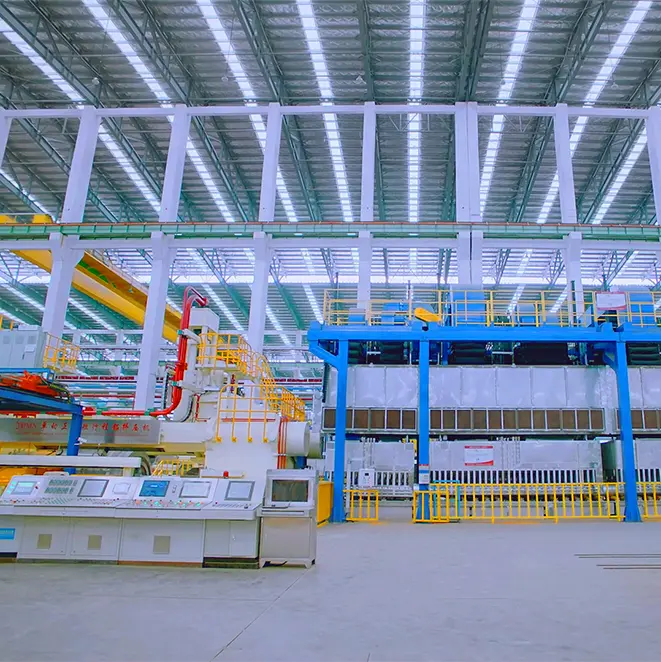
We utilize premium Fenglu aluminum, offering a diverse range of profiles for flexible applications. Our extrusion lines, ranging from 800T to 20,000T, accommodate alloys 1xxx, 2xxx, 3xxx, 5xxx, 6xxx, and 7xxx, allowing us to produce shaped products with section dimensions up to 1.2 meters in width and 28 meters in length. These products are recognized for their precision and meticulous processing, finding broad application in aerospace, military, medical, and industrial sectors.
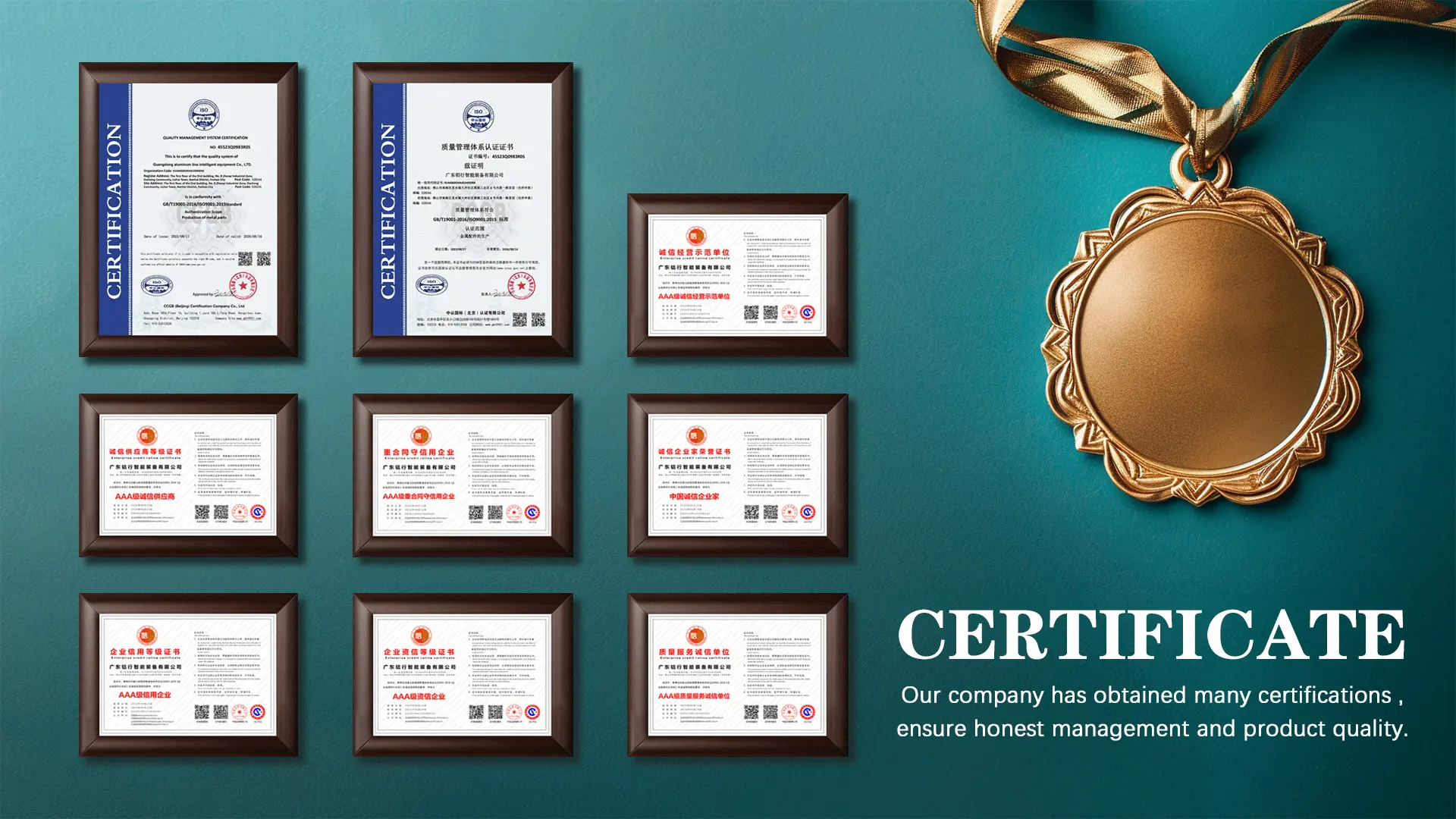
Our commitment to excellence is evident throughout the manufacturing process, rigorous quality control, thorough packaging, and efficient shipping procedures. This dedication has earned us recognition as a national excellent and honest enterprise, along with quality system certification in accordance with GB/T19001-2016/ISO9001:2015 standards. We aspire to be your trusted business partner and warmly invite you to visit our factory.
Uncompromising structural integrity, advanced alloy formulations, and world-class manufacturing capacities.
We have obtained the "Special Aluminium Materials for Aerospace" Certificate, validating our compliance with the most demanding mechanical and environmental stress parameters.
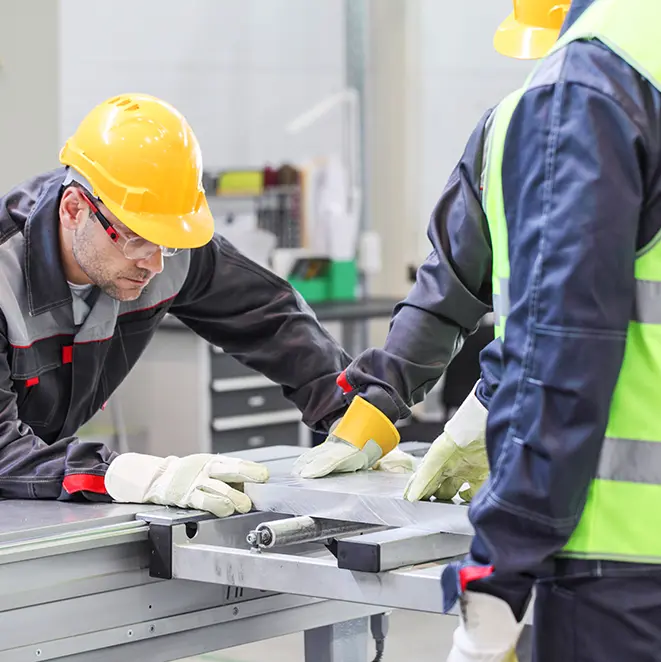
We utilize high-quality Fenglu aluminum profiles. With extrusion lines from 800T to 20,000T, we produce alloys 1xxx to 7xxx, manufacturing shaped products up to 1.2m width or 28m length.
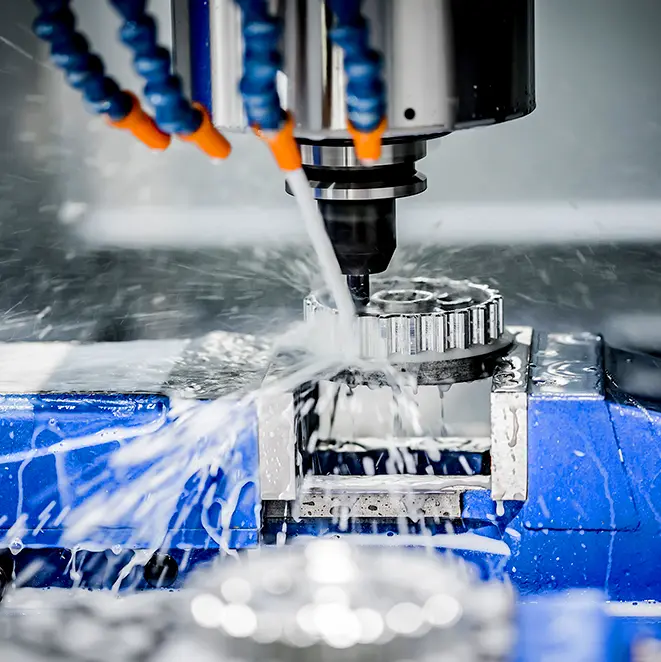
Our team of technicians has 15 years of experience. Our deep understanding of customer requirements allows us to identify potential issues and offer practical insights, turning concepts into reality.
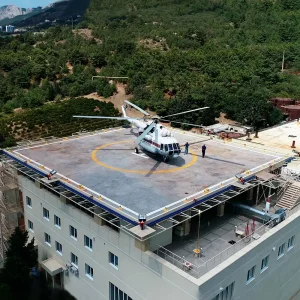
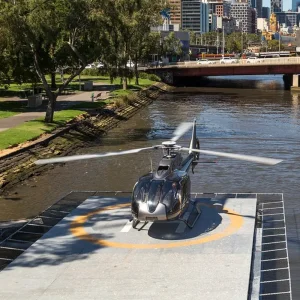
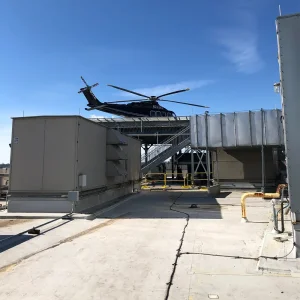
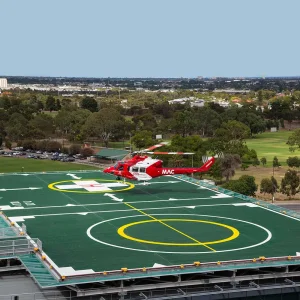
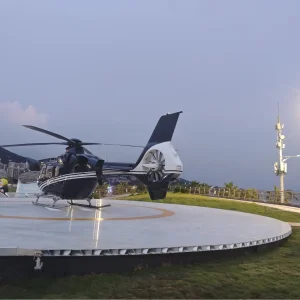
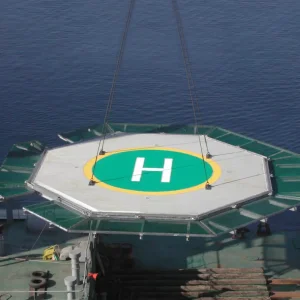
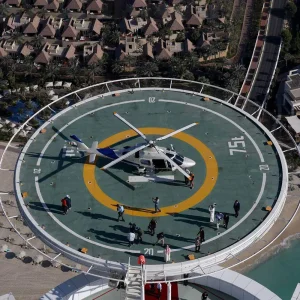
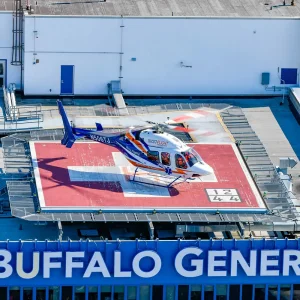
Tower heliports located on high-rise commercial structures, rooftop hospitals, and offshore drilling platforms present distinct engineering challenges. Unlike ground-level landing zones, elevated helidecks must feature robust perimeter safety netting systems to prevent personnel, equipment, and litter from falling. According to international aviation directives, including CAP 437, FAA AC 150/5390-2C, and ICAO Annex 14, safety netting is a non-negotiable requirement for any elevated helideck.
Global procurement teams prioritize structural longevity and compliance. Traditional carbon steel net installations are highly susceptible to rust and atmospheric degradation, requiring costly replacements every few years. As a result, modern structural engineers require premium-grade aluminum alloy profiles and marine-grade stainless steel wire meshes that provide high corrosion resistance, light weight, and dynamic impact load capacities.
Key Procurement Focus: Safety nets must not create aerodynamic turbulence, must exhibit a life cycle exceeding 15 years in marine (C5-M) environments, and must withstand a drop-test energy equivalent to a 100 kg mass dropped from a height of 1 meter.
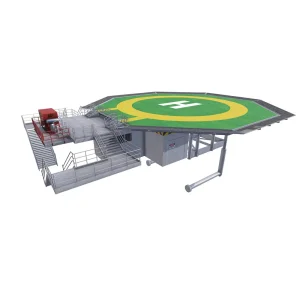
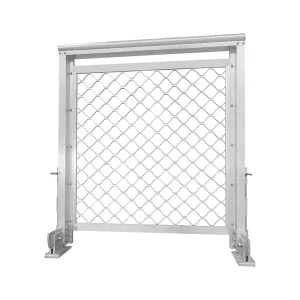
Elevated safety net systems are engineered as modular frameworks that bolt directly onto the outer perimeter of the helipad deck structure. These systems typically project outwards by 1.5 meters to 2.0 meters, inclined slightly upward at an angle of approximately 10 degrees to capture falling objects securely without creating flight path obstructions.
Acoustically optimized, lightweight aluminum frameworks that minimize structural loads on building crowns while offering maximum wind-shear permeability.
Heavy anodized profiles utilizing marine-grade 6005A-T6 or 6082-T6 aluminum alloys combined with SS316 cable nets to resist high-salinity marine environments.
Prioritizing rapid installation, high aesthetic compatibility with architectural facades, non-reflective surfaces, and strict safety redundancy.
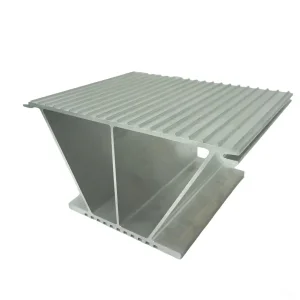
The selection of structural alloys forms the basis of helideck perimeter safety. Historically, safety netting systems were heavy, welded steel structures. The shift toward specialized extruded aluminum alloys has revolutionized the industry. Aluminum profiles provide a high strength-to-weight ratio, allowing engineers to decrease the dead load on the helideck cantilever supports by up to 55%.
| Alloy / Material Class | Typical Application | Tensile Strength (MPa) | Corrosion Resistance | Key Benefit |
|---|---|---|---|---|
| Alloy 6082-T6 | Structural Outer Frame Profiles | 290 - 310 | Excellent (Marine Grade) | High structural load capacity |
| Alloy 6063-T6 | Interlocking Mesh Channels & Slats | 215 - 230 | Very Good | Superior extrusion surface finish |
| SS316 Stainless Steel | Woven Cable Safety Mesh | 500 - 700 | Outstanding | Extreme tensile elongation, no rust |
Using our advanced 20,000T extrusion press line, LvXing can extrude complex, single-section profiles up to 1.2 meters wide. These large-format profiles eliminate multiple weld lines, which are typically the primary sites for fatigue cracking and mechanical failure under sustained wind load vibrations.
The commercial aviation sector, coupled with offshore energy exploration, continues to drive demand for reliable perimeter safety netting. As supertall skyscrapers proliferate in Asian, Middle Eastern, and North American metropolitan areas, municipal fire codes increasingly require rooftop evacuation helipads. These installations must meet strict local building codes alongside international civil aviation guidelines.
Simultaneously, offshore wind substations and petroleum platforms are upgrading their aging steel decks to lightweight aluminum helidecks equipped with state-of-the-art safety netting. Lvxing satisfies this global requirement by manufacturing components under a quality management system certified to GB/T19001-2016/ISO9001:2015 standards, ensuring all manufactured items are completely traceable back to the raw billet stage.
Deploying safety systems internationally requires localized engineering support and verification. Lvxing works closely with structural engineers worldwide to provide comprehensive calculation sheets, wind tunnel simulation data, and localized regulatory compliance files. Our systems can be pre-configured to satisfy:
Additionally, Lvxing provides specialized packaging, marine-grade anti-corrosive wrapping, and complete assembly drawings to streamline installation for on-site contractor teams.
Technical insights into specifications, procurement, and standards for tower heliport safety netting.
Complete structural systems designed for heavy-duty commercial and emergency rescue installations.
 LvXing