Explore our structural profiles, aluminum mesh solutions, and custom configurations tailored for hospital, rooftop, and skyscraper environments.
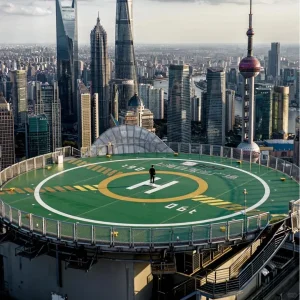
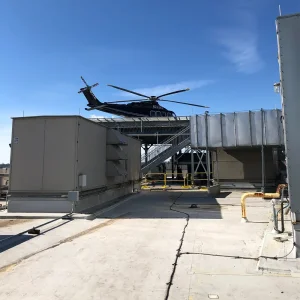
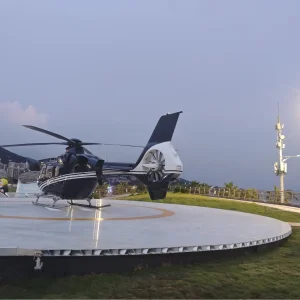
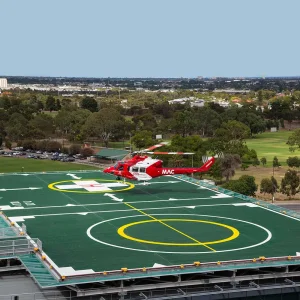
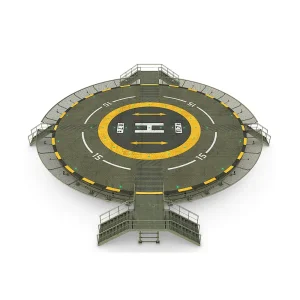
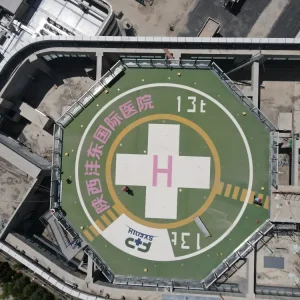
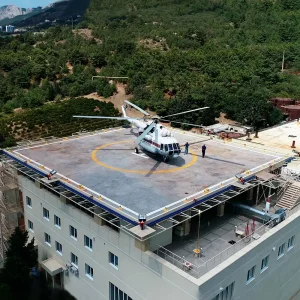
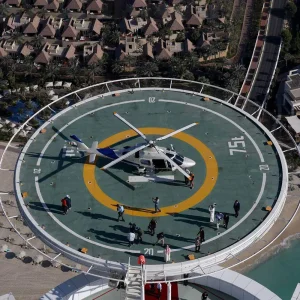
Modern aviation environments place extreme demands on emergency infrastructure. Helipad perimeter safety netting systems are not merely dynamic structural accessories—they are high-integrity, life-saving fall arrest platforms required by international aviation authorities.
Offshore oil platforms, marine vessels, and seaside hospital heliports are continuously exposed to highly corrosive chloride-laden environments (C5-M classification). Procurement requires marine-grade alloys such as 6061-T6 aluminum or 316 stainless steel to ensure zero structural degradation.
Perimeter safety nets must absorb the impact energy of an falling adult body without structural collapse. Standard testing guidelines specify a dynamic drop test (e.g., dropping a 125 kg weight from a height of 1 meter) to confirm energy dissipation.
Regulatory authorities including the UK Civil Aviation Authority (CAA CAP 437), US Federal Aviation Administration (FAA AC 150/5390-2C), and ICAO Annex 14 mandate specific angle orientations (1.5m projection at an upward slope of 10° or horizontally aligned) to prevent helicopter rotor blades interference.
Established in 2015 and located in Foshan City, Guangdong, LvXing Intelligent Equipment Co., Ltd. boasts a skilled R&D team with extensive experience.
We leverage exceptional technical expertise to effectively transform customers' ideas into reality, consistently meeting their precise structural requirements. By utilizing premium Fenglu aluminum, we provide a diverse range of structural profiles optimized for flexible and heavy-duty load applications.
Our comprehensive production facility features extrusion lines ranging from 800T up to a powerful 20,000T. This enables us to process high-performance aluminum alloys in the 1xxx, 2xxx, 3xxx, 5xxx, 6xxx, and 7xxx series. Our capabilities extend to manufacturing complex shaped products with section dimensions up to 1.2 meters in width and up to 28 meters in length, recognized internationally for precision processing and tight tolerances.
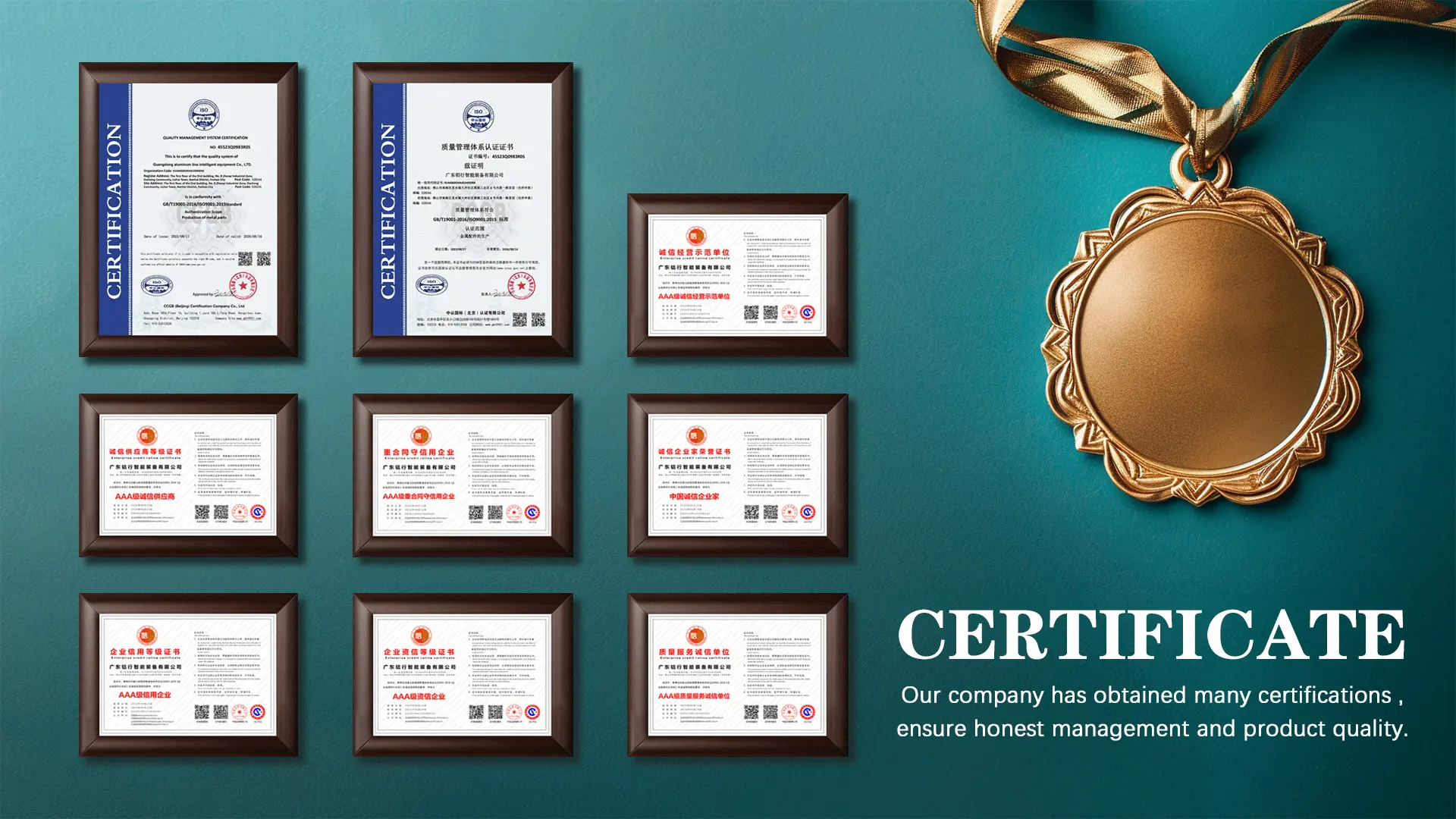
Our engineering and manufacturing capabilities set a global benchmark for safety and profile integrity.
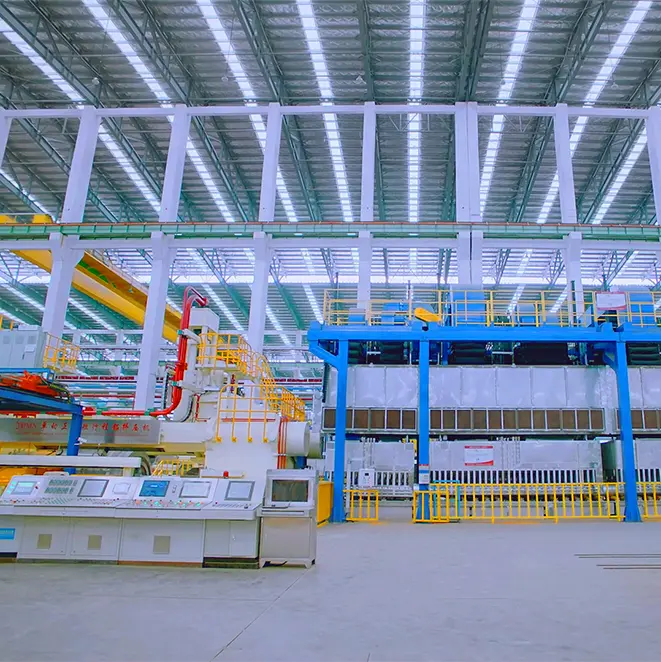
We are certified to process and supply specialized aerospace-grade aluminum, ensuring every batch meets high tensile strength parameters required for severe dynamic landings.
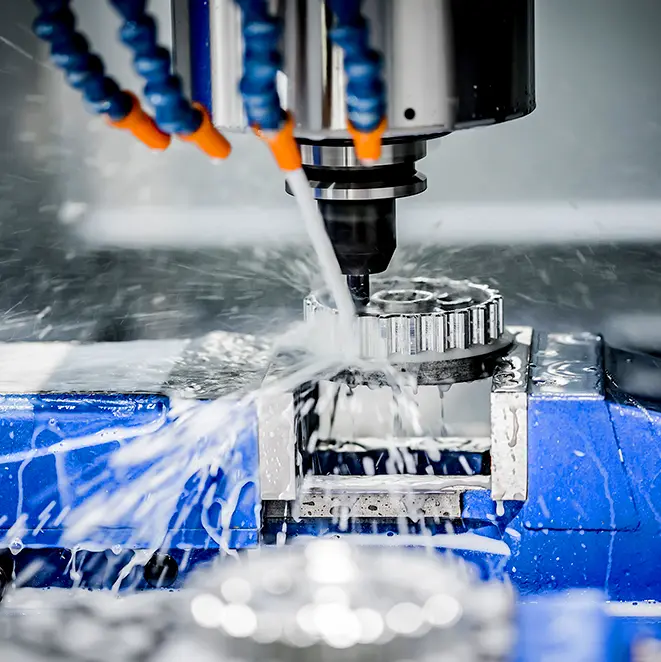
Our team of R&D engineers has more than 15 years of industry experience. They analyze structural loads, wind shears, and seismic vulnerabilities to design custom systems that eliminate risks beforehand.
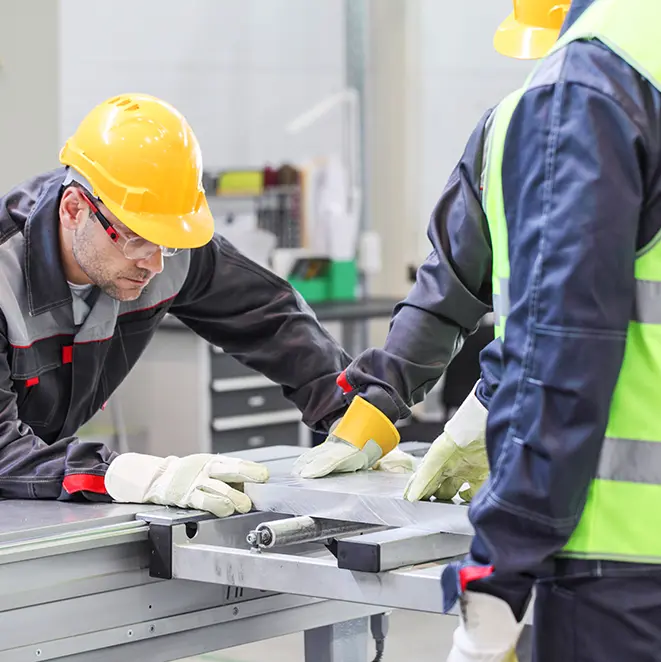
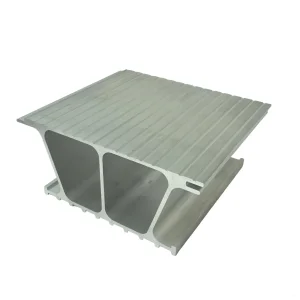
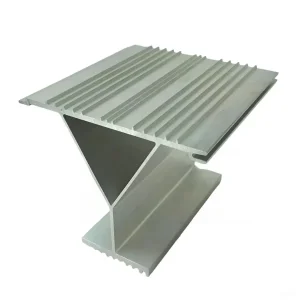
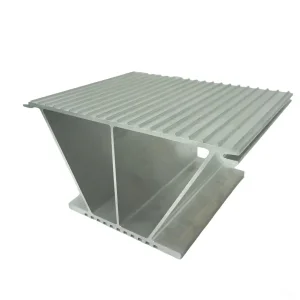
Leveraging high-end extrusion lines, we process structural 6000-series alloy profiles with deep precision. These profiles serve as the load-bearing frames supporting the safety nets on offshore helidecks.

By sourcing exclusively from Fenglu, we guarantee consistency in structural alloys (including 1xxx to 7xxx). This ensures excellent mechanical properties for both perimeter mesh and framing components.
Engineered safety systems must balance lightweight requirements with absolute structural redundancy. At Lvxing, we continuously improve our profile metallurgy and netting structures to address future aerodynamic challenges.
Our structural aluminum profiles are pre-engineered with smart slotting channels. This modular design allows installers to slide and lock components securely, eliminating complex welding processes at heights or offshore platforms.
Helicopters generate significant downwash. Our customized aluminum wire mesh and perimeter safety net profiles are designed to limit air resistance, preventing the uplift forces that can compromise deck attachments.
By utilizing specialized anodizing and polyester powder coatings, our aluminum mesh components resist salt spray tests up to 3,000 hours, virtually eliminating maintenance overheads in harsh marine environments.

We export to over 40 countries, ensuring every municipal, military, and commercial aviation design project complies with its regional aviation guidelines.
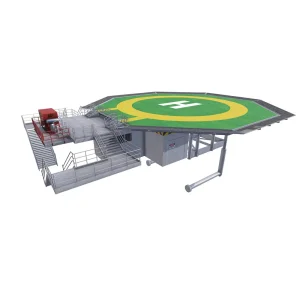
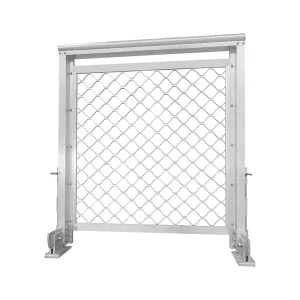
Compliance with CAP 437 is vital. Our perimeter nets extend at least 1.5 meters outward from the landing platform edge and are angled slightly upward to catch personnel while keeping the landing pad clear of obstruction.
In high-density urban areas, safety nets must be visually integrated without blocking sightlines. We provide customizable powder coatings that match skyscraper facades while maintaining fire and shock resistance.
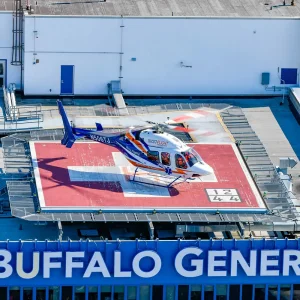
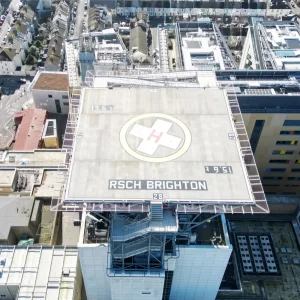
Rapid patient transport demands safety. Emergency rescue helipads require reliable fall protection nets designed to withstand extreme wind shear from dual-rotor emergency helicopters.
The cost of a custom helipad safety netting system depends on dimensions, profile selection, certification levels, and environmental coatings. Consult the technical reference below to plan your project budget.
| Profile Model / System | Primary Material | Dimensions / Frame Spec | Compliance Standards | Est. Price Index (USD) |
|---|---|---|---|---|
| LX-HP01 Profile System | Alloy 6061-T6 / 6082-T6 | Section Width up to 1.2m, Custom L | GB/T19001-2016, CE | $140 - $210 / Meter |
| LX-HP02 Heavy Profile | Aerospace Grade Aluminum | Reinforced Section, Modular | CE, CAP 437 Compliant | $180 - $260 / Meter |
| LX-HP04 Extruded Profile | Premium Fenglu Aluminum | Engineered for Offshore Decks | DNV GL / ISO9001:2015 | Request Quote |
| Aluminum Wire Mesh System | Corrosion Resistant 3000/5000 Series | Mesh aperture 50x50mm, 2.5mm dia | FAA AC 150/5390-2C | $85 - $130 / Sq. Meter |
| Helideck Perimeter Safety Net (Manual) | Alloy Frame + Marine Stainless Steel Mesh | Projection: 1.5m wide modules | CAP 437, ICAO Annex 14 | $350 - $550 / Module |
*Note: The prices provided are estimates for baseline planning. Final pricing requires detailed structural wind-load simulations and engineering verification. Contact our Foshan R&D facility for project-specific quotes.
Get professional technical answers regarding standard testing, compliance requirements, and installation steps for helideck safety systems.
Select from our certified range of aluminum alloy panels, landing pads, and safety perimeter nets.
 LvXing