Explore our technical assemblies, tailored specifically for extreme offshore environments, vessel decks, and commercial rooftops.
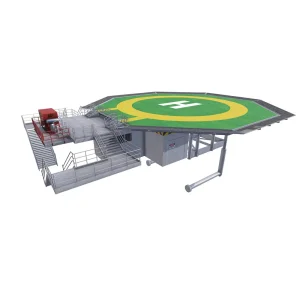
In modern industrial and maritime operations, safety is not merely a box to check; it is a critical engineering requirement governed by international maritime codes. Helicopter Landing Pad Safety Nets (often called helideck perimeter safety nets) and their supporting structures are designed to save lives. Positioned along the edges of vessel decks, offshore rigs, and high-rise commercial structures, these nets act as structural fall-prevention barriers that catch personnel or debris from falling without interfering with helicopter operations.
Historically, stainless steel wire rope configurations or heavy polymer materials dominated helideck design. However, structural corrosion, extreme marine winds, UV degradation, and excessive weight burdens led to a significant shift. Marine and civil engineers now specify high-strength, lightweight aluminum profile systems combined with structural safety mesh. Aluminum's native self-passivating oxide layer delivers unmatched resilience against saltwater corrosion while drastically reducing the dead weight of the structure.
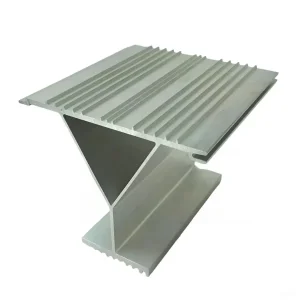
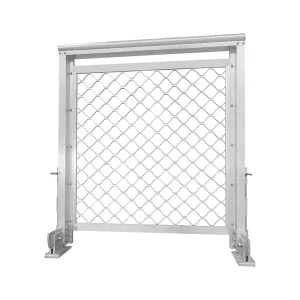
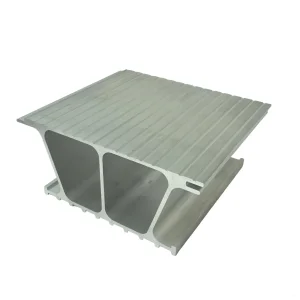
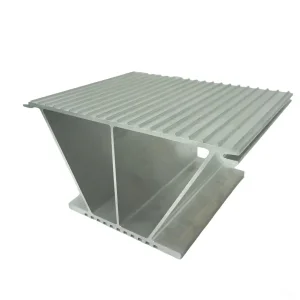
Understanding structural behavior under heavy maritime service begins with examining chemical composition. The modern structural framework of helicopter landing pads relies on extruded aluminum profiles, primarily within the 6xxx series (specifically 6082-T6 or 6061-T6 structural alloys). These profiles are chosen because they balance strength, weldability, and extrudability. They serve as the structural ribbing that anchors the safety mesh panels securely to the deck outline.
Furthermore, when high tensile load capacities are required, alloys containing magnesium and silicon are processed through intensive heat treatment processes. This enables manufacturers to produce structural components capable of absorbing significant dynamic loads without permanent deformation—critical when a helicopter experiences hard-landing scenarios or crew members require emergency restraint.
Discover how advanced machinery, centralized raw-material supply chains, and specialized aerospace processes drive efficiency, speed, and cost-effectiveness.
Established in 2015 and located in Foshan City, Guangdong—the absolute global capital of aluminum extrusions—LvXing Intelligent Equipment Co., Ltd. boasts a highly skilled R&D team with extensive experience. We leverage exceptional technical expertise to effectively transform customer designs and custom drawings into reality, consistently meeting precise structural tolerances.
We utilize premium Fenglu aluminum, offering a diverse range of high-grade alloy profiles for flexible engineering applications. Our advanced extrusion lines, ranging from 800T to 20,000T, accommodate high-specification alloy systems including the 1xxx, 2xxx, 3xxx, 5xxx, 6xxx, and 7xxx series. This allows us to produce complex shaped profiles with section dimensions reaching up to 1.2 meters in width and 28 meters in length. These products are globally recognized for their structural precision and meticulous surface finishing, finding broad applications across the aerospace, military, medical, marine, and industrial sectors.
Our commitment to manufacturing excellence is evident throughout every step of our operations: from billet casting and precision extrusion, to rigorous quality inspection, protective seaworthy packaging, and efficient international logistics. This dedication has earned us recognition as a national excellent and honest enterprise, alongside quality system certification in accordance with GB/T19001-2016 / ISO9001:2015 standards.
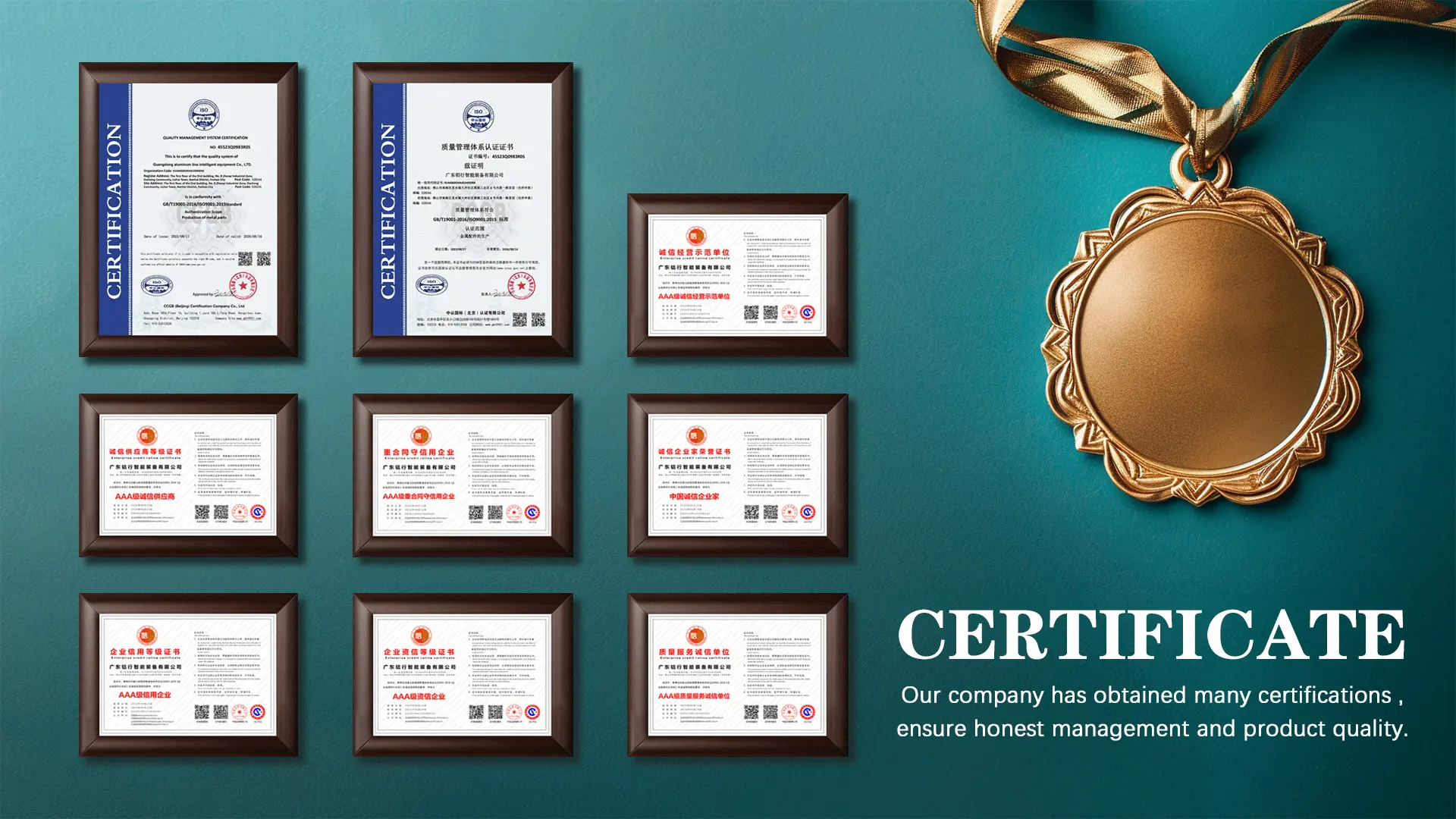
We have obtained the official “Special Aluminium Materials for Aerospace” Certificate, ensuring performance under high stress.
We provide and utilize high-quality Fenglu aluminum profiles. Extrusion lines from 800T to 20,000T support width up to 1.2m and length up to 28m.
Our team of technicians has 15 years of experience. We analyze customer requirements to identify potential issues and offer practical design insights.
Customized aluminum mesh systems and perimeter support frames are engineered for specific operating conditions and regional safety regulations.
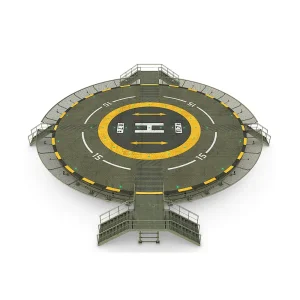
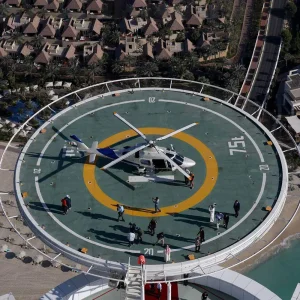
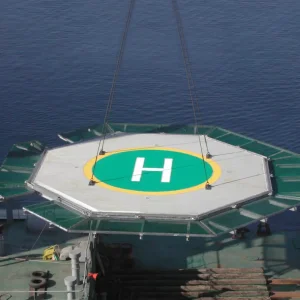
Offshore vessels, FPSOs, and drilling rigs operate in demanding corrosive environments. Safety nets must withstand continuous wind force, saltwater spray, and high UV radiation. Lightweight aluminum designs minimize overall weight above the center of gravity, enhancing vessel stability.
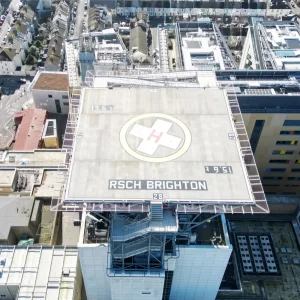
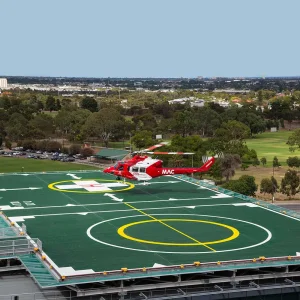
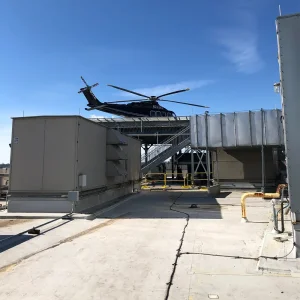
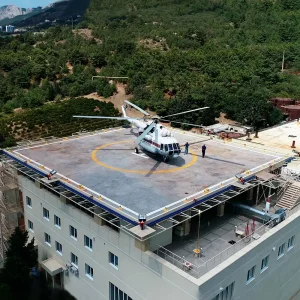
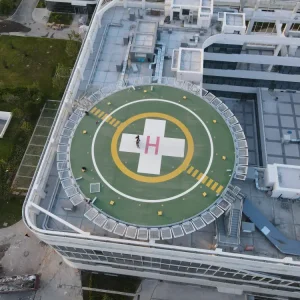
Hospital roof helipads require reliable protection to secure emergency medical teams and landing crew. These applications feature drop-down perimeter designs that prevent falls while maintaining a flat, obstruction-free landing path for medical helicopters.
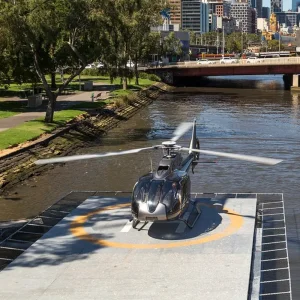
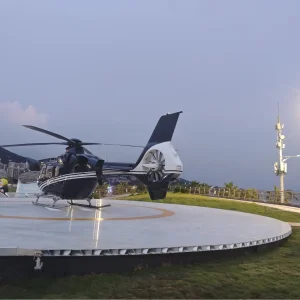
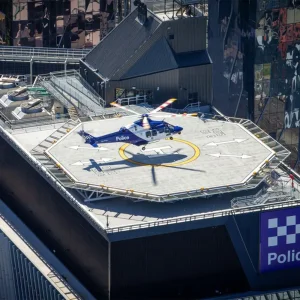
High-rise municipal, police department, and luxury hotel landing zones demand aesthetically clean structural integration. Customized color-anodized aluminum support nets blend into modern building designs while meeting local fire-safety and civil aviation requirements.
When engineering firms and commercial purchasing agents select a global manufacturing partner for helipad safety nets, technical performance takes priority. Because these systems are essential for site safety, low-cost options that lack proper material documentation or stress tests present significant operational risks. Below are the key engineering specifications that global procurement teams evaluate:
| Technical Parameter | Requirement / Specification Standard | Engineering Relevance |
|---|---|---|
| Base Alloy Grade | Alloy 6082-T6 / 6061-T6 (extruded) | Determines ultimate yield strength and structural deflection limits. |
| Mesh Wire Diameter | 2.3mm to 4.0mm (alloy or high-tensile SS) | Protects against impact and accommodates heavy falling objects. |
| Tensile Strength | Minimum 120 kN/m structural border tension | Prevents tearing or frame disconnection during emergency impacts. |
| Drop Test Capacity | 100 kg test weight dropped from 1 meter height | Simulates a crew member falling over the perimeter edge. |
| Anodizing Coating | 15 - 25 microns thickness (Class I Clear/Color) | Protects the system from saltwater spray and atmospheric oxidation. |
A reliable supplier must provide a comprehensive compliance package. Global procurement managers should request the following documentation before placing orders:
Explore the technological shifts reshaping the design, manufacturing, and lifespan of modern helicopter landing pads.
Next-generation helideck perimeter nets are beginning to incorporate fiber-optic sensors or LED boundary lights directly into the mesh weaving, providing clear visual guidance during night landings without adding separate light fixtures.
With corporate focus shifting to green procurement, modular aluminum structures are highly valued for their 100% recyclability. Unlike composite materials, aluminum profiles can be melted down and re-extruded at the end of their service life, reducing carbon footprints.
To minimize high offshore installation costs, the industry is shifting toward pre-engineered, modular interlocking frame systems. These panels arrive on-site pre-tensioned, allowing fast bolt-together installation that reduces offshore labor hours.
Find technical answers regarding engineering specifications, testing standards, lifetime expectations, and order customization.
Review our catalog of custom-extruded aluminum components and safety net products designed for modern aviation infrastructure.
 LvXing