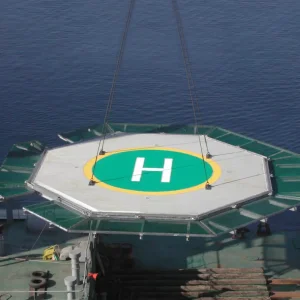
Explore our range of engineering solutions. Durable, light-weight, and custom-configured for offshore helidecks and urban elevated helipads.
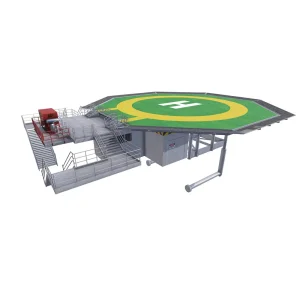
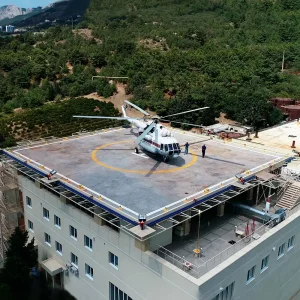
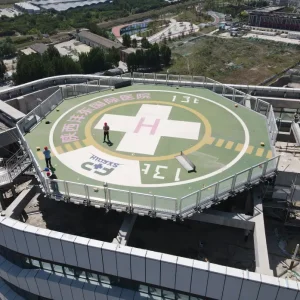
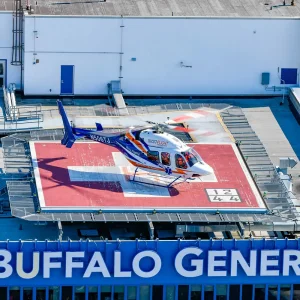
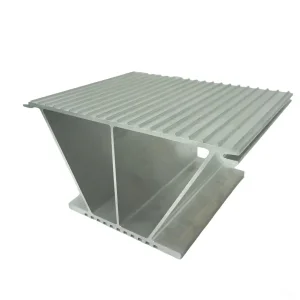
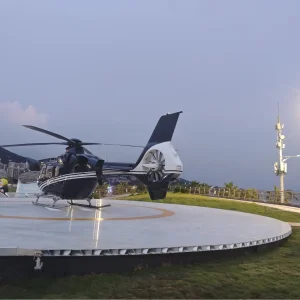
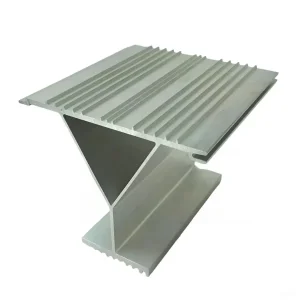
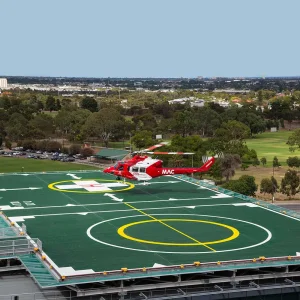
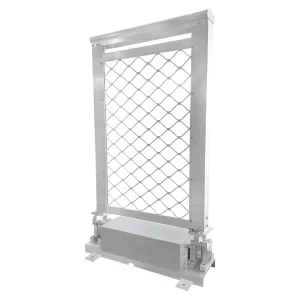
Elevated landing facilities represent high-risk aviation infrastructure. Whether positioned on skyscraper rooftops, offshore oil rigs, or emergency hospital trauma centers, an elevated helipad requires specialized safety parameters. The Elevated Helipad Safety Net is a regulatory and structural component installed around the deck perimeter to prevent personnel, equipment, and litter from falling from high elevations during landing, takeoff, and servicing procedures.
Global aviation standards dictate rigid specifications for perimeter net designs. According to the United Kingdom Civil Aviation Authority CAP 437 (Standards for Offshore Helicopter Landing Areas), international ICAO Annex 14 Volume II, and FAA AC 150/5390-2C, perimeter safety nets must be installed around the edges of helidecks. These regulations stipulate that the nets must extend outward by at least 1.5 meters, present an upward slope of 10 degrees, and be capable of catching a minimum drop weight of 125 kg without sustaining structural failure or permanent deformation.
Modern structures favor lightweight, corrosion-resistant materials over legacy steel structures. Anodized aluminum alloy frames combined with high-grade aluminum or stainless-steel mesh offer structural strength-to-weight ratios that protect structures and personnel alike. Understanding the engineering behind safety nets is critical to procurement teams managing complex aviation, defense, or infrastructure tenders.
How Lvxing Intelligent Equipment leverages massive industrial extrusion capacity to deliver structural integrity.
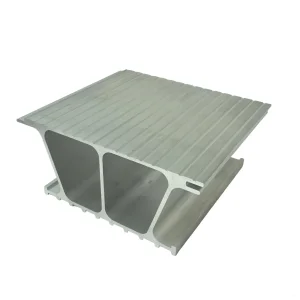
Established in 2015 and located in Foshan City, Guangdong (the aluminum capital of China), LvXing Intelligent Equipment Co., Ltd. specializes in advanced structural aluminum solutions. We utilize premium Fenglu aluminum, offering a diverse range of customized alloy profiles for flexible applications. This material serves as the structural baseline for our lightweight, high-tensile safety net support beams and structural deck framing profiles.
Our heavy-duty production infrastructure boasts comprehensive extrusion lines ranging from 800T to 20,000T. This enables us to extrude alloys in the 1xxx, 2xxx, 3xxx, 5xxx, 6xxx, and 7xxx series. The extrusion width can reach up to 1.2 meters, with structural profiles processed to lengths of up to 28 meters. This enables Lvxing to manufacture large-scale, seamless modular components for helicopter platforms, minimizing joinery weak points and maximizing safety margins.
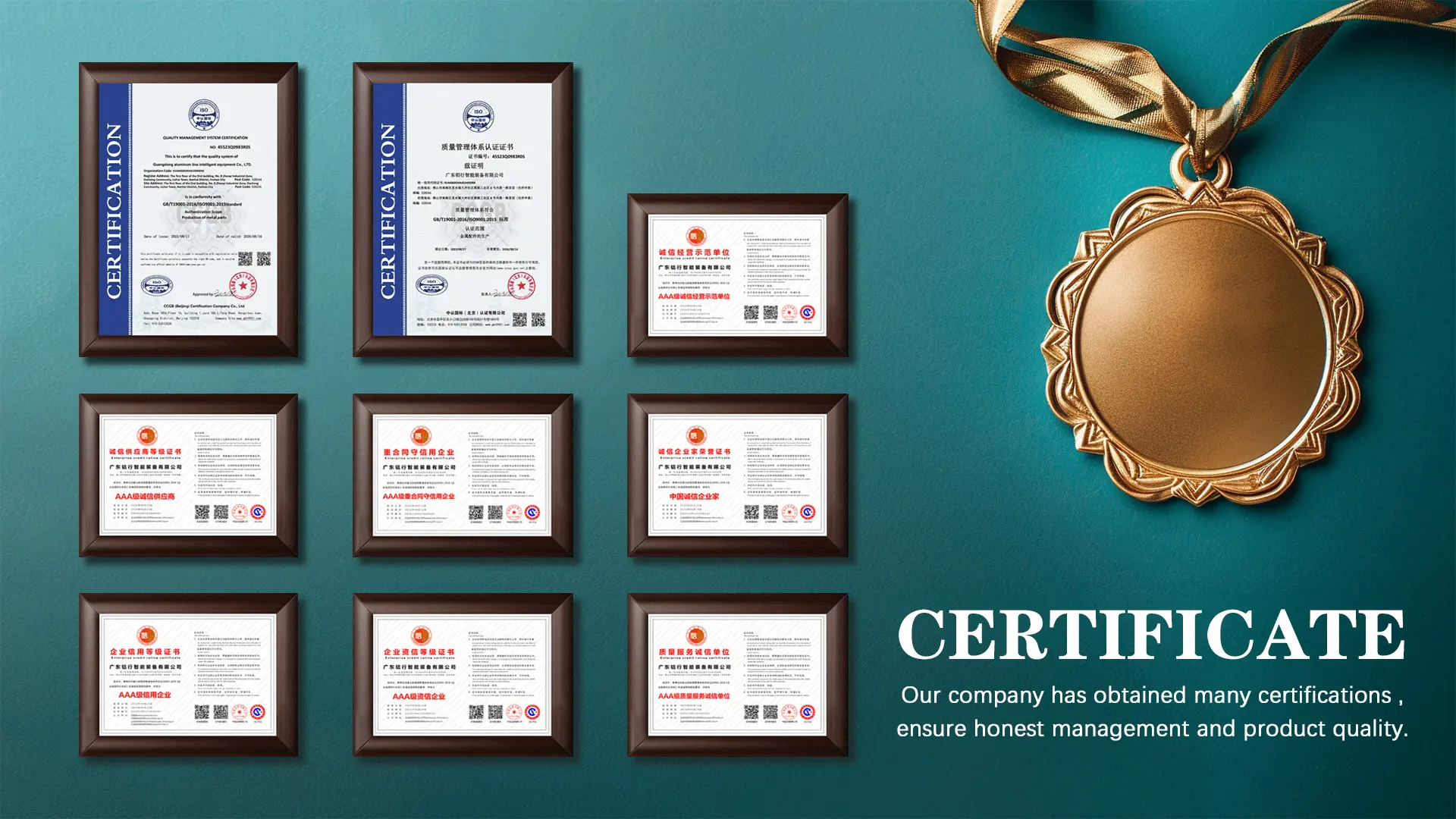
With quality systems certified under the GB/T19001-2016 / ISO9001:2015 standards, Lvxing handles the complete fabrication process—from raw material extrusion to CNC milling, surface anodizing, quality assurance testing, and final assembly packaging.
Lvxing is certified under the “Special Aluminium Materials for Aerospace” standard, qualifying our factory to produce primary structural supports for military, rescue, and commercial aviation infrastructure.
Lvxing blends material science, state-of-the-art machinery, and experienced design engineering to create safety nets that outperform expectations.
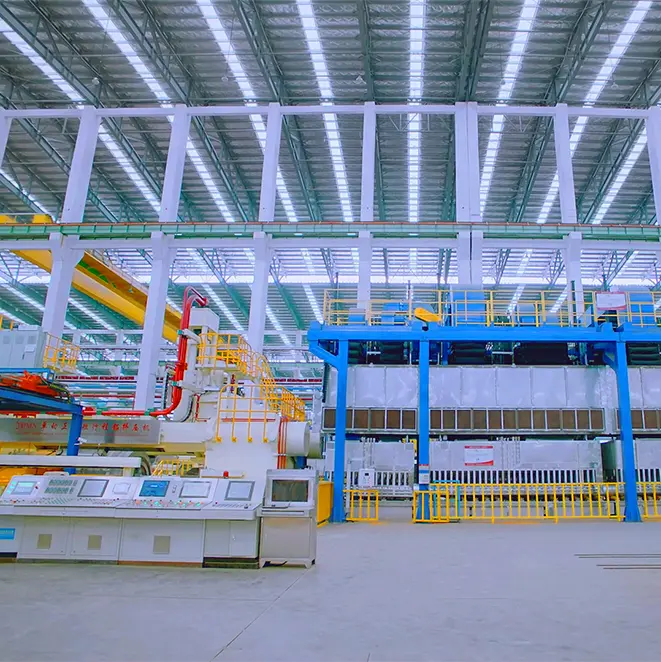

Our organization has obtained the prestigious “Special Aluminium Materials for Aerospace” Certificate. This ensures that the aluminum alloys used in our helideck systems, profiles, and structural safety nets are engineered to handle the load-bearing requirements, stress tolerances, and high fatigue resistance demanded by modern helicopters.
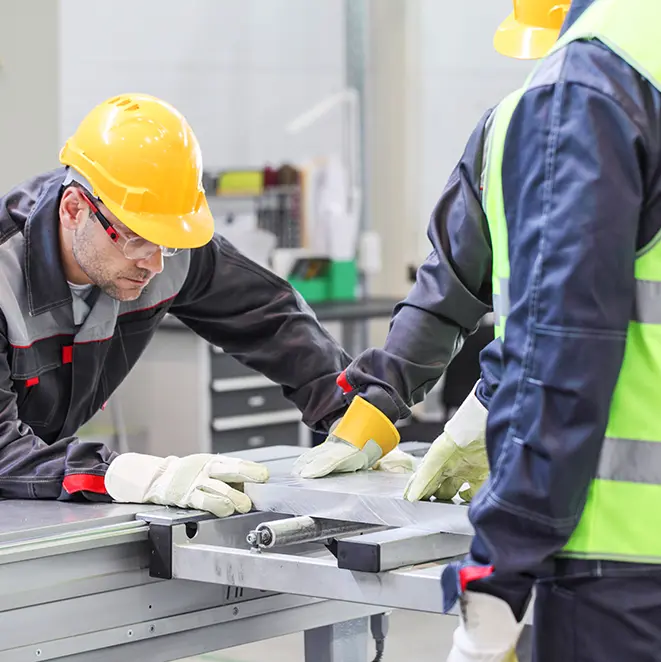

We leverage advanced Fenglu aluminum profiles. With extrusion lines scaling from 800T to a massive 20,000T, we have the flexibility to handle alloy composition across the 1xxx, 2xxx, 3xxx, 5xxx, 6xxx, and 7xxx series. This allows us to supply complete shaped profiles with dimensions stretching up to 1.2 meters in width or 28 meters in length, reducing assembly lines and structural seams.
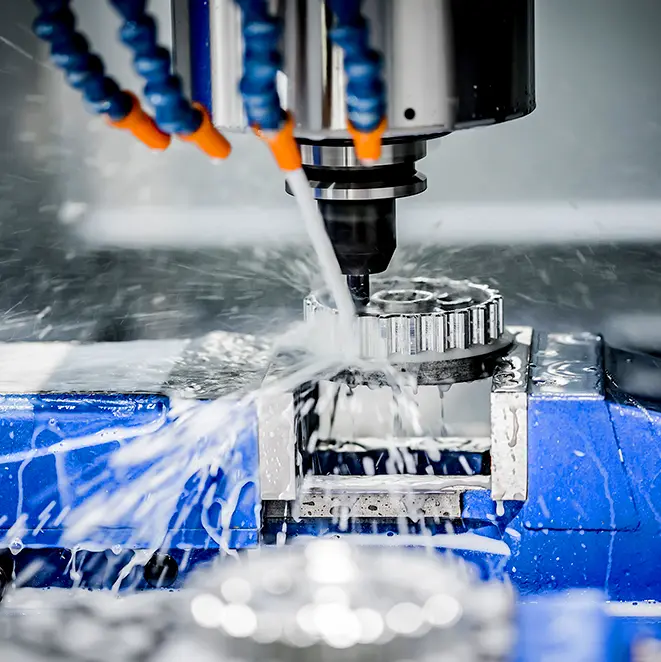

Our core R&D department features technical experts with over 15 years of practical experience. Our deep understanding of aviation-specific regulatory bodies allows us to pre-emptively identify structural layout complications and design robust custom frame solutions to convert clients' concepts into reality.
Engineered to withstand extreme environmental parameters, our perimeter nets are designed for three primary sectors.
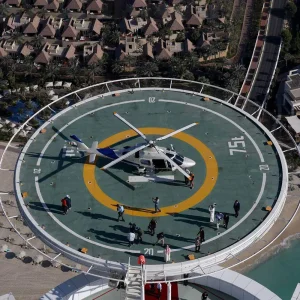
Marine helidecks must cope with high-salinity air, continuous salt spray, and extreme winds. Lvxing’s aluminum-alloy mesh components provide corrosion-resistance. Anodized coating parameters exceeding 20 microns insulate the metal, preventing degradation and maintaining compliance with CAP 437 offshore standards.
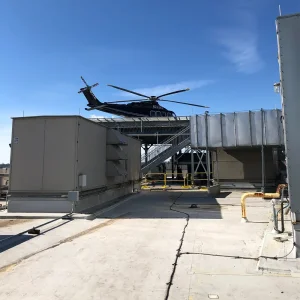
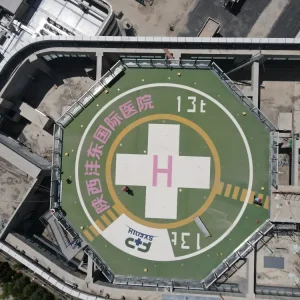
Rooftop hospital trauma helipads require lightweight structural footprints to meet building code limits. Aluminum safety nets reduce the dead weight on support trusses by up to 65% compared to steel. Their modular, non-combustible profiles ensure rapid setup, minimal maintenance, and long service life.
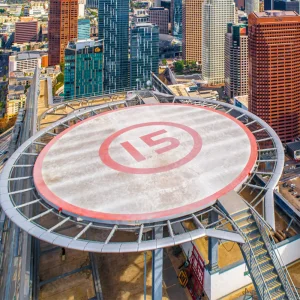
Luxury high-rises and commercial hotel heliports require visual appeal and structural safety. Lvxing safety nets feature clean anodized surface finishes that complement modern architectural designs. Dynamic design patterns withstand high updrafts and thermal expansion/contraction cycles.
Sourcing from Foshan, China delivers structural quality, scalability, and economic efficiency.
Global procurement specialists face the challenge of balancing strict safety compliance with budget constraints. Sourcing direct from our Foshan facility gives EPC contractors and heliport builders a distinct competitive edge:
When submitting tenders for public and private safety projects, ensure your supplier provides:
| Feature Parameter | Lvxing Aluminum Safety Net Systems | Standard Steel Wire Safety Net Systems |
|---|---|---|
| Primary Material | Aviation Grade Anodized Aluminum Alloys (6xxx series) | 316 Stainless Steel / Galvanized Steel Wire |
| Weight Advantage | Ultra-light (approx. 4.5 kg - 6.5 kg per m² frame included) | Heavy (approx. 12 kg - 18 kg per m²) |
| Corrosion Performance | Self-passivating aluminum oxide layer; highly resistant to ocean spray | Susceptible to localized pitting corrosion and rust over time |
| Service Life | 25+ Years with zero structural maintenance | 10-15 Years; requires painting/coating and periodic wire checks |
| Environmental Recyclability | 100% Recyclable; high residual scrap value | Low scrap value; complex recycling processing required |
| Structural Length Option | Extrusions up to 28m seamless profiles | Limited lengths, requiring frequent joint installations |
As helicopter fleets globally transition toward larger, heavier airframes—such as civil aircraft like the AW101 and heavy transport military configurations—elevated deck standards are evolving in tandem. This shifts the engineering focus toward modern perimeter security solutions.
One notable trend is the deployment of Electric / Automated Perimeter Safety Nets. These systems feature remote-controlled components that adjust or lower during non-landing service procedures, preventing interference with low-altitude aviation operations. Lvxing’s production is aligned with these developments, fabricating high-tolerance hollow aluminum frames that route electrical wire harnesses and integrate smart perimeter lighting arrays. This ensures visibility for incoming pilots during inclement weather or night operations.
Environmental responsibility is another critical factor. Global green building certifications like LEED require materials with high recyclability rates. Modern aluminum structures provide a sustainable solution, offering reliable circular economy profiles that minimize carbon footprints across the product lifecycle.
Technical answers to key safety, engineering, and manufacturing questions.
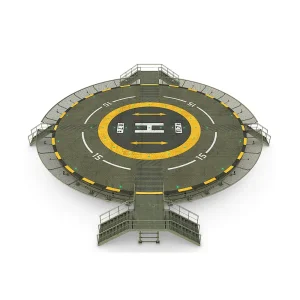
Discover our customized ship deck profiles, round landing decks, emergency hospital pads, and electric perimeter net products.
 LvXing