Discover our industry-standard structural profiles, perimeter mesh options, and engineered configurations customized for high-security applications worldwide.
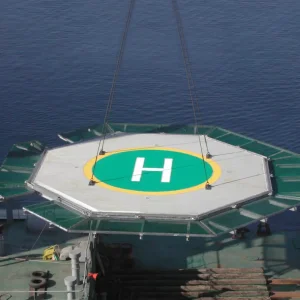
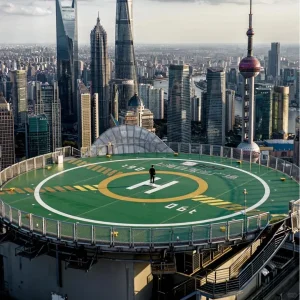
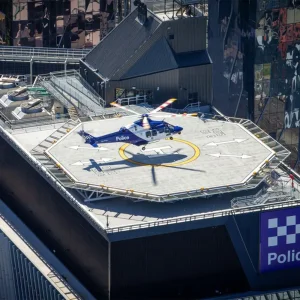
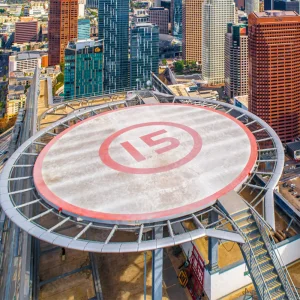
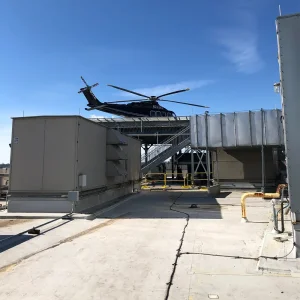
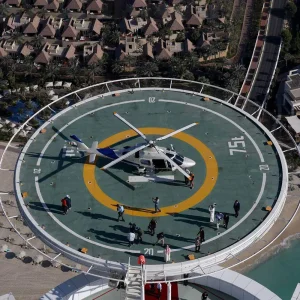
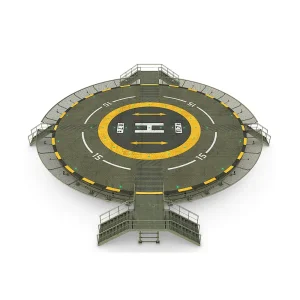
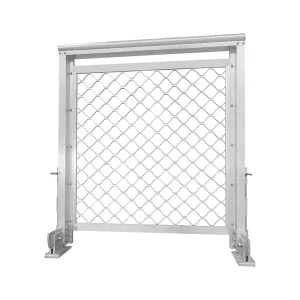
Elevated structure heliport perimeter safety nets are not passive elements; they are active life-saving systems that undergo severe environmental stresses. Designed to protect flight deck personnel, passengers, and maintenance staff from catastrophic falls, these nets must withstand high-speed winds, heavy maritime environments, UV degradation, and sudden kinetic impacts.
As a leading supplier and manufacturer, we align our engineering processes with global aviation frameworks. The design metrics are developed around CAP 437 (Standards for Offshore Helicopter Landing Areas), FAA AC 150/5390-2C (Heliport Design Guide), and BS EN 1263-1 (Safety Netting Requirements). To ensure compliance, each net system must undergo rigorous drop testing, simulating a 100kg mass drop from heights of up to 1.5 meters to verify that the net deflections and supports absorb energy safely without yielding.
Our commitment to material science is demonstrated by our use of specialized aluminum alloys and high-grade stainless steel wire meshes. By utilizing corrosion-resistant structural compositions, we eliminate the rapid structural decay associated with low-tier iron or carbon steel nets. When designing an elevated helipad system, safety profiles are matched against local weather data, load-bearing capacities, and building architecture to ensure long-term stability and structural performance.
Specializing in high-performance aluminum solutions for complex structural engineering projects.
Established in 2015 and located in Foshan City, Guangdong, LvXing Intelligent Equipment Co., Ltd. boasts a skilled R&D team with extensive experience. We leverage exceptional technical expertise to effectively transform customers' ideas into reality, consistently meeting their precise requirements.
Our manufacturing and processing units use premium Fenglu aluminum to guarantee that all products conform to national and international standards. This commitment ensures our safety systems operate effectively under high stress, whether installed in offshore marine environments or skyscraper roofs.
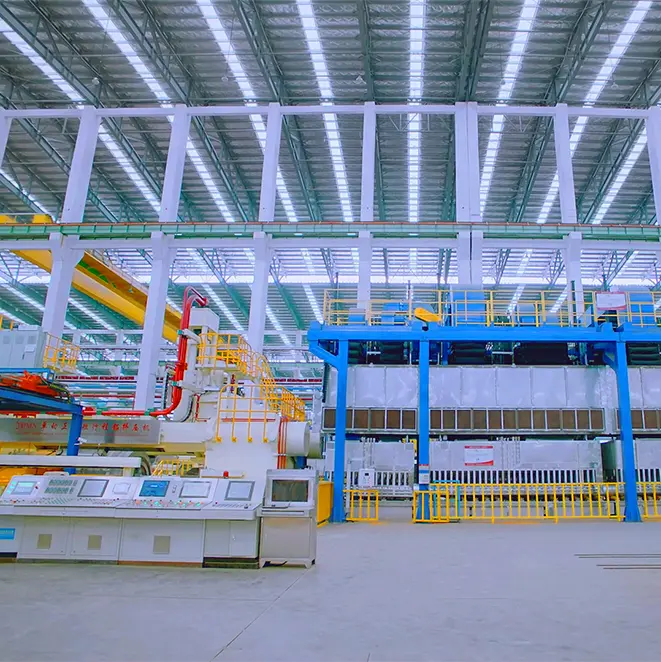
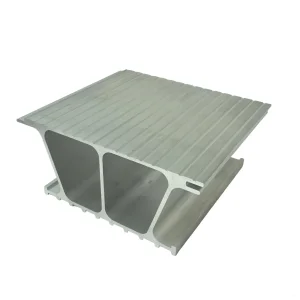
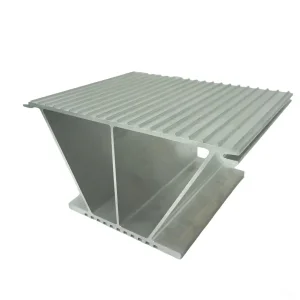
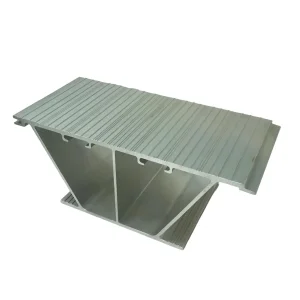
We utilize premium Fenglu aluminum, offering a diverse range of profiles for flexible applications. Our extrusion lines, ranging from 800T to 20,000T, accommodate alloys 1xxx, 2xxx, 3xxx, 5xxx, 6xxx, and 7xxx, allowing us to produce shaped products with section dimensions up to 1.2 meters in width and 28 meters in length. These products are recognized for their precision and meticulous processing, finding broad application in aerospace, military, medical, and industrial sectors.
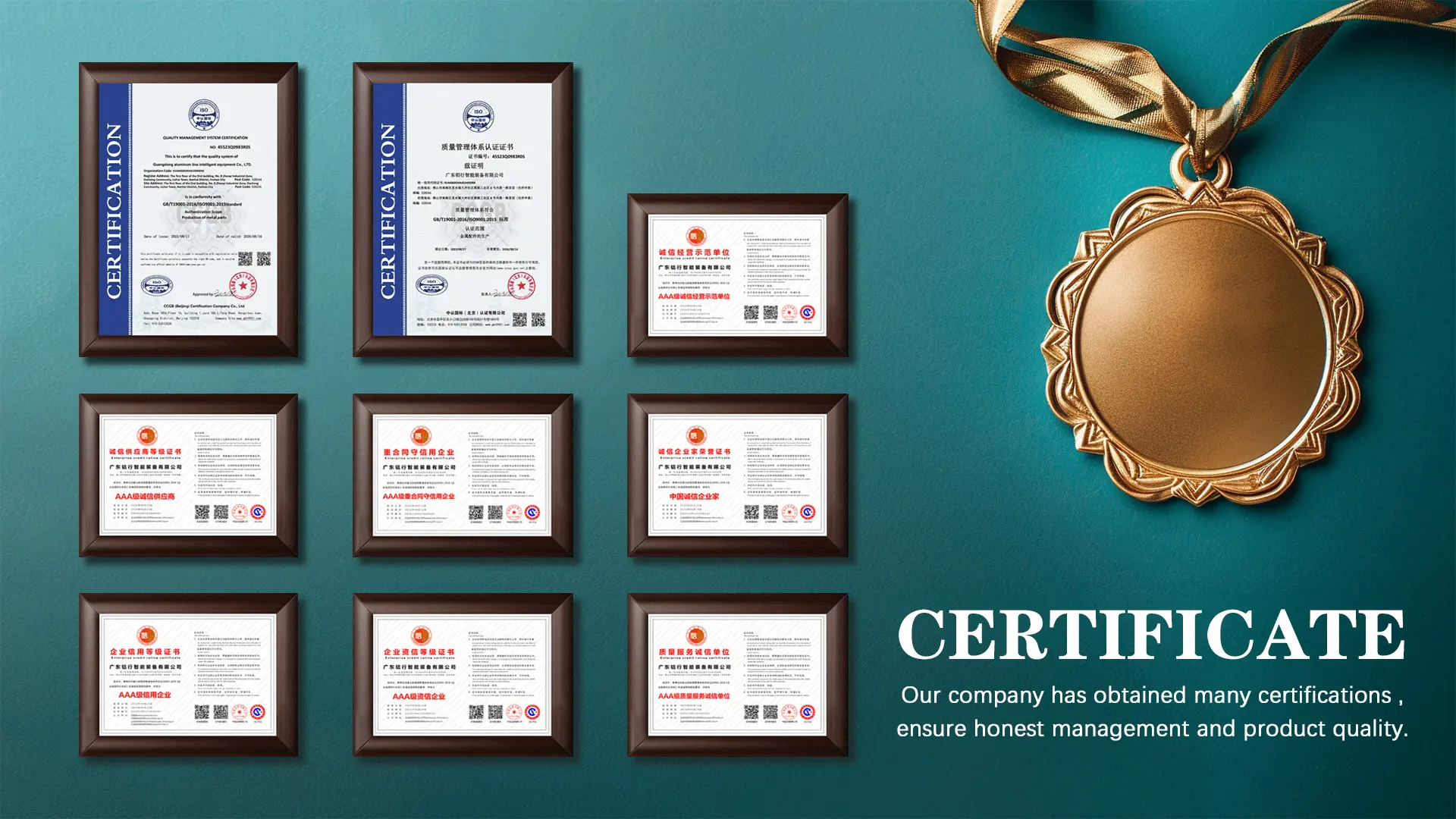
Our operation is ISO-certified, meeting quality system standards in accordance with GB/T19001-2016/ISO9001:2015. By controlling the quality from raw billet chemistry through final packaging, we ensure our profiles provide reliable support structures for elevated helipads.
Engineered reliability, advanced material sourcing, and veteran technicians form the bedrock of our safety structures.
We have obtained the "Special Aluminium Materials for Aerospace" Certificate. This ensures our material structures meet quality standards suitable for extreme mechanical conditions.

We utilize high-quality Fenglu aluminum profiles. With extrusion lines ranging from 800T to 20,000T, we can produce alloys 1xxx, 2xxx, 3xxx, 5xxx, 6xxx, and 7xxx up to 1.2m wide and 28m long.
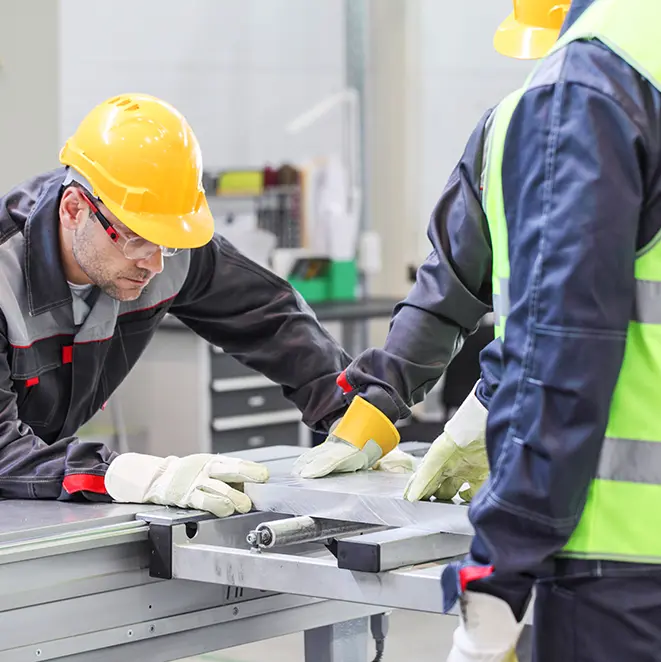
Our team of technicians has 15 years of experience. Our deep understanding of customer requirements allows us to identify potential issues and offer practical insights.
Designing the next generation of smart, sustainable, and high-performance helipad safety structures.
Our research and development team is testing fiber-optic and piezo-resistive strain sensors integrated directly into the perimeter netting mesh. In the future, these systems will provide real-time warning indicators for structural fatigue, ice loading, and excessive strain caused by heavy wind gusts or accidental landings, transmitting alerts directly to airport or vessel command stations.
By partnering with Fenglu aluminum, we are focusing on reducing our carbon footprint. Aluminum is highly recyclable, and our manufacturing processes aim to transition towards utilizing clean energy sources for extrusion. This approach supports green building initiatives and assists urban developers in securing LEED credentials.
For demanding offshore locations like marine oil platforms and FPSO units, standard anodization is not always sufficient. We are developing proprietary nano-ceramic and fluoropolymer thermal spray techniques. This surface engineering prevents localized galvanic corrosion when aluminum components are coupled with stainless steel wires in highly saline atmospheres.
To reduce onsite installation costs, our R&D department is designing modular "Snap-Lock" frame components. These kits arrive pre-assembled at the site, requiring minimal welding and basic tooling. This modularity reduces structural weight and decreases helipad installation time by up to 40% compared to traditional configurations.
Tailored engineering strategies targeting specific challenges faced by energy, municipal, and private real estate sectors.
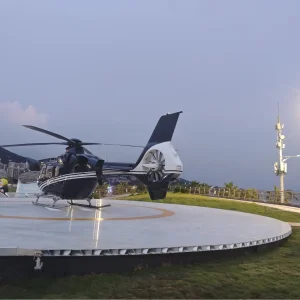
Densely populated urban centers require systems that manage wind shears and mitigate noise. Our aerodynamic aluminum profile layouts redirect high-altitude wind currents downwards, reducing landing turbulence on roof pads.
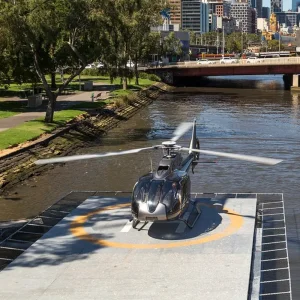
Offshore installations face salt spray, wave dynamics, and rapid shifts in wind directions. We utilize marine-grade 6082-T6 aluminum alloys and high-tensile 316 stainless steel mesh options to prevent corrosion and sustain structural integrity over years of service.
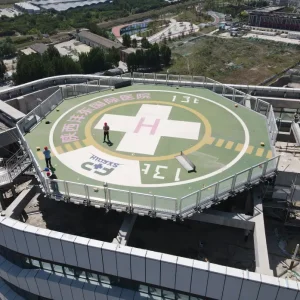
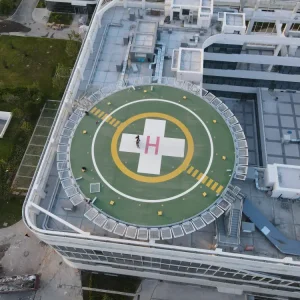
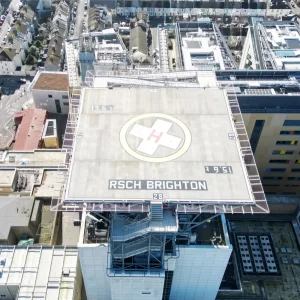
Hospitals require reliable access, zero down-time, and stable perimeter protection. Our non-combustible aluminum profile designs prevent potential fire spread while providing safety zones for medical teams unloading critically ill patients.
How LvXing leverages the industrial density of Foshan to deliver performance, cost stability, and compliance.
Located in the heart of Foshan, Guangdong—China's primary hub for advanced metals and engineering machinery—LvXing Intelligent Equipment Co., Ltd. benefits from a robust regional supply network. By maintaining close partnerships with domestic raw material suppliers, including Fenglu, we secure access to primary high-purity aluminum billets without the delays associated with multi-stage logistical chains.
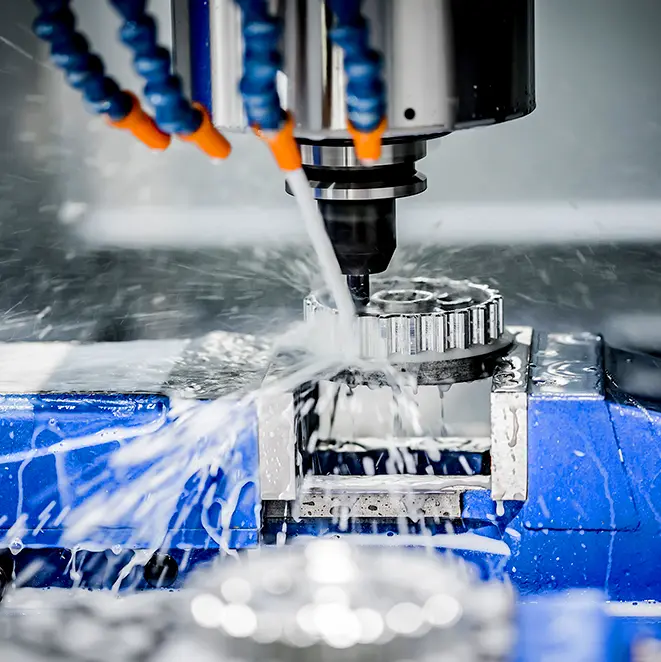
Our Factory 4.0 paradigm utilizes automated extrusion lines, precision multi-axis CNC milling machines, and digitized quality management systems. From the initial inspection of raw materials to final shipment, each process is documented within our ERP system. This digital tracking allows for full traceability of material composition, mechanical properties, and anodizing layer thickness, providing assurance to quality auditors and structural inspectors.
| Performance Metrics | LvXing Aluminum Systems | Traditional Steel Systems | Standard Import Alternatives |
|---|---|---|---|
| Structural Weight | 12 - 15 kg/m² (Lightweight advantage) | 35 - 50 kg/m² (Heavy foundation required) | 18 - 25 kg/m² (Moderate weight) |
| Corrosion Resistance | High (Self-passivating oxide film) | Low (Requires constant repainting) | Moderate (Depends on standard coating) |
| Design Life | 25+ Years with minimal upkeep | 8 - 12 Years (High maintenance) | 15 - 20 Years |
| Installation Complexity | Low (Modular interlocking channels) | High (Requires intensive field welding) | Moderate (Standard modular bolt systems) |
| Relative Cost Index | 1.0 (Optimal performance-to-cost ratio) | 0.8 (Low initial cost, high upkeep) | 1.8 - 2.5 (High customs/logistics overheads) |
Aligning documentation, specifications, and regional requirements for corporate project managers.
Procuring engineered safety infrastructure for high-value operations requires extensive compliance documentation. Procurement departments face challenges such as verifying third-party certifications, coordinating international shipping logistics, and confirming local regulatory alignment. At LvXing, our engineering and sales teams streamline these processes by offering technical support from the initial request for quotation through final installation.
We provide localized engineering packages, including CAD drawings, BIM modeling blocks, wind-load simulation data, and certified mill test reports (MTR) detailing chemical and mechanical properties. Our sales and engineering documents are available in English, Spanish, and German to ensure clear communication with local authorities during project approval stages. All product shipments are packaged in marine-grade crate structures to prevent physical deformation or galvanic exposure during transit.
Budgetary indicators for raw materials, customization engineering, and surface treatments.
Heliport nets and structural profiles are customized to match project specifications, wind load criteria, and environmental conditions. While final project quotes depend on layout complexities and raw material market values, this guide offers basic pricing parameters for project planning and budgeting.
| Profile / Mesh Type | Material Specification | Estimated Price Range (USD/m²) | Common Applications |
|---|---|---|---|
| LX-HP02 Profile System | Alloy 6005-T6 / 6061-T6 Extrusion | $110 - $150 | Standard elevated helipads, urban hospital roofs |
| LX-HP03 Heavy-Duty Profile | Alloy 6082-T6 high strength | $140 - $190 | Offshore oil and gas platforms, FPSO decks |
| LX-HP04 Interlocking Deck | Alloy 6063-T6 precision profile | $95 - $130 | Medium weight municipal structures, round helipads |
| Perimeter Safety Mesh (Manual) | SS316 marine-grade cable mesh | $85 - $120 | Safety boundaries, high corrosion locations |
| Anodized Aluminum Wire Mesh | High strength structural aluminum | $70 - $95 | Urban building helidecks, hotel rooftop installations |
*Disclaimer: The above rates are indicative. They vary based on dynamic raw metal indexes (LME), shipping terms (FOB/CIF), customized tooling setup fees, and total volume orders. Reach out to our design department for a customized project quote.
Technical answers regarding materials, certifications, testing, and customization options.
Compare structural profiles, safety nettings, and installation systems designed for diverse engineering environments.
 LvXing