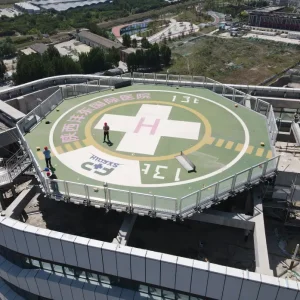
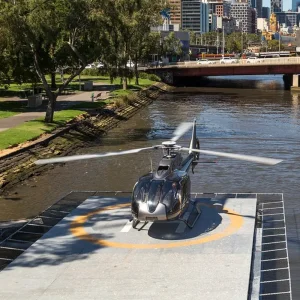
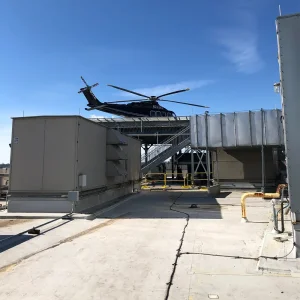
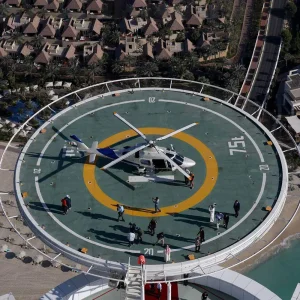
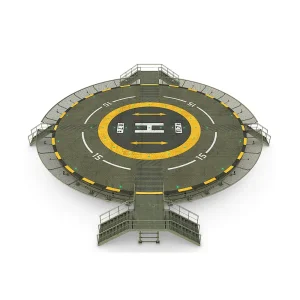
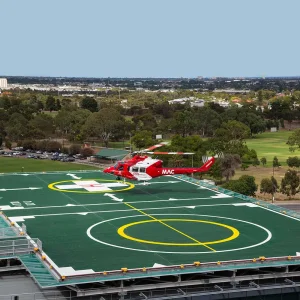
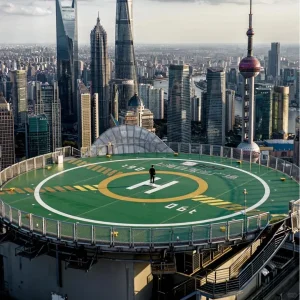
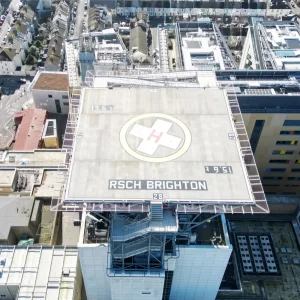
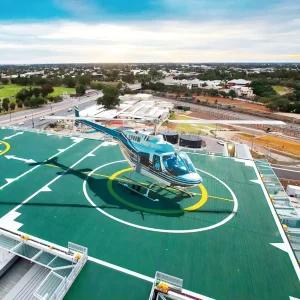
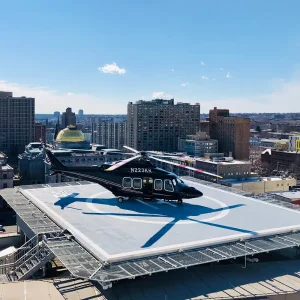
In high-stakes marine, offshore, and structural engineering projects, the helideck is a critical gateway. Operational safety here is non-negotiable. Helicopter Deck Nets—comprising both perimeter safety meshes and surface friction nets—form a crucial security barrier. These systems prevent helicopters from sliding during adverse weather conditions and protect personnel from fall hazards. Achieving CE Certification is not just a regulatory compliance checkmark; it represents a commitment to material integrity under severe mechanical shear and ambient salt spray exposures.
Established in 2015 and located in Foshan City, Guangdong, LvXing Intelligent Equipment Co., Ltd. boasts a skilled R&D team with extensive experience. We leverage exceptional technical expertise to effectively transform customers' ideas into reality, consistently meeting their precise requirements.
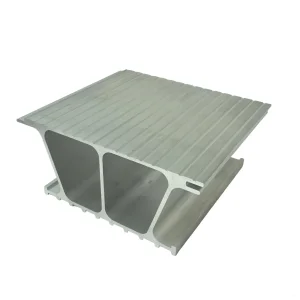
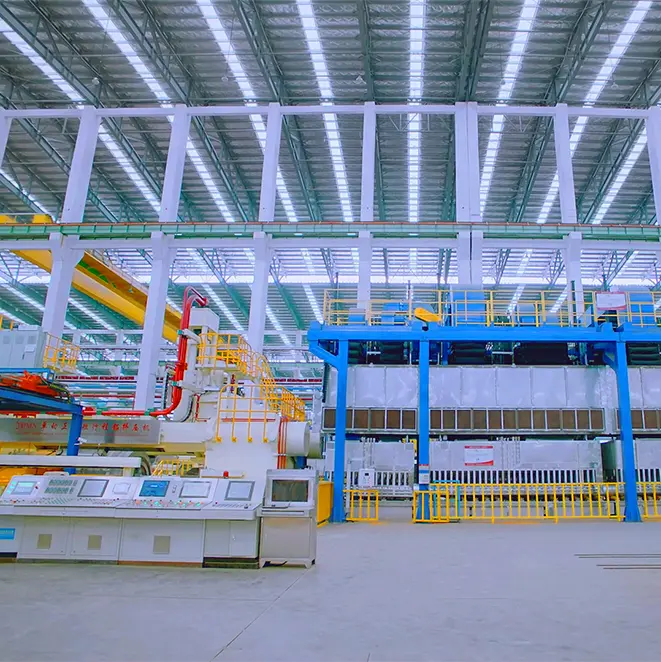
We utilize premium Fenglu aluminum, offering a diverse range of profiles for flexible applications. Our extrusion lines, ranging from 800T to 20,000T, accommodate alloys 1xxx, 2xxx, 3xxx, 5xxx, 6xxx, and 7xxx, allowing us to produce shaped products with section dimensions up to 1.2 meters in width and 28 meters in length. These products are recognized for their precision and meticulous processing, finding broad application in aerospace, military, medical, and industrial sectors.
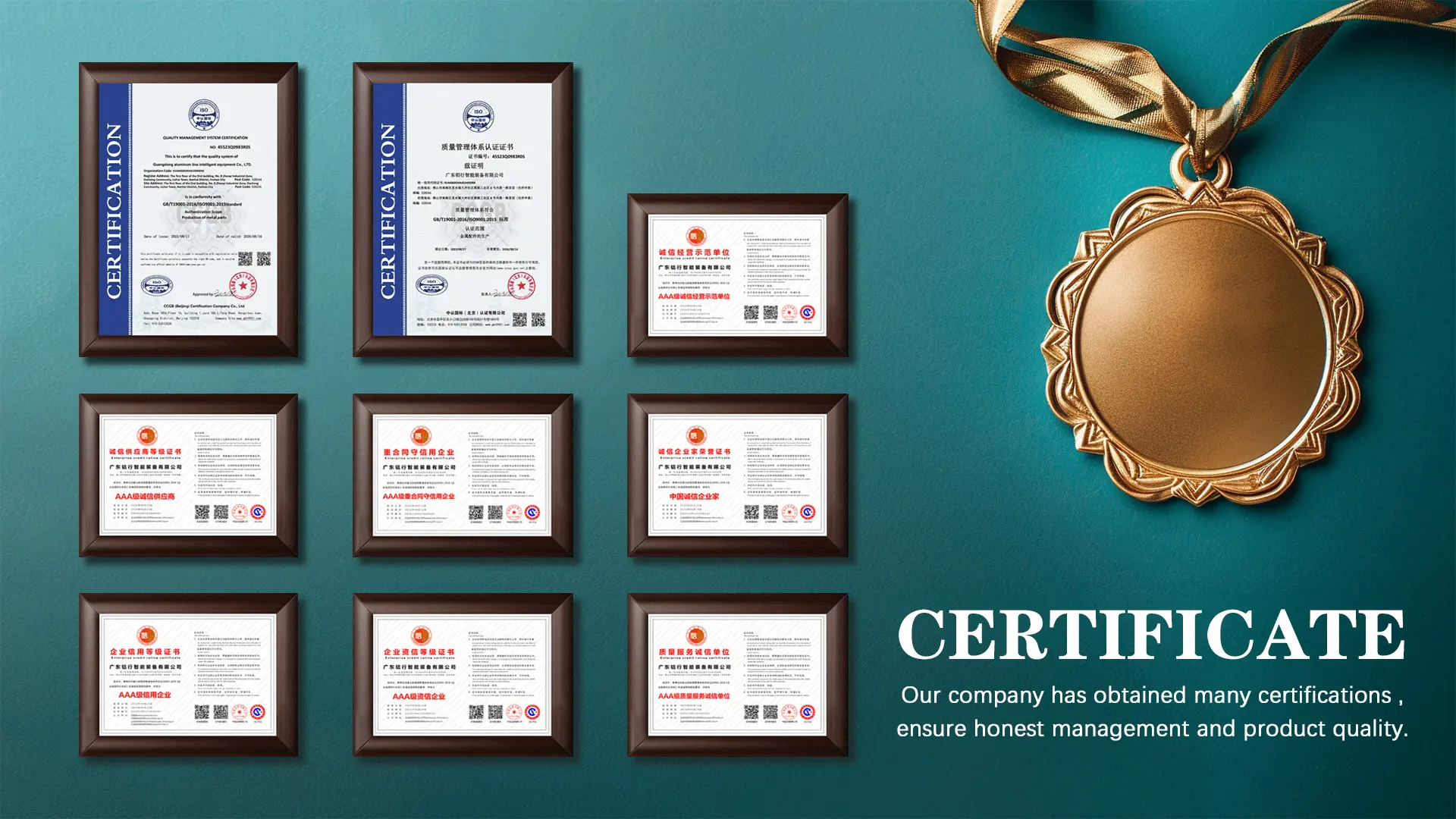
Our commitment to excellence is evident throughout the manufacturing process, rigorous quality control, thorough packaging, and efficient shipping procedures. This dedication has earned us recognition as a national excellent and honest enterprise, along with quality system certification in accordance with GB/T19001-2016/ISO9001:2015 standards. We aspire to be your trusted business partner and warmly invite you to visit our factory.

We have obtained the exclusive “Special Aluminium Materials for Aerospace” Certificate, qualifying our production lines for safety-critical civilian and military applications.
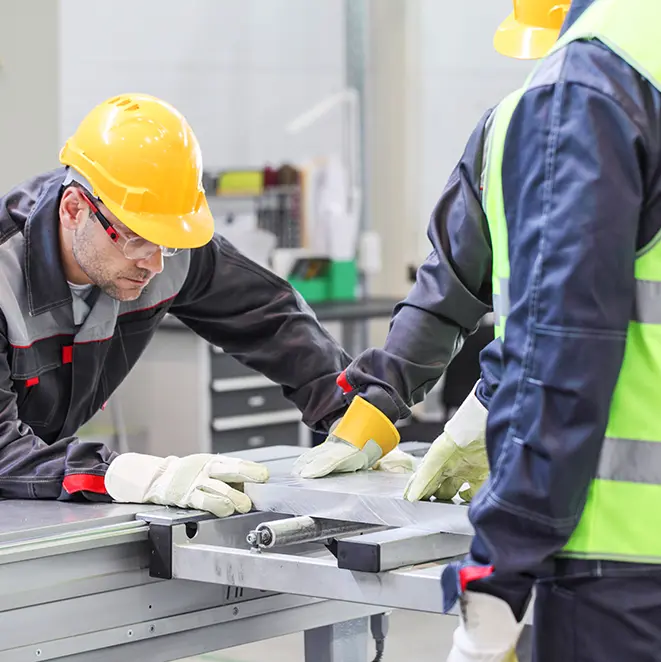

We provide and utilize high-quality Fenglu aluminum profiles. With extrusion lines ranging from 800T to 20,000T, we produce alloys 1xxx, 2xxx, 3xxx, 5xxx, 6xxx, and 7xxx up to 1.2m wide or 28m in length.
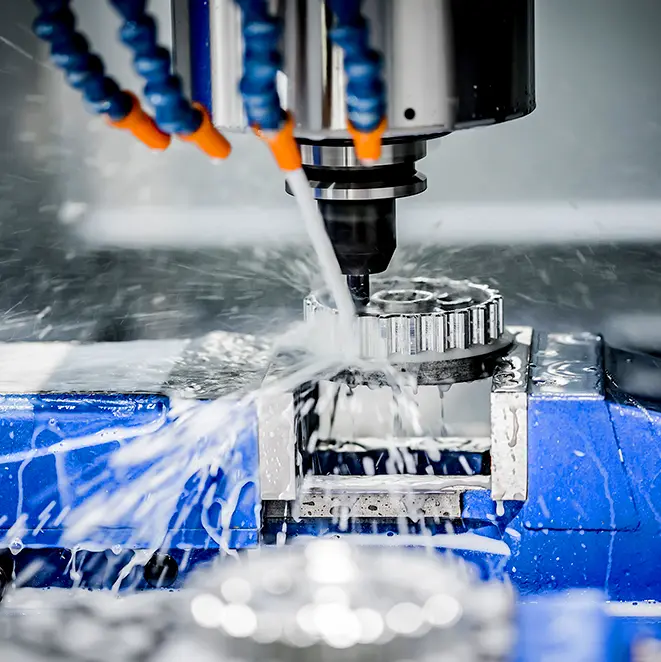

Our technicians hold 15 years of invaluable experience. Deep regulatory insight enables us to address structural load tolerances and environmental corrosion pathways in our custom netting.
Modern aviation logistics demand robust infrastructure on marine, offshore, and structural locations. From deep-water exploration platforms (FPSOs, Jack-up rigs) to skyscraper rooftops and regional trauma centers, the requirements for stable, certified helidecks are rapidly changing. Environmental conditions, mechanical vibration, and strict weight limitations dictate modern design considerations.
Traditional steel structures are being replaced by lightweight, corrosion-resistant marine-grade aluminum alloys. By using high-strength profiles from our 20,000T extrusion lines, project developers can reduce top-side weight by up to 60% compared to structural steel. This weight reduction directly translates to lower CAPEX for offshore hull construction and simplified structural load paths for urban rooftop retrofit projects. However, the light weight of aluminum structures requires specialized friction nets and perimeter safety systems to maintain operational continuity under heavy winds and dynamic landings.
Our global supply capacity addresses the strict safety expectations of class societies like DNV, ABS, and Lloyd’s Register. By integrating the structural frame design with the landing and perimeter safety netting, we deliver unified solutions that pass third-party audits on the first attempt, preventing costly project start-up delays.
Helicopter landing decks must comply with international civil aviation and maritime rules, such as CAA CAP 437 (Standards for Offshore Helicopter Landing Areas), FAA Advisory Circulars, and EN standards. Safety nets and deck landing profiles must satisfy several key engineering criteria:
Under CAP 437 regulations, perimeter safety nets must be designed to withstand an impact load equivalent to a 100 kg body falling from a height of 1 meter without failure. Our structures utilize high-tensile 6082-T6 and 6005A-T6 aluminum alloys. These alloys provide excellent energy absorption properties and yield strengths exceeding 250 MPa, preventing structural collapse under sudden vertical impact.
A key parameter in helicopter landing operations is the surface friction coefficient, which must remain above 0.85 in wet, oily, or icy environments. Traditional deck surfaces wear down over time. Our integrated deck netting utilizes specialized weaves of 316 stainless steel wire mesh or heavy-duty polymer cords. These components work together with extruded aluminum deck profiles to secure helicopter skids and tires during high-pitch offshore vessel maneuvers.
When steel netting contacts aluminum decking in marine environments, galvanic corrosion can occur. We address this issue by anodizing our aluminum extrusion profiles to a minimum thickness of 25 microns and incorporating non-conductive elastomeric isolating elements. This engineering approach eliminates direct metal-to-metal contact, preserving structural integrity for over 25 years in offshore applications.
Helicopter landing safety nets are deployed in various environments, each presenting unique engineering challenges. Our team modifies our aluminum alloy combinations and net weaving patterns to match these localized operating requirements:
In cold sub-zero regions, structural steel can experience brittle transition. Our 6000-series aluminum profiles maintain their ductility and impact toughness down to -60°C. To prevent ice buildup on landing nets, our designs feature modular channel runs that accommodate electrical heating cables. This configuration supports de-icing operations while keeping the perimeter safety net clear of snow load accumulation.
High-temperature environments expose deck nets to intense UV radiation and sand particle abrasion. Standard polymer-based nets degrade rapidly under these conditions. Our solution integrates stainless steel wire nets or advanced UV-stabilized polymer meshes with hard-anodized aluminum frames. This material selection maintains tension and structural capacity despite prolonged exposure to high temperatures and sunlight.
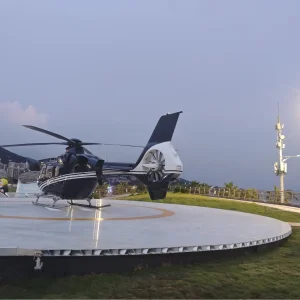
In the South China Sea, the Gulf of Guinea, and offshore Brazil, humidity and high salt concentrations accelerate oxidation. We utilize corrosion-resistant 5000 and 6000-series aluminum alloys combined with 316L marine-grade stainless steel cables. This setup ensures reliability in high-salinity areas, reducing the need for frequent maintenance and visual inspections by offshore operators.
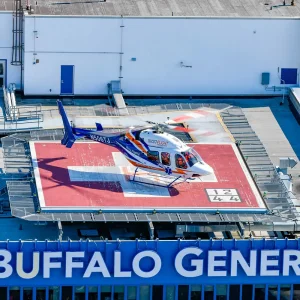
Municipal helipads on hospitals and corporate offices must address strict fire safety and acoustic reflections. Our aluminum helipad profiles feature integrated foam-deluge fire extinguishing pathways and drainage networks. These design details quickly channel fuel spills away from the landing area into safety retention systems, protecting the building structure below.
As offshore logistics transition toward autonomous drone deliveries and heavier electric vertical take-off and landing (eVTOL) aircraft, landing deck technology must evolve accordingly. Our R&D team is driving innovation across several key areas:
Future helidecks will feature real-time structural health monitoring. We are developing prototype nets with integrated fiber-optic strain sensors. These sensors detect local impact points, monitor structural fatigue, and alert maintenance crews when tension levels drop below standard parameters, enabling predictive maintenance.
To reduce deadweight on ultra-deepwater vessels, we are testing structural profiles that combine high-strength aluminum alloys with carbon fiber reinforced polymers (CFRP). This hybrid approach reduces structural weight by an additional 25% while maintaining the stiffness required to support heavy helicopter landings.
In line with global decarbonization goals, we are expanding our use of recycled aluminum billets. Utilizing green electricity during the smelting and extrusion processes allows us to manufacture low-carbon profiles, helping customers meet their project-specific environmental targets.
Our manufacturing facility in Foshan City, Guangdong, operates within one of the world's most complete industrial metal ecosystems. This location provides distinct advantages for major global engineering projects:
Through our partnership with Fenglu Aluminum, we maintain direct access to raw materials and smelting capacity. Our extrusion line options, ranging from 800T to 20,000T, allow us to process diverse profiles without depending on external rolling mills. This integrated structure shortens lead times, moving projects from initial design to shipped product in 15 to 30 days.
Our location near key shipping ports (Guangzhou, Shenzhen, Hong Kong) enables flexible logistics planning. Whether shipping components by ocean container or air freight for urgent repairs, we coordinate secure packaging and customs documentation to ensure prompt delivery.
Perimeter Safety Nets are installed around the outer edge of the helideck to protect personnel from fall hazards. They typically measure 1.5 meters wide and slope slightly upward at about 10 degrees. Surface Landing Nets (or friction nets) are secured directly to the deck surface. They provide friction for the helicopter's tires or skids, preventing movement in high winds or when the deck is wet.
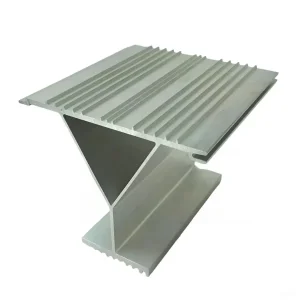
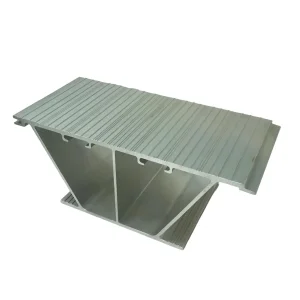
Our 20,000T extrusion press allows us to produce large, continuous aluminum profiles up to 1.2 meters wide and 28 meters long. This capability minimizes the need for welds and joints, creating a stronger structural landing platform with fewer failure points.
We prevent galvanic corrosion by hard-anodizing all aluminum profiles to a thickness of at least 25 microns. We also incorporate non-conductive elastomeric isolating elements to prevent direct steel-to-aluminum contact.
Yes, our nets are designed and certified to meet the safety expectations of CAA CAP 437. They are engineered to absorb the impact of a 100 kg load falling from 1 meter, ensuring reliable containment performance.
We primarily use 6082-T6 and 6005A-T6 alloys for the structural framing due to their high yield strength and marine corrosion resistance. For components requiring higher ductility, we selectively apply 5000-series alloys.
 LvXing