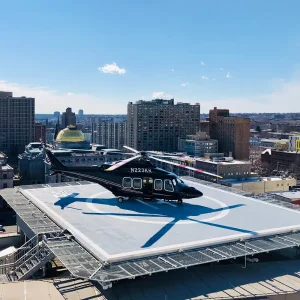
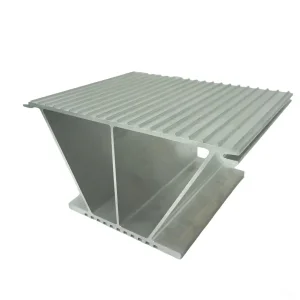
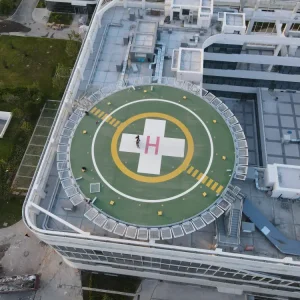
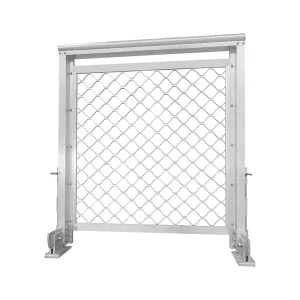
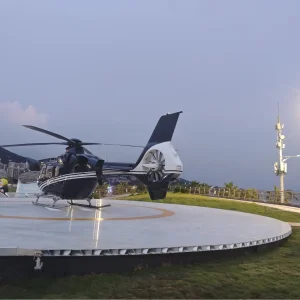
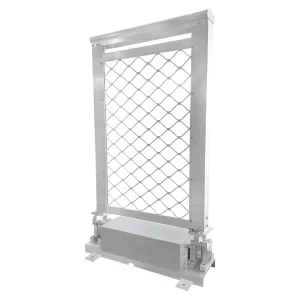
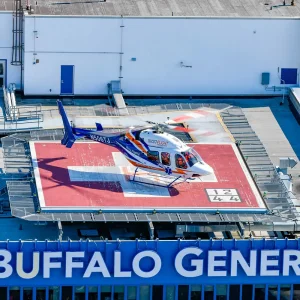
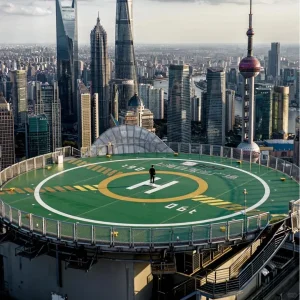
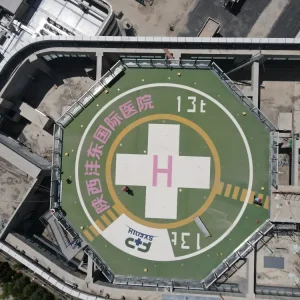
Explore our specialized products, from marine-grade structural aluminum extrusions to CE-certified perimeter safety net solutions designed for global infrastructure.
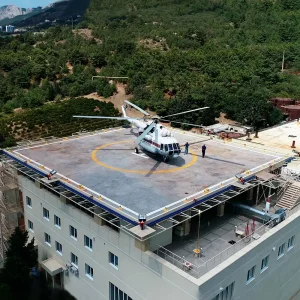
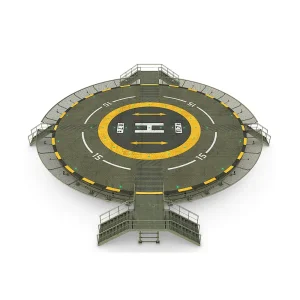
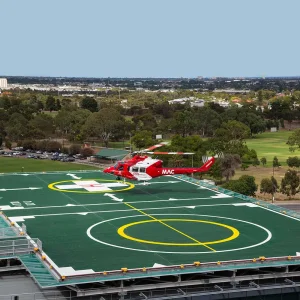
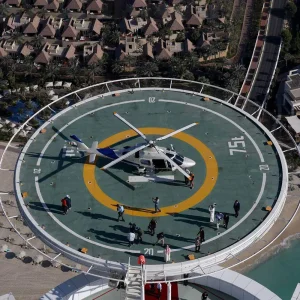
In modern architectural, offshore, and medical infrastructure, the integration of helipads requires stringent safety systems. The perimeter of any elevated helideck represents a high-risk zone where personnel, equipment, or baggage face falling hazards. As a result, international aviation authorities mandate the installation of high-tensile safety netting systems around helipads.
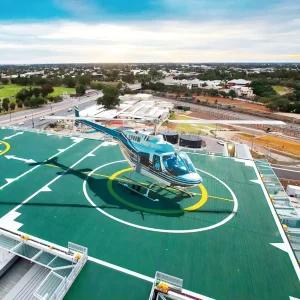
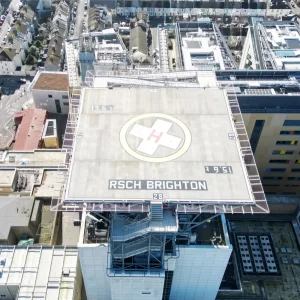
Today, the global market for helipad guard nets is driven by urban expansion (skyscrapers), offshore energy exploitation (oil & gas rigs), and emergency healthcare services (hospital rooftop helipads). These installations are strictly regulated by bodies such as the International Civil Aviation Organization (ICAO), the Federal Aviation Administration (FAA), and the UK Civil Aviation Authority (CAP 437). Ensuring dynamic shock absorption, resistance to extreme weather, and compliance with maritime corrosion classifications is paramount.
A certified helipad safety net is not just a passive fence. It is a highly engineered tension barrier designed to catch a falling adult without causing deceleration injury, absorbing kinetic energy through elastic deformation.
Unpacking the regulatory frameworks that govern the manufacturing and engineering testing protocols for safety nets.
Mandates safety netting extending at least 1.5 meters outward from the edge of the helideck. The system must display upward slope inclination and withstand a drop load test of 122 kg from a height of 1 meter.
The definitive benchmark for offshore safety. It details mesh dimension restrictions, non-snagging properties, dynamic flex parameters, and resistance to highly corrosive maritime atmospheres.
Validates manufacturing quality, material testing, safety coefficients, and durability tracking. As a certified manufacturer, we provide direct traceability for every batch of mesh and frames.
| Performance Metric | Requirement (ICAO & CAP 437) | LvXing Aluminum Alloy System Advantage | Traditional Stainless Steel Mesh |
|---|---|---|---|
| Corrosion Resistance | Minimum C5-M Marine Class durability | Excellent (Alloy 6005A-T6 + Anodized Treatment) | Subject to crevice corrosion over time |
| Weight Burden | Minimized to reduce cantilever stress | Ultra-lightweight structural profiles | Heavy weight profile, increases deck stress |
| Dynamic Load Profile | Absorbs drop of 122kg with elastic return | Optimized deformation without permanent set | Rigid deceleration, higher potential for injury |
| Maintenance Cycle | Requires regular annual inspections | Virtually zero-maintenance for up to 15 years | Frequent replacement of individual wire lines |
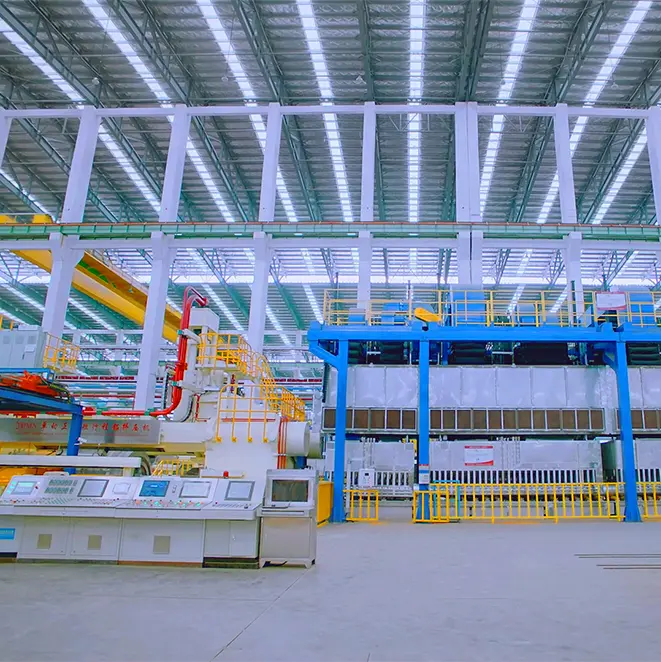
Our production facilities are situated in Foshan City, Guangdong Province, the absolute core of the global aluminum industrial cluster. This proximity grants us access to premium-grade **Fenglu aluminum** profiles, utilizing supply chain integrations that drastically reduce logistics overheads and lead times.
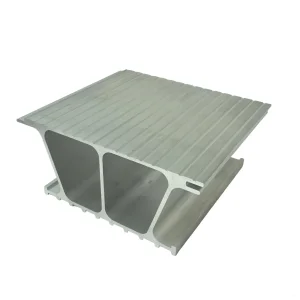
LvXing Intelligent Equipment Co., Ltd. features a highly advanced production floor equipped with extrusion lines ranging from **800T to 20,000T**. This huge capacity allows us to manufacture complex shaped profiles with section dimensions up to **1.2 meters in width and 28 meters in length**. In comparison with manufacturers globally, our capability to extrude single, continuous long-span components reduces joints, thus maximizing structural strength.
By leveraging Chinese industrial manufacturing scale, we maintain an efficiency that translates to significant cost savings for EPC contractors and hospital procurement agents worldwide, without compromising on materials compliance (Alloys 1xxx, 2xxx, 3xxx, 5xxx, 6xxx, and 7xxx).
Combining 15 years of technical expertise with elite structural materials to deliver reliable safety barriers.
With massive press lines up to 20,000T, we satisfy structural demands for military, aviation, and industrial applications. Our ability to supply specialized shapes and custom sizes is unmatched.
We hold the prestigious "Special Aluminium Materials for Aerospace" certificate, demonstrating that our manufacturing environment adheres to quality control procedures required in high-altitude and military aviation sectors.
Our engineers analyze structural layouts, wind loading simulations, and load-path metrics before manufacturing begins. This preempts field errors and guarantees installation compatibility.
Under the supervision of our leading engineering team, LvXing translates complex architectural blueprints into precision profiles. We do not just sell profiles; we supply comprehensive security installations.
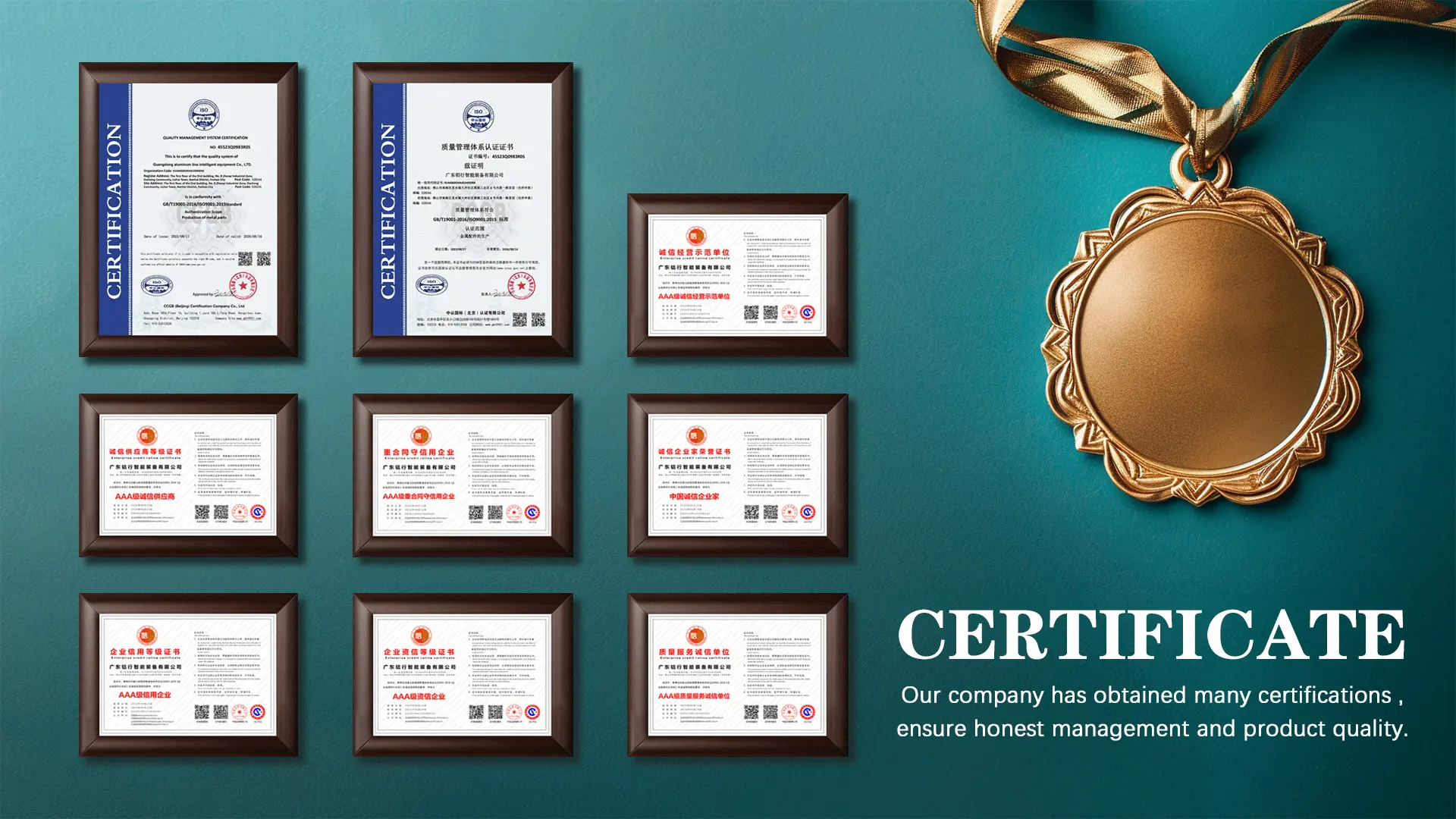
Our materials conform to GB/T19001-2016/ISO9001:2015, which translates to complete material traceability—from the initial billet melting phase, through chemical composition analysis, heat treatment, tensile strength verification, and final safety net drop tests.
From standard building applications to extreme environments, our safety nets perform without compromise.
Environment: Severe salinity (C5-M Classification), continuous UV radiation, high-amplitude wind turbulence, and dynamic ship movement.
Design Priority: Utilizing high-grade marine aluminum profiles paired with flexible net structures. The perimeter net acts to safely catch any slipping technicians or rolling freight. Frame assemblies are designed to fold away downwards to allow obstruction-free landing procedures and easy deck cleaning.
Environment: Tall structures experiencing extreme vortex-shedding wind forces and significant thermals.
Design Priority: The mesh structure is engineered with a wind transparency coefficient that prevents the building's updrafts from creating aerodynamic lift underneath the net, which would otherwise strain the structural anchors. The system conforms neatly with building aesthetics.
Environment: Rapid medical evacuation zones where civilian personnel operate in fast-paced scenarios.
Design Priority: Smooth mesh lines without sharp edges to prevent injury to medical crew. Non-snagging properties ensure that clothing or safety gear does not get caught during emergency patient transfers.
Environment: Tactical situations requiring rapid deployment, impact resistance, and low radar cross-section profiles.
Design Priority: High-tensile alloys (primarily 7xxx series) are utilized to handle extreme impact energy from dynamic flight deck operations. Coated with non-reflective finishes for naval stealth compliance.
Procuring aviation-grade safety equipment involves multiple stages of validation. For procurement officers, EPC managers, and lead structural engineers, selecting a manufacturer requires checking several critical checkboxes:
At LvXing, we address these exact parameters by providing detailed engineering submittal packages, mechanical simulation drawings, and direct engineering access to our Foshan technicians during the planning phase.
How materials science and IoT integration are shaping the future of helipad operations.
Integration of optical fiber lines or copper micro-traces within the mesh allows real-time structural health monitoring. If a strand breaks or deforms due to impact, a telemetry warning is sent to the airport operator.
Integrating photoluminescent pigments directly into the safety net coating or using embedded low-power LED strips along the frames to provide pilot landing guidance during night or severe weather conditions.
The push toward using secondary aluminum with low carbon footprints. Because our aluminum is 100% recyclable, it helps construction projects achieve LEED (Leadership in Energy and Environmental Design) green building ratings.
Authoritative answers to the most common technical questions asked by structural engineers and procurement heads.
A CE Certified helipad safety net must conform to standard safety netting frameworks (such as EN 1263-1 where applicable) adapted for high-risk heliport parameters. It guarantees that the mesh undergoes static load testing, energy absorption testing, dynamic drop tests, and chemical degradation checks. It ensures that the structural frame, tension wires, and mesh components exhibit no structural failure when subject to sudden impact from heights.
While stainless steel offers high tensile strength, it adds massive dead-weight to cantilevered helideck structures and is susceptible to crevice corrosion in marine environments unless high-grade (and very expensive) duplex steels are used. Marine-grade aluminum (like 6005A, 6082, or 6061) is lightweight, reducing structural load, and forms a natural oxide layer that protects it from saline corrosion. Additionally, aluminum offers better flexibility, allowing the net to absorb fall energy gently.
Under ICAO Annex 14 Volume II, the safety net must be installed around the edge of the helideck and extend outwards by at least 1.5 meters. The net must also have an upward slope of approximately 10 degrees to prevent catching victims and then rolling them off the edge. Furthermore, the net must not project above the level of the landing area (it must remain below the FATO boundary) to prevent helicopter rotor strikes.
A 20,000-ton extrusion press allows us to extrude large-scale, complex shapes with wall thicknesses designed for optimal load-bearing strength. This means we can manufacture main support beams and deck modules in continuous sections up to 28 meters long and 1.2 meters wide. Reducing joint connections lowers the risk of structural failure and speeds up installation times on-site.
With high-quality anodized coatings and corrosion-resistant alloys, our helipad safety net systems have a design life of 15 to 20 years. Maintenance protocols involve checking bolt torque specifications, inspecting the mesh for localized abrasions, verifying that structural joints move freely (for folding systems), and performing annual pull tests to ensure the mesh tension meets safety standards.
Yes. Because we control the extrusion dies and have a 15-year experienced R&D engineering team, we can customize safety net frames to follow circular decks, polygonal shapes, or irregular rooftop perimeters. Our engineers work directly with your CAD or BIM files to build a custom-engineered solution.
Browse through our wider industrial offerings, ranging from clean-energy bracket hardware to urban mass transit screen systems.