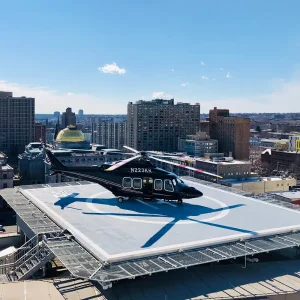
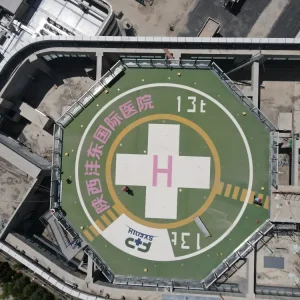
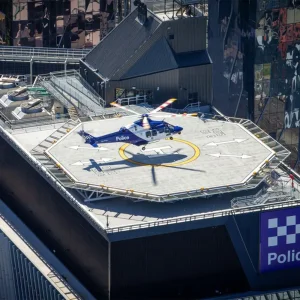
Explore our engineering-grade aluminum alloy profiles and CE-certified perimeter safety nets.
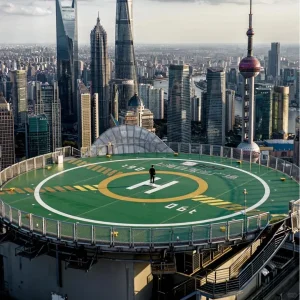
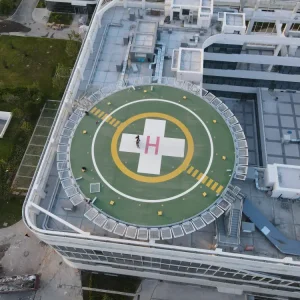
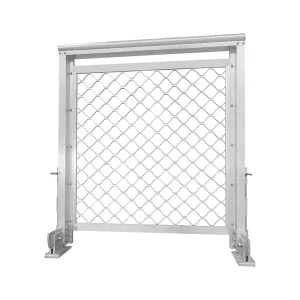
Helipad perimeter safety nets are critical, life-saving structural safety components designed to protect flight crew, passengers, and maintenance personnel from falls. In environments like commercial rooftops, hospital evacuation pads, offshore drilling platforms, and marine vessels, winds are unpredictable and structural heights are extreme. A standard mesh system is insufficient; the safety net must be designed to withstand high impact forces without tearing or sagging.
Our safety nets are constructed from marine-grade, high-tensile aluminum alloy 6061-T6 and 316 stainless steel components. They are specifically tested to meet the rigorous European CE Certification standards. CE compliance ensures that the safety systems are subjected to severe drop tests—typically absorbing the impact of a 100 kg to 200 kg mass dropped from heights of up to 1.5 meters without failure. This engineering design ensures the net acts as an elastic safety catch system rather than a rigid bounce surface, preventing injury during accidental falls.
Key Compliance Frameworks: CAP 437 (Offshore Helicopter Landing Areas), ICAO Annex 14 (Aerodromes), and FAA AC 150/5390-2C.
Max Extrusion Line Capacity
R&D Team Experience
Certified Standards
Max Profile Length Capability
Leveraging state-of-the-art metallurgical technologies to deliver global-standard security networks.
Established in 2015 and located in the famous industrial capital of Foshan City, Guangdong Province, LvXing Intelligent Equipment Co., Ltd. boasts a highly skilled R&D team with extensive experience. We leverage exceptional technical expertise to effectively transform our customers' custom helipad concepts into physical reality, consistently meeting precise structural tolerances.
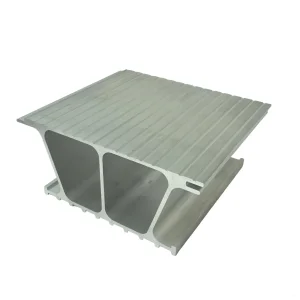
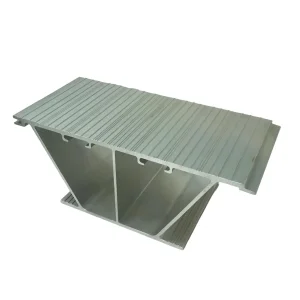
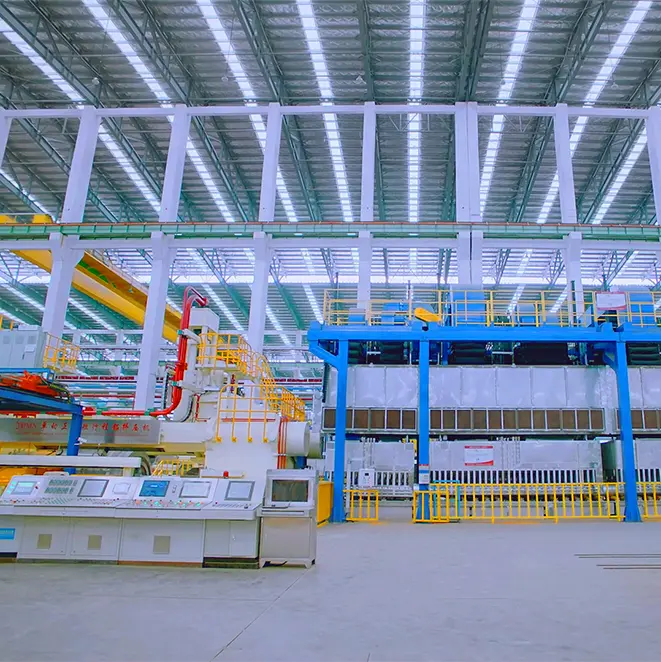
We utilize premium Fenglu aluminum, offering a diverse range of high-grade profiles for flexible applications. Our extrusion lines, ranging from 800T to 20,000T, accommodate high-strength alloys across the 1xxx, 2xxx, 3xxx, 5xxx, 6xxx, and 7xxx series. This enables us to manufacture completely customized, structural shaped products with cross-section dimensions up to 1.2 meters in width and 28 meters in length.
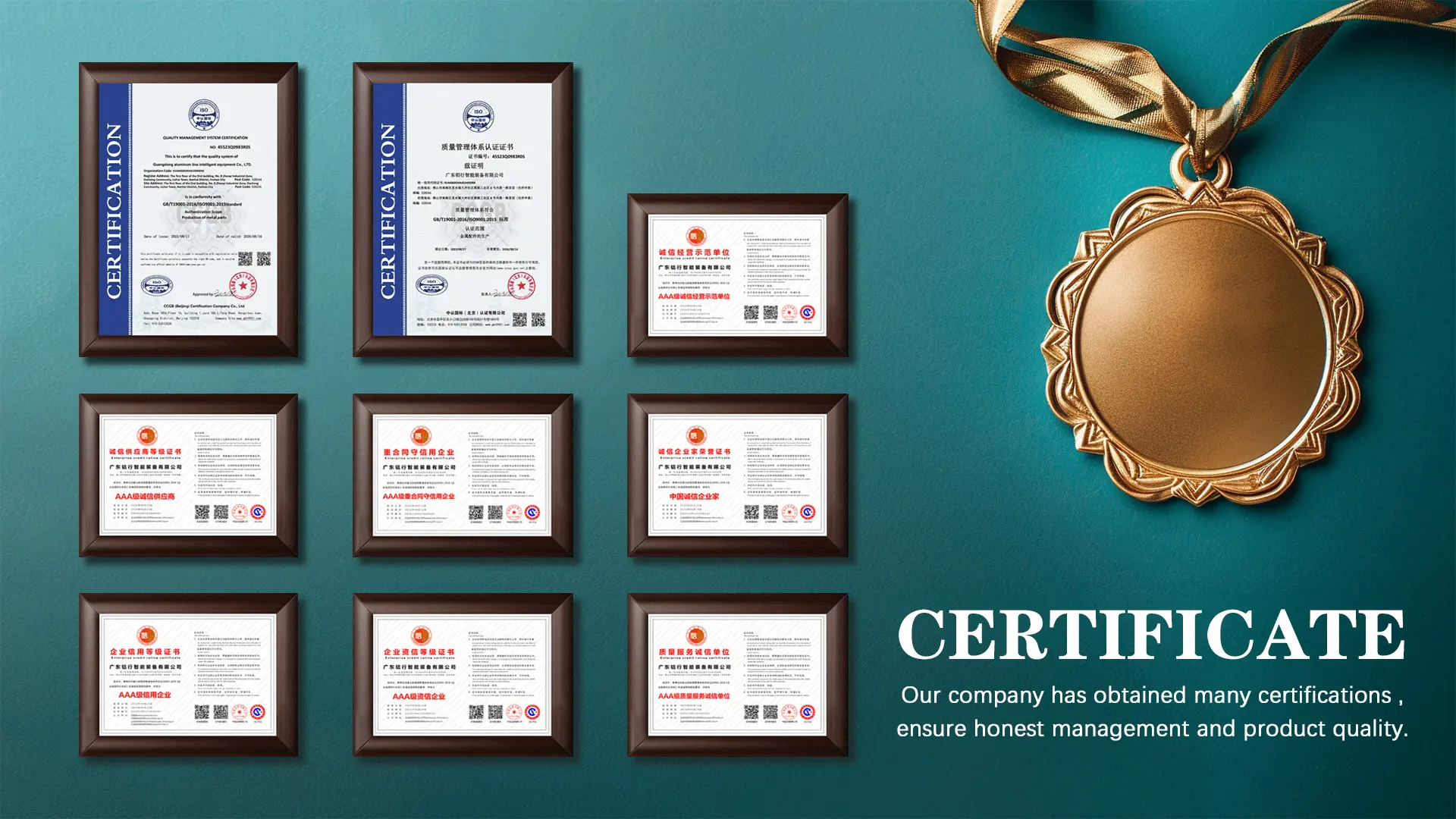
These advanced aluminum products are recognized for their precision and meticulous post-processing, finding broad application in aerospace, military, medical, marine, and industrial sectors. Our commitment to excellence is reflected in our strict adherence to GB/T19001-2016 and ISO9001:2015 standards.
Why Tier-1 EPC Contractors and Aviation Authorities partner with Lvxing.
We have obtained the exclusive “Special Aluminium Materials for Aerospace” Certificate. This qualification guarantees that our raw materials exhibit the highest fatigue strength, structural integrity, and resistance to environmental stress cracking.

Providing high-quality Fenglu profiles. With extrusion capacities spanning 800T to 20,000T, we accommodate complex cross-sections up to 1.2m wide and 28m long. Ideal for custom structural modules without structural joints.

Our engineering division possesses a deep understanding of standard load-bearing and wind shear mechanics. We anticipate potential safety issues, deliver detailed CAD/BIM layouts, and custom-tailor the net frame tension to comply with site requirements.

How our centralized supply chain translates into unparalleled quality and global cost efficiencies.
Foshan is the undisputed heart of global aluminum manufacturing. By centering our production facility here, Lvxing benefits from direct access to raw material smelters, rapid alloy modification, and localized tooling experts. This structural proximity enables us to significantly reduce logistics lag times for large-scale projects.
Our raw material feedstock undergoes strict spectrographic testing. This ensures the correct ratio of magnesium and silicon is maintained, giving the 6xxx series profiles optimal strength and corrosion resistance. Our localized supply chain enables us to execute projects faster than overseas competitors, from drawing approvals to on-site delivery.
Staying ahead of regulatory shifts and environmental demands in critical industries.
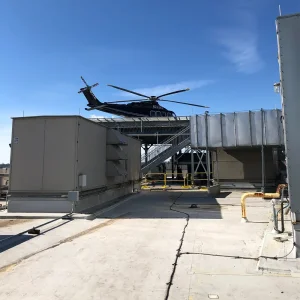
Marine environments impose harsh conditions on safety equipment. Current safety standards dictate that safety nets must feature non-combustible material composition and must not project above the level of the landing area. Our low-profile aluminum alloy perimeter systems provide reliable drop absorption while remaining unaffected by salt water exposure.
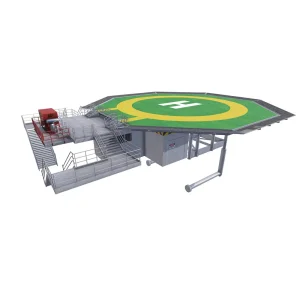
For municipal trauma centers and commercial skyscrapers, weight and wind resistance are key constraints. By integrating lightweight aluminum deck structures with micro-mesh safety nets, we reduce dead-load on building structures. The low wind resistance profiles minimize turbulence during critical landing operations.
Traditional nylon and synthetic nets suffer from quick UV degradation, requiring replacement every 2 to 3 years. We are seeing a major global shift toward maintenance-free aluminum safety net systems. These system boast service lives exceeding 25 years, delivering a much higher return on investment (ROI) for asset owners.
Custom-fit safety solutions designed for challenging installations.
Engineered to minimize structural vibration and resonance during emergency air ambulance landings. Focuses on quick egress and absolute safety under high foot-traffic scenarios.
Built to endure corrosion in severe offshore environments, utilizing highly resistant alloys (6082-T6 / 6061-T6) and 316 stainless steel cable nets. Fully compliant with CAP 437.
Aesthetically integrated perimeter nets that complement modern skyscraper architecture while exceeding local building safety codes and aviation guidelines.
Rapidly deployable, high-impact resistant modular decks and safety mesh systems designed for heavy aircraft and extreme tactical operations.
From metallurgical verification to final safety net load testing, precision is our standard.
Every batch of raw aluminum ingots undergoes spectrographic testing to verify the concentration of trace elements, ensuring compliance with international aerospace and marine standards.
Profiles are extruded on presses ranging from 800T to 20,000T, followed by precision aging in heat treatment ovens to achieve the correct T6 temper mechanical properties.
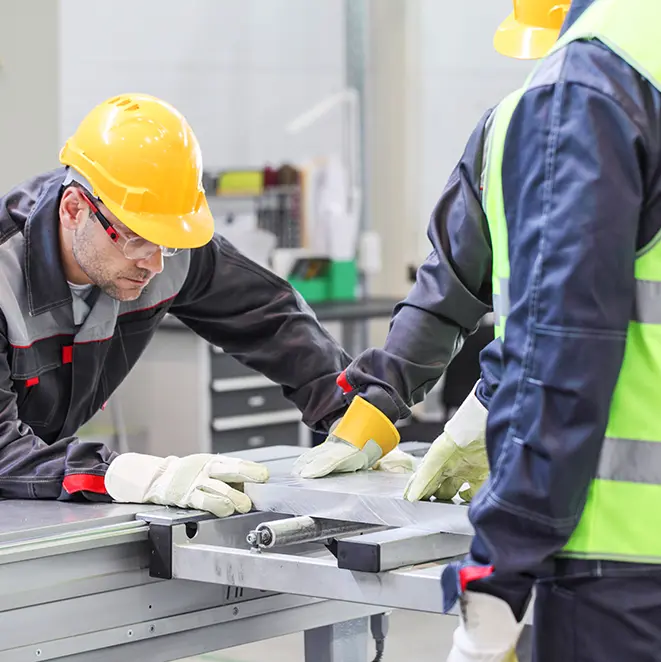
Prototypes and sample safety frames are subjected to impact testing (100+ kg drop tests) to verify the energy dissipation characteristics of our wire mesh and frame attachments.
Detailed technical answers to common engineering and procurement inquiries.
Engineered for stability, durability, and compliance.
 LvXing