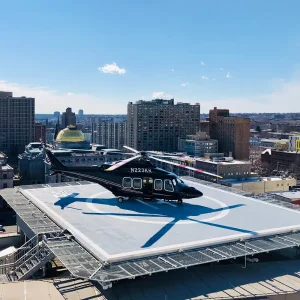
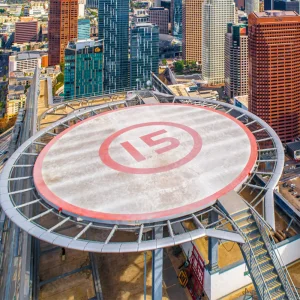
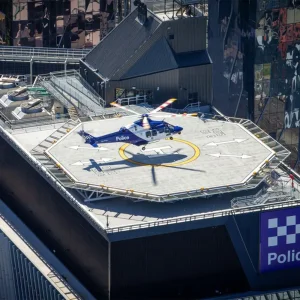
Engineered to comply with stringent European CE and Japanese Industrial Standards (JIS) for automotive, structural, and heavy safety applications.
Utilizing high-end Fenglu aluminum, certified for heavy industrial and aerospace structures, supporting alloys from 1xxx to 7xxx.
Equipped with state-of-the-art extrusion lines ranging from 800T up to 20,000T, allowing for sections up to 1.2m wide and 28m long.
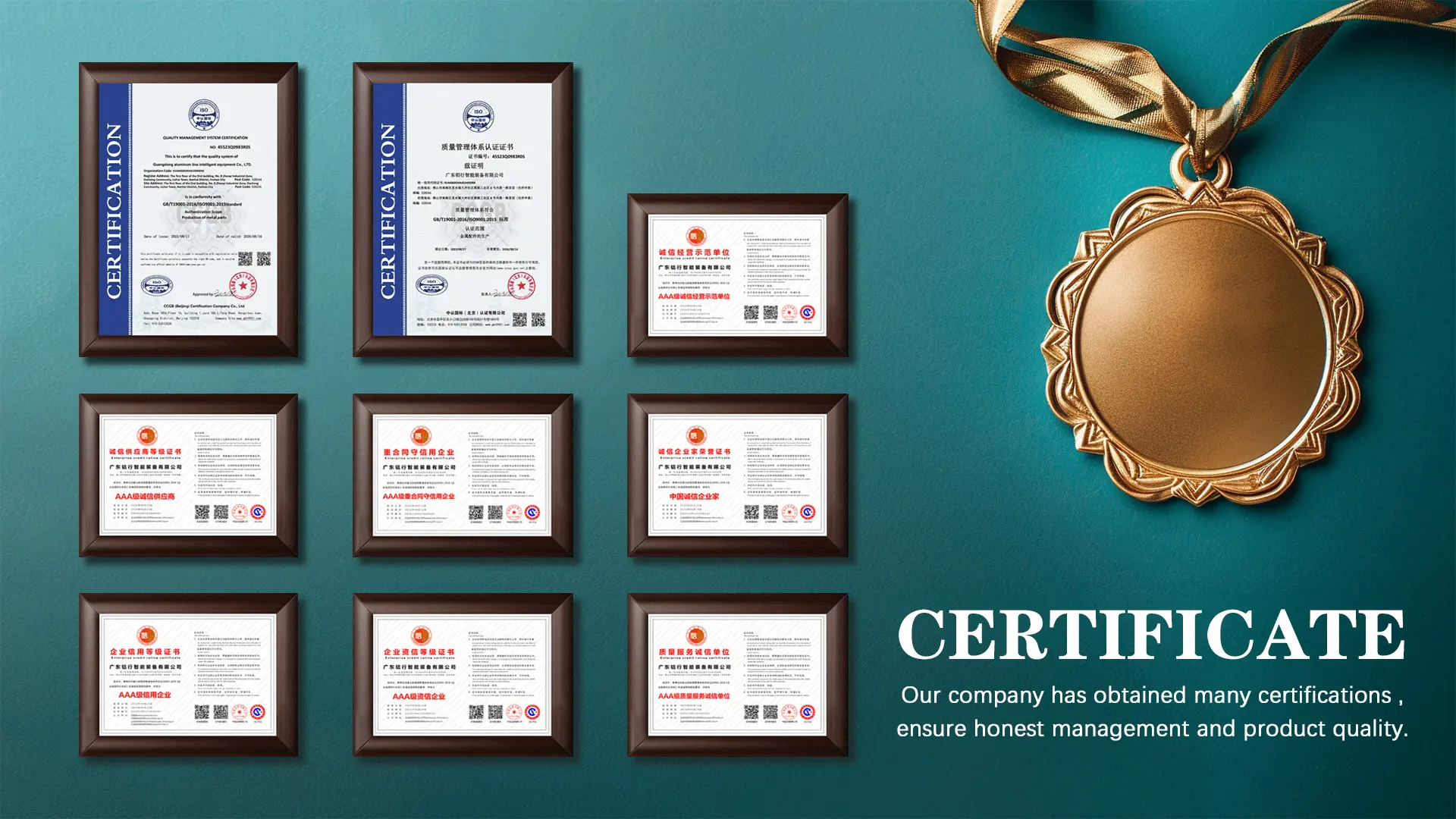
Certified in complete accordance with GB/T19001-2016 and ISO9001:2015 standards, ensuring zero defect rate in precision mesh weaving.
In the modern commercial and recreational vehicle industries, utility performance is no longer separated from structural safety. The global market is experiencing an unprecedented surge in demand for durable, weather-resistant, and high-tensile Van Sliding Door Window Shade Nets. Driving this demand is the rising adoption of multi-purpose vehicles (MPVs), logistics vans, and camper conversions across Japan, Europe, and North America.
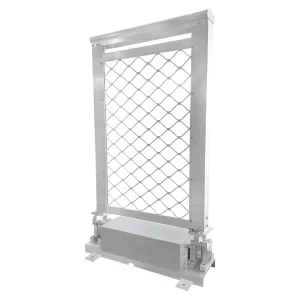
Historically, window screens were treated as low-cost textile accessories. Today, leading Japanese automotive manufacturers and tier-one suppliers treat window shade nets as integrated safety and environmental control subsystems. These systems must provide optimal solar filtration, maintain high visibility, resist intense mechanical wear from automated sliding doors, and prevent insect ingress—all while ensuring they do not compromise the vehicle's structural integrity or aerodynamic performance.
Japanese engineering stands out globally due to its rigorous adherence to precision tolerances and structural longevity. Known locally as *Monozukuri*, this design philosophy influences every element of the manufacturing process of sliding door window shade nets:
Leveraging our extensive industrial manufacturing capabilities, we supply both lightweight automotive-grade window shade systems and heavy-duty structural safety nets. Below is the technical breakdown outlining our capabilities across different material configurations:
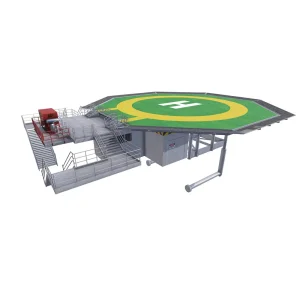
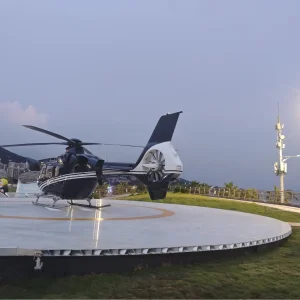
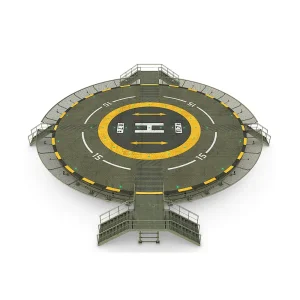
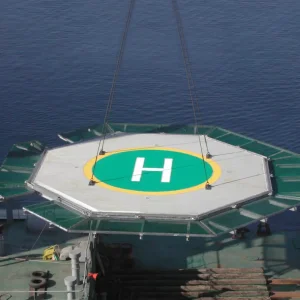
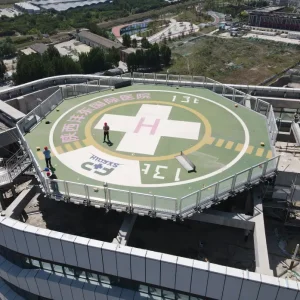
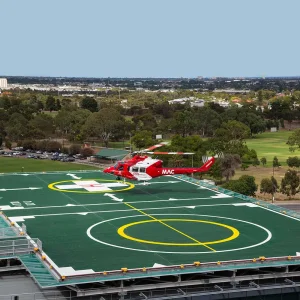
| Parameters | Automotive Sliding Door Mesh | Structural Protective Netting | Heavy Aviation Netting (Helipad) |
|---|---|---|---|
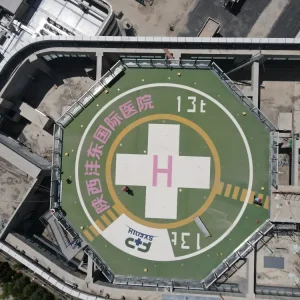
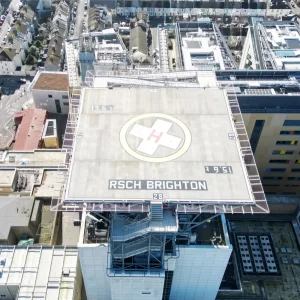
| Primary Material | Coated Fiberglass / High-Tensile Polyester Mesh | 6000-Series Aluminum Alloy (Fenglu) | 6061-T6 / 6082-T6 Anodized Aluminum |
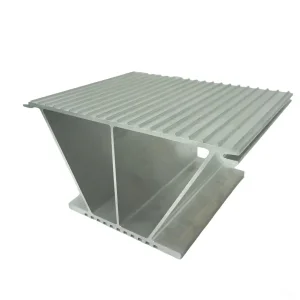
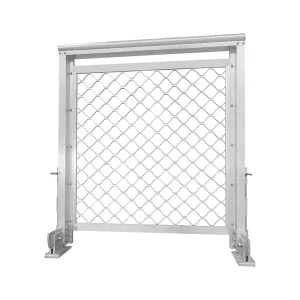
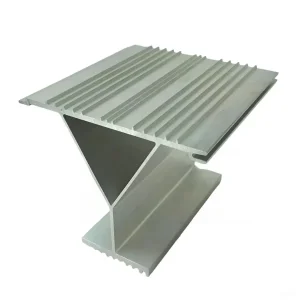
| Frame Profile | Ultra-thin Extruded Aluminum (0.8mm - 1.2mm) | Medium Structural Profiles | Heavy-Duty Extruded Hollow Profiles |
| Tensile Strength | > 450 N / 5cm | > 2100 N / 5cm | > 5000 N / 5cm (CE Certified) |
| UV Stabilization | UV Resistant Coating (JIS D 0205 compliant) | Anodized Film Thickness > 15μm | Anodized Film Thickness > 25μm |
| Key Certifications | CE Certification, Reach, RoHS | CE, GB/T19001-2016 | CE Certification, ISO9001:2015 |
B2B procurement directors facing strict timelines and regulatory barriers often run into three core bottlenecks: supply chain inconsistency, lack of customized design adaptability, and non-compliance with regional transport safety regulations.
1. Material Origin & Purity: Low-cost suppliers often use recycled aluminum alloys containing high impurities, leading to frame warping and micro-fractures under thermal expansion. We eliminate this vulnerability by utilizing 100% virgin Fenglu aluminum profiles. Our raw materials undergo strict spectral verification to guarantee structural durability.
2. Compliance and Safety (CE & JIS): For commercial vehicles deployed in the EU and Japan, components must meet strict flammability (FMVSS 302) and structural safety directives. Our shade nets carry full CE certification, ensuring zero resistance during customs clearances and vehicle inspection audits.
3. Supply Chain Agility: With extrusion configurations ranging from 800T to 20,000T, we have the manufacturing bandwidth to transition seamlessly from low-volume custom prototyping to high-volume containerized shipments without extending lead times.
Established in 2015 and located in the industrial manufacturing hub of Foshan City, Guangdong, LvXing Intelligent Equipment Co., Ltd. has grown to become a leading global partner for high-precision aluminum and mesh solutions. Backed by a highly experienced R&D team, we bridge the gap between engineering theory and production reality, turning complex customer designs into precise, high-performance physical products.
Our core competitive edge lies in our access to premium-grade Fenglu aluminum and our state-of-the-art machinery. Our extrusion lines scale from 800T for fine, detailed profiles up to 20,000T for massive structural profiles. We regularly process complex alloys across the 1xxx, 2xxx, 3xxx, 5xxx, 6xxx, and 7xxx series, with capabilities to manufacture cross-sections up to 1.2 meters wide and individual profile lengths reaching 28 meters. This makes us the supplier of choice for demanding industries, including aerospace, defense, marine, and medical systems.
The manufacturing process of our automotive shade nets and structural meshes involves multi-stage processing including precision cutting, CNC machining, high-tension mesh weaving, and advanced surface treatments (anodizing, powder coating, and electrophoresis).
As the automotive landscape shifts towards electrification and autonomous driving, auxiliary systems must evolve. Our technical roadmap for the next generation of Van Sliding Door Window Shade Nets focuses on three key innovations:
Due to fluctuating global alloy costs and custom configuration specifications, prices are adjusted dynamically based on standard commodity market index parameters. Below is a target reference price structure for B2B procurement evaluation:
| Product Configuration Group | MOQ (Units) | Standard Lead Time | Estimated Price Range (FOB) |
|---|---|---|---|
| Premium Van Sliding Door Shade Net (JIS Standard Frame) | 500 | 15 - 20 Days | $12.50 - $18.90 / Unit |
| Heavy-Duty Custom Vehicle Mesh (CE Certified Frame) | 200 | 20 - 25 Days | $22.00 - $35.00 / Unit |
| Industrial Security Safety Netting (Alloy 6063-T6) | 500 sqm | 25 - 30 Days | $45.00 - $85.00 / sqm |
| Custom High-Strength Structural Profiles (Aerospace Alloy) | 5 Tons | 30 - 35 Days | Custom Quote (Based on Alloy Market Rates) |
*Note: The prices listed above are reference estimates for OEM/ODM planning. Contact our commercial sales department for precise project-specific quotes based on current raw material pricing and tooling requirements.
Get answers to critical technical questions regarding CE certification, Japanese automotive safety compliance, and custom ordering details.
Automotive shade nets must comply with the general safety requirements under European Regulation (EC) No 661/2009. The materials must pass flammability testing under ISO 3795 (equivalent to FMVSS 302), and the structural frame must pass impact safety evaluations to ensure no sharp edges are exposed in the event of an accident.
We use premium Fenglu aluminum extrusions. By using high-capacity extrusion lines (up to 20,000T), we refine the grain structure of our alloys (predominantly 6063-T5 or T6), making them significantly more resistant to flexing and vibration compared to standard commercial extrusions.
Yes. Our engineering team has 15 years of OEM design experience. We can take vehicle body-in-white (BIW) CAD files and design custom-curved sliding door window frames that fit Japanese micro-vans, ensuring minimal gaps and seamless integration with existing manual or motorized window systems.
We offer a standard 3-year warranty covering frame deformation, anodizing degradation, and mesh separation under normal operational conditions. For structural safety nets, the warranty can be extended depending on environmental exposures.
Explore our extended industrial product portfolio designed for high-stress applications, maritime engineering, and architectural setups.
 LvXing