Premium grade structural aluminum netting systems designed to withstand extreme wind, maritime corrosion, and impact stress.
Helipad safety is not merely about structural surface load limits; it is fundamentally about perimeter fall protection. In industrial aviation, maritime fleet services, and rooftop urban environments, helipad perimeter safety netting acts as the critical barrier preventing fatal accidents. According to global civil aviation authorities, dynamic operations on elevated decks require nets capable of absorbing intense kinetic impacts without fracturing.
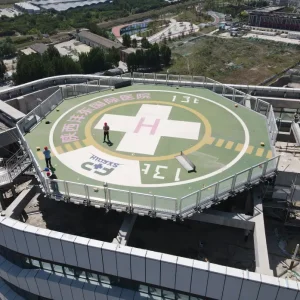
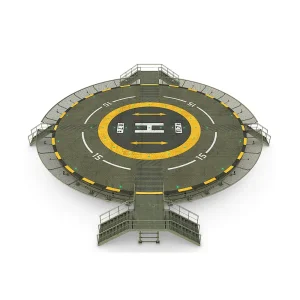
Internationally, safety parameters are strictly governed by regulations such as the UK Civil Aviation Authority's CAP 437 (Standards for Offshore Helicopter Landing Areas), ICAO Annex 14, and the Federal Aviation Administration (FAA) guides. A compliant safety net must extend outward from the deck edge by at least 1.5 meters, decline slightly (approx. 10 degrees) to clear rotors, and resist upward wind gusts exceeding 100 knots.
Helipad safety solutions require precise configuration adjustments depending on their environmental deployment.
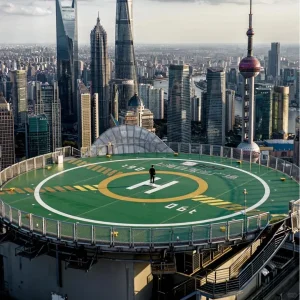
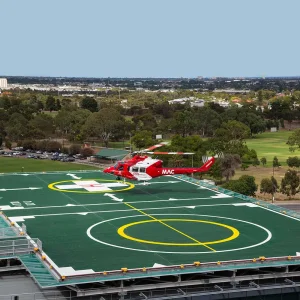
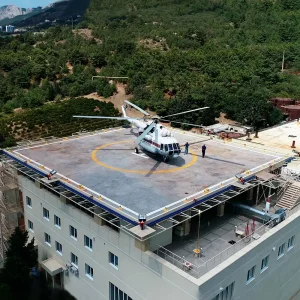
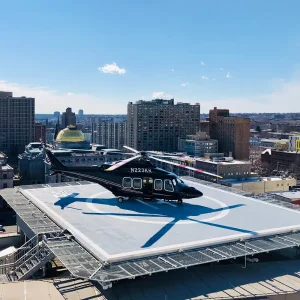
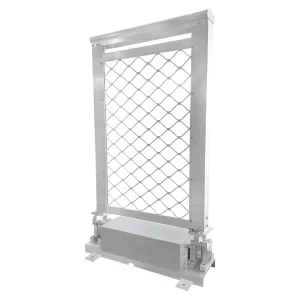
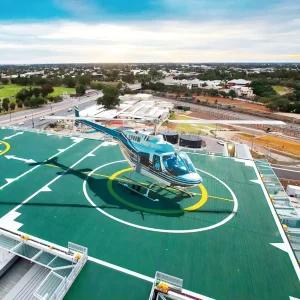
Rooftop installations face turbulent thermal drafts caused by high-rise architecture. Safety netting on rooftops must use aerodynamically stable designs like mesh profiles that minimize lift and drag. Structural aluminum alloy netting is extremely lightweight, reducing load burdens on the building's structural columns, while providing robust fall arrest protection for rooftop maintenance staff and crew.
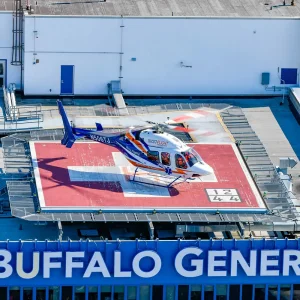
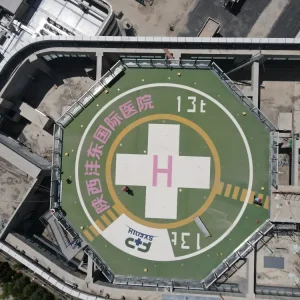
Every second counts during emergency medical operations. Helipads on hospital roofs are used under highly critical, fast-paced conditions. Safety netting systems must provide reliable perimeter containment while avoiding interference with patient transport stretchers and equipment. The netting must also feature flame retardancy and high visual contrast (reflective borders) to facilitate safe night landing operations.
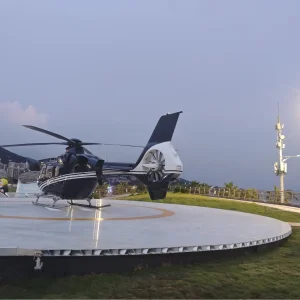
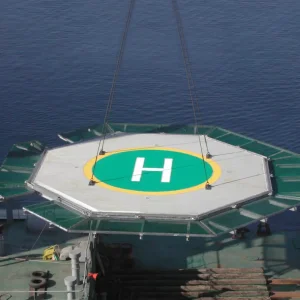
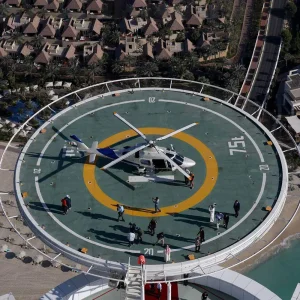
Offshore environments present severe corrosion challenges due to constant salt spray, humidity, and chemical exposure (C5-M environment). Stainless steel options are prone to crevice corrosion, whereas marine-grade aluminum alloy netting forms an integrated oxide layer that guarantees safety for over 25 years. This lightweight construction also maintains stability during heavy ship pitching and rolling.
Based in Foshan City, Guangdong, the global center of aluminum profile manufacturing, LvXing Intelligent Equipment Co., Ltd. offers unparalleled production efficiencies. We access top-tier raw billet supply chains, specialized tooling centers, and skilled structural engineers all within a 50km radius.
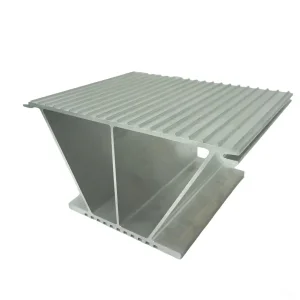
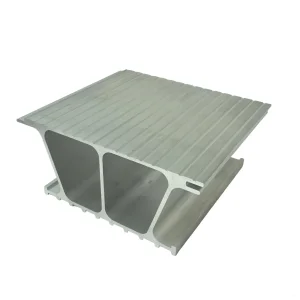
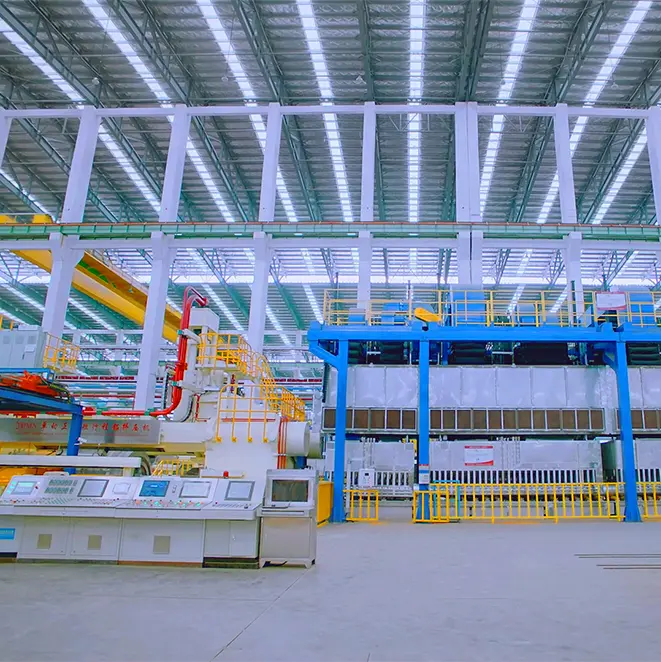
By leveraging premium Fenglu aluminum, we ensure that every batch of customized safety netting meets strict chemical and physical criteria. Our factory utilizes extrusion lines ranging from 800T to 20,000T. This enables us to extrude large-scale, continuous profiles with cross-sections up to 1.2m in width and 28m in length, reducing joints and weak points in safety netting support frames.
For international buyers, sourcing from a specialized Chinese supplier like LvXing guarantees high precision, fast production turnaround, and direct factory-gate pricing. This approach eliminates the middleman markups that often double the cost of public infrastructure projects.
Partnering with global EPC contractors since 2015 to deliver world-class structural aluminum solutions.
Established in 2015 and located in Foshan City, Guangdong, LvXing Intelligent Equipment Co., Ltd. boasts a skilled R&D team with extensive experience. We leverage exceptional technical expertise to effectively transform customers' ideas into reality, consistently meeting their precise requirements.
We utilize premium Fenglu aluminum, offering a diverse range of profiles for flexible applications. Our extrusion lines, ranging from 800T to 20,000T, accommodate alloys 1xxx, 2xxx, 3xxx, 5xxx, 6xxx, and 7xxx, allowing us to produce shaped products with section dimensions up to 1.2 meters in width and 28 meters in length. These products are recognized for their precision and meticulous processing, finding broad application in aerospace, military, medical, and industrial sectors.
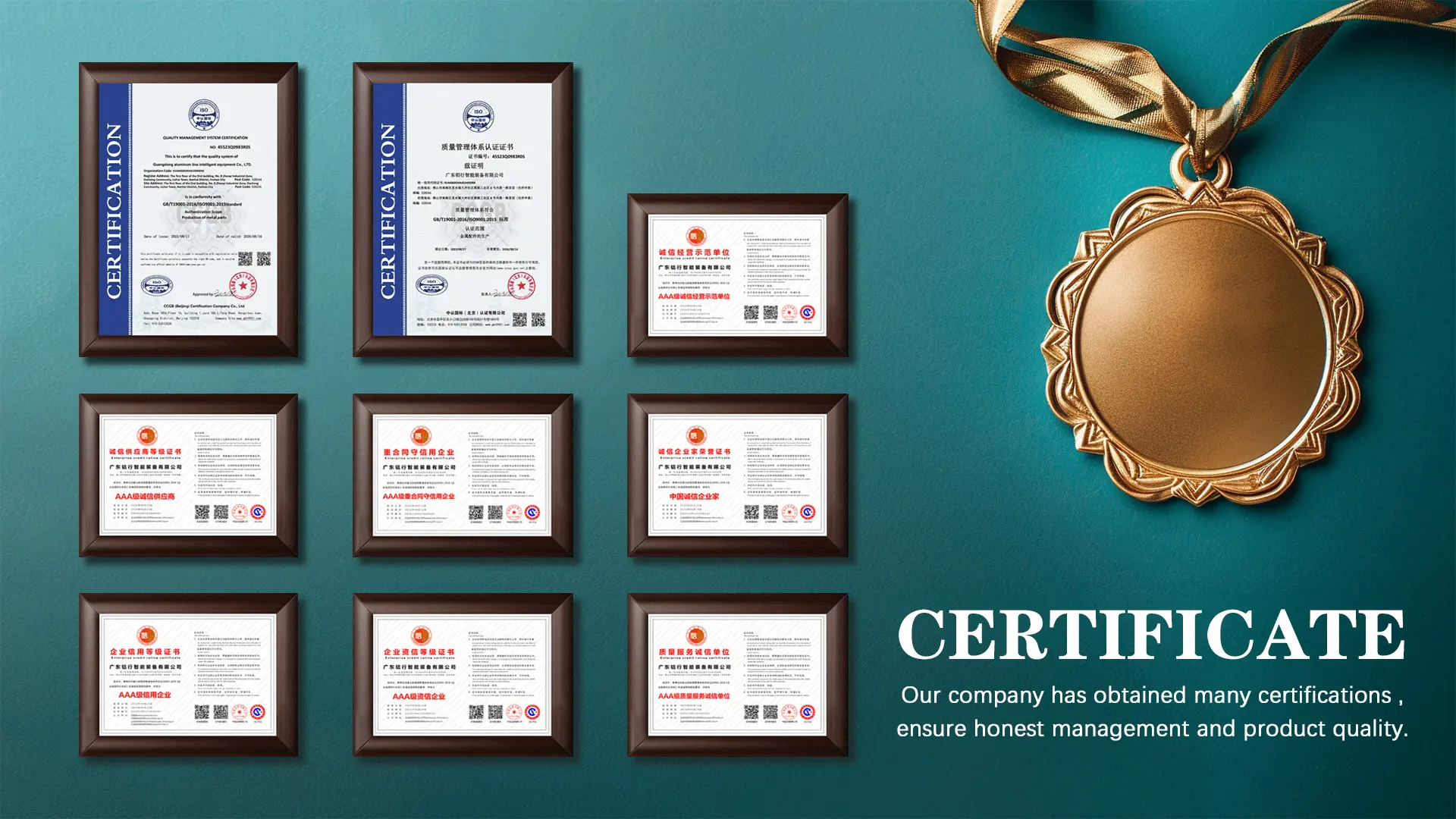
Our commitment to excellence is evident throughout the manufacturing process, rigorous quality control, thorough packaging, and efficient shipping procedures. This dedication has earned us recognition as a national excellent and honest enterprise, along with quality system certification in accordance with GB/T19001-2016/ISO9001:2015 standards.

We have obtained the "Special Aluminium Materials for Aerospace" Certificate, certifying our metallurgy for extreme structural duty.

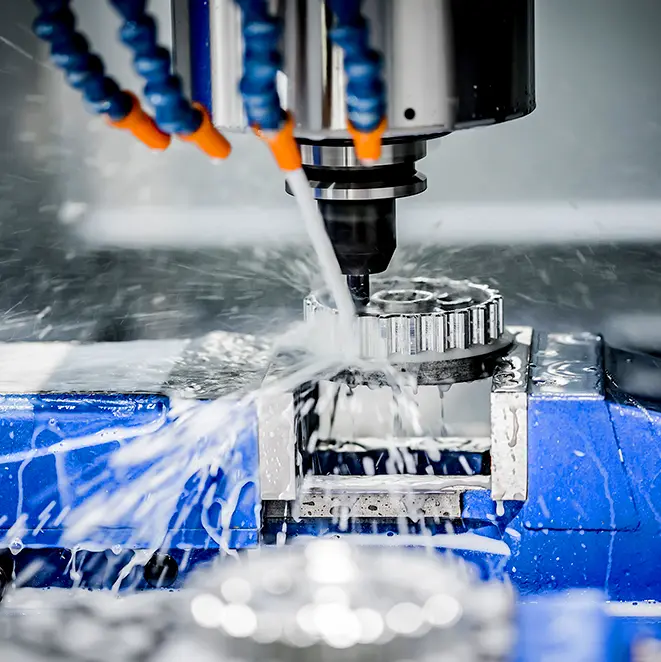
We utilize high-quality Fenglu profiles in alloys 1xxx to 7xxx. We produce shapes up to 1.2m wide or 28m long with ultimate precision.

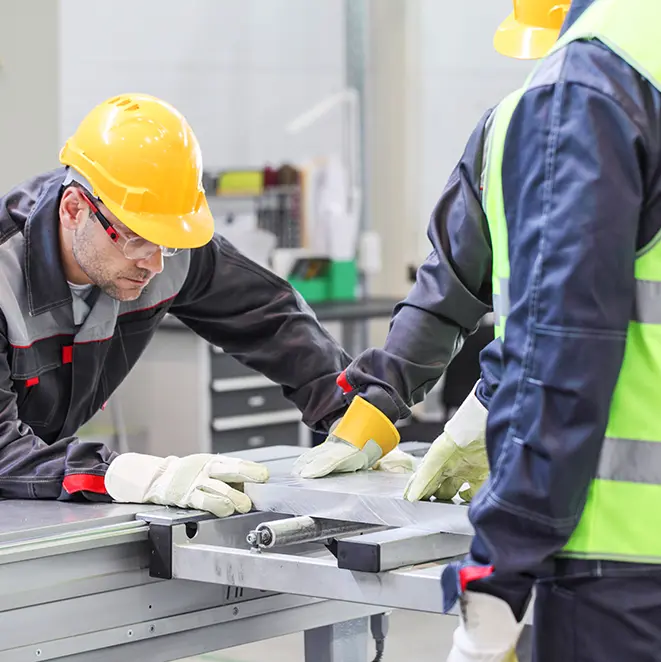
Our technicians identify potential design risks early, refining client concepts into highly manufacturable, regulatory-compliant systems.
Why modern structural engineers specify marine-grade aluminum alloy safety mesh for helipads.
| Evaluation Parameter | Al-Mg-Si Alloy (6061-T6 / 6082-T6) | 316L Stainless Steel Wire Mesh | Synthetic Fiber/Nylon Netting |
|---|---|---|---|
| Structural Weight | Low (~2.7 g/cm³) - Minimizes deck moment loads | High (~8.0 g/cm³) - Increases dead load weight | Extremely Low - Subject to high wind flutter |
| Corrosion Resistance | Self-passivating oxide layer; high marine resistance | Prone to chloride pitting and crevice corrosion | Prone to rapid UV rot and chemical degradation |
| Tensile Yield Strength | 276 - 310 MPa | 290 - 485 MPa | Highly variable; decays under UV exposure |
| System Lifespan | 25+ Years without structural degradation | 10-15 Years (requires frequent corrosion audits) | 2-5 Years (requires regular replacements) |
| Impact Mechanics | Excellent energy dissipation through elastic frame tension | High rebound stiffness; higher stress on fasteners | High sag; potential contact with sub-structures |
| Maintenance Cost | Zero maintenance; self-healing anodized layer | High; requires regular acid-washing & NDT testing | High replacement frequency |
The helipad safety industry is moving toward integrated tech monitoring. Modern developments include embedding tension sensors in the netting frame corners to transmit load integrity data directly to airport maintenance dashboards. Additionally, LED lighting strips are being integrated directly into the perimeter frames to improve visual reference cues for pilots during low-visibility weather and night operations.
A guide for procurement officers and engineering firms to draft detailed RFQs for helipad netting.
Answering major technical, regulatory, and pricing questions asked by structural engineers and purchasing officers.
Browse our verified product catalog. Select an item to request specific structural details and price lists.
 LvXing