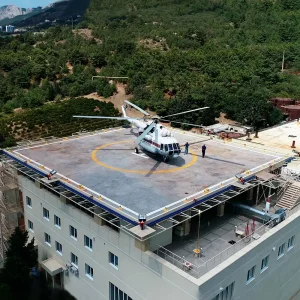
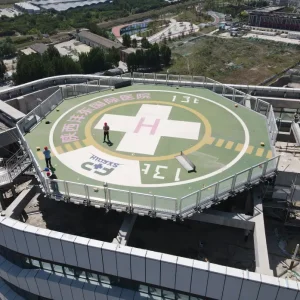
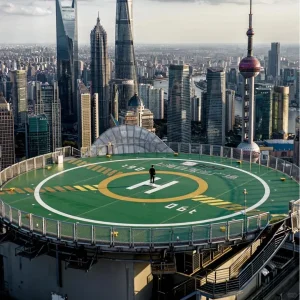
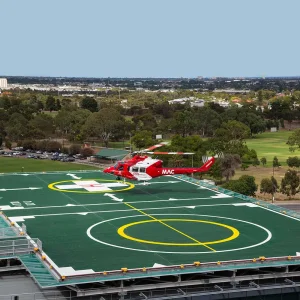
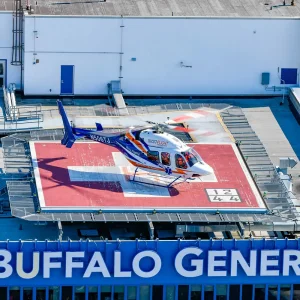
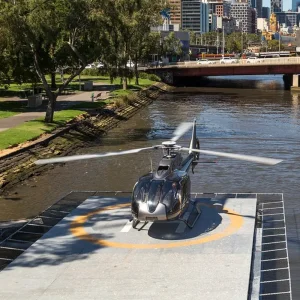
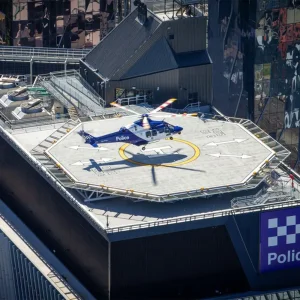
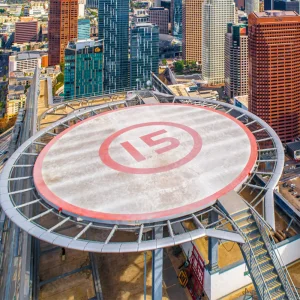
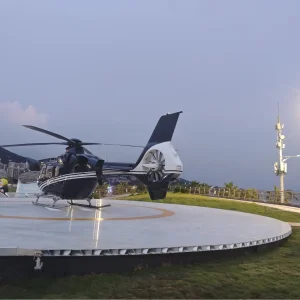
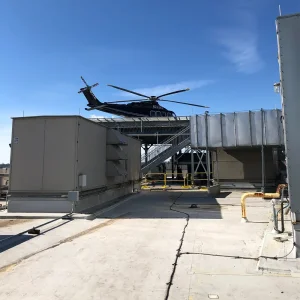
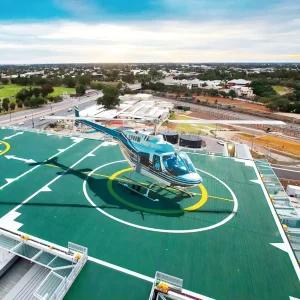
As urbanization trends drive skyscrapers to unprecedented heights and urban air mobility (UAM) emerges as a standard element of municipal infrastructure, high-rise helidecks have transitioned from luxury amenities to essential structural components. Skyscraper helipads serve vital roles in emergency medical services (EMS), tactical fire response, police operations, and rapid corporate evacuation. The engineering demands of these elevated platforms require rigorous design standards, especially concerning perimeter safety netting.
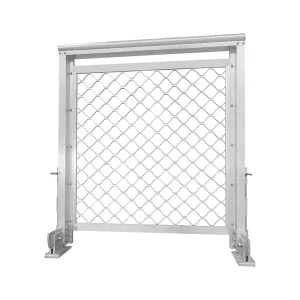
Modern helicopter landing nets and perimeter safety meshes must withstand dynamic kinetic impact forces while remaining lightweight, corrosion-resistant, and aerodynamically neutral to prevent dangerous ground-effect wind currents.
LvXing Intelligent Equipment Co., Ltd. addresses these complex engineering challenges. Utilizing state-of-the-art aluminum extrusion and custom-engineered safety nets, we provide global infrastructure developers and EPC (Engineering, Procurement, and Construction) companies with reliable structural assemblies that comply with global aviation authorities including the ICAO, FAA, and CAP 437 standards.
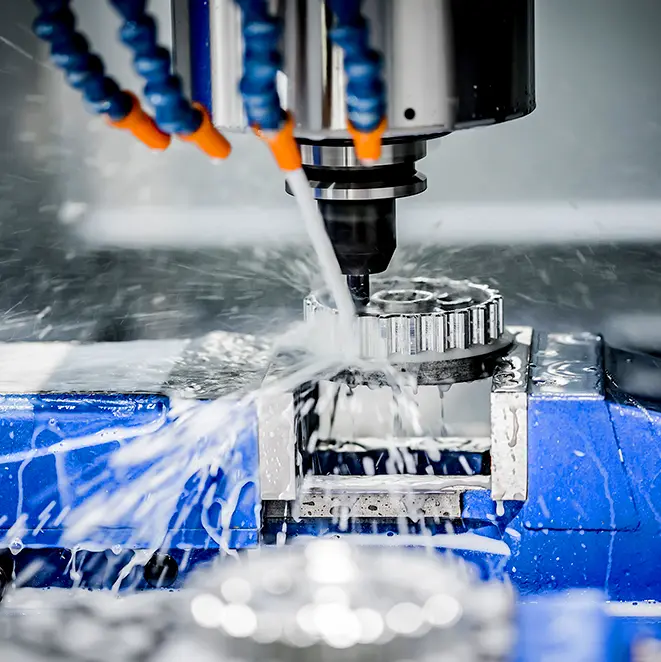
Established in 2015 and located in Foshan City, Guangdong, LvXing Intelligent Equipment Co., Ltd. boasts a skilled R&D team with extensive experience. We leverage exceptional technical expertise to effectively transform customers' ideas into reality, consistently meeting their precise requirements.
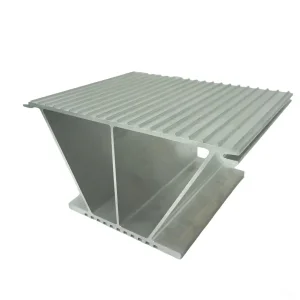
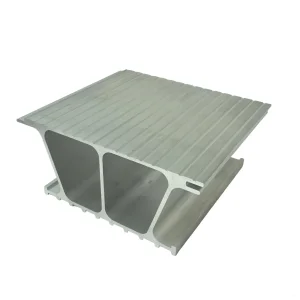
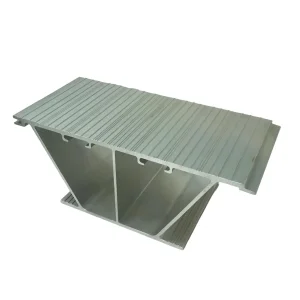
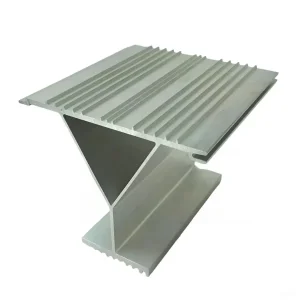
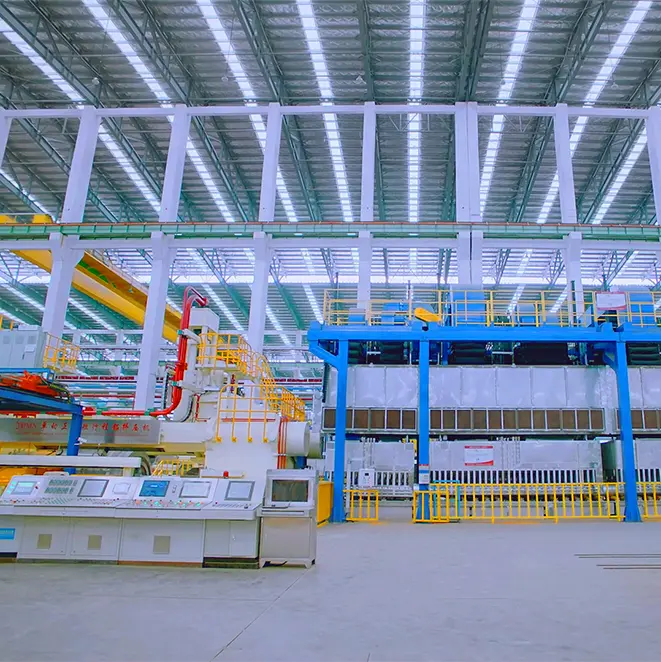
We utilize premium Fenglu aluminum, offering a diverse range of profiles for flexible applications. Our extrusion lines, ranging from 800T to 20,000T, accommodate alloys 1xxx, 2xxx, 3xxx, 5xxx, 6xxx, and 7xxx, allowing us to produce shaped products with section dimensions up to 1.2 meters in width and 28 meters in length. These products are recognized for their precision and meticulous processing, finding broad application in aerospace, military, medical, and industrial sectors.
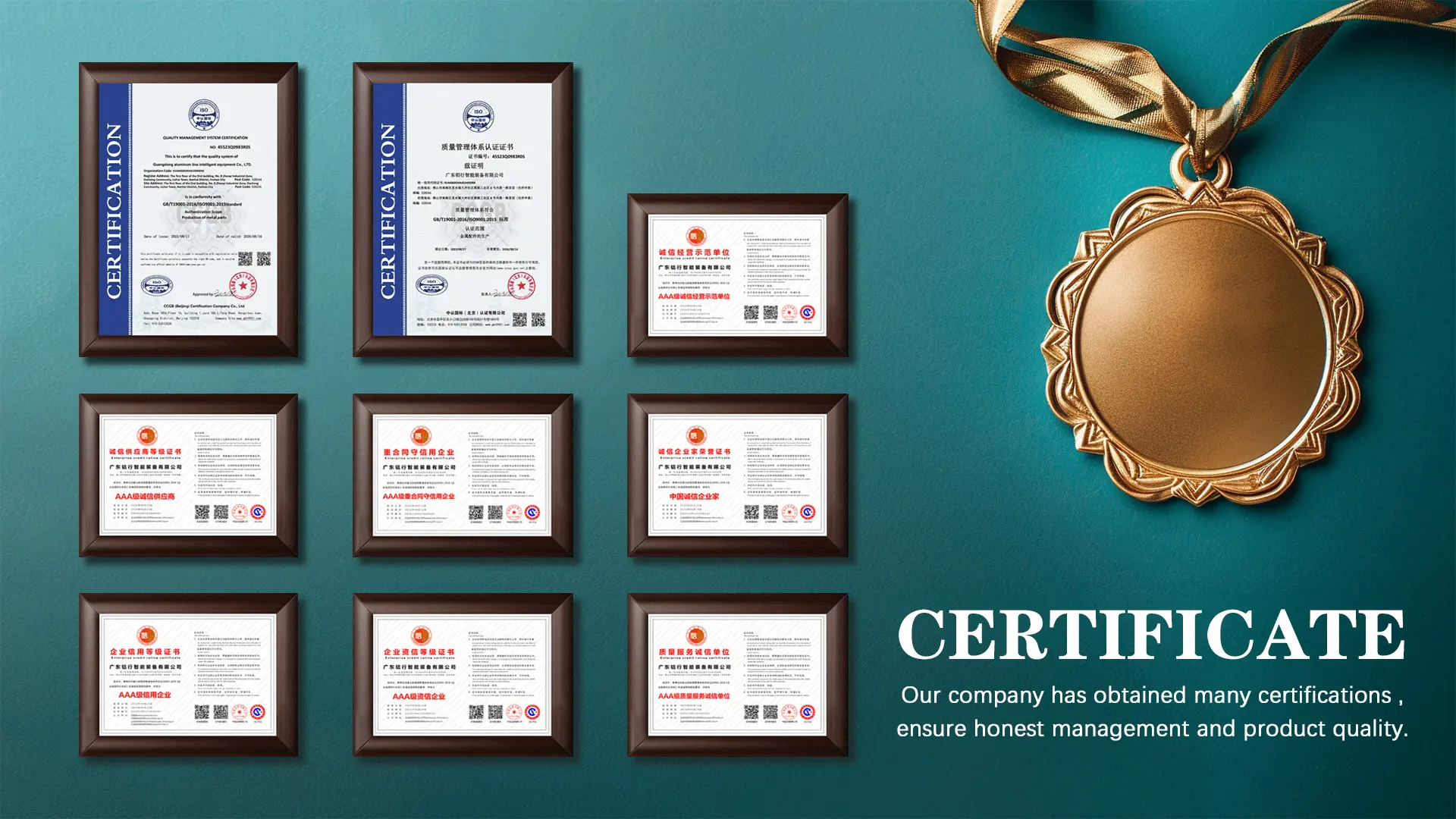
Our commitment to excellence is evident throughout the manufacturing process, rigorous quality control, thorough packaging, and efficient shipping procedures. This dedication has earned us recognition as a national excellent and honest enterprise, along with quality system certification in accordance with GB/T19001-2016/ISO9001:2015 standards.

We have obtained the "Special Aluminium Materials for Aerospace" Certificate, validating our ability to supply materials capable of withstanding the demanding operational conditions of flight decks and safety structures.

We provide and utilize high-quality Fenglu aluminum profiles. With extrusion lines ranging from 800T to 20,000T, we can produce alloys 1xxx, 2xxx, 3xxx, 5xxx, 6xxx, and 7xxx. We can manufacture fully shaped products with section dimensions up to 1.2 meters in width or 28 meters in length.

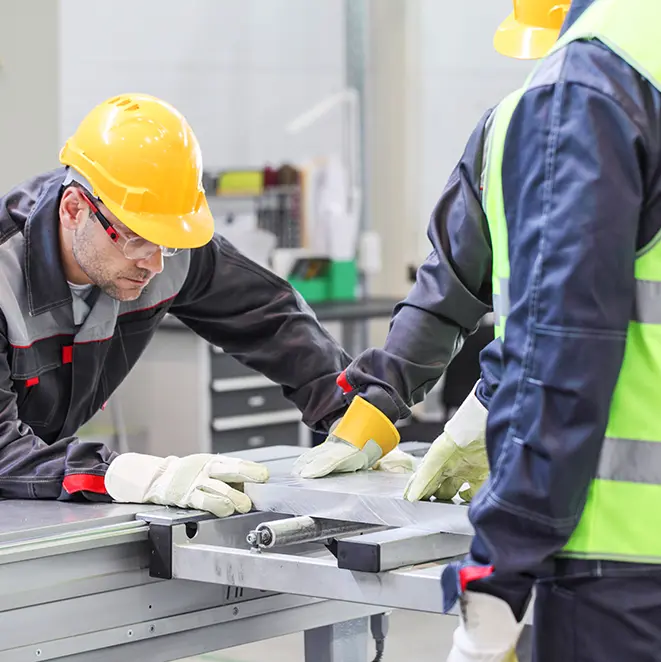
We have a team of technicians with 15 years of invaluable experience. Our deep understanding of customer requirements allows us to identify potential issues and offer practical insights, turning customer ideas into tangible products that meet specific needs.
Utilizing marine-grade 6005A-T6, 6082-T6, and 6061-T6 aluminum alloys ensures high mechanical strength and exceptional corrosion resistance. In critical high-stress zones, 7000-series aerospace alloys are used to reduce overall structural weight while maintaining structural safety.
High-rise helipads are subjected to complex, high-velocity updrafts. Our safety net mesh configurations are designed with aerodynamic opening ratios that minimize wind resistance, mitigate air turbulence, and prevent lifting forces during helicopter takeoff and landing.
Designed in compliance with international drop-test parameters. When subjected to a vertical drop impact, the perimeter frame and netting system absorb and dissipate kinetic energy, preventing rebound and protecting personnel from fall-related injuries.
Typical mechanical properties of extruded aluminum profiles used by LvXing in safety systems:
| Alloy & Temper | Yield Strength (MPa) | Tensile Strength (MPa) | Elongation (%) | Key Applications |
|---|---|---|---|---|
| 6005A-T6 | ≥ 215 | ≥ 255 | ≥ 8 | High-load structural deck support beams |
| 6061-T6 | ≥ 240 | ≥ 260 | ≥ 9 | Standard structural columns & framing members |
| 6082-T6 | ≥ 260 | ≥ 310 | ≥ 10 | Heavy-duty helideck framing and perimeter net joints |
| 7075-T6 | ≥ 500 | ≥ 570 | ≥ 7 | Aerospace-grade components with high load-to-weight ratios |
Global procurement offices and engineering contractors often face complex design specifications for elevated high-rise helideck nets. In coastal cities, marine salt-spray corrosion presents a major challenge, while high-altitude buildings must account for freezing rain and snow loading. Furthermore, safety nets must be lightweight, as excessive structural load at the building's highest point increases wind drift and seismic moments.
Our aluminum landing profiles and perimeter safety nets are designed to meet the strict requirements of CAP 437 (Offshore Helicopter Landing Areas) and ICAO Annex 14 Chapter 5. These standards require perimeter safety nets to extend at least 1.5 meters outward, with an upward incline of 2 to 6 degrees to catch personnel safely.
Our manufacturing facility operates under the GB/T19001-2016 and ISO9001:2015 quality management systems. From the initial inspection of Fenglu aluminum alloy billets to final dimensional verification using high-precision coordinate-measuring systems, every production step is fully traceable.
LvXing supports global commissioning processes by providing comprehensive mechanical test reports. These include tensile testing of extruded aluminum profiles and drop-impact testing of net panel configurations, demonstrating the system's ability to safely absorb 2.3 kJ dynamic impacts.
 LvXing