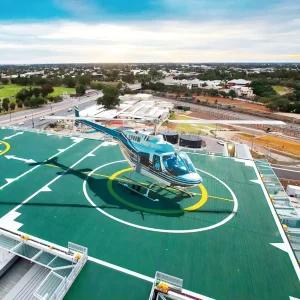
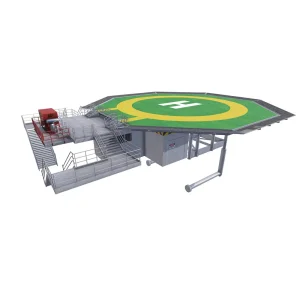
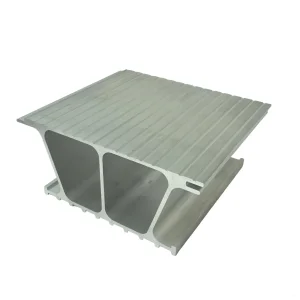
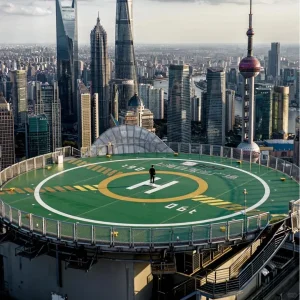
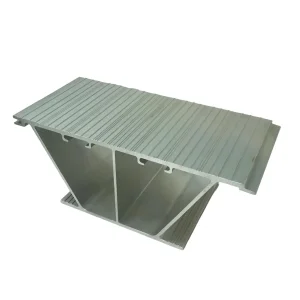
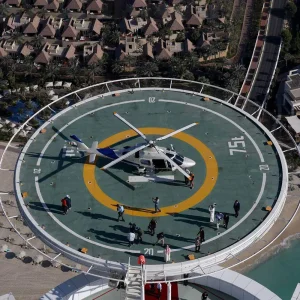
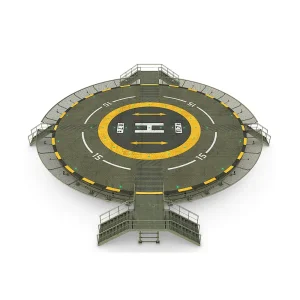
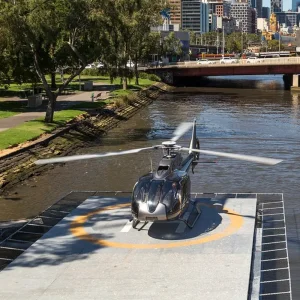
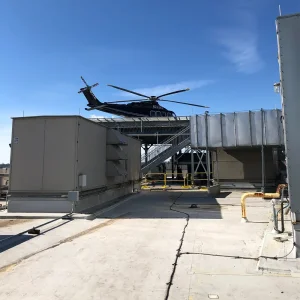
Engineered to comply with FAA, ICAO and CAP 437 regulations. Discover our custom aluminum safety profiles and net configurations.
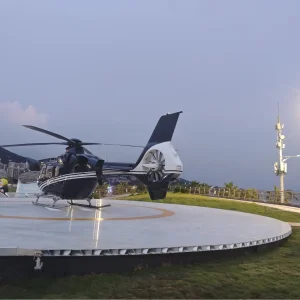
Heliports globally represent vital infrastructure nodes for offshore oil and gas production, emergency medical services (EMS), governmental operations, and high-altitude logistics. Crucial to these structures is the safety zone perimeter, particularly the heliport protection nets (perimeter safety mesh). According to global aviation standards, any elevated landing deck must incorporate a safety net extending at least 1.5 meters outward to prevent personnel, luggage, and critical materials from falling. These safety net installations must not exceed the profile of the landing deck surface, preventing potential rotor blade strikes or landing gear obstructions.
Historically, safety nets relied on stainless steel wire ropes or heavy webbed nylon. While strong, these systems suffered from high wind resistance (drag), massive structural weight loads, and susceptibility to dynamic fatigue and corrosion. Today, the global commercial standard has shifted decisively toward anodized aluminum alloy safety mesh. These lightweight, high-tensile, and corrosion-resistant modular systems leverage specialized extrusions to deliver decades of protection with minimal maintenance under the harshest offshore and rooftop environments.
"Modern heliport operations require perimeter net systems that satisfy ICAO Annex 14 Volume II and CAA CAP 437 guidelines, providing at least 125 kg drop-impact absorption without permanent structural deformation or failure."
Aluminum alloys, especially those processed from the 6000-series (such as 6061-T6 and 6082-T6), present distinct advantages over stainless steel and polymer mesh configurations. In elevated rooftop designs, reducing the dead weight of the safety system is key to conserving structural budget on supporting columns. Aluminum's density is roughly one-third that of steel, allowing for robust perimeter frames and double-wire mesh layouts at a fraction of the weight.
Additionally, marine and offshore helipads face continuous exposure to salt spray, demanding excellent atmospheric corrosion resistance. When anodized to commercial marine specs (greater than 15-20 microns), aluminum forms a protective oxide layer that resists chloride pitting. Unlike polymer nets that deteriorate from ultraviolet (UV) radiation in tropical regions, aluminum safety nets retain their physical properties indefinitely under extreme sun exposure.
A premier manufacturer of advanced aluminum structural solutions and helipad profile systems based in Foshan, China.
Established in 2015 and located in the heart of Foshan City, Guangdong—the aluminum capital of China—LvXing Intelligent Equipment Co., Ltd. has grown into a leading developer and fabricator of high-precision aluminum profiles and safety infrastructure. Our core competence lies in converting complex engineering designs into high-performance structural systems, serving the aerospace, military, medical, and high-end industrial sectors.
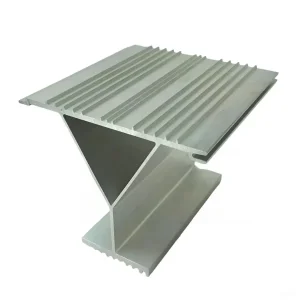
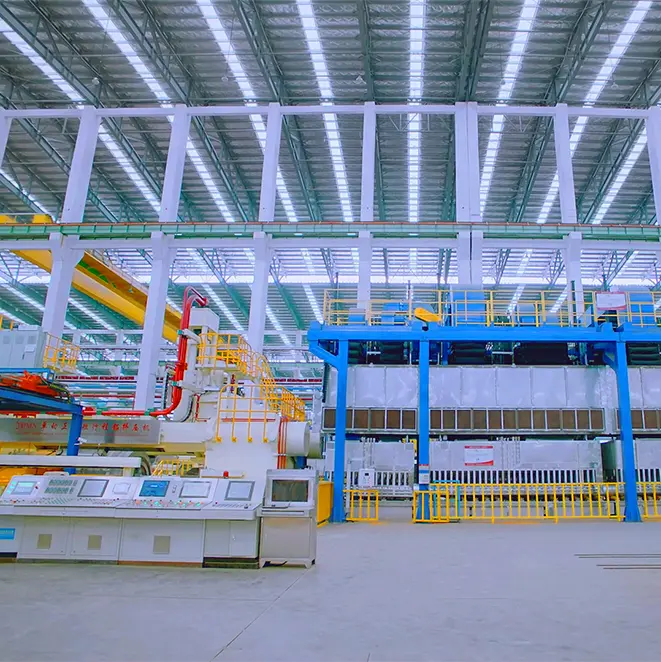
We leverage top-grade Fenglu aluminum, a brand globally renowned for material purity and consistent grain structures. Our state-of-the-art extrusion lines, ranging from 800T to 20,000T, give us the unique capability to extrude diverse profiles across 1xxx, 2xxx, 3xxx, 5xxx, 6xxx, and 7xxx series alloys. We can manufacture complex, continuous single-piece profiles with section widths up to 1.2 meters and lengths up to 28 meters, reducing the number of joint connections and structural failure points in our helipad systems.
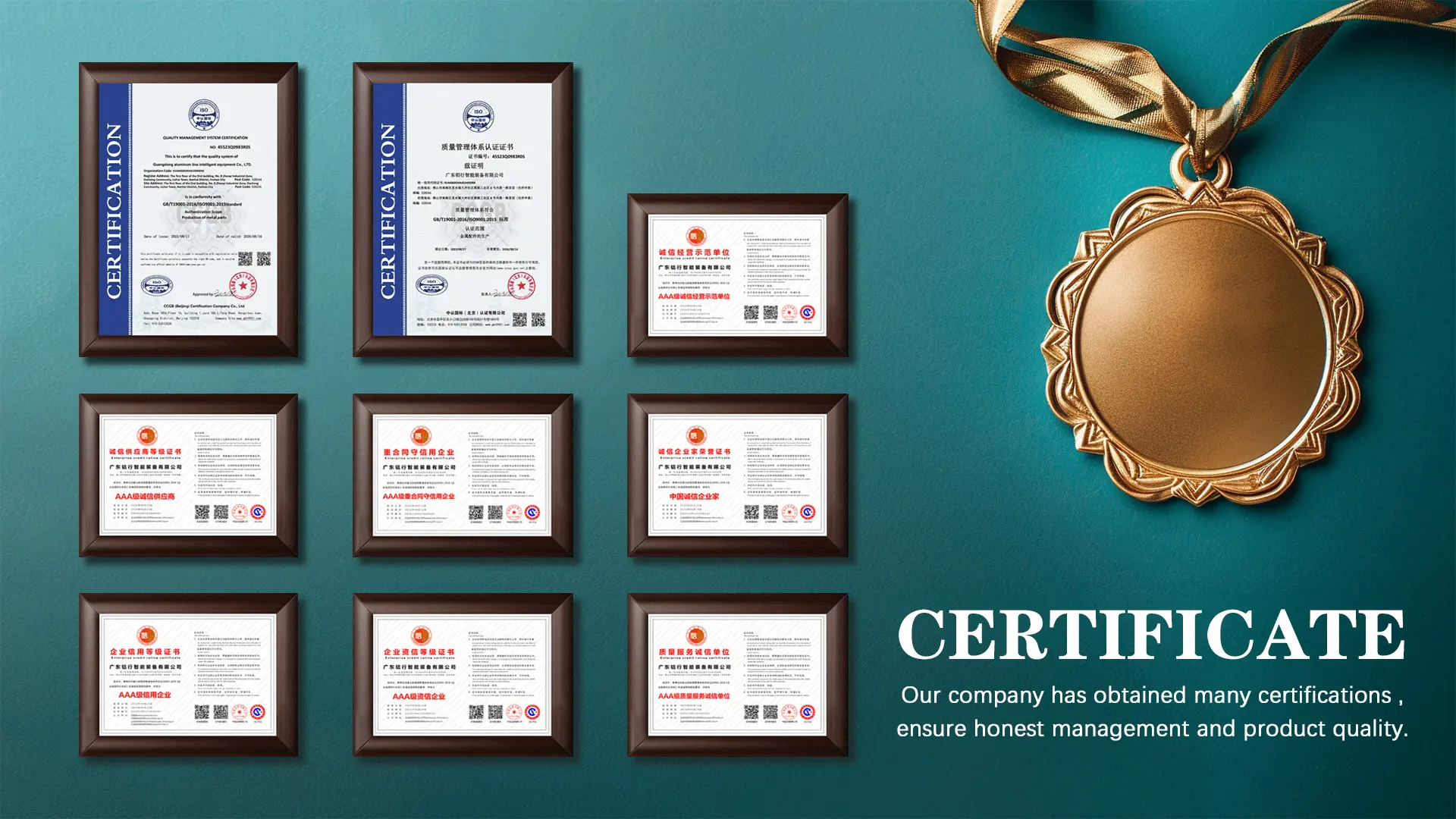
Our Quality Management System is fully certified under the GB/T19001-2016/ISO9001:2015 standard. From alloy selection, billet preheating, and precision extrusion to chemical surface treatment and structural load testing, every process is documented and traceable, providing peace of mind to our global engineering partners.

Aerospace Quality Standard: We have obtained the prestigious "Special Aluminium Materials for Aerospace" Certificate, confirming our alloys meet strict structural safety and chemical composition thresholds.

Heavy-Duty Extrusion Output: Utilizing Fenglu profiles, our extrusion range is backed by presses up to 20,000T. We produce wide-section 1xxx to 7xxx alloys, ensuring profiles up to 1.2m wide or 28m long without joints.

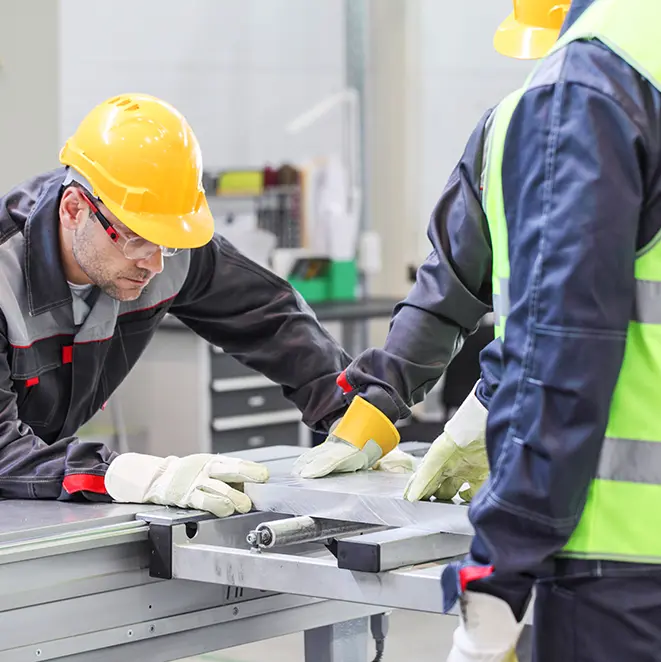
15-Year Engineering Depth: Our engineering and design team possesses 15 years of practical industry experience, converting conceptual designs into tailored structural components while anticipating stress-related vulnerabilities.
Perimeter protection systems must adapt to the environmental loads of their specific operating locations. Working alongside contractors and civil engineers, LvXing tailors every safety net to match local climatic, geographic, and regulatory conditions.
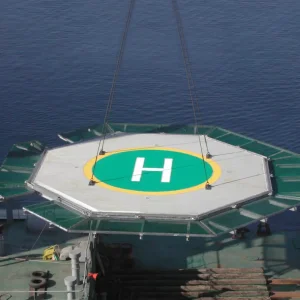
Offshore locations experience extreme humidity, salt spray, and cyclical wind forces. In areas like the South China Sea, North Sea, or Gulf of Mexico, safety nets must endure constant exposure to high-pressure salt aerosols. We recommend marine-grade 6082-T6 alloy frames paired with 316 stainless steel wire mesh or hard-anodized aluminum mesh. Our safety nets are designed with aerodynamic, low-drag geometries to prevent wind lift, keeping the mesh stable during major storms.
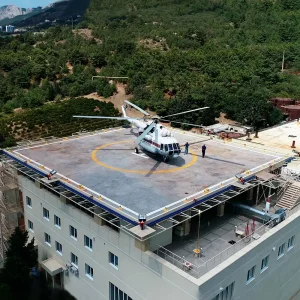
Helipads on skyscraper rooftops in dense metropolitan centers must address severe wind shear and tight weight budgets. Structural engineers aim to reduce the load on the building's support columns. LvXing's lightweight all-aluminum frame and safety mesh reduce structure weight by up to 60% compared to steel. Additionally, we provide non-reflective, matte-anodized surface finishes to prevent sun glare from affecting pilots during final approach.
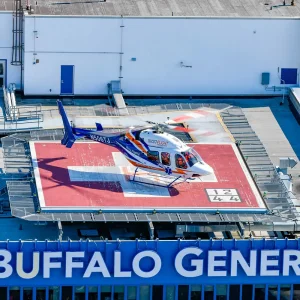
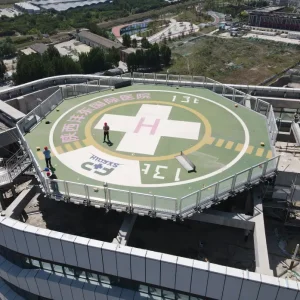
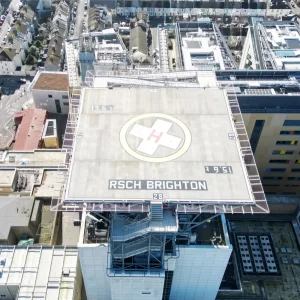
Hospitals located in high-traffic zones prioritize safety and rapid response. Perimeter safety nets must be robust enough to support multiple medical technicians in the event of an evacuation emergency. Hospital helipads use flat, tension-controlled aluminum nets that align with the deck edge. These nets provide safe footing and prevent injuries if someone falls, keeping emergency corridors clear and safe.
Marine vessels face rolling, pitching, and yawing forces. The perimeter net must handle both gravitational loads and dynamic forces from wave impacts. Our custom frame supports use reinforced pivot mounts that absorb deck vibration and structural twisting without fracturing, maintaining tension across the net under all sea conditions.
Installations in mountainous or high-latitude regions face freezing rain and heavy snow loads. Standard safety mesh can collect ice, creating heavy loads that sag the structure. LvXing designs safety nets with open-grid profiles that allow snow to fall through, and uses specialized water-shedding surfaces to minimize ice buildup. This keeps the perimeter net light and functional even in sub-zero temperatures.
Ensuring compliance with international aviation safety criteria requires rigorous engineering. Below is the technical specification matrix of LvXing’s primary Heliport Protection Net configurations.
| Parameter / Property | Aluminum Frame Standard (6082-T6) | Mesh Component (Aluminum Alloy / SS316) | Regulatory Compliance |
|---|---|---|---|
| Tensile Strength (UTS) | ≥ 310 MPa | ≥ 450 - 550 MPa | ASTM B221M / EN 755 |
| Yield Strength (0.2%) | ≥ 260 MPa | ≥ 380 MPa | ISO 6892-1 Mechanical Testing |
| Anodizing Coating Depth | Class I (15 - 25 μm) | Hard Anodized (20 μm) / Clear Passivated | MIL-A-8625 / ISO 7599 |
| Dynamic Impact Capacity | 125 kg drop from 1.0m height | Zero mesh breakage, permanent deflection < 100mm | ICAO Annex 14 / CAP 437 / FAA |
| Wind Resistance Coef. | Low Profile (Drag Coef. Cx < 0.4) | High Open Area (≥ 82% venting efficiency) | Wind Tunnel Tested ≥ 60 m/s (Category 5) |
| Operating Temp. Range | -40°C to +80°C | Stable ductile properties at low temperature | CE Certification Compliant |
Our commitment to engineering drives the constant evolution of our safety designs. LvXing’s design laboratory follows a multi-generational product roadmap focused on material efficiency and digital integration:
We are refining the microstructures of our 6082-T6 alloys to maximize strength-to-weight ratios. We have also introduced eco-friendly acid-anodizing techniques that extend salt spray resistance to 3,000 hours in laboratory environments.
To reduce manual maintenance on remote offshore platforms, we are developing smart frame connections. These incorporate strain-gauge sensors that transmit structural integrity and impact alerts directly to the helipad control room.
We are moving toward high-recycle-content alloys for structural shapes. By utilizing clean energy at our extrusion facilities, we aim to lower the carbon footprint of our helipad builds, helping clients meet their sustainability goals.
Choosing a manufacturing partner is a long-term strategic decision. LvXing's operations in Foshan, Guangdong, provide key advantages that help us deliver high quality, reliable supply, and cost efficiency for global projects:
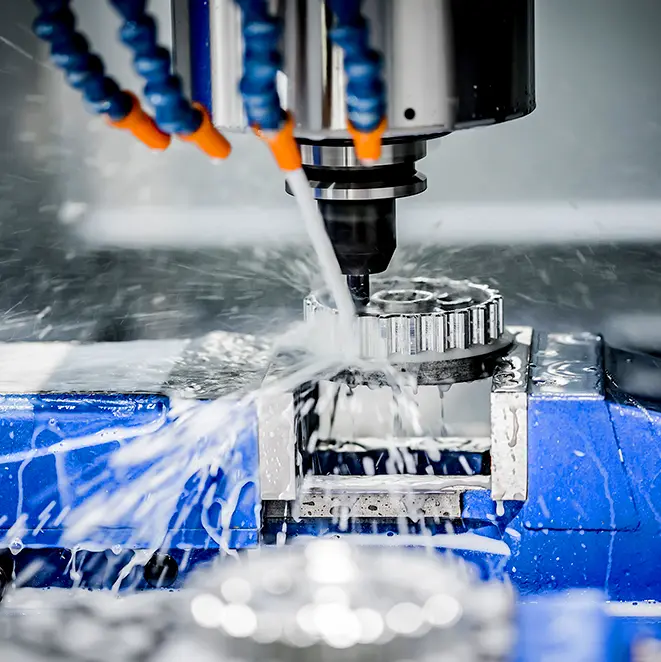
Our engineering services extend beyond the factory floor. Every safety net is designed to meet target airworthiness and safety rules. When designing a heliport layout, our engineers model regional wind, thermal, and seismic loads to ensure the safety mesh integrates cleanly with the landing deck.
To verify performance, we perform structural load testing on all net styles. A key benchmark is the CAP 437 dynamic drop test, where a 125 kg load is dropped onto the center of the mesh to simulate a person falling. The frame and mesh must absorb the kinetic energy without tearing or collapsing. We provide certified documentation and testing records with every order to simplify local permit approvals.
Additionally, each system is designed for straightforward installation. We supply detailed assembly guides, 3D CAD models, and marked layout drawings. Our frames feature adjustable brackets, allowing local installation teams to adjust tension and alignment to compensate for any structural variances in the concrete or steel deck.
Because heliports require custom sizing, safety net pricing varies based on dimensions, alloy selection, finish specifications, and regulatory documentation requirements. Factors influencing overall cost include:
Contact our engineering sales team with your deck dimensions, wind parameters, and project location, and we will provide a comprehensive, itemized quote within 48 hours.
Answers to engineering and procurement questions regarding heliport perimeter nets.
High-tolerance extruded decks, landing pads, and safety profiles built to your design specifications.
 LvXing