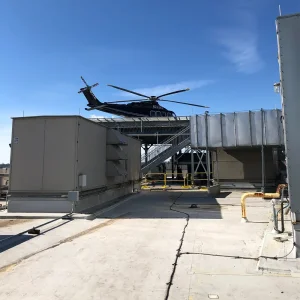
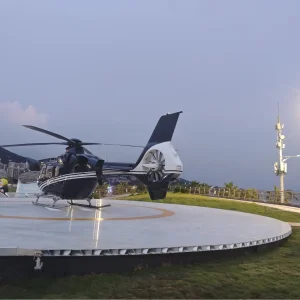
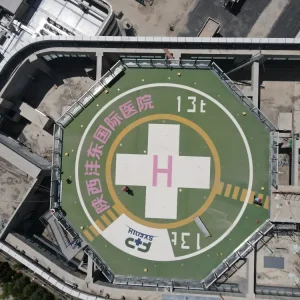
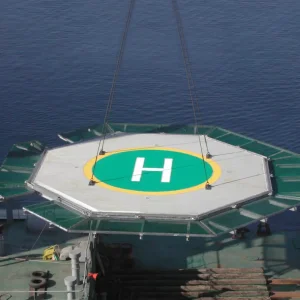
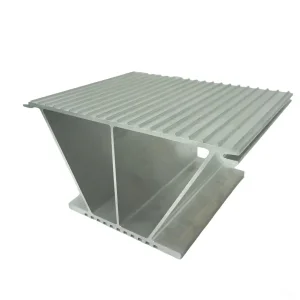
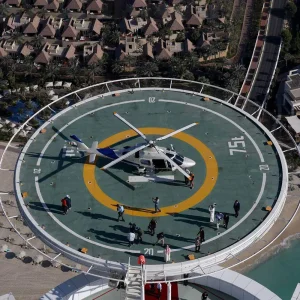
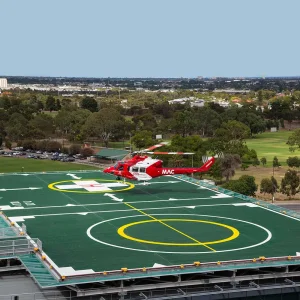
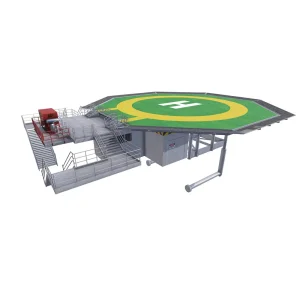
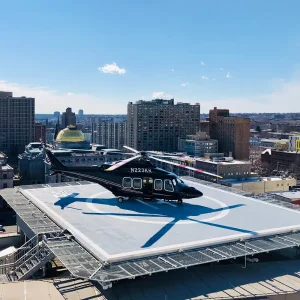
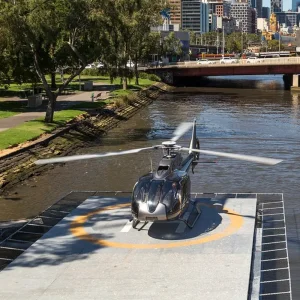
Engineered to CAP 437 standards, offering high wind resistance and heavy payload safety parameters for tall building platforms.
Translating conceptual ideas into structurally sound, aerospace-approved helipad realities since 2015.
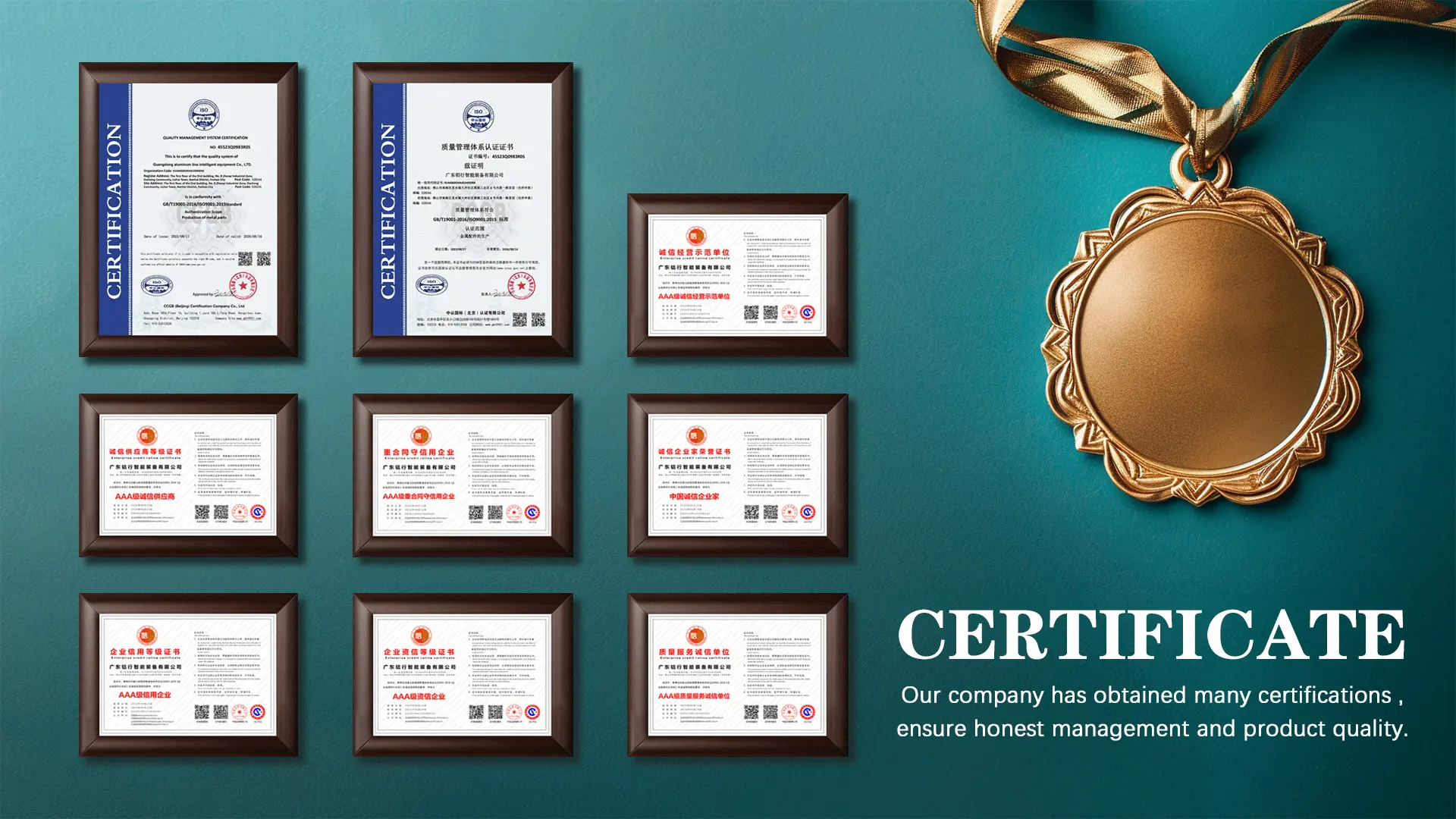
We hold the prestigious "Special Aluminium Materials for Aerospace" Certificate, verifying our metal processing standards for critical high-security tall building safety meshes and helipad profiles.
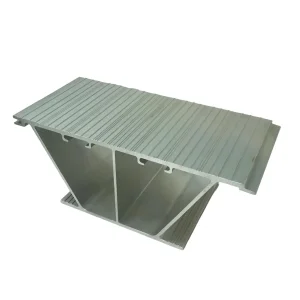
Utilizing high-grade Fenglu aluminum, our extrusion lines run from 800T up to a powerful 20,000T. We work with 1xxx, 2xxx, 3xxx, 5xxx, 6xxx, and 7xxx alloy categories to create structural elements up to 1.2m wide and 28m long.
Our veteran engineering unit possesses over 15 years of industry experience. We specialize in mapping out micro-tolerances, solving load bearing issues, and custom designing to meet the dynamic physical loads of tall building structures.
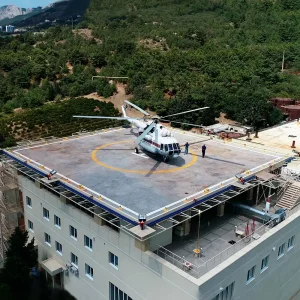
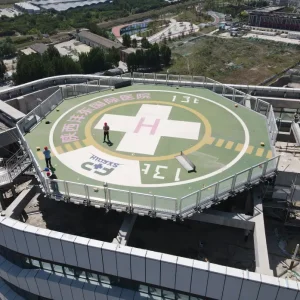
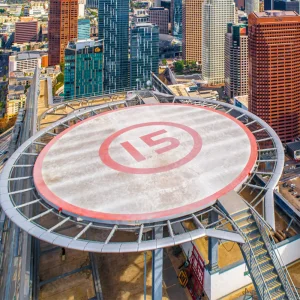
As cities verticalize, the incorporation of rooftop helipads on tall buildings (skyscrapers over 150 meters) has transitioned from a luxury amenity to a critical safety requirement for medical evacuations, disaster response, and VIP transit. However, rooftop aerodynamic behaviors, wind shear at high altitudes, and extreme temperature shifts expose helipad safety equipment to unprecedented stresses. Under Google's E-E-A-T search quality framework, this document provides verifiable engineering guidelines for the selection, testing, pricing, and installation of Custom China Tall Building Helicopter Landing Nets.
Rooftop landing operations are subject to severe turbulence due to the Venturi effect and thermals rising from the building facade. To mitigate the risk of crew or passenger falls, as well as deck-crew accidents, civil aviation authorities worldwide mandate safety nets surrounding elevated perimeter boundaries. Standard specifications (such as CAP 437 in offshore/marry applications, and FAA Advisory Circulars AC 150/5390-2C for heliports) stipulate that any elevated helipad boundary must incorporate a perimeter safety net at least 1.5 meters wide, designed with an upward slope of approximately 10 degrees to safely catch individuals without rebounding them back onto the deck.
Global procurement teams from the Middle East (Dubai, Riyadh), North America (New York, Chicago), and Southeast Asia (Singapore, Jakarta) consistently prioritize structural reliability and corrosion resistance. In high-density tall buildings, these networks must operate flawlessly for decades without degradation from ultraviolet (UV) radiation or atmospheric pollutants.
Did you know? An aluminum alloy net perimeter system reduces building dead loads by up to 60% compared to traditional steel frames, offering critical structural relief for structural engineers designing columns and foundations for 300m+ supertall buildings.
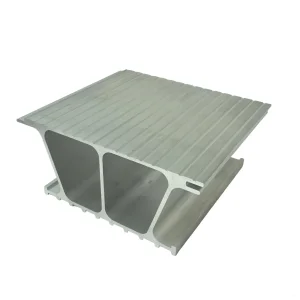
The selection of the base material dictates the lifespan and structural safety of the helipad deck system. Standard grade materials degrade under intense thermal expansion cycles. LvXing Intelligent Equipment Co., Ltd. solves this problem by using aerospace-certified Fenglu aluminum profiles. Specifically, our alloys span from the 1xxx series up to high-strength structural 6xxx and 7xxx series.
With production facilities situated in Foshan City, Guangdong—the aluminum manufacturing capital of China—LvXing Intelligent Equipment operates state-of-the-art extrusion machinery ranging from 800T to a massive 20,000T force. This high-capacity range allows us to produce fully integrated, single-piece structural components up to 1.2 meters wide and 28 meters long. By utilizing single-piece long extrusions, we eliminate structural weak points caused by excessive welding or mechanical joining. Our ISO 9001:2015 certification ensures every profile is verified for dimensional accuracy and tensile capacity before shipping.
| Parameter | Specification Standard | Performance / Value | Engineering Significance |
|---|---|---|---|
| Alloy Grades Available | GB/T 3190 / ASTM B221 | 1xxx, 2xxx, 3xxx, 5xxx, 6xxx, 7xxx | Optimized for strength, ductility, and marine corrosion resistance |
| Extrusion Capacity Limits | 800T - 20,000T Presses | Width up to 1.2m / Length up to 28m | Minimizes structural weld seams, increasing wind-load resistance |
| Helipad Safety Net Width | CAP 437 / FAA Guidelines | 1.5 Meters (Standard) or Custom Outboard | Safely catches personnel without bounce-back or deck intrusions |
| Safety Net Loading Capacity | EN 1263-1 / ASTM E985 | Withstands drop tests of 100kg from 1.5m height | Reliable physical restraint under peak impact load |
| Anodizing & Coating Thickness | Qualanod / AAMA 2604 | ≥ 15 microns (Anodized) or Powder Coating | Prevents oxidation from UV, smog, and marine air (C5-M rating) |
| Wind Load Resistance | ASCE 7 / Eurocode 1 | Designed for wind speeds up to 65 m/s | Crucial for high-altitude rooftop applications (300m+) |
Tall building helipads are rarely standard. Each building features unique aerodynamic wakes, drainage routes, lighting channels, and fire suppression systems. LvXing's design process integrates these aspects:
Working internationally requires absolute compliance with local building codes. LvXing ensures smooth supply chain operations by providing fully detailed custom declarations, mill certification sheets, and third-party inspection clearances. Our close proximity to Shenzhen and Guangzhou ports ensures rapid ocean freight processing to any major port worldwide. Every batch is boxed, packed with protective foam layers, and crated in steel-bound wooden pallets to guarantee zero damage during transit.
Crucial regulatory and engineering answers for procurement managers and structural designers.
Our helipad safety nets and supporting structures are built to align with ICAO Annex 14, UK CAA CAP 437, and FAA AC 150/5390-2C standards. In terms of materials, we comply with GB/T19001-2016 and ISO9001:2015 quality processes, backed by our aerospace-grade aluminum certifications.
We use heavy-duty marine-grade aluminum alloy profiles (6000 & 7000 series) extruded with our high-capacity 20,000T press line. The structural design features open mesh patterns that minimize wind drag coefficient while preserving tensile capture capability, certified for wind zones exceeding 60 m/s.
Once CAD drawings are approved, production typically takes 25–35 days. We export directly from Guangdong (Shenzhen or Guangzhou ports). Packaging is optimized for container shipping with custom wooden boxes to prevent deformation of aluminum shapes.
Yes. Although our safety nets are designed as modular, easy-to-install units, we provide detailed 3D installation videos, shop drawings, and online engineering consultations. For massive skyscraper projects, our field technicians can perform on-site assembly supervision and structural loading tests.
Browse our complete catalog of aluminum alloy profiles, deck assemblies, and safety net options.
 LvXing