Explore our premium range of CE-certified aluminum perimeter net structures and custom structural profiles.
Established in 2015 and strategically located in Foshan City, Guangdong—the global epicenter of advanced extrusion technologies—LvXing Intelligent Equipment Co., Ltd. has developed into a premier designer and manufacturer of structural aluminum products and custom vertical landing pad safety net systems. Driven by an in-house R&D team with extensive industry tenure, we specialize in high-stakes structural applications, turning intricate architectural designs into certified realities.
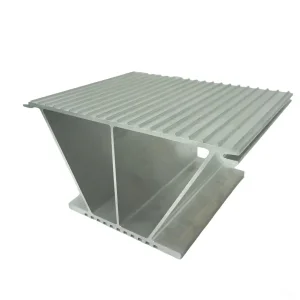
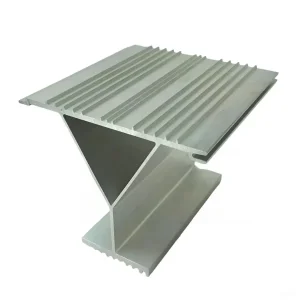
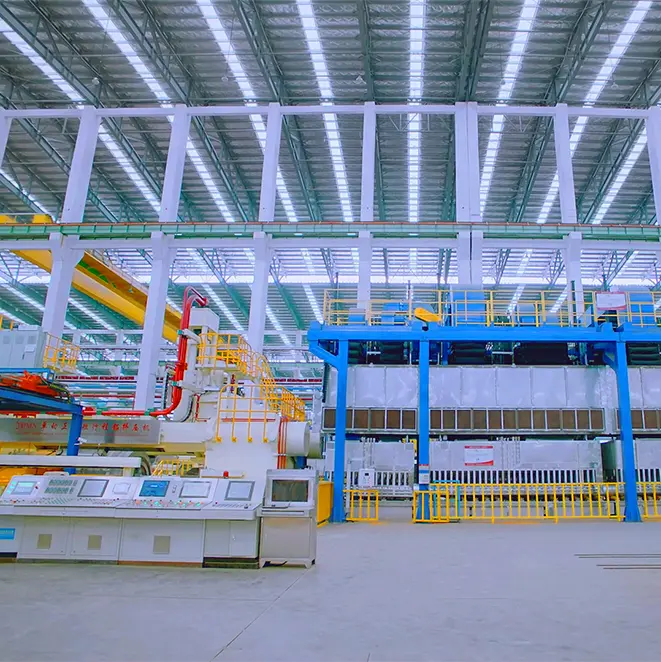
Our operation integrates directly with premium Fenglu aluminum materials, utilizing state-of-the-art extrusion infrastructures ranging from 800T to 20,000T. These industry-leading mechanical capabilities allow us to produce high-performance sections utilizing advanced alloys from 1xxx up to the structurally demanding 6xxx and 7xxx series. We routinely deliver profile widths up to 1.2 meters and continuous lengths reaching up to 28 meters with high precision.
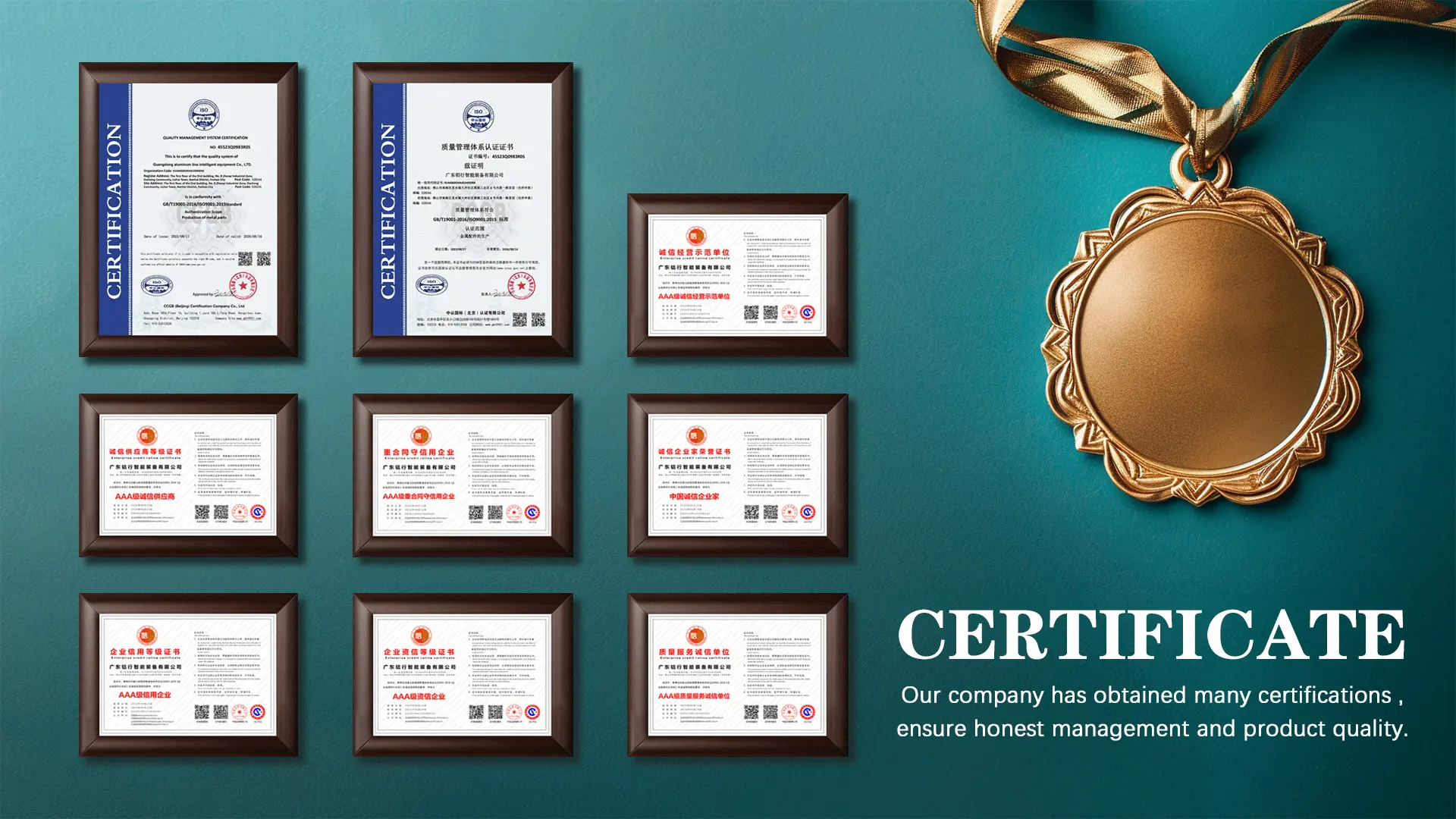
LvXing operates under a strict quality management regime accredited to GB/T19001-2016 and ISO9001:2015 standards. Every system we ship represents our unwavering dedication to global industrial standards, rendering our brand a trusted structural partner for international contractors, design institutes, and military agencies.
Why LvXing's vertical landing pad net framing systems represent the pinnacle of aerospace-grade aluminum engineering.
By leveraging hydraulic extrusion presses ranging up to 20,000T, we eliminate the need for segmented, multi-part profile welding on large landing pad spans. Welded joints represent structural risk areas under sudden impact; our ability to produce structural sections up to 1.2m wide and 28m long yields seamless, monolithic aluminum perimeter frames. This ensures a consistent modulus of elasticity and superior stress distribution across the entire surface of the safety net structure.
Furthermore, our material processing preserves the grain flow direction of the aluminum alloys. This delivers exceptional fatigue resistance—a critical attribute for offshore vessels and high-wind vertical landing pads subjected to harmonic vibrations and high aerodynamic forces.
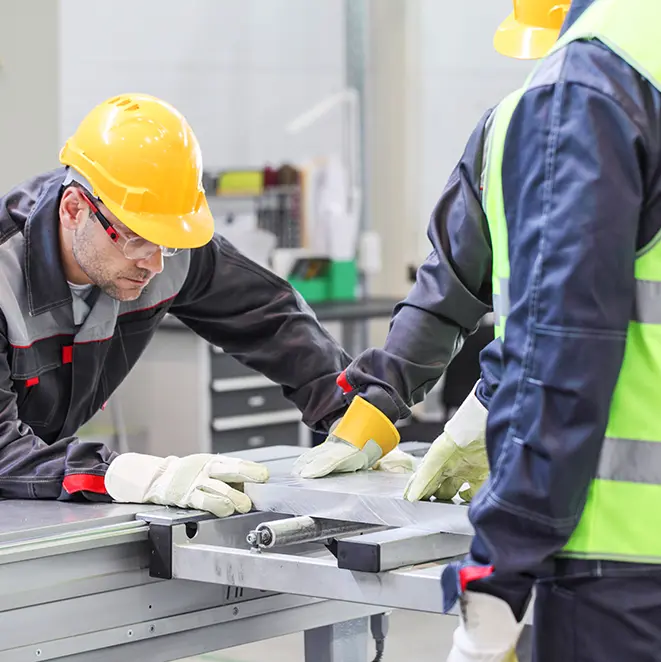
Standard grade meshes often succumb to corrosion when deployed on offshore helidecks or chemical plants. LvXing carefully selects specific alloy formulations based on target conditions. For offshore platforms, we utilize 5xxx and 6xxx series alloys (such as 6061-T6 or 6082-T6) possessing high magnesium/silicon contents, which are anodized to protect against marine salt-spray corrosion.
For applications where extreme high-velocity structural loads are anticipated, we formulate custom 7xxx series alloys (such as 7075-T6). These materials exhibit a yield strength approaching that of high-tensile steels while maintaining the low density of aluminum. This enables the design of lightweight cantilevered support structures that reduce overall structural loads on the rooftop or vessel deck.
The next generation of vertical landing pad safety nets: Integrated intelligence and carbon neutrality.
We are actively developing smart perimeter safety systems integrated with fiber-optic strain and load cells. These sensors continually measure structural tension, sending real-time health data to airport maintenance crews or vessel telemetry networks to signal the need for tension adjustments before structural failure occurs.
For Arctic environments and cold-weather operations, we are engineering low-voltage heated safety net frames. These structures prevent dangerous ice buildup, ensuring the perimeter net remains flexible and ready to absorb impacts even in extreme sub-zero conditions.
Aligned with global net-zero targets, our manufacturing pipeline is transitioning toward high-recycled-content aluminum and green-power extrusion processes, dramatically reducing the embodied carbon footprint of large-scale infrastructure projects.
Meeting and exceeding the requirements of leading international aviation and maritime regulatory frameworks.
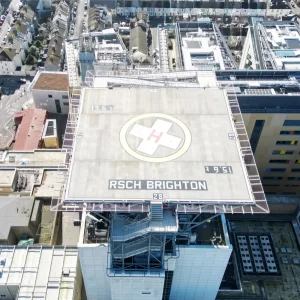
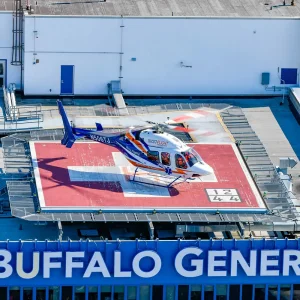
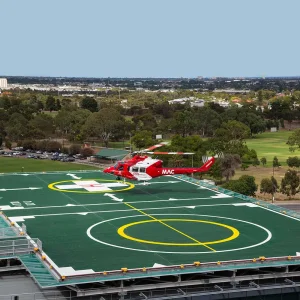
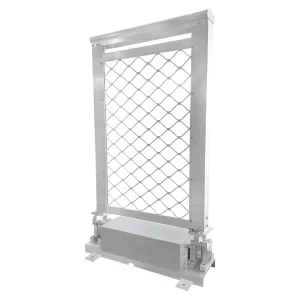
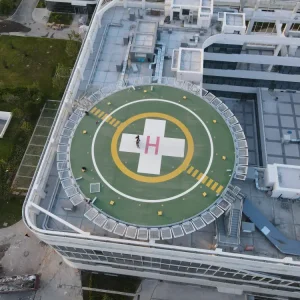
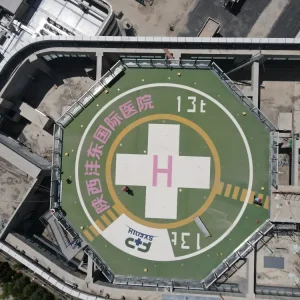
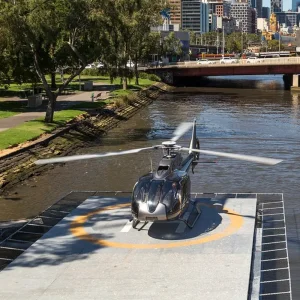
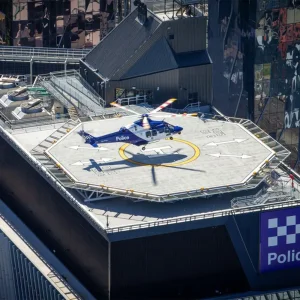
Rooftop medical helipads require reliable fall-protection systems. Our perimeter nets are designed in strict accordance with ICAO Annex 14 Volume II and FAA AC 150/5390-2C guidelines, providing robust energy dissipation to catch falling personnel or equipment without causing severe rebound injuries.
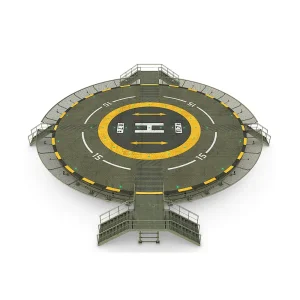
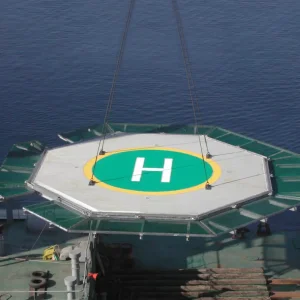
Deployed on FPSO vessels and drilling rigs, safety nets must endure corrosive sea spray, heavy winds, and dynamic impacts. We supply marine-grade anodized aluminum structures certified to CAP 437 standards, offering exceptional durability and corrosion resistance in marine environments.
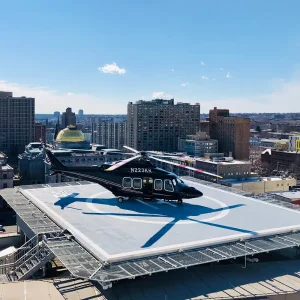
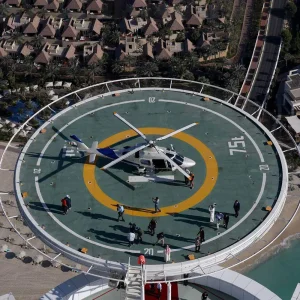
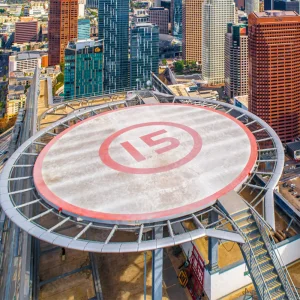
As Urban Air Mobility evolves, vertiports on downtown skyscrapers demand lightweight safety net structures. Our high-strength aluminum frames deliver structural safety without exceeding the roof load limits of existing urban skyscrapers.
How our advanced industrial production model ensures rapid delivery and optimized unit costs.
Located in the heart of Foshan, Guangdong, our factory operates within a mature industrial supply chain. We maintain long-term partnerships with premium feedstock suppliers, ensuring consistent access to high-grade raw aluminum. This localized supply chain model reduces transport times, insulates us from material supply disruptions, and stabilizes procurement costs.
By bypassing multiple logistics layers, we pass these raw material cost savings directly to our clients, ensuring competitive pricing without compromising on mechanical performance or structural tolerances.
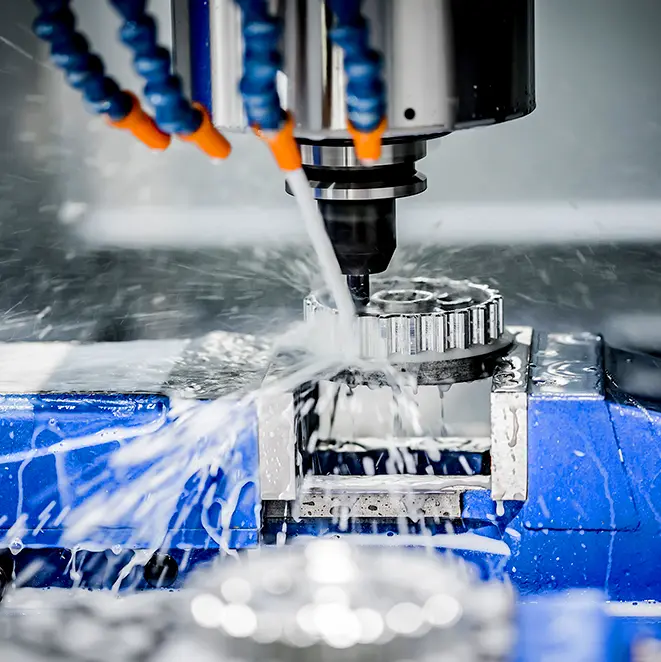
Our factory utilizes multi-axis CNC milling machines and automated punching stations that execute design specifications with high accuracy. This level of automated control ensures that every connector plate, hinge, bracket, and support strut is manufactured to tight tolerances, enabling straightforward, trouble-free assembly on site.
Furthermore, our rigorous quality control processes track every batch from raw billet heating to the final anodizing bath, assuring complete traceability and compliance with international standards.
Providing end-to-end engineering, logistics, and compliance support for international buyers.

We provide complete documentation packages to simplify local regulatory approvals, including material test certificates (MTC) to EN 10204 3.1 standards, detailed wind load analyses, dynamic impact test data, and structural compliance declarations. Whether your project is audited by the FAA, EASA, or local civil aviation bodies, our engineering documentation is formatted to facilitate a smooth approval process.
Our technical team collaborates directly with your structural engineers, providing customizable CAD and BIM models to ensure our perimeter safety nets integrate cleanly into your overall helideck drawing package.
Demonstrated manufacturing scale and technical capability in aluminum structural safety.
Addressing key engineering, procurement, and performance questions regarding our vertical landing pad safety net systems.
Our perimeter safety nets are designed, manufactured, and tested to meet or exceed key international standards, including ICAO Annex 14 Volume II (Heliports), UK CAA CAP 437 (Standards for Offshore Helicopter Landing Areas), and FAA Advisory Circular 150/5390-2C. We perform dynamic drop tests—typically using a 100kg test weight dropped from a height of 1 meter—to ensure the net structure absorbs kinetic energy without generating a trampoline rebound effect that could throw personnel back onto the landing deck or over the side.
Aluminum offers several key engineering advantages: First, it has a high strength-to-weight ratio, which reduces the dead load on cantilevered roof structures and offshore vessels. Second, aluminum naturally forms a protective oxide layer, providing high corrosion resistance. When anodized to standard marine specifications (typically 15-25 microns), our aluminum frames withstand harsh offshore environments without requiring painting or regular rust treatment, lowering long-term maintenance costs compared to stainless steel.
With an experienced in-house R&D team and multi-axis CNC machinery, we custom-engineer frames to fit specific layouts, whether square, circular, or irregular. We can accommodate various mounting configurations, including folding, fixed, and swing-down designs, to match your specific structural requirements. Our engineers provide 2D/3D CAD drawings for approval before production begins, ensuring precise alignment with your overall site plans.
We process a wide range of alloys across the 1xxx, 2xxx, 3xxx, 5xxx, 6xxx, and 7xxx series. For structural safety nets, we typically recommend 6061-T6 or 6082-T6 due to their optimal balance of tensile strength, weldability, and corrosion resistance. In specialized marine or high-stress aerospace environments, we utilize tailored 5xxx series or high-strength 7xxx series alloys as dictated by project specifications.
Lead times vary depending on structural complexity and volume, but standard custom orders typically range between 4 to 6 weeks from technical drawing approval to factory dispatch. Leveraging our strong supply chain connections in Foshan and direct access to premium Fenglu feedstocks, we maintain highly competitive production schedules. We also assist with international sea freight logistics, customs clearance documentation, and export packing to ensure secure delivery.
Direct supply of specialized profiles and safety net assemblies engineered for reliability.
 LvXing