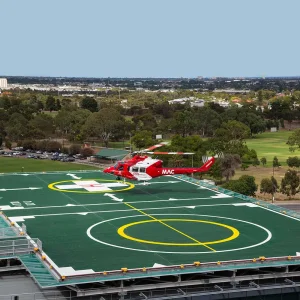
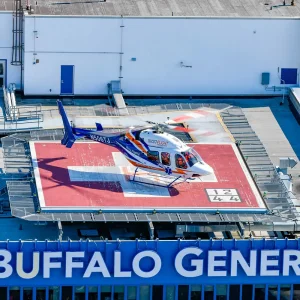
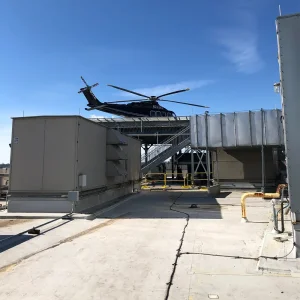
Explore our state-of-the-art aluminum profile helidecks and CE-certified perimeter safety nets.
Elevated structure heliports represent a critical nexus of civil engineering, aeronautical compliance, and structural metallurgy. Unlike ground-level landing pads, elevated decks mounted on rooftop complexes, offshore petroleum rigs, or deep-sea vessels are subjected to dynamic environmental conditions. These structures must withstand dynamic wind shear forces, seismic displacement, acoustic resonance, and the immense impact energy of a landing helicopter.
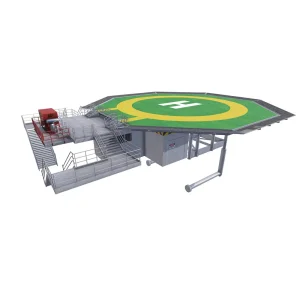
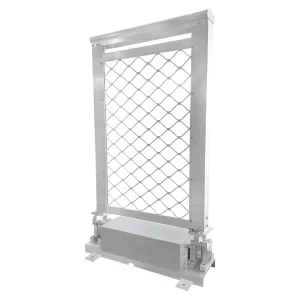
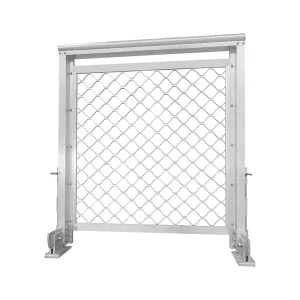
A primary structural safety component mandated by international civil aviation authorities (ICAO, FAA, and UK CAA CAP 437) is the helideck perimeter safety netting system. These mesh systems are designed not to stop aircraft, but to prevent personnel, equipment, and flight crew from falling from elevated decks. Our factory specializes in high-tensile marine-grade aluminum alloy safety nets and structural profiles that deliver maximum durability under extreme corrosion and stress.
Transforming engineering designs into structural realities since 2015.
Established in 2015 and located in Foshan City, Guangdong, LvXing Intelligent Equipment Co., Ltd. boasts a highly skilled R&D team with extensive experience. We leverage exceptional technical expertise to effectively transform customers' ideas into reality, consistently meeting their precise requirements.
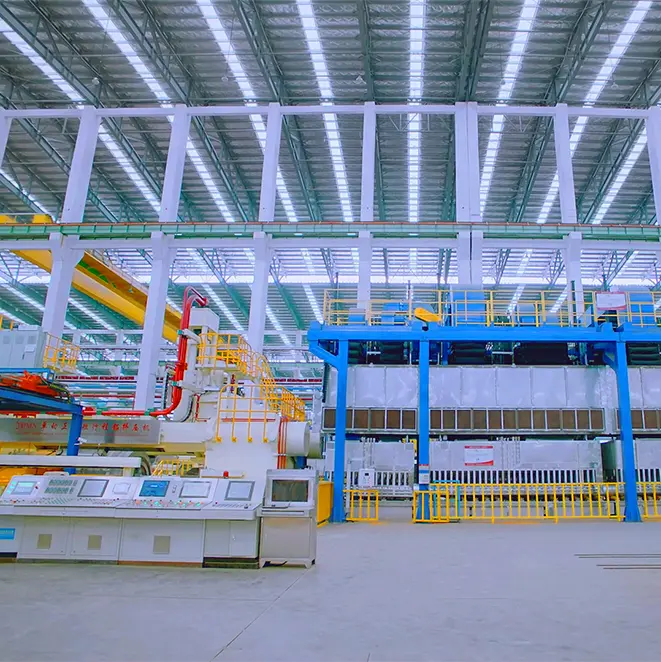
We utilize premium Fenglu aluminum, offering a diverse range of profiles for flexible applications. Our extrusion lines, ranging from 800T to 20,000T, accommodate alloys in the 1xxx, 2xxx, 3xxx, 5xxx, 6xxx, and 7xxx series, allowing us to produce shaped products with section dimensions up to 1.2 meters in width and 28 meters in length. These products are recognized for their precision and meticulous processing, finding broad application in aerospace, military, medical, and industrial sectors.
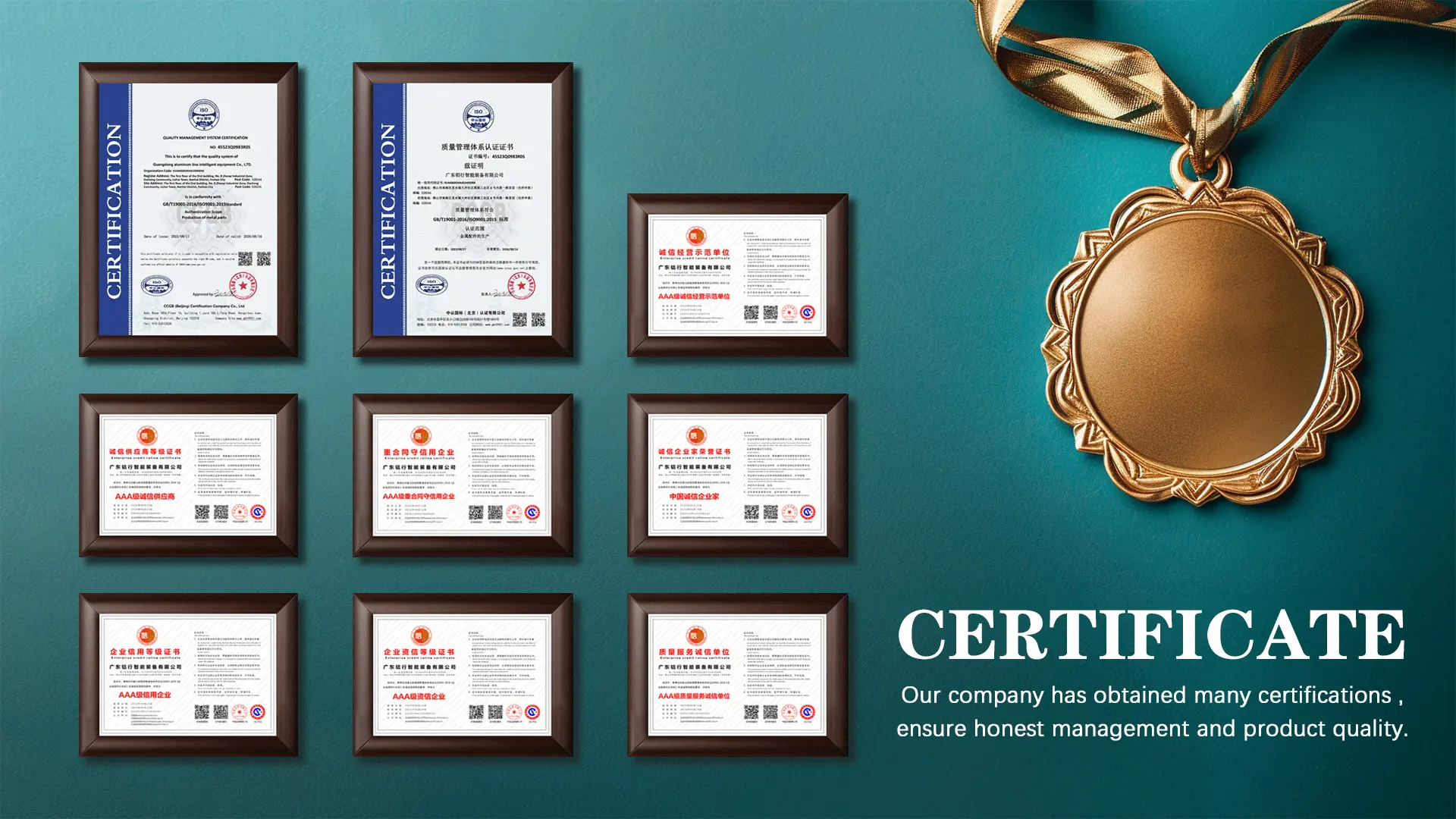
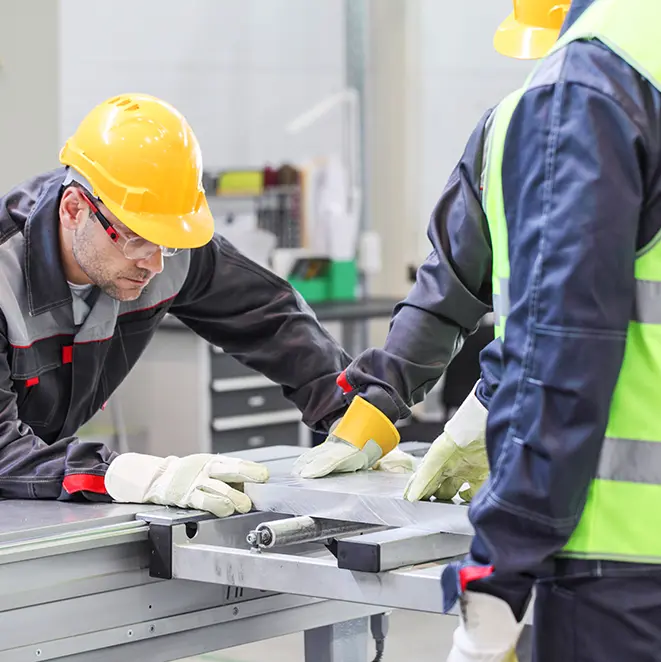
Our commitment to excellence is evident throughout the manufacturing process, rigorous quality control, thorough packaging, and efficient shipping procedures. This dedication has earned us recognition as a national excellent and honest enterprise, along with quality system certification in accordance with GB/T19001-2016/ISO9001:2015 standards. We aspire to be your trusted business partner and warmly invite you to visit our factory.
The technological and structural advantages that set Lvxing apart in the global aerospace and helipad sector.



How our custom elevated structure heliport nets and decks perform across challenging operational environments.
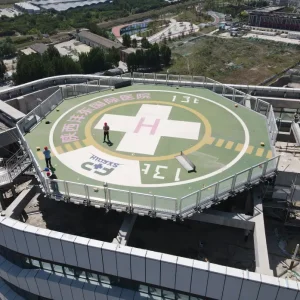
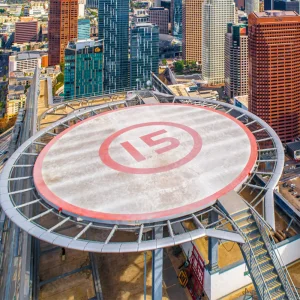
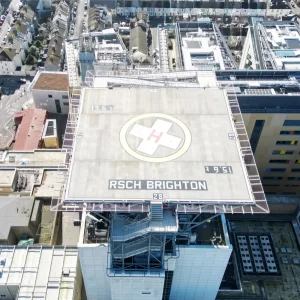
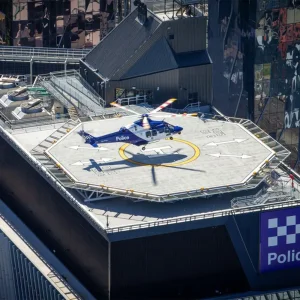
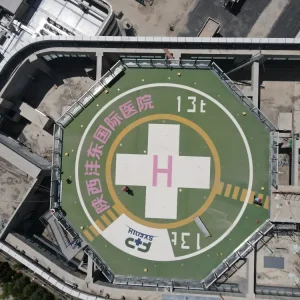
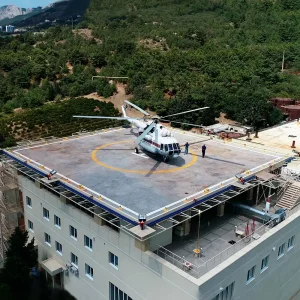
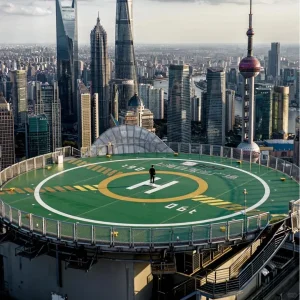
Rooftop installations demand high structural reliability paired with minimum dead weight. Our custom 6000-series aluminum helipads provide structural stability without overloading skyscraper frames. The safety nets prevent accidental falls of EMS staff and medical personnel under high thermal updrafts generated by HVAC installations and helicopter rotors.
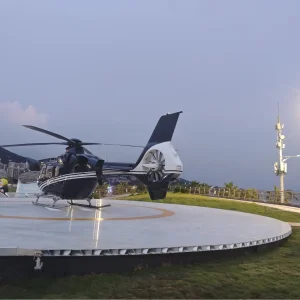
Offshore oil rigs in the North Sea or Gulf of Mexico present highly corrosive salt-spray environments. Our perimeter safety nets, made of stainless steel 316 wire and custom anodized aluminum frames, resist severe oxidation. The high tension prevents sagging under the dynamic impact of ocean wind shears.
Tactical operations demand heavy-duty, fast-deployment solutions. Our modular aluminum alloy profiles facilitate rapid assembly for temporary or mobile bases. Our perimeter netting systems are built to withstand rigorous stress cycles, supporting heavy-cargo handling and rapid tactical troop egress.
Pioneering smart technologies and high-efficiency material science to advance vertical aviation safety.
As eVTOL (electric Vertical Takeoff and Landing) aircraft and advanced urban air mobility systems scale globally, elevated landing infrastructure must adapt. Our R&D team is engineering next-generation structural platforms focused on three primary areas:
We are developing electric perimeter safety nets with integrated fiber-optic strain gauges and load sensors. These systems monitor structural integrity, mesh tension, and stress accumulation in real time, alerting facility managers of fatigue or damage before failure occurs.
Utilizing our 20,000T extrusion lines, we are experimenting with advanced lithium-aluminum alloys. These materials offer higher tensile strength-to-weight ratios and improved fatigue limits, allowing lighter helideck structures with greater payload capacities.
Our manual and motorized dynamic safety nets are shifting toward automated self-tensioning frameworks. Designed for extreme climates, these structures adjust tension automatically based on temperature changes and snow loads, keeping compliance levels high without manual intervention.
Why sourcing from our Foshan facility guarantees structural quality, supply security, and cost performance.
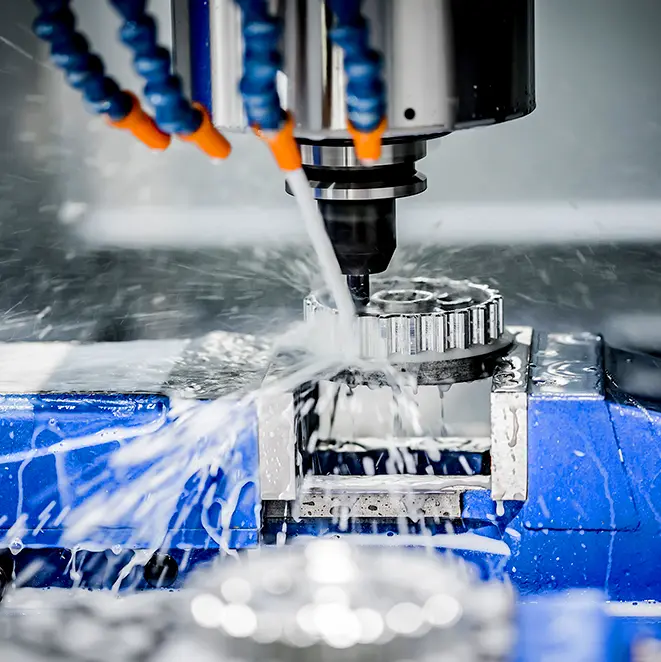
Guangdong's industrial ecosystem provides a robust supply chain network. By base-positioning our operations in Foshan, Lvxing accesses a fully integrated value chain, from raw bauxite refinement to high-end aluminum extrusion, heat treatment, and precision CNC finishing.
Strict adherence to international aviation codes ensures smooth project handovers.
Aviation safety allows no margin for error. Lvxing designs, tests, and manufactures helipads and perimeter net systems to meet global aviation and offshore codes:
Prescribes specific dimensions, safety margins, and structural slope requirements for heliport installations worldwide.
Defines the global benchmark for offshore vessel and oil rig helipads, specifying drop tests and friction requirements.
Outlines structural safety parameters for hospital, commercial, and general aviation helipads in North America.
We provide complete documentation, including material test certificates (MTC), quality control check logs, and structural design calculations. For complex municipal or marine projects, we offer on-site supervision and installation guidance to ensure proper installation.
Answers to common structural and logistical questions regarding elevated heliport netting systems.
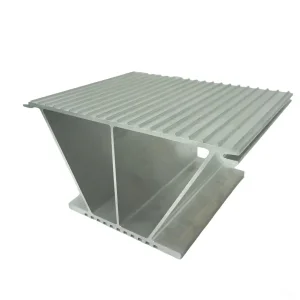
We primarily utilize high-tensile 6000-series alloys, such as 6061-T6 and 6082-T6, for structural helideck profiles. These alloys deliver excellent yield strength, weldability, and resistance to marine corrosion. For aerospace-grade requirements, we select custom 7000 and 2000-series alloys, which offer outstanding structural load capacities.
Under CAP 437, helideck perimeter safety nets must survive a dynamic drop test, absorbing the kinetic energy of a 100 kg body dropped from a height of 1 meter without failure. Our safety nets are manufactured using marine-grade stainless steel 316 wire rope and high-tensile aluminum frames. We pre-tension and test these assemblies to ensure they deform elastically to catch falling objects without breaking.
Yes. With our 20,000T extrusion press and advanced facility, we can manufacture specialized aluminum shapes up to 1.2 meters wide and 28 meters long. This minimizes the need for joints and field welding, improving structural integrity and reducing installation times.
Yes. We manufacture both manual and motorized (electric) perimeter safety nets. Motorized systems allow operators to fold or deploy the netting structure remotely. This is especially useful on naval vessels, multi-use offshore platforms, or sites where space-saving structures are required.
For marine, offshore, and coastal helipads, we apply thick anodized coatings (typically over 20 microns) or specialized marine-grade powder coatings. This prevents galvanic corrosion and pitting caused by salt-spray exposure.
Please contact our sales team with your structural designs, target landing loads, and regulatory requirements (e.g., ICAO or CAP 437). Our team of engineers, drawing on 15 years of industry experience, will analyze your specifications and provide a detailed quote and feasibility assessment.
Discover more specialized structural profiles and safety net options.
 LvXing