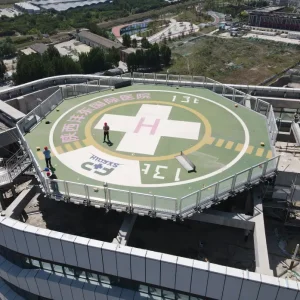
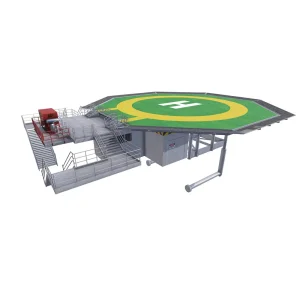
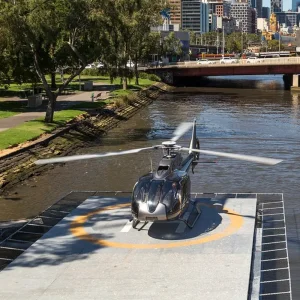
Explore our industrial range of high-strength aluminum helipad profiles and perimeter environment safety nets engineered to meet international aviation and maritime codes.
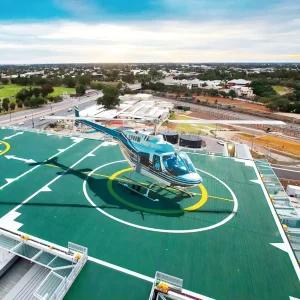
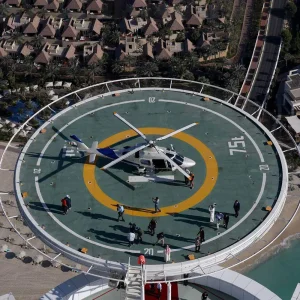
In offshore marine installations, commercial skyscrapers, and emergency hospital rooftop ports, helicopter safety systems are subject to extreme mechanical and environmental stresses. Standard industrial barriers fall short. Helideck perimeter safety nets, or helicopter environment nets, are critical safety elements required by civil aviation authorities worldwide (including CAP 437, FAA, and EASA regulations) to prevent personnel and mobile ground support equipment from falling from the landing deck.
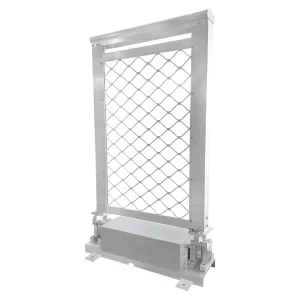
These specialized safety nets must absorb the dynamic kinetic energy of an falling human body or cargo unit without presenting a rigid surface that could cause severe impact trauma. Under CAP 437 standards, the mesh material must exhibit high elasticity, tensile capacity, and resistance to degradation from hydrocarbons, UV radiation, and highly saline ocean spray. Lvxing Intelligent Equipment designs safety net systems that feature marine-grade aluminum framing coupled with flexible mesh structures to meet these stringent requirements.
Designed to endure 2.3 kJ impact tests without structural failure, retaining flexibility for maximum shock absorption.
Frames built exclusively from 6xxx-series and specialized aerospace-grade aluminum alloys to eliminate galvanic corrosion.
Selecting the ideal netting infrastructure requires aligning with localized site dimensions and maintenance routines. The industry specifies two primary deployment mechanism styles:
Lvxing provides fully customizable perimeter net systems, supporting section widths up to 1.2m and frame spans up to 28m using our massive 20,000T extrusion equipment.
Established in 2015 and located in Foshan City, Guangdong, LvXing Intelligent Equipment Co., Ltd. boasts a skilled R&D team with extensive experience. We leverage exceptional technical expertise to effectively transform customers' ideas into reality, consistently meeting their precise requirements.
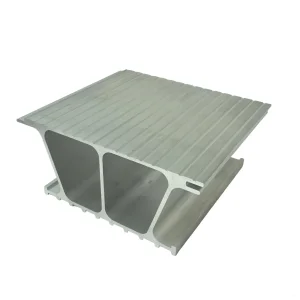
We utilize premium Fenglu aluminum, offering a diverse range of profiles for flexible applications. Our extrusion lines, ranging from 800T to 20,000T, accommodate alloys 1xxx, 2xxx, 3xxx, 5xxx, 6xxx, and 7xxx, allowing us to produce shaped products with section dimensions up to 1.2 meters in width and 28 meters in length. These products are recognized for their precision and meticulous processing, finding broad application in aerospace, military, medical, and industrial sectors.
Our commitment to excellence is evident throughout the manufacturing process, rigorous quality control, thorough packaging, and efficient shipping procedures. This dedication has earned us recognition as a national excellent and honest enterprise, along with quality system certification in accordance with GB/T19001-2016/ISO9001:2015 standards.
We aspire to be your trusted business partner and warmly invite you to visit our factory.
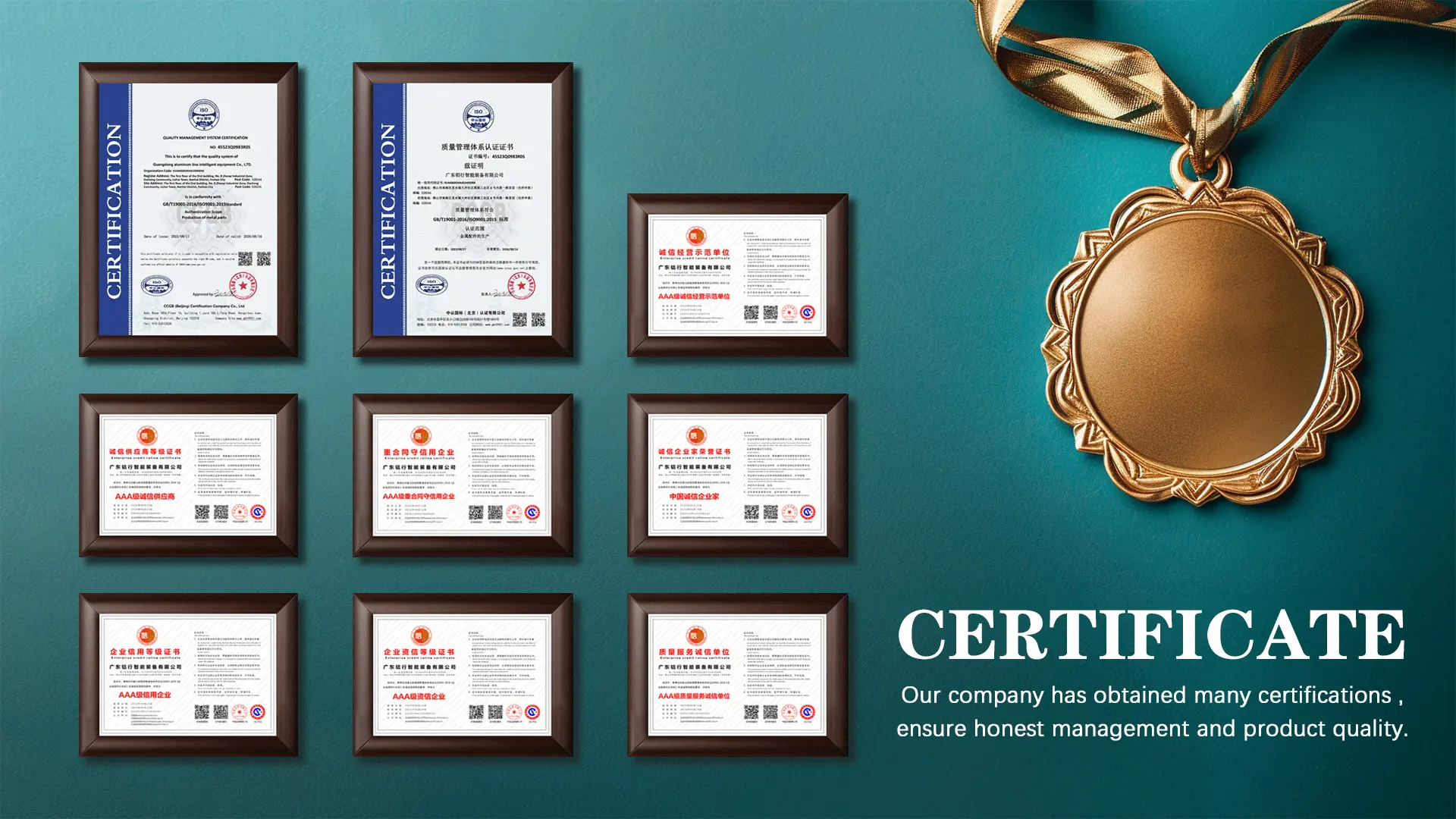
Why maritime and aviation authorities choose Lvxing structural frames for global environment net projects.
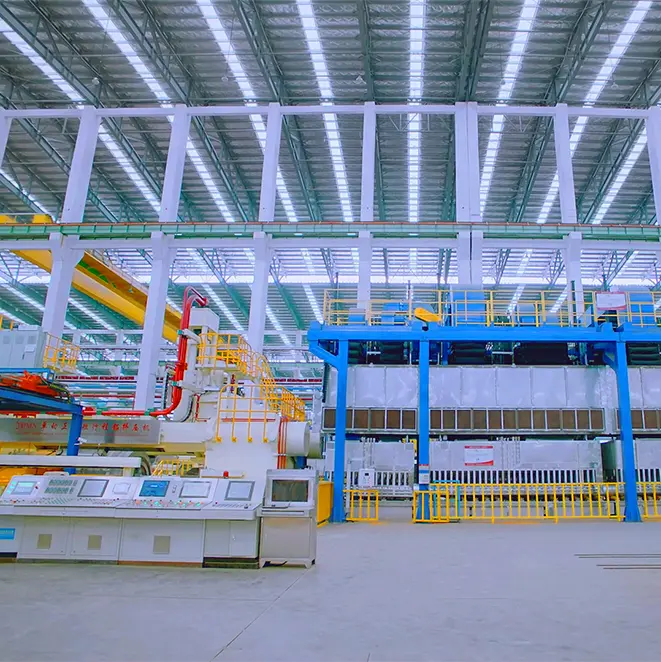

We have obtained the official “Special Aluminium Materials for Aerospace” Certificate. This validation guarantees that every structural element shipped from our plant conforms to the strict physical load tolerances required for deep-sea installations, defense operations, and commercial aviation infrastructure.
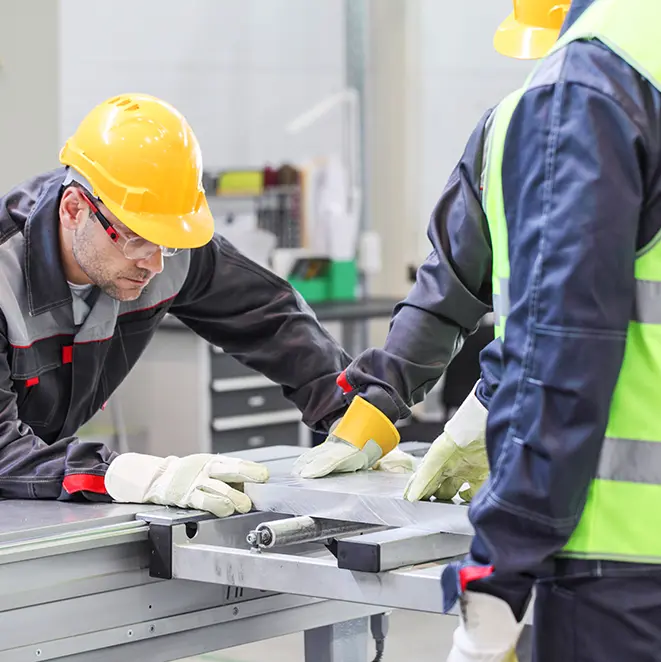

We provide and utilize high-quality Fenglu aluminum profiles. With extrusion lines ranging from 800T to 20,000T, we can produce alloys 1xxx, 2xxx, 3xxx, 5xxx, 6xxx, and 7xxx. We can manufacture fully shaped products with section dimensions up to 1.2 meters in width or 28 meters in length.
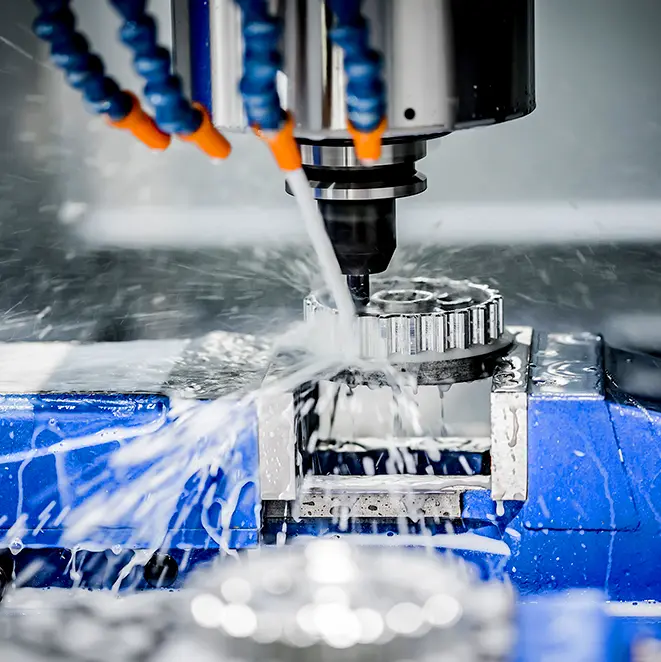

We have a team of technicians with 15 years of invaluable experience. Our deep understanding of customer requirements allows us to identify potential design issues early and offer practical engineering insights, turning complex layouts into high-performance safety structures.
A statistical breakdown of our manufacturing thresholds and quality validation parameters.
How dynamic environmental factors dictate the structural and alloy choices for safety net systems.
North Sea, Gulf of Mexico, and South China Sea installations experience constant saline winds and wave impacts. We supply helideck perimeter safety nets fabricated from highly corrosion-resistant 6082-T6 and 5083 alloys. These materials resist chloride pitting without structural degradation, lowering long-term maintenance costs.
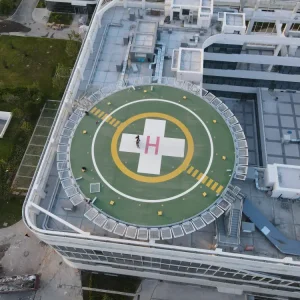
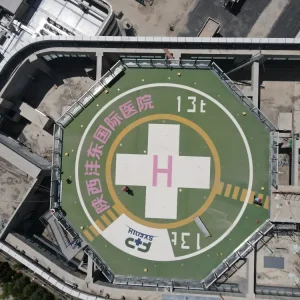
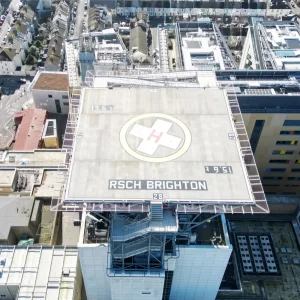
Urban hospital rooftops demand lightweight safety netting systems to prevent exceeding local structural limits. Lvxing's custom hospital roof square helipads integrate perimeter frameworks directly into the building's edge profiles, lowering total dead weight while ensuring optimal dynamic load dispersion.
Superyachts and commercial transport vessels require automated, low-profile safety nets. Our electric perimeter nets fold flat with one-touch bridge control. This system removes aesthetic obstacles when not in use while ensuring immediate deployment during flight arrivals.
Foshan, Guangdong is the global epicenter for industrial aluminum processing. By basing Lvxing's primary manufacturing facility within this region, we tap into a dense network of raw billet suppliers, custom mold designers, and surface finishing plants.
This raw material accessibility allows Lvxing to source high-grade Fenglu aluminum billets quickly, passing these efficiency savings directly to our global customers. While Western fabricators face long lead times for custom dies, our team designs, tests, and extrudes custom helideck framing shapes within 15–20 days.
Additionally, our scale reduces typical marine grade net component prices by 20–30% without compromising on certification criteria. Every step—from raw alloy analysis to final anodizing treatments (securing thickness ≥ 15 microns)—is verified under our GB/T19001-2016/ISO9001:2015 protocol.
A side-by-side technical evaluation of common alloys and structural netting styles.
| Property / Detail | Marine Aluminum 6061-T6 (Lvxing) | Grade 316 Stainless Steel Netting | High-Density Synthetic Fiber Netting |
|---|---|---|---|
| Ultimate Tensile Strength | ≥ 310 MPa | ≥ 515 MPa | Varies (Degrades under UV) |
| Density (Dead Weight) | 2.7 g/cm³ (Extremely light) | 8.0 g/cm³ (Heavy structural load) | ~0.95 g/cm³ (Ultra-light, weak structure) |
| Corrosion Performance | Excellent (Self-passivating oxide layer) | Good (Susceptible to crevice corrosion) | Chemical resistant (Poor UV stability) |
| Maintenance Profile | Zero maintenance, anodized finish | Regular passivation & washing required | Must be replaced every 3-5 years |
| Retraction Compatibility | Fully compatible with manual/electric frames | Heavy, requires high-torque motors | Not suitable for structural auto-folding |
| Typical Lifespan | 20+ Years | 15+ Years (Depends on sea spray) | 2–5 Years max |
The cost of custom helicopter environment nets is determined by several core variables: 1. Material composition (e.g., choice of alloy grade and mesh density); 2. Surface finish requirements (e.g., standard anodizing vs. fluorocarbon PVDF coatings); 3. Retraction automation (e.g., manual pivot hinges vs. electric hydraulic mechanisms); and 4. Sourcing quantity. By utilizing our direct-to-factory supply chains in China, clients save on middlemen markups, receiving high-precision, aviation-grade equipment tailored to their project's exact blueprints.
Innovation directions in helideck safety engineering for the next generation of logistics.
Future iterations will feature embedded structural strain-gauge sensors along the frame's mounting points. These sensors transmit real-time telemetry to control rooms, monitoring structural integrity and alerting crews if a high-impact fall occurs or if wind loading exceeds safe operation parameters.
For Arctic and sub-polar helideck applications, Lvxing is researching integrated heat tracing channels within our structural extrusions. This design prevents ice buildup on the perimeter netting, ensuring the safety system remains flexible and fully deployable in freezing conditions.
With global maritime regulations focusing on ocean safety, we are shifting to chromium-free passivation processes. This transition ensures that paint prep coatings release zero harmful chemical runoffs into delicate marine ecosystems over years of exposure.
Common questions answered by our engineering and design team.
The primary global standards are CAP 437 (Standard for Offshore Helicopter Landing Areas) and FAA AC 150/5390-2C (Heliport Design). CAP 437 requires perimeter safety nets to extend at least 1.5 meters outward, have an upward slope of around 10 degrees, and withstand a dynamic drop test of at least 2.3 kJ without failure.
Aluminum alloys, especially anodized 6061-T6, offer a superior strength-to-weight ratio. They are roughly 60% lighter than stainless steel, which significantly reduces structural loads on hospital roofs and cantilevered shipboard helidecks. Anodized aluminum also forms a natural oxide layer that resists marine corrosion without regular maintenance.
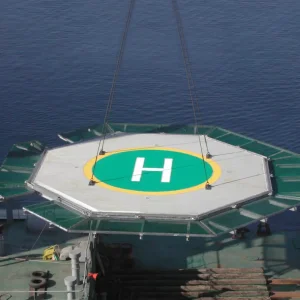
Our 15-year engineering team specialize in fully custom configurations. We design and manufacture round, square, octagonal, and irregular-perimeter systems. Using our heavy-duty extrusion presses (up to 20,000T), we can shape custom corner joinery and edge mounting frames to fit any design.
Electric systems utilize integrated actuator motors linked to bridge controls, allowing operators to drop the netting automatically during helicopter operations and raise it when the pad is idle. Manual nets rely on locking pins and hinge assemblies, which are simpler and more cost-effective but require crews to manually lower them.
Foshan's dense network of raw billet suppliers, extrusion facilities, and surface treatment plants minimizes processing lead times. This allows us to keep our pricing highly competitive while ensuring that every profile is extruded to aerospace standards under our ISO9001:2015-certified quality management system.
With an anodizing film thickness of 15 microns or more, our aluminum helideck frames are designed for a service life of over 20 years, even in offshore environments. The mesh netting, depending on the material selected (stainless steel wire or composite cord), typically lasts 10 to 15 years before requiring inspection or replacement.
Select from our complete range of certified helipad designs, perimeter safety nets, and extrusion profiles.
 LvXing