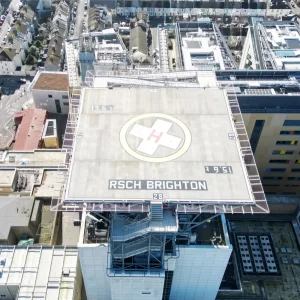
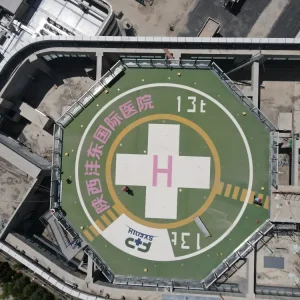
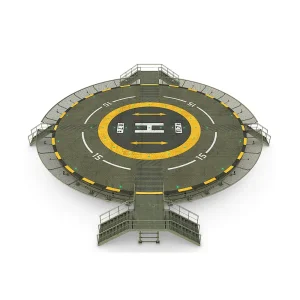
Explore our high-performance structural systems, precision-engineered for heavy loading profiles and extreme marine environments.
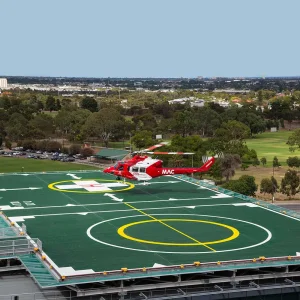
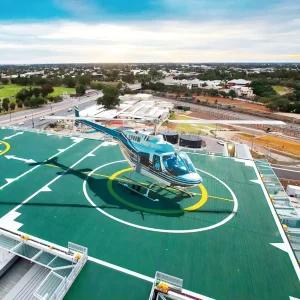
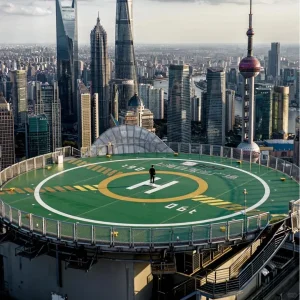
Helicopter Landing Zones (HLZs) on offshore vessels, oil rigs, urban medical rooftops, and military vessels operate under extreme environmental strain. An HLZ safety net (also known as a helideck perimeter safety net) is not merely a barrier; it is a critical safety system designed to save lives, absorb massive energy impacts, and endure severe wind and salt spray without degrading.
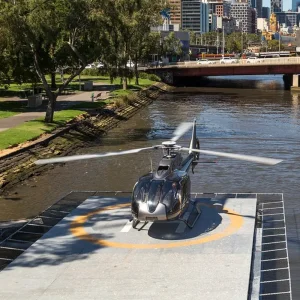
According to CAP 437 (Standards for Offshore Helicopter Landing Areas) and international civil aviation guidelines, perimeter safety nets must be installed around the edge of helidecks to prevent crew, passengers, and equipment from falling. These nets must be designed with an upward slope of 10° and a span of at least 1.5 meters. In the event of a crew member falling, the net must cushion the impact without causing injury, utilizing elastic, high-tensile material properties.
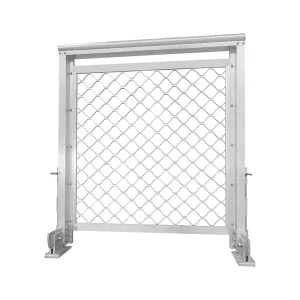
LvXing Intelligent Equipment Co., Ltd., standing as a premier Helicopter Landing Zone Safety Net Manufacturer, utilizes advanced engineering methodologies to fabricate systems that exceed aviation testing requirements. We combine marine-grade aluminum alloy frame components with high-durability mesh webbing to offer unmatched corrosion resistance, low weight, and structural reliability.
Established in 2015 and located in Foshan City, Guangdong, LvXing Intelligent Equipment Co., Ltd. boasts a skilled R&D team with extensive experience. We leverage exceptional technical expertise to effectively transform customers' ideas into reality, consistently meeting their precise requirements.
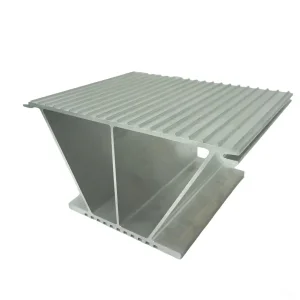
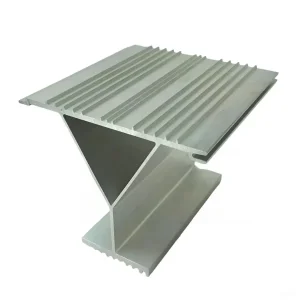
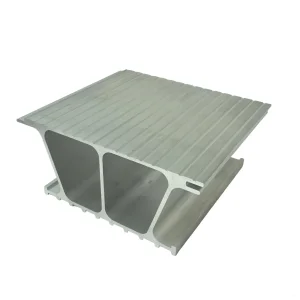
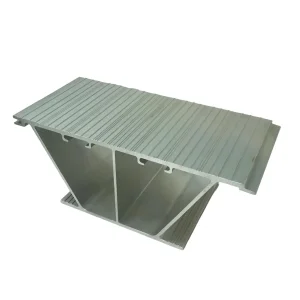
We utilize premium Fenglu aluminum, offering a diverse range of profiles for flexible applications. Our extrusion lines, ranging from 800T to 20,000T, accommodate alloys 1xxx, 2xxx, 3xxx, 5xxx, 6xxx, and 7xxx, allowing us to produce shaped products with section dimensions up to 1.2 meters in width and 28 meters in length. These products are recognized for their precision and meticulous processing, finding broad application in aerospace, military, medical, and industrial sectors.
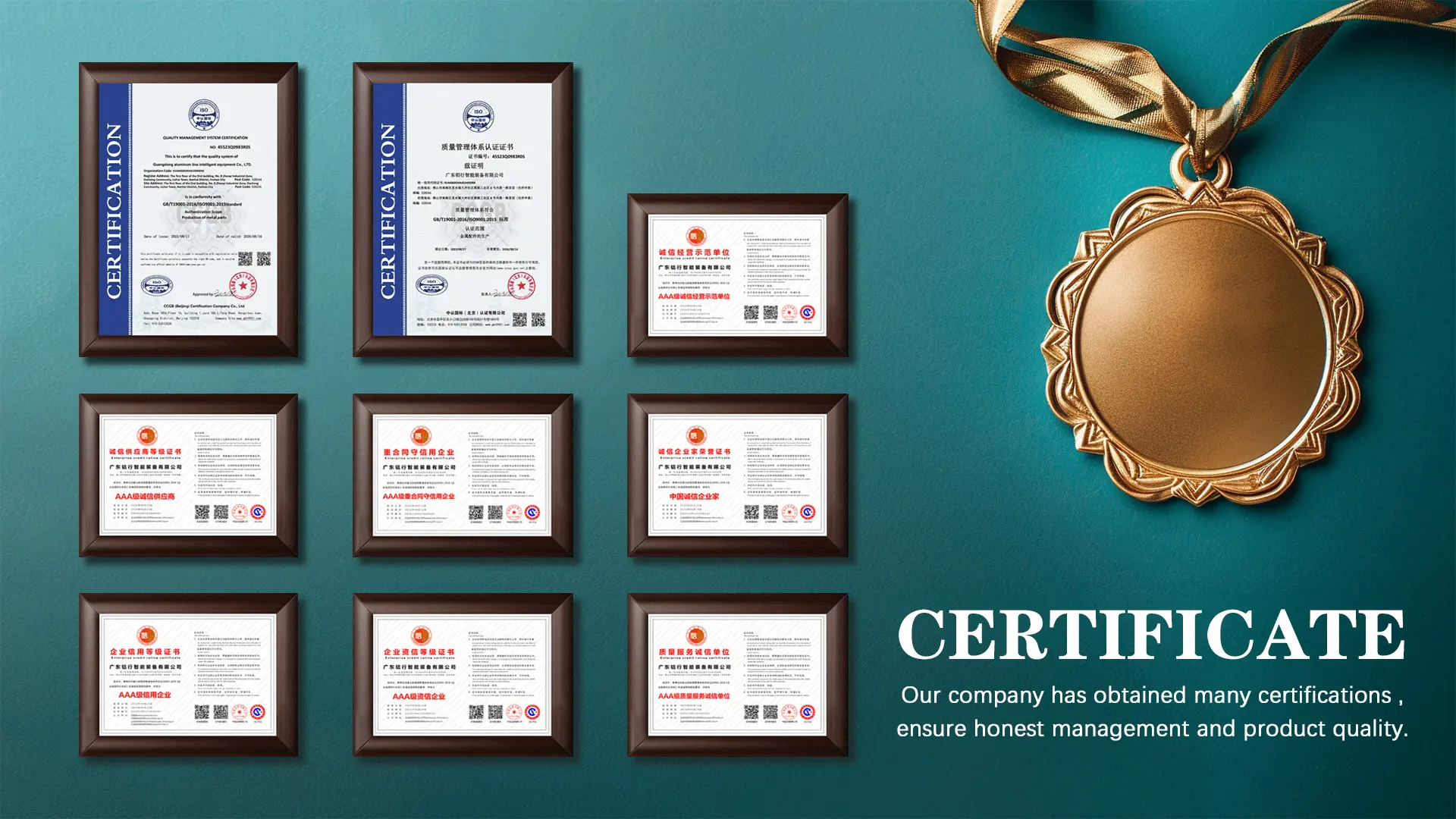
Our commitment to excellence is evident throughout the manufacturing process, rigorous quality control, thorough packaging, and efficient shipping procedures. This dedication has earned us recognition as a national excellent and honest enterprise, along with quality system certification in accordance with GB/T19001-2016/ISO9001:2015 standards. We aspire to be your trusted business partner and warmly invite you to visit our factory.
Discover how our technological capability, quality materials, and expert knowledge define our position in the global helideck structures industry.
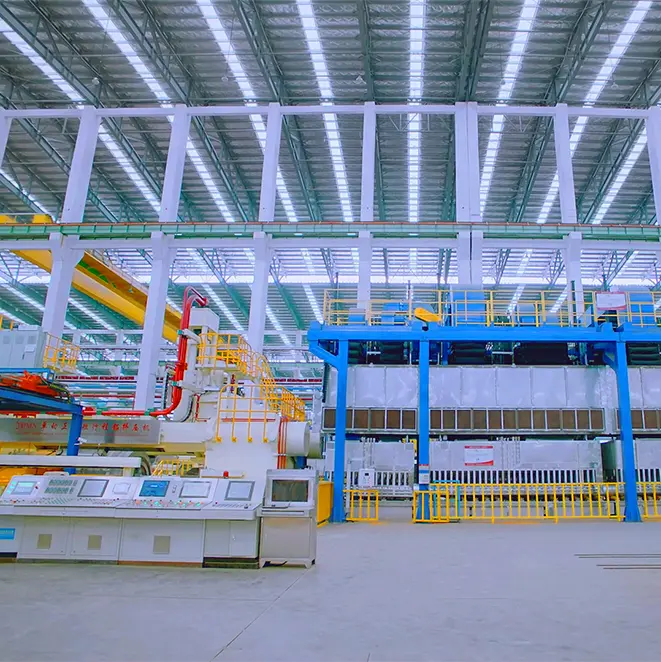
 Aerospace Certification
We have obtained the “Special Aluminium Materials for Aerospace” Certificate, guaranteeing compliance for defense and high-stakes operations.
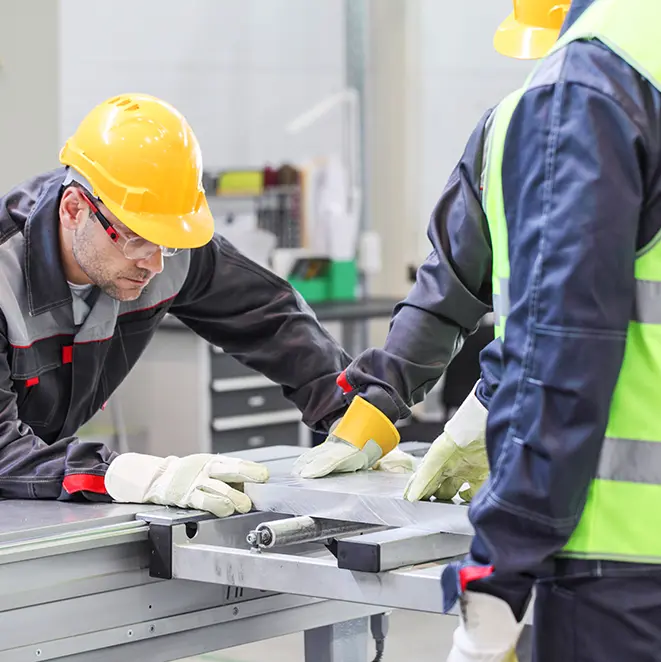
 Advanced Extrusion Lines
We utilize Fenglu aluminum profiles. With extrusion capacities from 800T to 20,000T, we manufacture components up to 1.2m wide and 28m long.
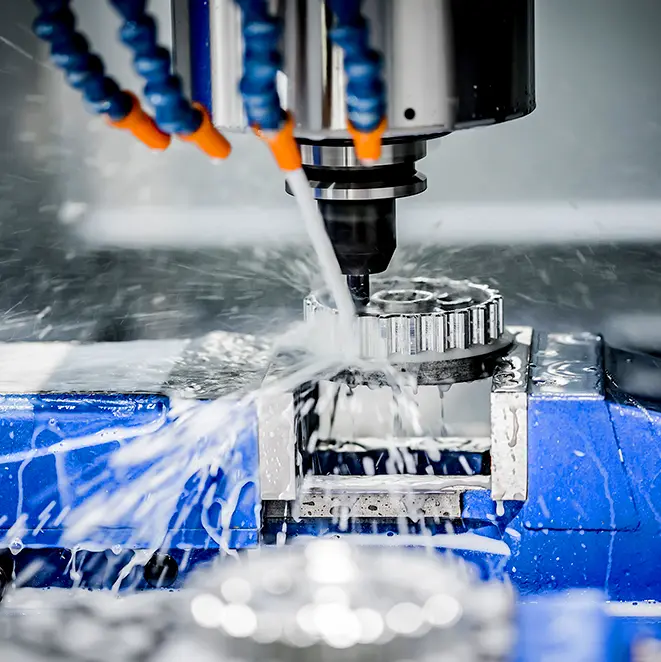
 Experienced Engineers
Our technicians possess over 15 years of industry experience. We turn concepts into physical, high-performance solutions tailored to your operational specifications.
Global logistics, construction codes, and safety standards differ dramatically across regions. For example, offshore installations in the North Sea must comply with strict UK CAA CAP 437 regulations, which specify the exact dimensions, slope angles, and chemical resistance parameters for safety netting systems. Conversely, North American urban hospital projects require compliance with FAA Advisory Circular AC 150/5390-2C.
Nets must extend at least 1.5m from the helideck edge and be angled upward at 10°. They must absorb a drop test of 100kg from 1.0m without tearing or breaking.
US rooftop landing areas must feature non-combustible perimeter systems. Standard materials include grade 316 stainless steel wire mesh or structural-grade high-tensile aluminum frames.
We offer structural load calculations, localized engineering drawing reviews, wind load simulation reports, and site-ready CAD/Revit files for seamless project integration.
Our manufacturing facility is situated in Foshan, Guangdong—the premier global hub for advanced aluminum metallurgy and fabrication. By integrating key supply chain processes into our operation, we provide high-performance helideck systems and safety nets at highly competitive price points.
Through our strategic relationship with Fenglu Aluminum, we gain consistent access to high-purity aluminum ingots. Our collection of heavy-duty extrusion presses (up to 20,000 tons) enables the production of structural sections without internal weld lines, maximizing shear resistance and carrying capacity under severe weather conditions.
Our facilities utilize multi-axis CNC routing systems to machine interlocking parts, support brackets, and deck profiles. Our surface treatment processes include Class 1 marine-grade clear anodizing, thick powder coating, and specialized anti-corrosion treatments, protecting all metal components from premature degradation in offshore saltwater environments.
Understanding localized environments allows us to supply system variants optimized for diverse operational scenarios.
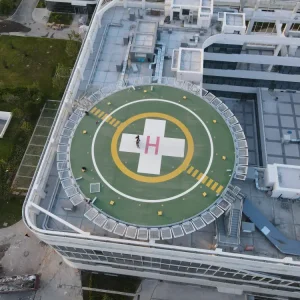
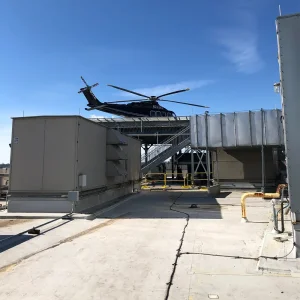
Urban projects require quiet operation, neat aesthetics, and compliance with structural building codes. Our lightweight aluminum designs reduce structural load on skyscraper roofs while providing necessary fall-protection capabilities.
Hospital helipads require reliable drainage, flat landing profiles, and easily accessible safety net frameworks. Our materials are non-combustible and feature chemical resistance to prevent damage from aviation fluids.
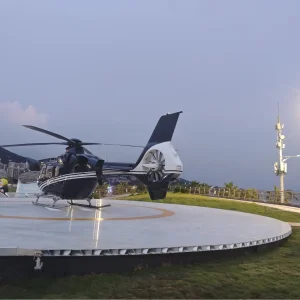
Exposed to constant moisture and sea spray, marine helidecks require maximum protection. We utilize high-tensile 316 stainless steel wire mesh or grade 6082-T6 aluminum alloys to prevent stress corrosion cracking.
Modern aviation design trends emphasize sustainability, digitization, and long-term durability. LvXing is at the forefront of these industry changes, integrating new technologies into our product line.
Future helideck safety systems will utilize tension-monitoring sensors. These sensors detect if structural loads have deformed the frame or net, alerting maintenance crews via local telemetry networks.
Using recycled aluminum reduces the carbon footprint of structural fabrication. Our partnerships allow us to incorporate environmentally conscious aluminum materials without sacrificing structural performance.
Our modular frame designs simplify installation and part replacement. Damaged panels can be swapped out on-site in hours, avoiding operational downtime.
We offer aluminum profiles designed to house LED perimeter lighting directly inside the frame. This improves visibility during night landings and bad weather conditions.
Find answers to common engineering, procurement, and installation questions.
Select from our catalog of certified profiles, manual tension safety nets, and rooftop structures.
 LvXing