Explore our industrial range of high-performance aluminum extrusions, perimeter safety nettings, and complete helideck landing systems customized for global applications.
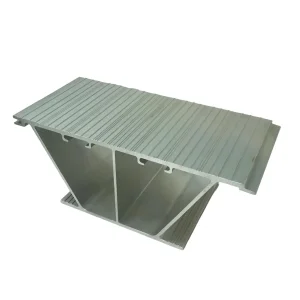
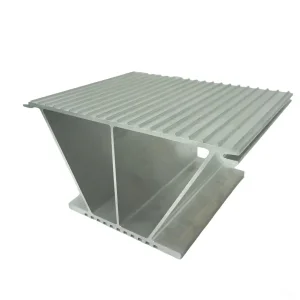
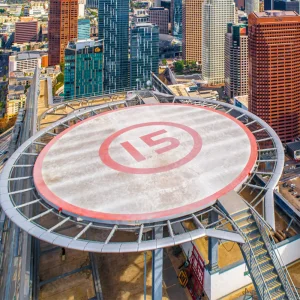
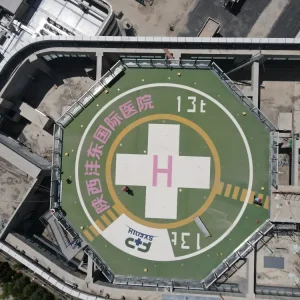
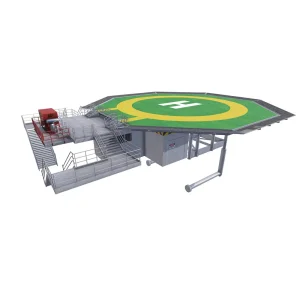
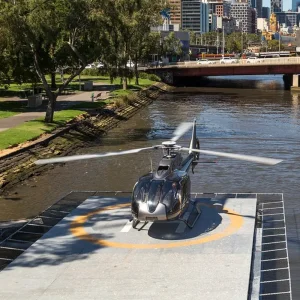
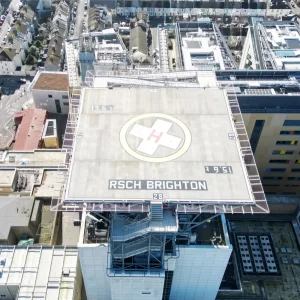
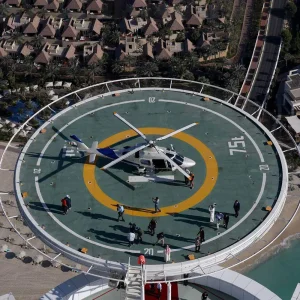
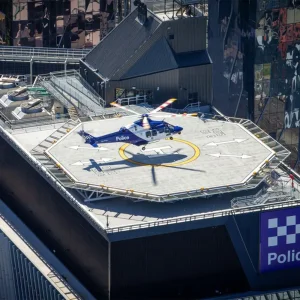
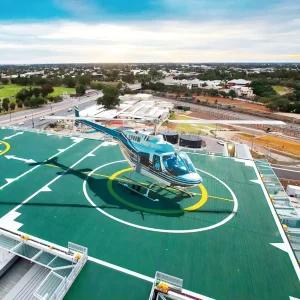
Elevated tower heliports, whether mounted on high-rise urban skyscrapers, commercial trauma hospitals, or offshore drilling platforms, demand uncompromising engineering design. Unlike grade-level helipads, elevated flight decks expose personnel, passengers, and maintenance staff to high-altitude falls and extreme wind shear conditions. Heliport perimeter safety netting systems act as a life-saving, passive fall arrest barrier configured around the outer limits of the landing pad.
A high-performance safety netting system is designed not just to stop an accidental fall, but to absorb kinetic energy without bouncing the falling individual back onto the deck or causing severe bodily injury. Modern structural safety norms require that these nets withstand extreme weather conditions, including hurricane-force winds, high ultraviolet exposure, and highly corrosive maritime environments without compromising structural integrity.
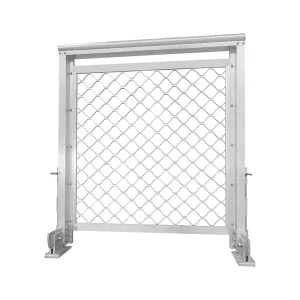
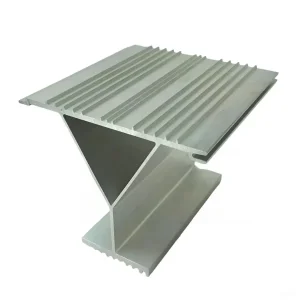
By specifying custom modular systems framed with lightweight, structural grade aluminum profiles and high-tensile mesh, structural engineers and architects ensure seamless compliance with international aviation protocols while drastically minimizing structural dead loads on the parent building or platform framework.
How strict regulatory frameworks shape the design and manufacture of structural perimeter netting.
Across the globe, rapid urbanization and the expansion of offshore renewable energy and oil exploration are driving unprecedented demand for vertical aviation infrastructure. From smart city rooftops to deepwater drillships, heliports have become critical connectivity nodes. However, safety regulations have evolved correspondingly. Today, regulatory bodies like the International Civil Aviation Organization (ICAO), the Federal Aviation Administration (FAA), and the UK Civil Aviation Authority (via CAP 437 regulations) mandate strict performance limits for perimeter safety zones.
The standard guideline dictates that the safety mesh must be installed around the entire perimeter of the helideck, outward and slightly upward angled (typically 1.5 to 2.0 meters wide, inclined upward at approximately 10 degrees). This design ensures that anyone slipping or blown off the deck is safely caught. Crucially, the net system must not exceed the horizontal plane of the landing area to avoid interfering with helicopter rotor blades or landing gear.
Specifies requirements for heliport physical characteristics and safety devices. Our custom safety netting is engineered to meet or exceed standard requirements for load bearing limits under continuous outdoor deployment.
Provides critical guidelines for design standards on hospital and general aviation heliports. Emphasizes the structural stability of the perimeter frames and the dynamic absorption limits of the mesh panels.
The gold standard for offshore helidecks. Demands rigorous drop-testing where the safety net system must absorb the impact of a 100kg load dropped from a height of 1 meter without structural failure or detachment.
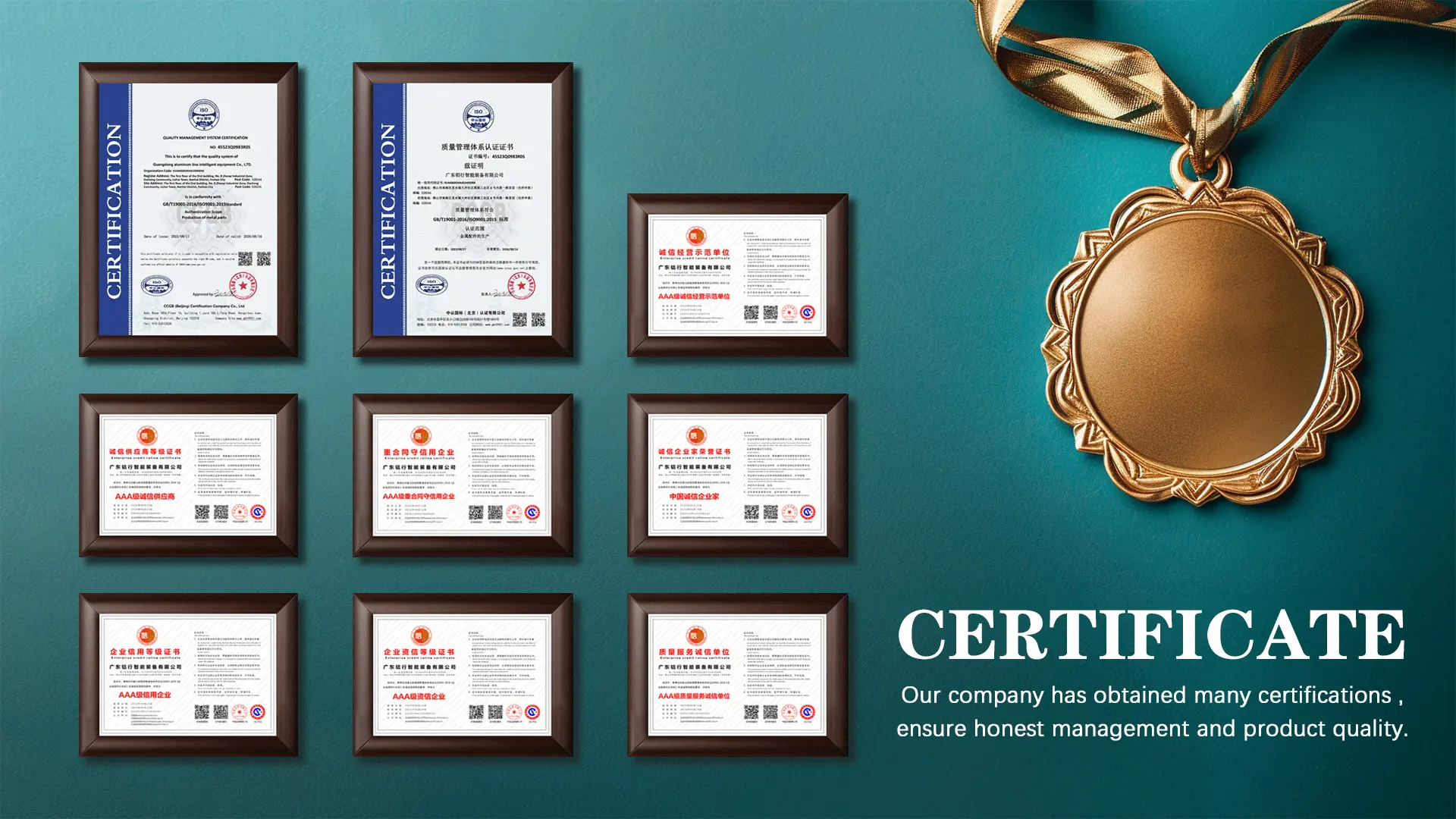
Established in 2015 and located in the industrial heart of Foshan City, Guangdong, LvXing Intelligent Equipment Co., Ltd. boasts a highly skilled R&D team with extensive engineering experience. We leverage exceptional technical expertise to transform customers' challenging ideas into concrete realities, consistently meeting precise structural requirements.
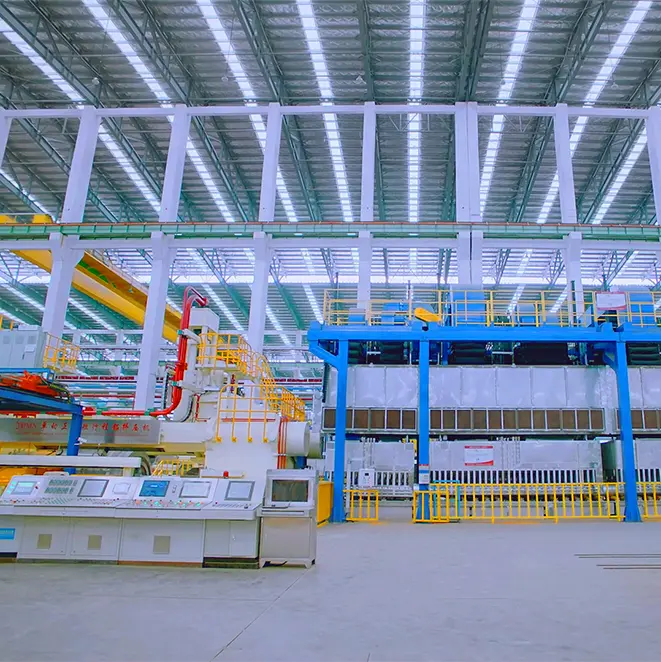
We utilize premium Fenglu Aluminum, offering a diverse range of high-performance profiles for flexible applications. Our advanced extrusion lines, ranging from 800T to 20,000T, accommodate high-strength alloys across the 1xxx, 2xxx, 3xxx, 5xxx, 6xxx, and 7xxx series. This allows us to produce complex shaped structural products with section dimensions up to 1.2 meters in width and 28 meters in length.
These specialized profiles are globally recognized for their tight precision, dimensional stability, and meticulous finishing, finding broad application in aerospace, military, medical, and high-safety industrial sectors.
Why Tier-1 engineering consultants and heliport contractors choose Lvxing solutions.



Designed for high durability under harsh atmospheric exposure, utilizing marine-grade metals and intelligent tensioning.
In heliport engineering, selecting the right material is paramount. Historically, heavy carbon steel structures prone to oxidation or lightweight plastics degraded by UV light were used. Today, the industry standard relies on structural Aluminum Alloys (specifically 6082-T6 and 6061-T6) and Stainless Steel Grade 316 / 316L wire rope mesh.
Aluminum alloys deliver an exceptional strength-to-weight ratio. Since tower heliports are cantilevered structures, keeping the dead weight of the landing deck and perimeter system minimal is critical. At the same time, the netting must resist marine salt-spray, dynamic offshore wave movements, thermal expansion/contraction, and galvanic corrosion. Using anodized aluminum components paired with isolated stainless steel wire rope prevents galvanic reactions and guarantees a maintenance-free lifespan of over 25 years.
| Performance Parameter | Structural Aluminum Frame | Stainless Steel Wire Mesh | Synthetics (Nylon/Polyester) - Reference Only |
|---|---|---|---|
| Primary Alloy / Material | 6082-T6 / 6061-T6 (Fenglu Premium) | 316 / 316L Stainless Steel Wire | Polyamide / Polyester yarns (Not recommended for offshore) |
| Tensile Strength (MPa) | ≥ 310 MPa | 800 - 1200 MPa | Varies (Degrades rapidly under UV) |
| Corrosion Resistance | Outstanding (Anodized/Powder-coated) | Extreme Marine-grade Resistance | Poor chemical resistance to aviation fuel spills |
| Dead Weight Impact | Very Low (Approx 8-12 kg/m) | Extremely Low | Low |
| Lifespan Expectancy | 30+ Years | 30+ Years | 2 - 5 Years (Requires frequent replacement) |
| Compliance Certification | CAP 437, ICAO Annex 14, FAA | CAP 437, ICAO Annex 14, FAA | Often fails standard dynamic drop-tests over time |
How Lvxing caters to distinct vertical sectors with targeted structural solutions.
Rooftop helipads on city skyscrapers face violent, erratic thermal updrafts and crosswinds. The custom perimeter netting must act as a reliable safety net without acting as a wind block. We design low-drag, streamlined aluminum frames equipped with high-tension mesh panels that allow winds to pass through with minimal turbulence. Our solutions preserve structural building margins while meeting local fire-safety and civil defense access codes.
Hospital landing zones demand absolute structural reliability. When critical care patients are transferred, there is zero room for safety compromise. Our systems incorporate non-reflective, sound-damped aluminum netting mounts that prevent visual glare for incoming emergency pilots. The materials are completely non-sparking, reducing the hazard profile during unexpected emergency refueling or handling of medical oxygen tanks.
Subjected to salt spray, continuous dampness, temperature extremes, and mechanical vibrations from marine engines. Our perimeter nets are constructed utilizing 316-grade stainless steel cables secured within structural grade 6082-T6 extruded aluminum framing profiles. Dynamic drop test compliance ensures the nets absorb heavy swells and high wind impacts, safeguarding deck hands in extreme North Sea or South China Sea weather.
Tactical military and rescue helipads require rugged structures capable of supporting heavy personnel loads and quick-deployment routines. We engineer heavy-duty foldable and swing-away safety net configurations. This allows the perimeter netting to fold down manually or automatically during specific transport operations or when loading large vehicular equipment onto the flight deck.
Leading the next generation of smart safety barriers with advanced materials and structural intelligence.
As unmanned aerial vehicles (UAVs), electric vertical takeoff and landing (eVTOL) aircraft, and smart cities expand, tower heliports will experience higher traffic frequencies and stricter automated checks. Lvxing’s technology roadmap actively addresses these future paradigms:
Detailed technical answers to common queries raised by architects, structural engineers, and procurement managers.
According to major civil aviation standards (such as ICAO Annex 14 and UK CAA CAP 437), the safety net must be capable of catching a falling person without allowing them to break through or bounce back onto the deck. The standard dynamic load test requires the assembly (frame and mesh) to survive a drop of a 100 kg mass (or bag of sand) from a height of 1 meter. The net should display elastic properties, absorbing energy gradually to minimize injury rates.
Weight and corrosion resistance are the primary factors. High-strength aluminum alloys (like 6xxx series) weigh approximately one-third of structural steel, reducing the cantilever structural loads on the tower rooftop. Furthermore, aluminum forms a natural protective oxide layer. When combined with marine anodization or polyester powder coatings, it provides maintenance-free service life in highly saline and humid environments, saving thousands of dollars in annual painting and rust prevention.
Most aviation authorities require a visual inspection every six months and a formal structural pull test or drop test at least once every 12 to 24 months. Standard inspection checks look for signs of mesh tension loss, loose connection bolts, physical deformation of the aluminum profiles, and corrosion of brackets or isolating plastic bushings.
To provide a highly accurate quote, manufacturers require the following details: 1) Total perimeter length of the helideck. 2) Preferred installation angle (e.g., horizontal, inclined). 3) Environmental data (proximity to ocean, maximum wind speeds). 4) Support structure type (steel deck, concrete curb, or aluminum profiles). 5) Specific regulatory compliance certifications needed (CE, FAA, ICAO, or CAP 437).
Yes. Our in-house technical engineering team has over 15 years of design experience. Leveraging extrusion press systems ranging from 800T up to 20,000T, we can custom-engineer profiles up to 1.2 meters wide to meet the specific architectural aesthetics and load constraints of your project.
Premium solutions for structural reinforcement, safety nets, and heavy-duty deck assemblies.
 LvXing