Customized Helicopter Landing Zone Safety Net Manufacturers & Pricelist

Engineered High-Grade Aluminium Helideck Perimeter Systems Conformant to CAP 437 & ISO9001 Standards

LvXing Scale & Capacity

Industrial Scale & Performance Metrics

From raw alloy formulation to completed aerospace-grade solutions, our metrics reflect deep precision engineering.

20,000T
Max Extrusion Capacity
1.2m
Max Section Dimension Width
28m
Max Continuous Extrusion Length
15+ Yrs
R&D Engineering Experience

1. Executive Summary & Global Industry Overview

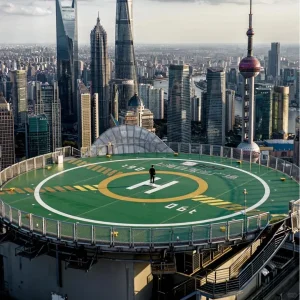
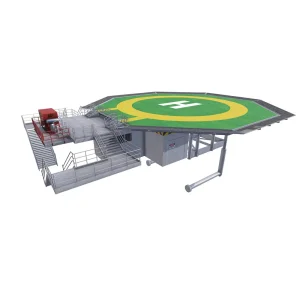
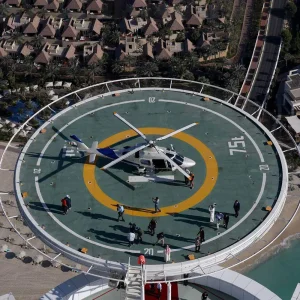
In modern high-risk aviation environments, helicopter landing zones (HLZs), helidecks on marine vessels, offshore oil and gas rigs, and urban skyscraper rooftops represent the nexus of advanced logistics and rigorous safety protocols. The structural boundaries of these zones demand specialized containment systems. The Helideck Perimeter Safety Net acts as a primary passive safety barrier, engineered specifically to prevent personnel, equipment, and critical structural components from falling over helideck boundaries during operational wind shear or dynamic surface disturbances. Unlike traditional general-purpose industrial nets, landing zone safety systems must conform to strict global standards, including the UK Civil Aviation Authority’s CAP 437, the Federal Aviation Administration’s (FAA) AC 150/5390-2C, and the International Civil Aviation Organization’s (ICAO) Annex 14.

Historically, the market relied heavily on heavy steel alloy wire frames, which suffered from rapid corrosion under marine environments and elevated physical weights that added static stress to structural assemblies. The modern global commercial trend has shifted strongly towards lightweight, high-tensile, corrosion-resistant anodized aluminium alloy construction. Global procurement departments look for reliable suppliers capable of customizing frame structures to match non-standard architectural designs, varying load factors, and specialized mechanical requirements. Understanding the nuances of material composition, test regulations, dynamic load performance, and manufacturer processing capability forms the cornerstone of effective procurement strategy.

2. Welcome to LvXing: Technical Strength & Credentials

Established in 2015 and located in Foshan City, Guangdong, LvXing Intelligent Equipment Co., Ltd. boasts a skilled R&D team with extensive experience. We leverage exceptional technical expertise to effectively transform customers' ideas into reality, consistently meeting their precise requirements.

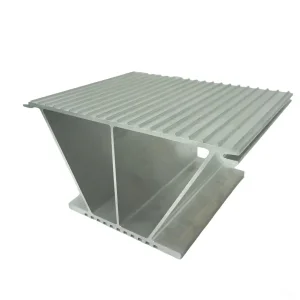
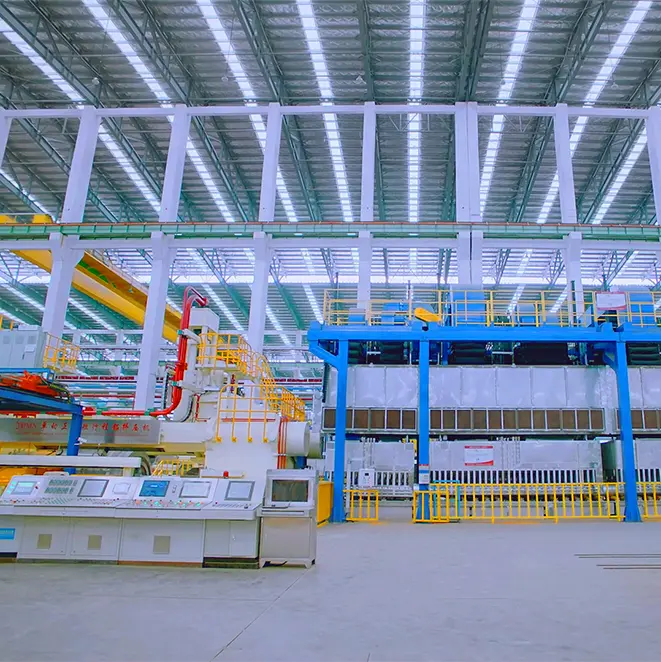
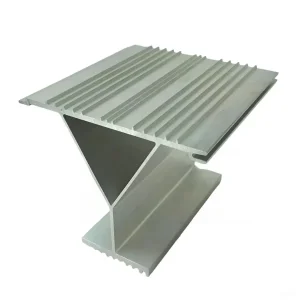
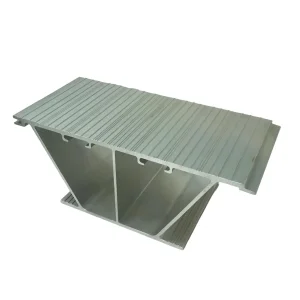
Our operation utilizes premium Fenglu aluminum, offering a diverse range of profiles for flexible applications. Our extrusion lines, ranging from 800T to 20,000T, accommodate alloys 1xxx, 2xxx, 3xxx, 5xxx, 6xxx, and 7xxx, allowing us to produce shaped products with section dimensions up to 1.2 meters in width and 28 meters in length. These products are recognized for their precision and meticulous processing, finding broad application in aerospace, military, medical, and industrial sectors.

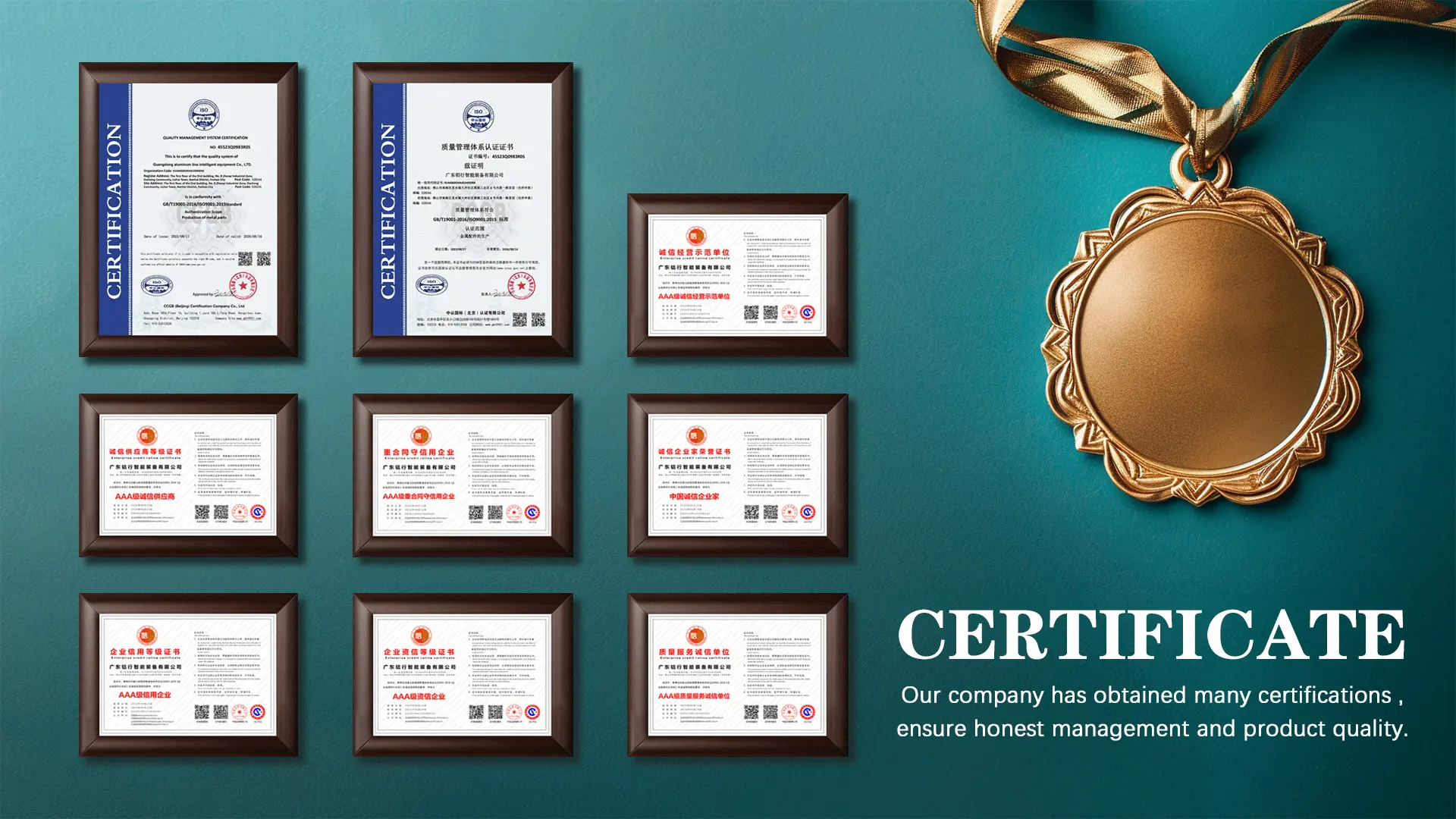
Our commitment to excellence is evident throughout the manufacturing process, rigorous quality control, thorough packaging, and efficient shipping procedures. This dedication has earned us recognition as a national excellent and honest enterprise, along with quality system certification in accordance with GB/T19001-2016/ISO9001:2015 standards. We aspire to be your trusted business partner and warmly invite you to visit our factory.

Aerospace Grade Aluminium

Utilizing high-tensile Fenglu aluminum profile alloys (ranging from 1xxx to 7xxx series) to provide exceptional structural integrity and marine-grade corrosion performance.

Industrial Scale Extrusion

Equipped with heavy extrusion setups from 800T to 20,000T, producing profile cross sections up to 1.2m wide and continuous elements up to 28m in length.

Stringent QA/QC Standards

Operates under GB/T19001-2016/ISO9001:2015 certification. Rigorous testing is applied to every design phase, material trace, and dispatch batch.

3. Why Choose China Extrusion & Manufacturing Efficiency?

Sourcing customized helideck safety nets from leading Chinese manufacturers, particularly those clustered in the Foshan industrial zone, offers unique strategic and structural advantages. This region provides an integrated ecosystem combining raw aluminum smelting, precision extrusion, specialized anodization, and structural testing. The efficiency gains translate directly into shorter production lead times and highly competitive pricing models. Key benefits of sourcing from China include:

  • Unmatched Extrusion Capacity: Access to heavy extrusion machinery up to 20,000T allows the fabrication of single-piece, joint-free structural members up to 28 meters long. This minimizes weak joints and reduces manual assembly labor.
  • Highly Competitive Raw Materials: Strategic partnerships with major material brands, such as Fenglu Aluminum, ensure reliable raw materials with precise alloy trace reports, lower raw material procurement costs, and faster supply chain turnarounds.
  • Advanced Anodizing and Powder Coating: Large-scale processing facilities ensure that structural aluminum components receive uniform marine-grade anodizing (exceeding 20 microns) or specialist anti-corrosive powder coatings, protecting structures against salt fog corrosion.
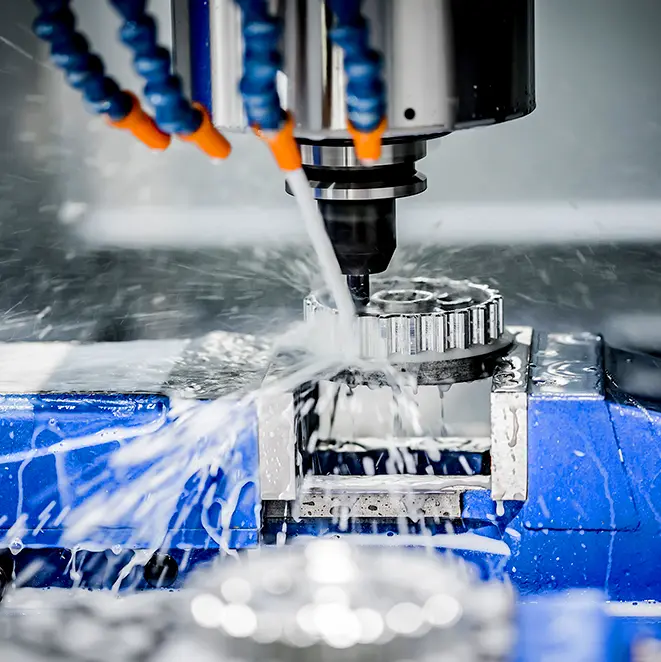
  • In-house Engineering & Customization: Engineering teams leverage CAD/CAM software to adjust frame designs, net tensions, and attachment mechanisms, transforming customer specifications into precise prototypes.

4. Structural Safety & Testing Specifications (CAP 437 Compliant)

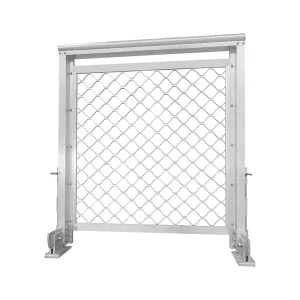
Helicopter landing zones demand safety equipment designed to withstand severe dynamic impacts. The safety net must catch an falling body (simulating a 100 kg weight falling from a height of 1 meter) without experiencing structural failure, permanent deformation, or tearing. The net itself should be flexible enough to absorb impact energy, reducing the deceleration forces exerted on a falling person, while remaining rigid enough to prevent the body from contacting structural steelwork below.

To meet standard marine regulations, safety systems must undergo regular inspection and stress testing. Our custom-designed safety net systems utilize marine-grade 6063-T6 or 6082-T6 aluminum alloys. These alloys offer excellent yield strengths and structural properties. The structural panels are rigorously tested for shear stress, impact absorption, and environmental degradation, ensuring compliance with global maritime authorities.

Property / Parameter Aluminum Mesh (6000 Series) Stainless Steel Wire Netting Polyester / Synthetic Netting
Structural Lifespan 25+ Years (Maintenance-Free) 15-20 Years (Subject to Rust) 3-5 Years (Requires UV Replacement)
Unit Weight Low (~ 4.5 kg/m²) Medium-High (~ 8.5 kg/m²) Very Low (~ 2.0 kg/m²)
Corrosion Resistance Outstanding (Natural Oxide Film) Susceptible to Crevice Corrosion Highly Susceptible to UV Damage
Impact Absorption High (Elastomer Frame Bushings) Rigid (Transfers Load to Deck) Good (High Elongation)
Standard Certification CAP 437, DNV-GL, ISO 9001 CAP 437, ABS Requires Frequent Tensile Drop Tests

5. Pricelist Structure & Cost Estimation Elements

Pricing for custom helideck safety nets depends on a range of engineering variables. Because safety configurations must be tailored to specific helideck designs, standard off-the-shelf pricing is rarely applicable. However, procurement teams can use the following factors to estimate budgets:

  • Alloy Grade Selection: Marine-grade 5xxx or 6xxx alloys (such as 6061-T6 or 6082-T6) offer a balanced combination of high tensile strength and reasonable cost. Special aerospace-grade 7xxx series alloys are available for high-load military applications.
  • Frame Construction: Standard flat frames are economical. Custom modular folding, telescoping, or electrically retractable frame assemblies require extra machining and engineering time, which increases production costs.
  • Mesh Size and Wire Gauge: Tighter mesh spacings (e.g., 50mm x 50mm or 100mm x 100mm) require more raw material and fabrication labor compared to wider spacings.
  • Surface Finishes: Options include mill finish, standard anodizing, hard anodizing (for extreme environments), and high-visibility marine powder coating. Anodizing to thicknesses greater than 20 microns ensures long-term protection but adds a premium to the base price.
  • Volume Scales: Large procurement orders (e.g., covering multiple drilling platforms or massive commercial rooftop helipads) benefit from significant bulk discounts on raw material extrusion and set-up operations.

To receive an accurate, project-specific quotation, clients should provide detail drawings, environmental condition reports, structural weight limits, and compliance specifications (such as CAP 437 or DNV certification requirements) to our sales engineers.

6. Application Scenarios & Global Procurement Requirements

Custom landing safety netting systems are used in diverse architectural and maritime applications worldwide. Procurement requirements vary depending on the destination environment:

A. Offshore Oil & Gas Platforms

Offshore oil rigs operate in harsh marine conditions with constant exposure to salt spray, high winds, and structural vibrations. Safety nets installed in these locations must feature highly corrosion-resistant alloys, DNV-GL design approvals, and heavy-duty, wind-permeable designs that minimize aerodynamic drag during storms.

B. Commercial Skyscraper Rooftops

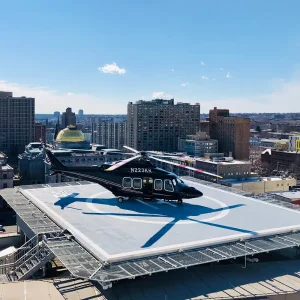
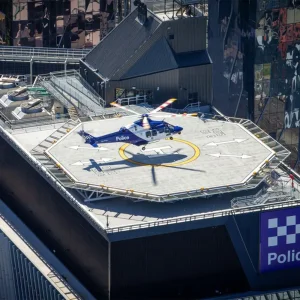
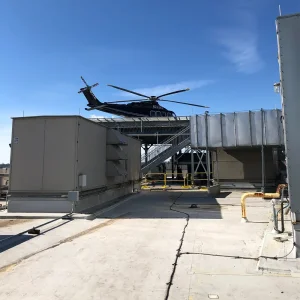
Rooftop helipads on urban skyscrapers must integrate safety netting that satisfies strict local building codes. These installations prioritize lightweight designs that minimize structural loads on the building, high-visibility color choices, and aesthetic compatibility with the modern exterior architecture.

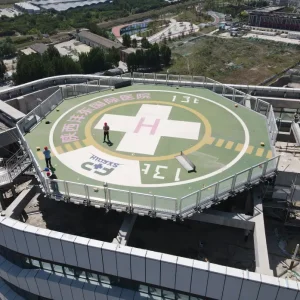
C. Hospital Emergency Helicopter Decks

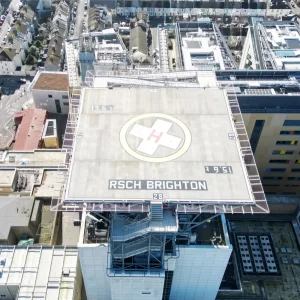
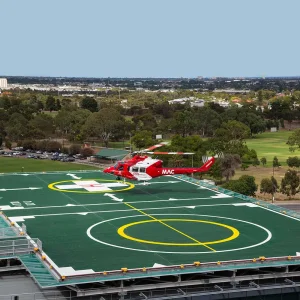
Medical evacuation (Medevac) landing zones require maximum safety and zero fail rates. Safety systems must meet stringent emergency services standards, offering flat, obstacle-free perimeter transitions, simple maintenance requirements, and quick-release attachment points for emergency response teams.

D. Naval Vessels & Commercial Yachts

Shipborne helicopter landing pads experience continuous pitch, roll, and heave motions. Helideck safety nets for marine vessels require dynamic structural elasticity, military-grade surface finishes, and folding or electric retraction systems that allow the netting to lay flat against the hull during docking maneuvers.

7. Key Engineering Trends: Electrification & Smart Netting

The helideck industry is embracing intelligent structural safety solutions. Key technological trends driving research and development include:

  • Electric & Automated Safety Nets: Motorized perimeter nets can deploy or retract automatically based on helicopter proximity sensors, weather alerts, or control room commands. This reduces manual labor and improves operational safety.
  • Integrated LED Visual Guidance: Safety nets are increasingly outfitted with low-profile LED perimeter lighting, improving night landing safety and pilot visibility without introducing vertical obstacles on the helideck.
  • Aerodynamic Optimization: Advanced fluid dynamics software is used to design frame profiles and mesh configurations that minimize turbulence over the helipad surface, improving landing stability for pilots.
  • Sustainable Materials: Manufacturers are shifting to 100% recyclable, marine-grade aluminum alloys, reducing carbon footprints while maintaining high-performance safety standards.
Our Competitive Edge

Proven Technical & Operational Excellence

We combine raw capability with certified manufacturing processes to deliver high-performance structural safety systems.

Special Aluminium Materials for Aerospace Certificate

We have obtained the “Special Aluminium Materials for Aerospace” Certificate.

Premium Materials and Advanced Extrusion Lines

We provide and utilize high-quality Fenglu aluminum profiles. With extrusion lines ranging from 800T to 20,000T, we can produce alloys 1xxx, 2xxx, 3xxx, 5xxx, 6xxx, and 7xxx. We can manufacture fully shaped products with section dimensions up to 1.2 meters in width or 28 meters in length.

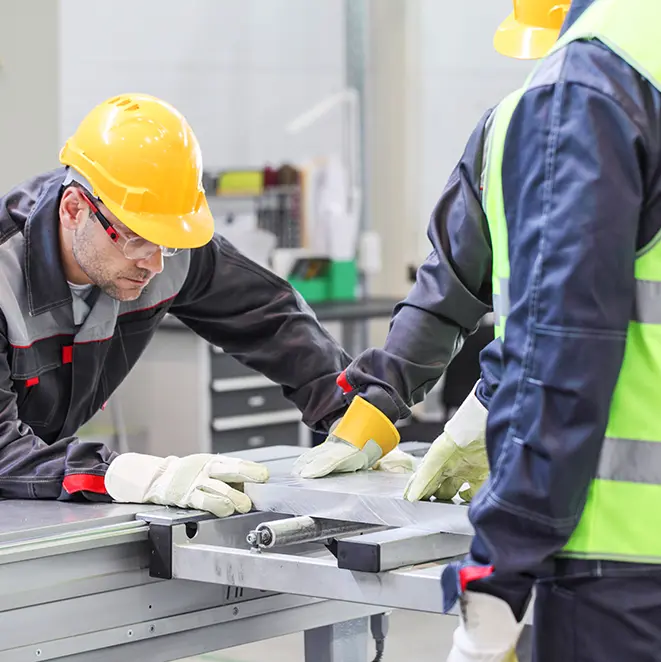
15 Years Experience Technicians Team

We have a team of technicians with 15 years of invaluable experience. Our deep understanding of customer requirements allows us to identify potential issues and offer practical insights, turning customer ideas into tangible products that meet specific needs.

Helideck Safety Mesh Layout Blueprint
FAQ

Frequently Asked Questions

Answers to common technical, structural, and procurement inquiries from clients worldwide.

What are the main compliance standards for helicopter landing zone safety nets?
The main standards are CAP 437 (UK Civil Aviation Authority Standards for Offshore Helicopter Landing Areas) and FAA AC 150/5390-2C. ICAO Annex 14 also details safety requirements. Our nets are manufactured to satisfy these strict global requirements.
Why is aluminum preferred over stainless steel for marine helidecks?
Aluminum alloys (6000 series) are much lighter, lowering structural loads on offshore rigs and vessel decks. They also form a natural protective oxide film that provides superior resistance to marine corrosion, minimizing maintenance costs compared to stainless steel.
How are these safety nets tested for dynamic impact loads?
Nets undergo drop tests that simulate a 100 kg mass falling from a height of 1 meter onto the center of a mesh panel. To pass, the netting and frames must absorb the impact energy without tearing or showing permanent structural deformation.
Can your factory manufacture custom frame configurations?
Yes. With our 15-year engineering background and extrusion lines ranging from 800T to 20,000T, we fabricate custom, project-specific frame geometries, including modular, folding, and telescoping systems.
What is the lifespan of your marine anodized aluminum safety nets?
When properly anodized to 20+ microns (or treated with specialized marine powder coatings), our aluminum alloy safety nets provide a service life of 25+ years, requiring minimal maintenance.
Do your products carry international certification?
Yes. Our manufacturing processes conform to GB/T19001-2016/ISO9001:2015 quality management standards. We can also coordinate project-specific inspections and third-party certifications with bodies such as DNV-GL, ABS, or Lloyd's Register.
What aluminum alloys do you use for safety net components?
We mainly use high-tensile 6xxx series alloys (such as 6061-T6 or 6082-T6) for framing. However, we can extrude alloys across the 1xxx, 2xxx, 3xxx, 5xxx, 6xxx, and 7xxx series depending on application requirements.
How does the shipment process work for large-scale international orders?
We package custom frame and netting components in protective modular crates to prevent damage during transit. Our logistics team handles international container shipping from Foshan, coordinating export documentation for global delivery.