Customized Electro-Motor Rotor Magnet Suppliers & Factory

Providing Precision-Engineered Permanent Magnet Solutions & High-Tolerance Aluminum Rotors for Next-Gen Automotive, Industrial & Aerospace Drivetrains

Welcome to LvXing: Aluminum & Electric Motor Rotor Specialists

Established in 2015 and located in Foshan City, Guangdong, LvXing Intelligent Equipment Co., Ltd. has grown into a premiere engineering partner for advanced industrial profiles and customized motor component designs. Leveraging a highly experienced R&D team, we transition raw engineering concepts into high-performance realities that meet exact industrial specifications.

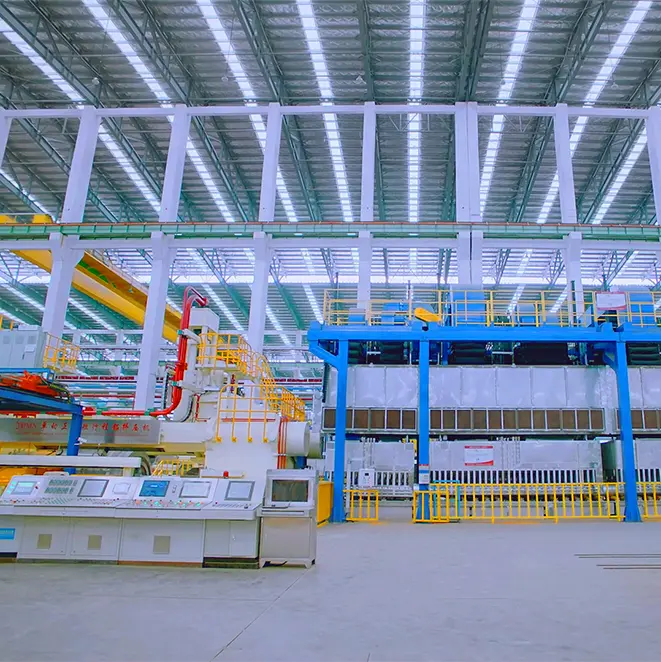
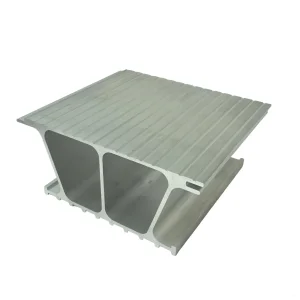
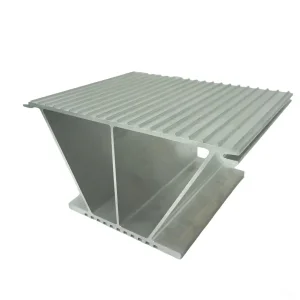
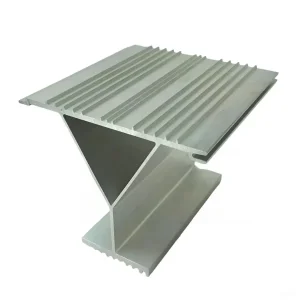
We source premium raw inputs, including renowned Fenglu aluminum, to support critical manufacturing processes. Our capabilities feature multiple high-capacity extrusion lines ranging from 800T to 20,000T. This scale allows us to easily handle complex alloy families: 1xxx, 2xxx, 3xxx, 5xxx, 6xxx, and 7xxx. We produce intricate structural profiles with cross-sections up to 1.2 meters in width and single continuous pieces up to 28 meters in length.

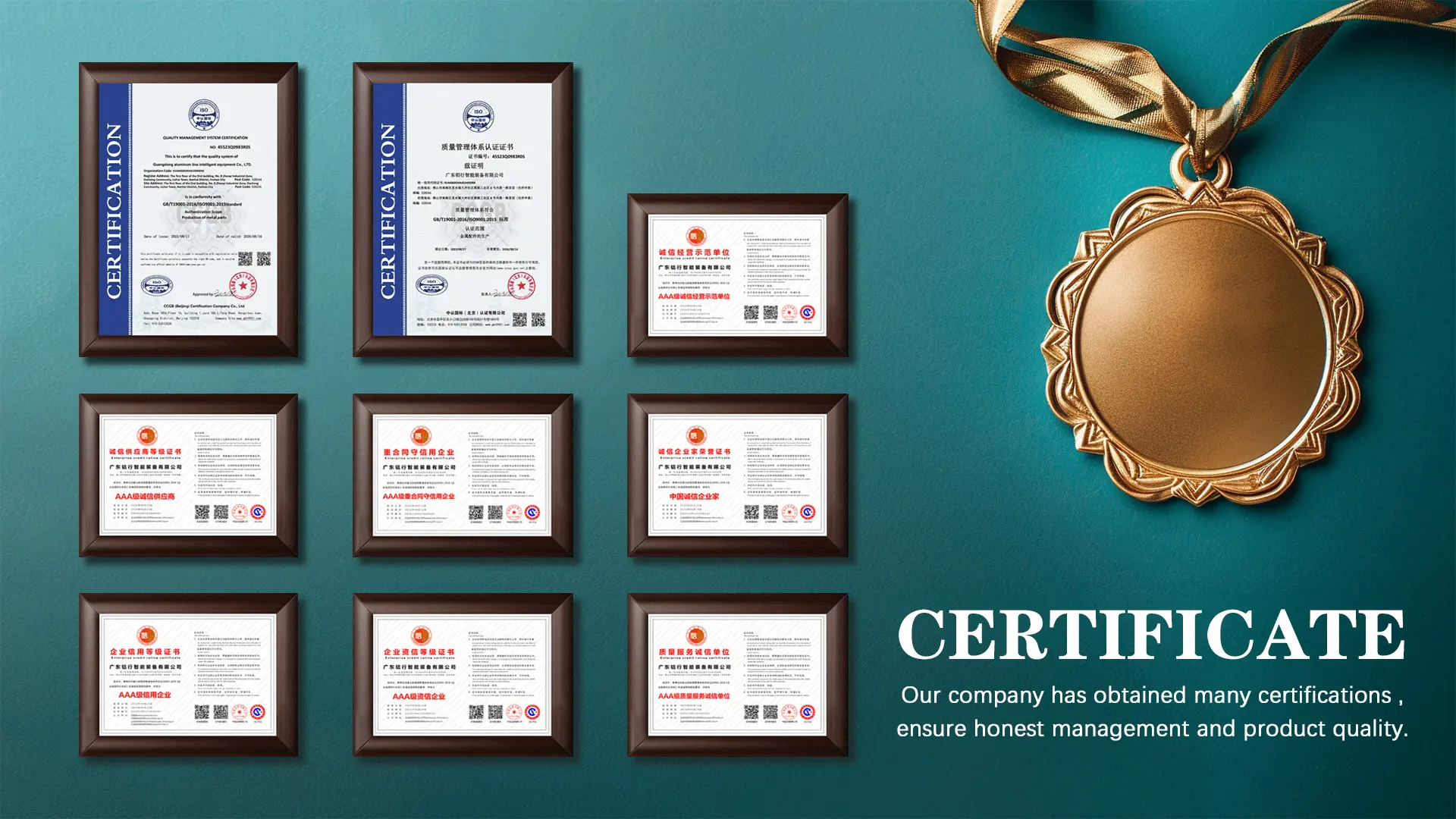
By marrying precise metallurgical controls with state-of-the-art balancing technology, we support industries demanding peak mechanical integrity: aerospace, defense, medical infrastructure, and advanced electric drivetrains. Our manufacturing operations run in strict accordance with the internationally recognized GB/T19001-2016/ISO9001:2015 quality management standards.

20,000T
Max Extrusion Capacity
15+ Yrs
R&D Engineering Experience
ISO9001
Certified Quality System
1.2m
Max Section Width Capacity

Certified Aerosphere-Grade Manufacturing Excellence

Our commitment to material science has earned us the prestigious "Special Aluminium Materials for Aerospace" Certificate. This validates our capacity to process structural alloys under severe thermal and mechanical loads.

Whether producing custom aluminum motor rotors, high-density thermal management profiles, or integrating high-coercivity permanent magnet assemblies, we deliver extreme dimensional stability, optimized heat rejection channels, and low rotational inertia.

LvXing Industrial Manufacturing Capabilities

Electro-Motor Rotor Magnet & Rotor Technology Whitepaper

An authoritative guide to material properties, manufacturing methodologies, global sourcing standards, and technical roadmaps.

2. Sourcing Requirements for Global Enterprises

For procurement officers in automotive and heavy industrial sectors, sourcing rotor magnets and complete rotor assemblies involves managing complex supply chain risks. Core priorities include:

  • Raw Material Traceability & Stability: Fluctuations in rare-earth metals (Dysprosium, Terbium, Neodymium) make pricing stability challenging. Enterprises seek suppliers with long-term refining partnerships to ensure stable supply channels.
  • Geometric Tolerances: Modern high-speed motors run at speeds exceeding 20,000 RPM, where runout deviations of even a few microns cause critical imbalance. Sourcing teams look for factories with high-precision CNC grinding, wire-EDM slicing, and automated optical sorting.
  • High-Temperature Demagnetization Resistance: Magnets must maintain their magnetic flux under continuous operating temperatures of 150°C to 220°C. Sourcing engineers require certified demagnetization curves (B-H loops) for every batch.
  • Coating Durability: Rare-earth magnets are highly prone to corrosion. Advanced protective coatings like epoxy, nickel-copper-nickel electroplating, or passivation must undergo salt-spray tests to ensure they will survive the lifetime of the motor.

3. Magnetic Material Selection Comparison

Choosing the right magnetic material involves balancing cost, weight, operating environment, and target magnetic flux. Below is an engineering comparison of the primary permanent magnet materials used in modern electro-motor rotors:

Material Class Remanence ($B_r$) Coercivity ($H_{ci}$) Max Working Temp Corrosion Resistance Primary Application
Sintered NdFeB 1.0 - 1.45 T 800 - 2400 kA/m 80°C - 230°C Low (Requires Coating) EV Traction Motors, Robotics
Sintered SmCo 0.8 - 1.15 T 600 - 2000 kA/m 250°C - 350°C High (Uncoated ok) Aerospace Actuators, Marine
Bonded NdFeB 0.6 - 0.9 T 600 - 1200 kA/m 120°C - 180°C Medium (Epoxy Bound) EPS, Micro-motors
Ferrite (Ceramic) 0.35 - 0.45 T 200 - 350 kA/m 250°C Excellent HVAC Fans, Low-Cost Alternators

For high-power-density designs, sintered NdFeB is the clear leader. However, heavy dysprosium (Dy) or terbium (Tb) grain boundary diffusion (GBD) is required to boost high-temperature coercivity without sacrificing remanence. When operating above 250°C, SmCo is preferred due to its superior thermal stability.

4. Custom Structural Optimization: Rotors & Heat Sinks

High motor efficiency requires matching the rotor magnet with optimized structural carriers. This is where LvXing Intelligent Equipment Co., Ltd. delivers unique technical value. Standard steel shafts are heavy, increasing the rotor's rotational inertia and reducing dynamic responsiveness.

Our engineering team specializes in combining advanced 6xxx and 7xxx series aluminum alloys with permanent magnets. Utilizing our 20,000T extrusion lines, we produce lightweight, high-strength aluminum motor rotor sleeves and housings. This hybrid construction offers several advantages:

  • Reduced Inertia: Replacing steel components with aerospace-grade aluminum profiles reduces weight, allowing faster acceleration, deceleration, and improved control loop performance in servo applications.
  • Advanced Cooling Integration: Our capability in extruding complex multi-channel geometries allows us to integrate direct-cooling paths into the rotor shaft or housing. This keeps the permanent magnets within their optimal temperature zone, avoiding thermal demagnetization.
  • Precision Machining: With 15 years of technical expertise, our engineers maintain tight tolerances for magnet slots. This ensures secure mechanical positioning, eliminating the risk of dynamic imbalance or magnet displacement during high-speed rotation.

5. Quality Assurance, Localized Support & Compliance

As a certified national honest enterprise operating in Foshan City, Guangdong, LvXing guarantees product compliance at every step. Our Quality Assurance (QA) labs use advanced testing tools to verify that magnetic and mechanical components meet global standards:

  • ISO9001:2015 Quality Management: All operational procedures, from raw material procurement to packaging, are fully documented and audited.
  • Advanced Inspection Equipment: Our facilities are equipped with three-coordinate measuring machines (CMM), optical projectors, magnetic field distribution scanners, Helmholtz coils, and high-speed balancing equipment to verify compliance before delivery.
  • Environmental Compliance: All magnetic and mechanical components are fully compliant with RoHS and REACH regulations, facilitating smooth imports for European and North American buyers.

6. Technical Roadmap & Future Outlook

Our forward-looking R&D efforts are focused on three main pillars:

  1. Heavy Rare-Earth-Free Magnets: Due to supply chain volatility, we are working on developing and optimizing motors that use NdFeB magnets with zero heavy rare-earth (Dy, Tb) content, utilizing grain boundary diffusion (GBD) to maintain performance.
  2. Additive Manufacturing & Hybrid Rotors: We are exploring the combination of high-precision aluminum extrusions with directly overmolded bonded magnets. This allows for complex magnet pole designs, such as Halbach arrays, without requiring manual assembly.
  3. Ultra-Lightweight Electric Axles: Partnering with aerospace and rail transit providers, we are designing structural rotor shafts out of high-strength 7xxx series aluminum, paired with liquid cooling paths. This supports next-generation high-speed drivetrains.

Technical Q&A: Electro-Motor Rotor Magnets

Get answers to the most common engineering and sourcing questions about motor rotor magnets and structures.

Q1: Which magnet grade is best for EV traction motor rotors?
For electric vehicle (EV) traction motors, sintered NdFeB grades with high coercivity, such as 45UH, 48UH, 50EH, or 52EH, are preferred. These grades can operate reliably at temperatures ranging from 180°C to 200°C without irreversible demagnetization. They use Dysprosium (Dy) or Terbium (Tb) grain boundary diffusion to maintain a high maximum energy product $(BH)_{max}$ while resisting demagnetization forces from the stator field.
Q2: How do you prevent eddy current losses in rotor magnets?
Eddy currents are reduced by magnet segmentation. Instead of using a single large block, the magnet is sliced into thin segments that are electrically insulated from each other and then bonded back together. This breaks the loop path for eddy currents, reducing heat generation. High-resistivity bonded magnets or SmCo magnets can also be used in applications where high-frequency harmonics are present.
Q3: Why is aluminum alloy preferred for high-speed rotor sleeves and housings?
Aluminum alloys (such as 6082 or 7075) have a high strength-to-weight ratio, which reduces the total rotational inertia of the rotor. This is critical for servo and traction motors that require rapid speed changes. Aluminum also provides good thermal conductivity to help dissipate heat from the rotor, is non-magnetic (preventing flux leakage), and can be extruded into complex cooling geometries.
Q4: How does LvXing ensure the balance of customized rotors?
We use dynamic balancing machines to measure static and dynamic unbalance at high rotational speeds. Our precision machining center holds tolerances on magnet slots and shaft seats to within 5-10 microns. We can also add dynamic balancing weight correction planes to the aluminum rotor carrier during post-extrusion CNC finishing.
Q5: What coatings are recommended for rare-earth motor magnets?
For automotive and industrial applications, Epoxy coating (either black or grey) is standard because of its chemical resistance and moisture protection. Other options include Nickel-Copper-Nickel (Ni-Cu-Ni) plating for dry environments, or Zinc (Zn) plating. For high-humidity or saline environments, aluminum-rich organic coatings or parylene coatings are used.
Q6: Can you manufacture rotor magnets based on customer drawings?
Yes. We specialize in custom manufacturing. Our engineering team can work from your CAD files (.STEP, .IGS, .DWG) to produce complex shapes, such as breadloaf, arc, block, or skewed magnets, to fit your exact IPM or SPM rotor slot requirements.
Q7: What is the typical lead time for custom prototype rotor assemblies?
Prototype manufacturing typically takes 3 to 5 weeks, depending on the complexity of the extrusion profiles, CNC machining requirements, and the tooling needed for the custom magnets. Mass production lead times generally range from 4 to 6 weeks once the prototype is approved.
Q8: Do you support aerospace-grade traceability standards?
Yes. Having earned the "Special Aluminium Materials for Aerospace" Certificate, we maintain complete traceability. This includes raw material melt certifications, batch chemical analysis, heat treatment charts, dimensional inspection records, and magnetic flux test data for every production lot.