Explore our industrial range of high-strength components engineered for critical elevated installations.
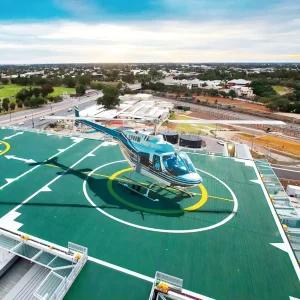
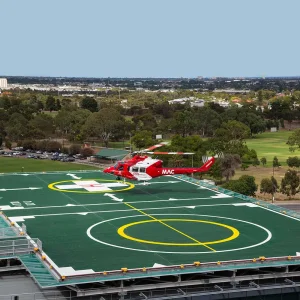
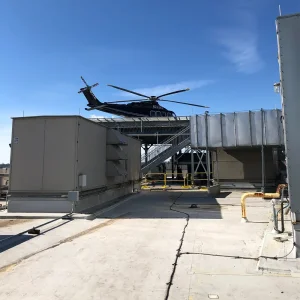
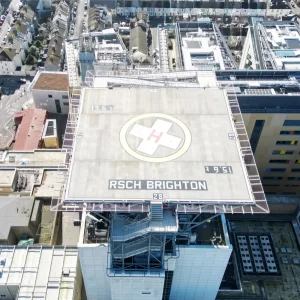
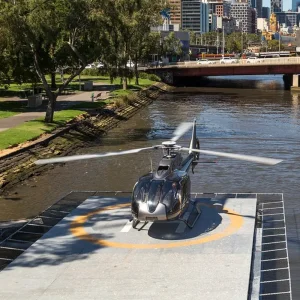
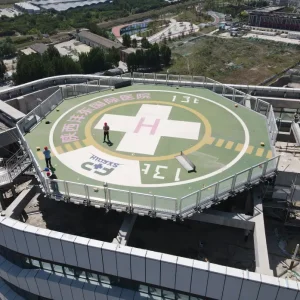
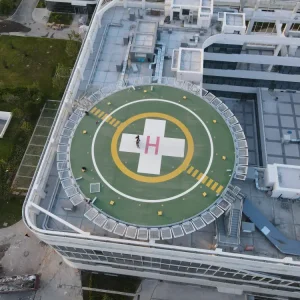
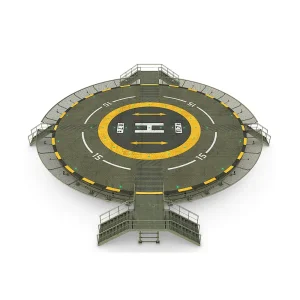
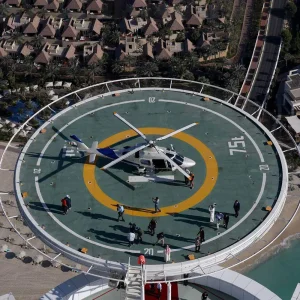
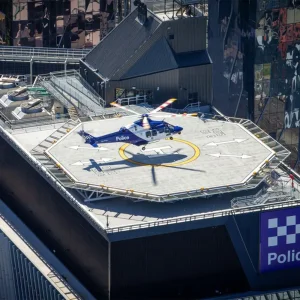
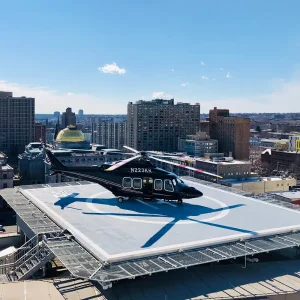
Elevated helipads—whether situated on offshore oil platforms, skyscraper rooftops, maritime vessels, or emergency hospital structures—present unique architectural, structural, and aerodynamic challenges. The perimeter of these landing decks is a high-risk zone where traditional safety barriers cannot be implemented due to rotor clearance restrictions and structural weight limits. To address this risk, specialized elevated helipad safety nets (often termed helideck perimeter safety mesh) must be integrated into the landing deck architecture.
As a premier manufacturer of customized helicopter landing infrastructure, LvXing Intelligent Equipment Co., Ltd. specializes in advanced aluminum extrusion and engineered mesh systems designed to absorb high dynamic impacts. We provide full-scale, customized safety net systems engineered to stop objects and personnel from falling off elevated platforms, ensuring total compliance with international civil aviation rules.
"Safety on elevated helipads is non-negotiable. Modern helidecks require perimeter netting that does not act like a trampoline, but rather catches and cradles falling loads without bouncing them back onto the deck or releasing them to the hazards below."
Established in 2015 and located in the industrial manufacturing hub of Foshan City, Guangdong, LvXing Intelligent Equipment Co., Ltd. has grown to become a benchmark manufacturer of advanced structural aluminum systems. Our specialized R&D department leverages decades of combined engineering expertise to design custom solutions that align with the rigorous requirements of civil aviation and structural engineering.
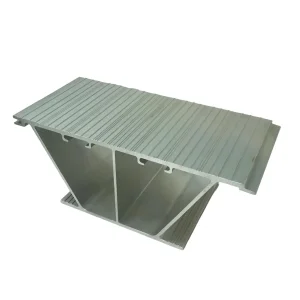
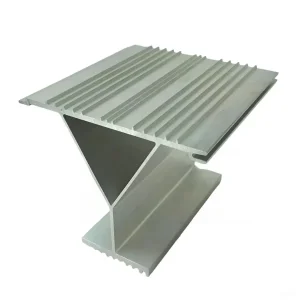
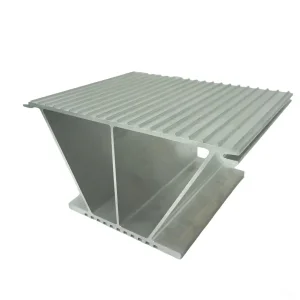
Using premium Fenglu aluminum, we offer a versatile portfolio of profiles engineered for high-performance structural systems. Our heavy-duty manufacturing infrastructure features extrusion capacities ranging from 800T up to an impressive 20,000T, allowing us to process high-tensile alloys across the 1xxx, 2xxx, 3xxx, 5xxx, 6xxx, and 7xxx series.
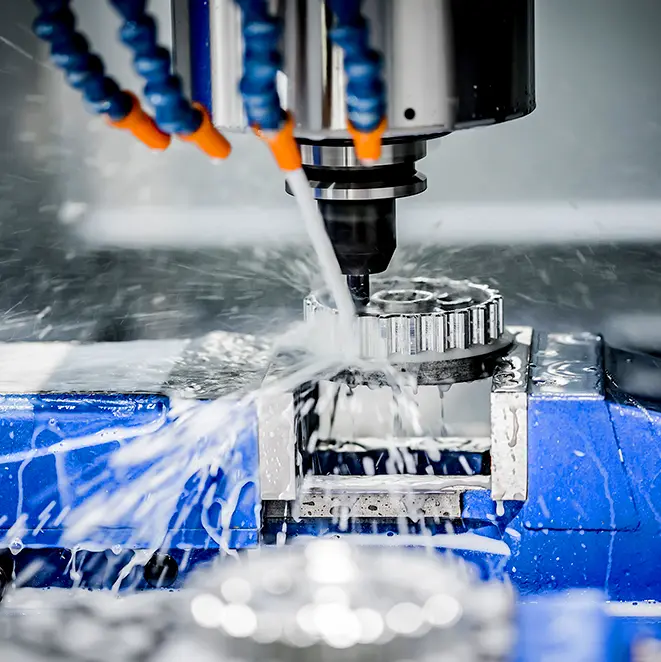
Our components are built to resist extreme marine corrosion, severe wind loads, and thermal stress. Here is how our production capability translates into elevated safety.
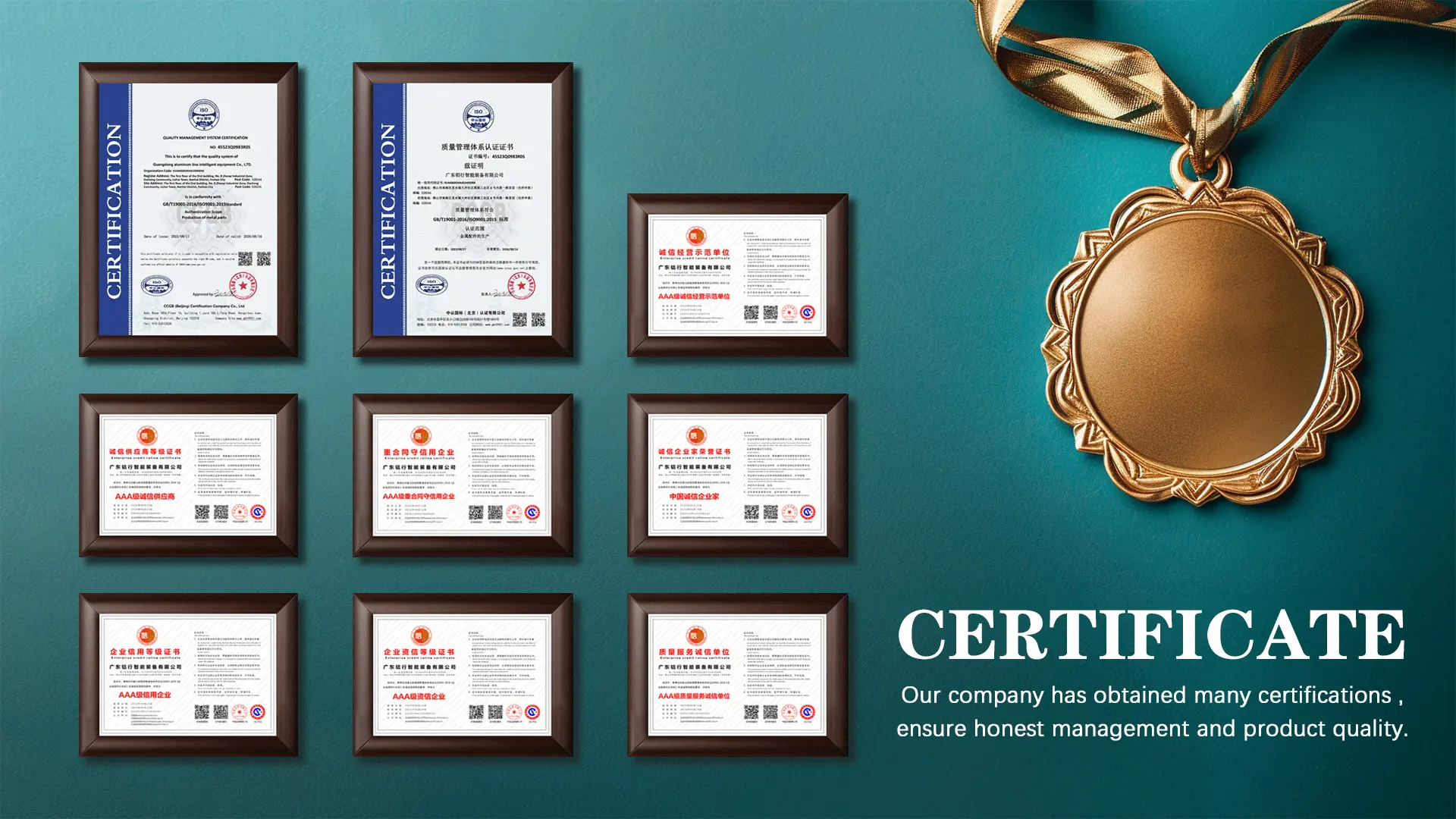
We hold the prestigious "Special Aluminium Materials for Aerospace" certificate, confirming that our materials meet chemical and mechanical benchmarks for aviation infrastructure.
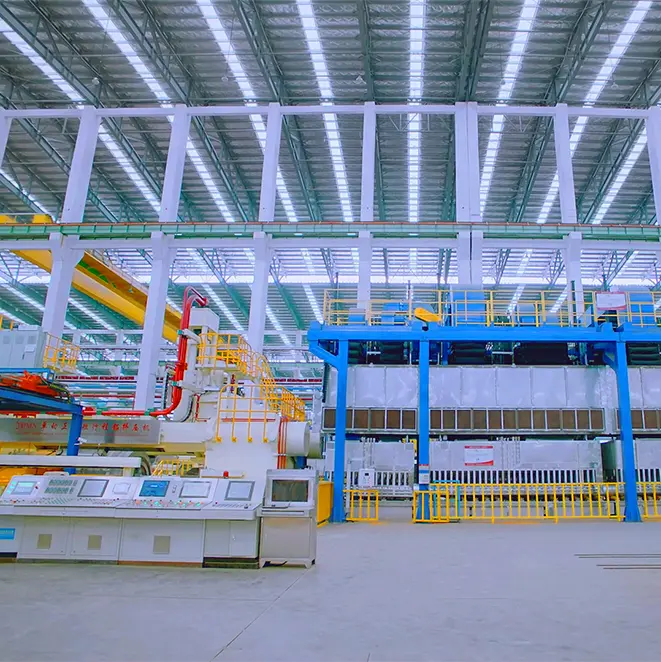
Equipped with 800T to 20,000T extrusion lines, we manufacture unified profiles up to 1.2 meters wide and 28 meters long, reducing joints and maximizing structural strength.
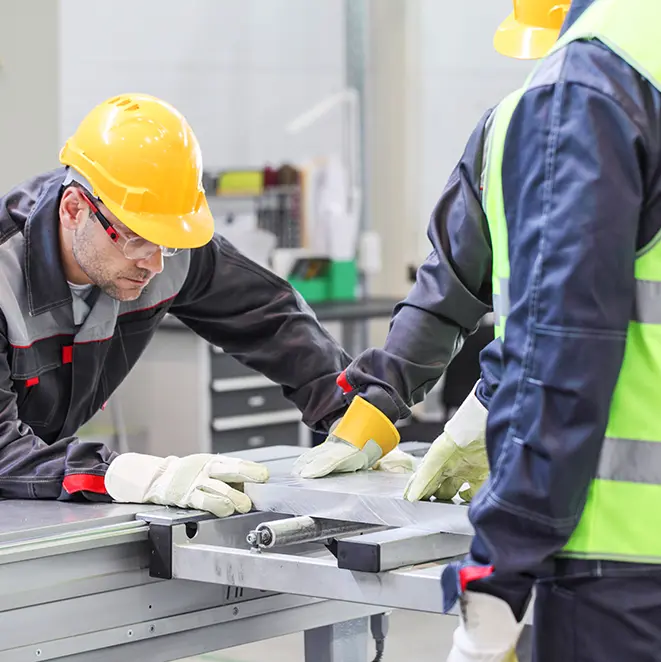
Our engineering team has 15 years of industry experience. We review client drawings, address design conflicts early, and refine specifications to simplify site installation.
Modern safety nets must serve as energy-absorbing systems. An effective design does not just catch a falling object; it minimizes deceleration forces to protect personnel. Below are the engineering specifications used for our aluminum frame and marine-grade mesh options:
| Parameters | Stainless Steel Wire Mesh Option | All-Aluminum Safety Mesh Option |
|---|---|---|
| Alloy / Composition | AISI 316 / 316L Stainless Steel Wire | Alloy 6061-T6 / 6082-T6 Premium Aluminum |
| Frame Profile | Extruded Aluminum Profiles (Fenglu Material) | Heavy-Duty Marine Aluminum Profiles |
| Aperture (Mesh Size) | 100mm x 100mm / 75mm x 75mm | Custom Diamond/Square Pattern < 100mm |
| Dynamic Impact Rating | Exceeds 2.3 kJ (Tested with 100kg drop) | Tested for drop test loads up to 125kg |
| Service Temperature | -40°C to +80°C | -50°C to +75°C |
| Corrosion Resistance | Salt Spray Test ASTM B117 > 1000 hrs | Hard Anodized / Powder Coated > 1500 hrs |
| Standard Compliance | CAP 437 / FAA AC 150/5390-2C / IMO | CAP 437 / US Coast Guard Standards |
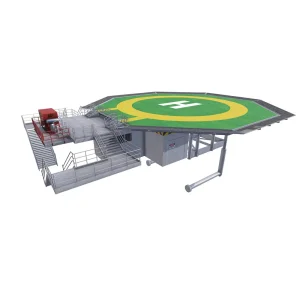
Our elevated safety net frames are angled outwards at approximately 10 degrees to match the profile of the landing deck. This angle, combined with a flexible mesh design, helps control dynamic wind forces. Standard solid panels can cause turbulence (or "ground effect disturbance") near the deck edge, which can affect helicopter control during landing. Using a high-tensile wire mesh keeps the surface open, allowing clean airflow and reducing deck-edge turbulence.

Our raw materials are sourced from Fenglu, a leading supplier of structural aluminum. By combining our 20,000T extrusion capabilities with strict quality control processes (GB/T19001-2016 / ISO9001:2015), we verify the mechanical and chemical parameters of every run. Our structural safety net brackets are designed to support a point load of 2.2 kN at their outer points, ensuring reliable safety margins for maintenance teams and crew.
Elevated helipads must comply with strict international safety rules. Two main standards govern helideck perimeter safety netting:
Offshore oil platforms and vessels are exposed to salt spray, moisture, and UV exposure. Standard steel structures can rust quickly under these conditions.
To prevent corrosion, we use marine-grade alloys such as 6061-T6 or 6082-T6, treated with polyester powder coatings or hard anodization. For the mesh inserts, we use grade 316 stainless steel wire. These materials form a protective oxide layer that resists chloride attack, reducing maintenance needs and extending the system's service life.

Different industries have distinct requirements for elevated safety systems. We customize our designs to suit each application:
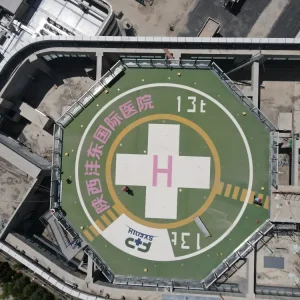
Hospital landing zones (HEMS) require structures with low acoustic resonance and minimum weight. Our aluminum profile frames help limit structural loads on older buildings while meeting strict building safety codes.
Offshore platforms face high winds and salt exposure. We supply heavy-duty, marine-certified netting designed to handle offshore storms and satisfy oil and gas regulatory requirements.
Superyachts and naval vessels need space-efficient, lightweight safety nets that can fold down or retract during non-flight operations. We design custom mechanical folding nets for these vessels.
As eVTOL and urban air mobility grow, city vertiports require safety nets with low visual impact, built-in LED lighting indicators, and clean integration with high-rise architecture.

We are continuously updating our design and manufacturing processes to keep pace with changing aviation requirements:
Complete project specifications using our standard and custom structural solutions.
Our team can assist with structural design, custom aluminum extrusion profiles, and compliance audits for CAP 437 or FAA standards. Get in touch to request a technical proposal for your project.
Get a Technical Quote LvXing