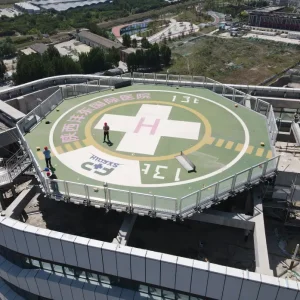
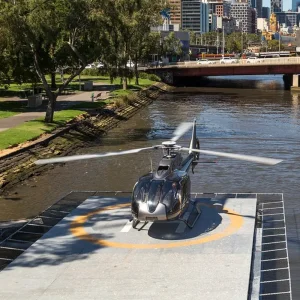
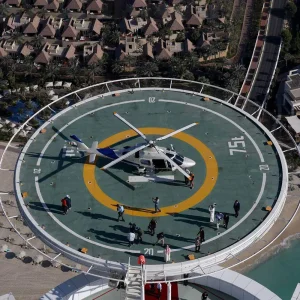
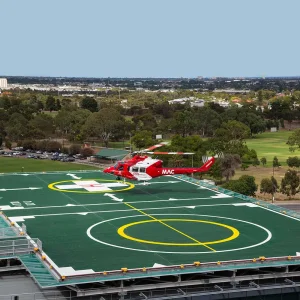
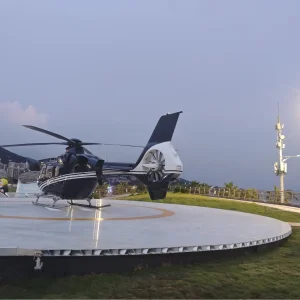
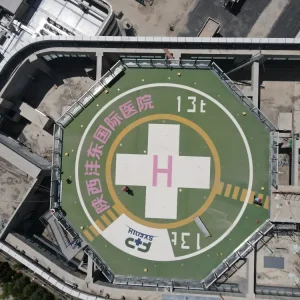
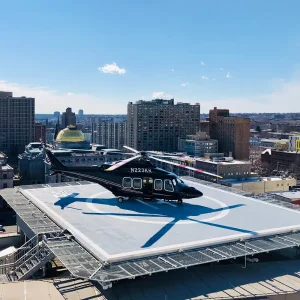
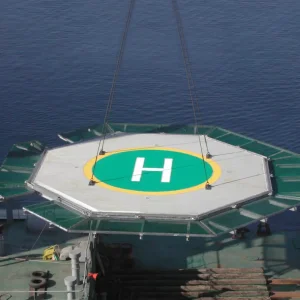
Engineered structural systems built using marine-grade alloys, tested to secure high-elevation platforms, helipads, and extreme structural facilities globally.
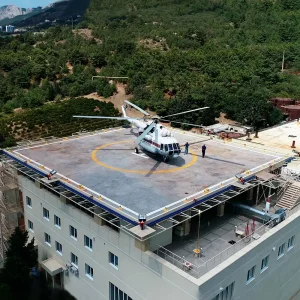
In high-altitude industrial installations, marine platforms, offshore drilling rigs, and urban skyscraper rooftops, safeguarding personnel and equipment is a regulatory mandate. Helideck perimeter safety nets act as the final, critical fallback mechanism designed to absorb kinetic energy and prevent catastrophic falls without causing injury or structural failure.
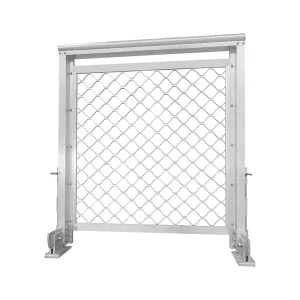
Unlike traditional steel cabling or synthetic rope nets that degrade under intense ultraviolet (UV) radiation and marine salinity, advanced B2B procurement now centers on anodized marine-grade aluminum alloy safety net frames combined with high-tensile stainless steel or premium aluminum mesh. These configurations guarantee up to 25+ years of operational durability in offshore environments under stringent aerospace rules, such as those set by the UK Civil Aviation Authority (CAP 437) and the US Federal Aviation Administration (FAA).
LVXING SPECIALIZES IN ALUMINUM SOLUTIONS. Established in 2015 and located in Foshan City, Guangdong, LvXing Intelligent Equipment Co., Ltd. boasts a skilled R&D team with extensive experience. We leverage exceptional technical expertise to effectively transform customers' ideas into reality, consistently meeting their precise requirements.
We utilize premium Fenglu aluminum, offering a diverse range of profiles for flexible applications. Our extrusion lines, ranging from 800T to 20,000T, accommodate alloys in the 1xxx, 2xxx, 3xxx, 5xxx, 6xxx, and 7xxx series, allowing us to produce shaped products with section dimensions up to 1.2 meters in width and 28 meters in length. These products are recognized for their precision and meticulous processing, finding broad application in aerospace, military, medical, and industrial sectors.
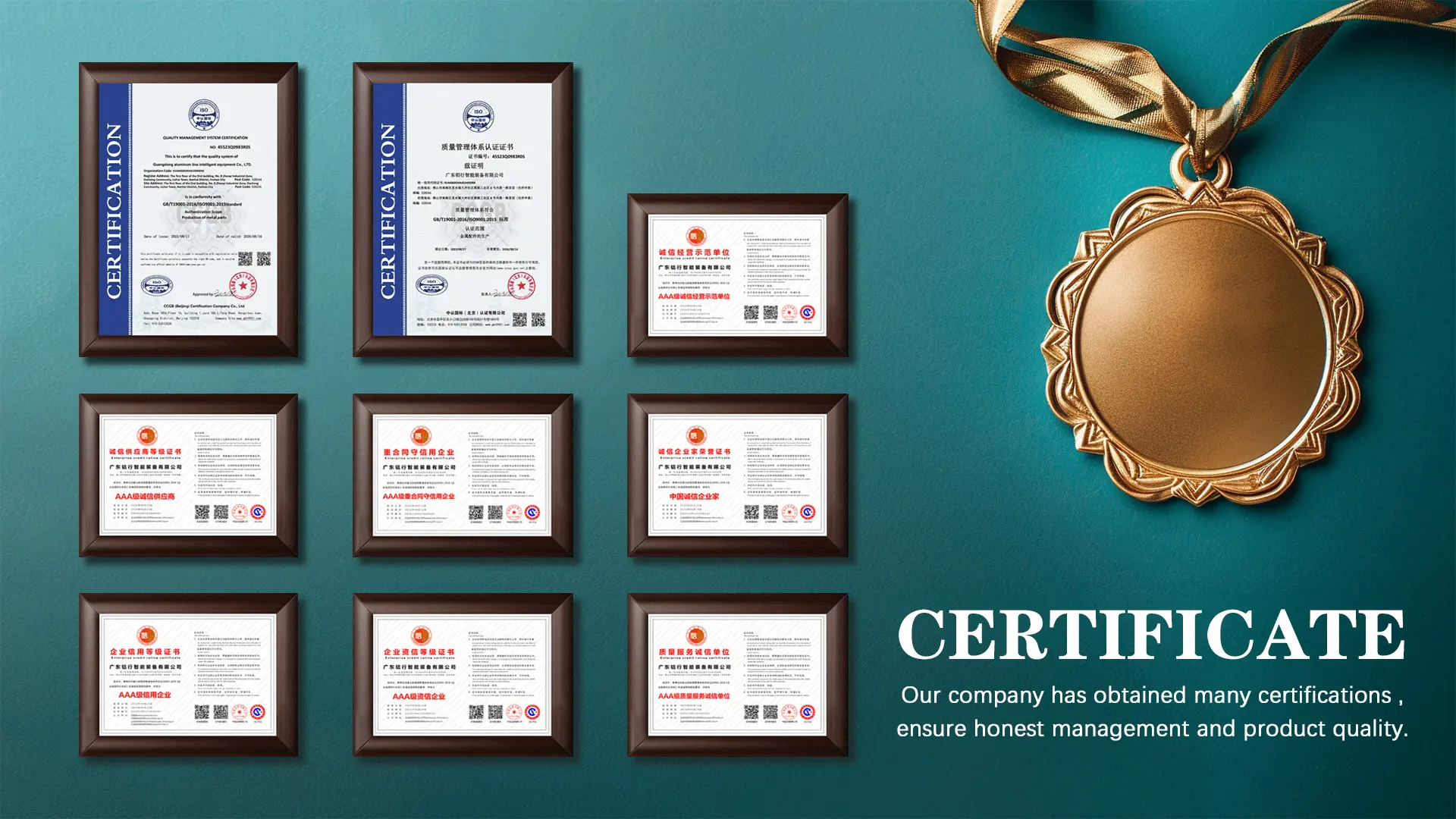
Our commitment to excellence is evident throughout the manufacturing process, rigorous quality control, thorough packaging, and efficient shipping procedures. This dedication has earned us recognition as a national excellent and honest enterprise, along with quality system certification in accordance with GB/T19001-2016/ISO9001:2015 standards.
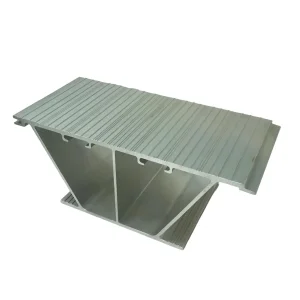
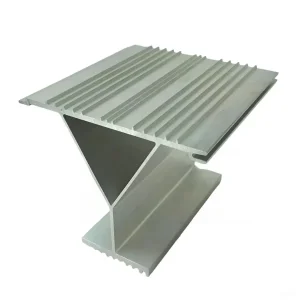
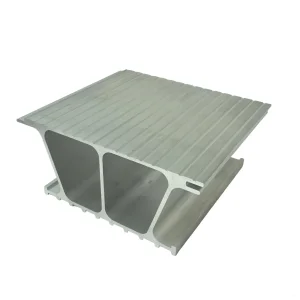
Safety nets and helipad perimeter structures require single-extrusion components that avoid weak joints. Lvxing's 20,000T extrusion capability allows the fabrication of ultra-wide, thick-walled profiles up to 1.2 meters wide. This limits weld stress points, providing unmatched structural integrity when absorbing a direct personnel impact or high-velocity wind loads on elevated ocean platforms.
A direct look at the manufacturing credentials and quality framework backing our wholesale safety nets and helipad structures.
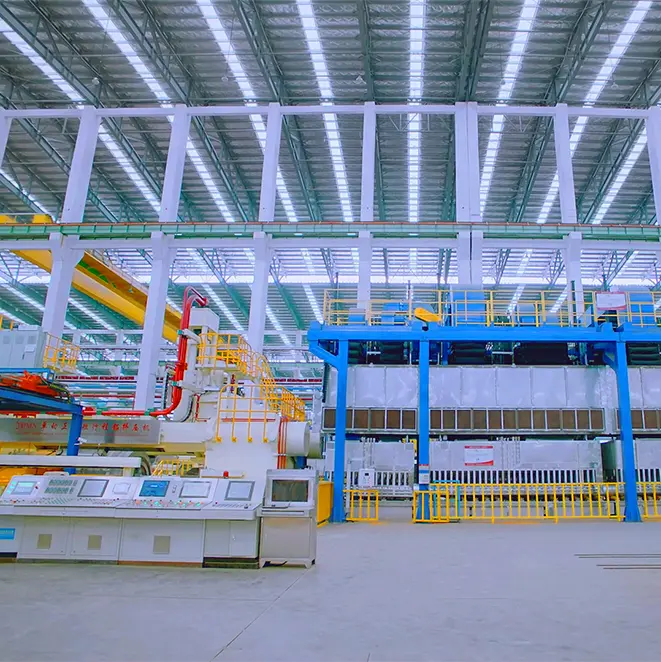

We have obtained the "Special Aluminium Materials for Aerospace" Certificate, confirming our ability to supply critical aviation structures.
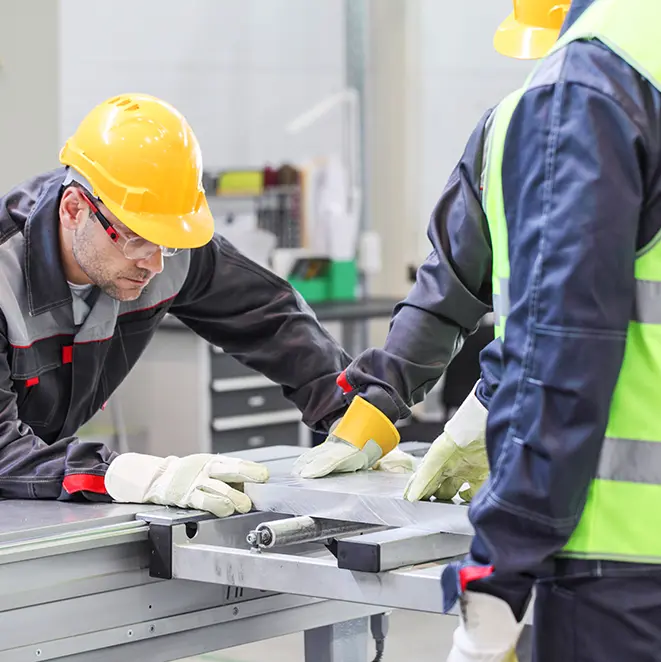

We provide and utilize high-quality Fenglu aluminum profiles. With extrusion lines ranging from 800T to 20,000T, we can produce alloys 1xxx, 2xxx, 3xxx, 5xxx, 6xxx, and 7xxx up to 1.2m width or 28m length.
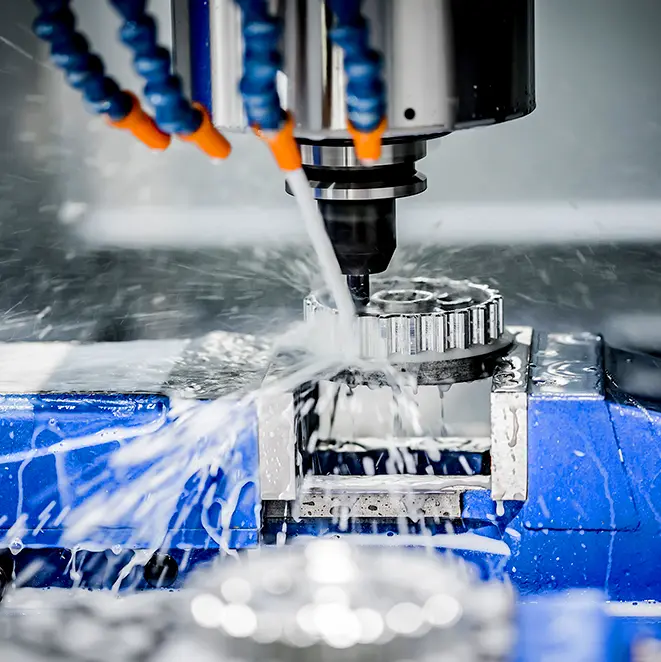

Our team of technicians possesses 15 years of invaluable experience. This deep understanding of customer requirements allows us to identify potential issues and offer practical insights.
Developing next-generation safety mesh systems using material innovation, dynamic shock absorption, and IoT-enabled strain monitoring.
Transitioning toward localized, custom heat-treatment controls that increase salt-fog corrosion resistance by 40% while preserving a high elastic modulus to absorb dynamic falls.
Standardizing pre-tensioned modular mesh panels that quickly secure to the helipad perimeter structural profiles. This shortens offshore installation times from weeks to days.
Validating design limits through drop-testing models where a 100 kg body is dropped from heights up to 1 meter, ensuring zero structural failure or rigid bounce-back.
Integrating fiber-optic distributed sensing or IoT strain sensors directly within the support struts. This monitors stress changes caused by wind load, snow load, or impact events, providing real-time data to control rooms.
How our engineering team adapts safety net designs to comply with local codes and extreme regional climates.
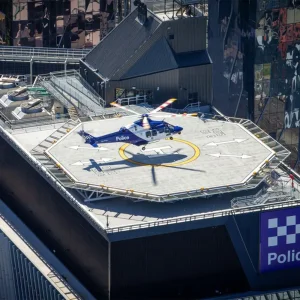
Our helideck perimeter safety net systems comply with CAP 437 rules. The structural frames incline 10 degrees upward, extending 1.5 meters outward, preventing trampoline-like bounce-backs.
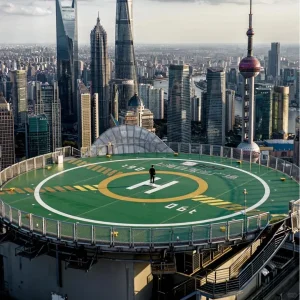
Designed for urban skyscrapers in typhoons and active seismic zones. Standard profiles are structurally analyzed (FEA) to withstand winds exceeding 200 km/h without vibrating loose.
Combining type-III hard anodizing with 316-grade stainless steel wire mesh protects the system against salt-fog environments and high acid rain, eliminating galvanic corrosion.
Choosing Lvxing as your wholesale partner grants you direct access to the Foshan industrial cluster, the world's most integrated aluminum extrusion region. This location creates a highly resilient supply chain that controls costs from raw aluminum ingots to completed surface treatments and export packing:
Final project costs depend on the profile width, alloy type (typically 6061-T6 or 6082-T6), mesh infill options (marine-grade aluminum mesh versus 316 stainless wire), surface coating thickness (measured in microns), and custom engineering certifications. Connect with our engineering department for a detailed price breakdown based on your project requirements.
Direct technical answers addressing regulatory standards, stress limits, and installation practices for B2B engineering clients.
Under CAP 437 (Chapter 3), safety nets must extend at least 1.5 meters wide around the helicopter landing area. They should incline slightly upwards (approximately 10 degrees) and should not act like a trampoline, ensuring falling personnel are safely caught rather than bounced back or off. The system, including the frame and mesh, must withstand a drop-test impact of 100 kg dropped from 1 meter without structural failure.
Aluminum (specifically marine-grade 6082-T6 or 6061-T6) provides an optimal strength-to-weight ratio, reducing structural loads on cantilevered platforms. While stainless steel is strong, it is heavier and more expensive. Synthetics degrade quickly when exposed to UV radiation and offshore wind. Anodized aluminum offers excellent corrosion resistance and requires minimal maintenance over its lifespan.
We leverage extrusion lines ranging from 800T to 20,000T, allowing us to produce single-piece profiles up to 1.2 meters wide. This limits weld stress points. Additionally, our manufacturing follows GB/T19001-2016 / ISO9001:2015 standards, and we utilize high-purity raw materials from Fenglu Aluminum, backed by our aerospace-certified production capability.
We recommend Type-III hard coat anodizing with a thickness of 20 to 25 microns. This forms an aluminum oxide layer that seals the alloy against salt-fog environments and chemical exposure. For urban projects, durable powder coating or PVDF paints can be applied in various colors to meet safety visibility standards.
Yes. We customize profiles, framing geometries, and mesh sizes for specific helideck dimensions and loading requirements. Pricing is calculated based on raw material weight, structural processing, surface treatment, and certification demands. Custom tooling fees may apply if new extrusion dies are required for unique profiles.
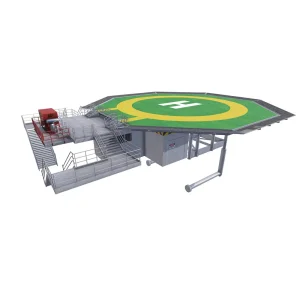
Select from our range of structural profiles, perimeter mesh systems, and complete helideck kits designed to meet international standards.
 LvXing