Explore our structural aluminum profiles, engineered for severe weather, maritime deployments, and architectural design loads.
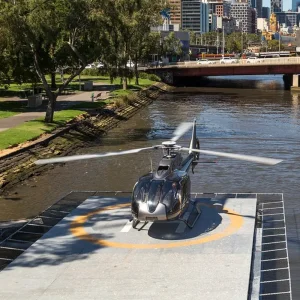
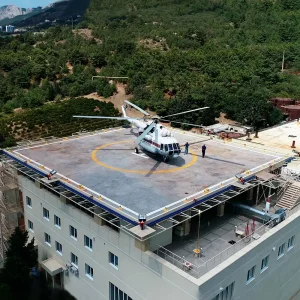
The global demand for high-strength aluminum profile frames has experienced a structural shift. As industries push toward carbon neutrality, the weight savings, structural efficiency, and recyclability of structural alloys have made extrusion systems the gold standard. Modern engineering applications require profiles that not only offer load-bearing capabilities but also incorporate design flexibilities that minimize secondary processing.
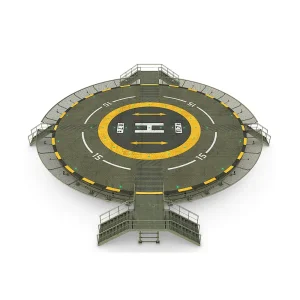
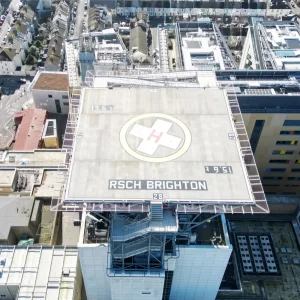
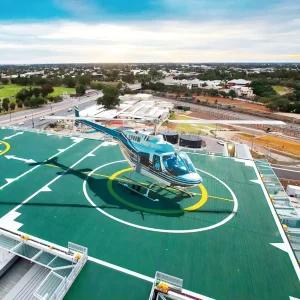
In renewable energy, automotive platforms, advanced transit networks, aerospace infrastructure, and marine environments, aluminum framing has replaced traditional structural steel. The introduction of large-format profiles—enabling structural spans with minimal weld joints—has transformed civil engineering. Specialized architectural frameworks, such as rooftop helicopter landing decks and offshore helipads, rely on aluminum profiles to manage structural dead weight while handling intense dynamic landing loads.
"The transition from structural steel to high-tensile aluminum extrusions reduces overall dead-load weight by up to 60% without compromising yield strength, presenting substantial material cost savings over the infrastructure life cycle."
Technical compliance, metallurgical consistency, and mechanical properties required by international engineering procurement officers.
Procurement teams require compliance with international certifications including ASTM, EN, and GB/T standards. Aerospace-grade projects must follow strict quality pathways, requiring traceability reports for every melt batch.
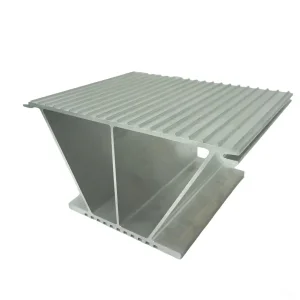
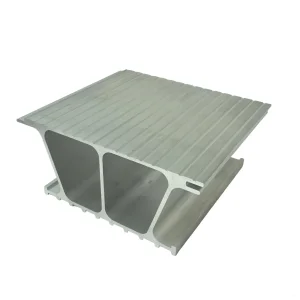
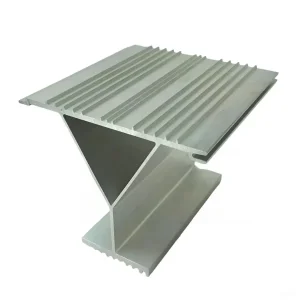
Modern applications require large profiles to eliminate structural seams. Processing capabilities that support cross-sections up to 1.2 meters in width and single extruded lengths of 28 meters reduce fastness dependencies, ensuring structural continuity.
For marine environments and offshore helidecks, profiles must have robust anodized layers or specialized PVDF coatings. These coatings must withstand standard neutral salt spray testing (NSS) up to 1,000+ hours to protect against galvanic corrosion.
Choosing the correct alloy is essential for project performance and safety. Aluminum profiles are grouped by their alloying elements, which determine their mechanical limits:
| Alloy Series | Primary Alloying Element | Tensile Strength (Typical MPa) | Corrosion Resistance | Primary Applications |
|---|---|---|---|---|
| 1xxx Series | Pure Aluminum (99%+) | 70 - 140 | Excellent | Chemical processing equipment, electrical busbars, conductive lines |
| 2xxx Series | Copper (Cu) | 300 - 450 | Moderate (Requires coating) | Aerospace structural ribs, skin panels, high-stress aviation brackets |
| 3xxx Series | Manganese (Mn) | 110 - 200 | Very Good | Heat exchangers, roofing sheets, general industrial hardware |
| 5xxx Series | Magnesium (Mg) | 190 - 310 | Excellent (Marine environments) | Ship hull framing, pressure vessels, maritime walkways, storage tanks |
| 6xxx Series | Magnesium & Silicon (Mg-Si) | 150 - 390 | Excellent | Heavy-duty structural framing, custom architectural profiles, helipad structures |
| 7xxx Series | Zinc (Zn) | 320 - 600 | Moderate (Requires protection) | Aerospace load-bearing structural members, performance sporting goods |
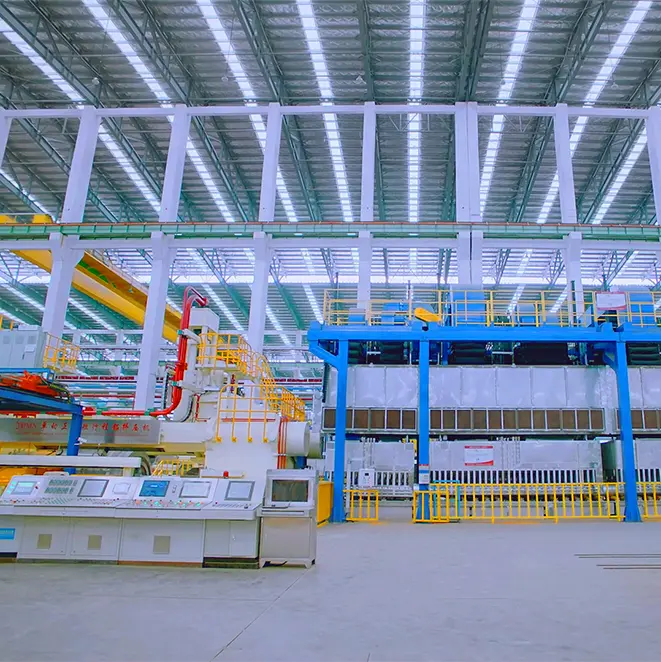
The concentration of raw material sourcing, ingot casting, die design, and advanced extrusion in Southern China has made the region a center for aluminum profile manufacturing. Modern factories operate with Industry 4.0 integration, linking die design directly to automated extrusion speed controllers and automated quench systems.
This automated supply chain enables high efficiency, quick design turns, and consistent production. By combining deep raw material reserves, close relationships with specialized alloy suppliers like Fenglu Aluminum, and in-house tooling shops, Chinese manufacturers can scale production quickly. This setup minimizes lead times for custom dies while maintaining the high dimensional tolerances required for precision engineering.
Delivering high-specification aluminum profiles for safety-critical and heavy-duty structural applications globally.
Established in 2015 and located in Foshan City, Guangdong, LvXing Intelligent Equipment Co., Ltd. features a skilled R&D team with extensive experience. We leverage technical expertise to transform custom concepts into reality, consistently meeting precise structural design parameters.
We utilize premium Fenglu aluminum, offering a diverse range of profiles for flexible applications. Our extrusion lines, ranging from 800T to 20,000T, accommodate alloys in the 1xxx, 2xxx, 3xxx, 5xxx, 6xxx, and 7xxx series, allowing us to produce shaped products with section dimensions up to 1.2 meters in width and 28 meters in length. These products are recognized for their precision and detailed processing, and are widely used in aerospace, military, medical, and industrial sectors.
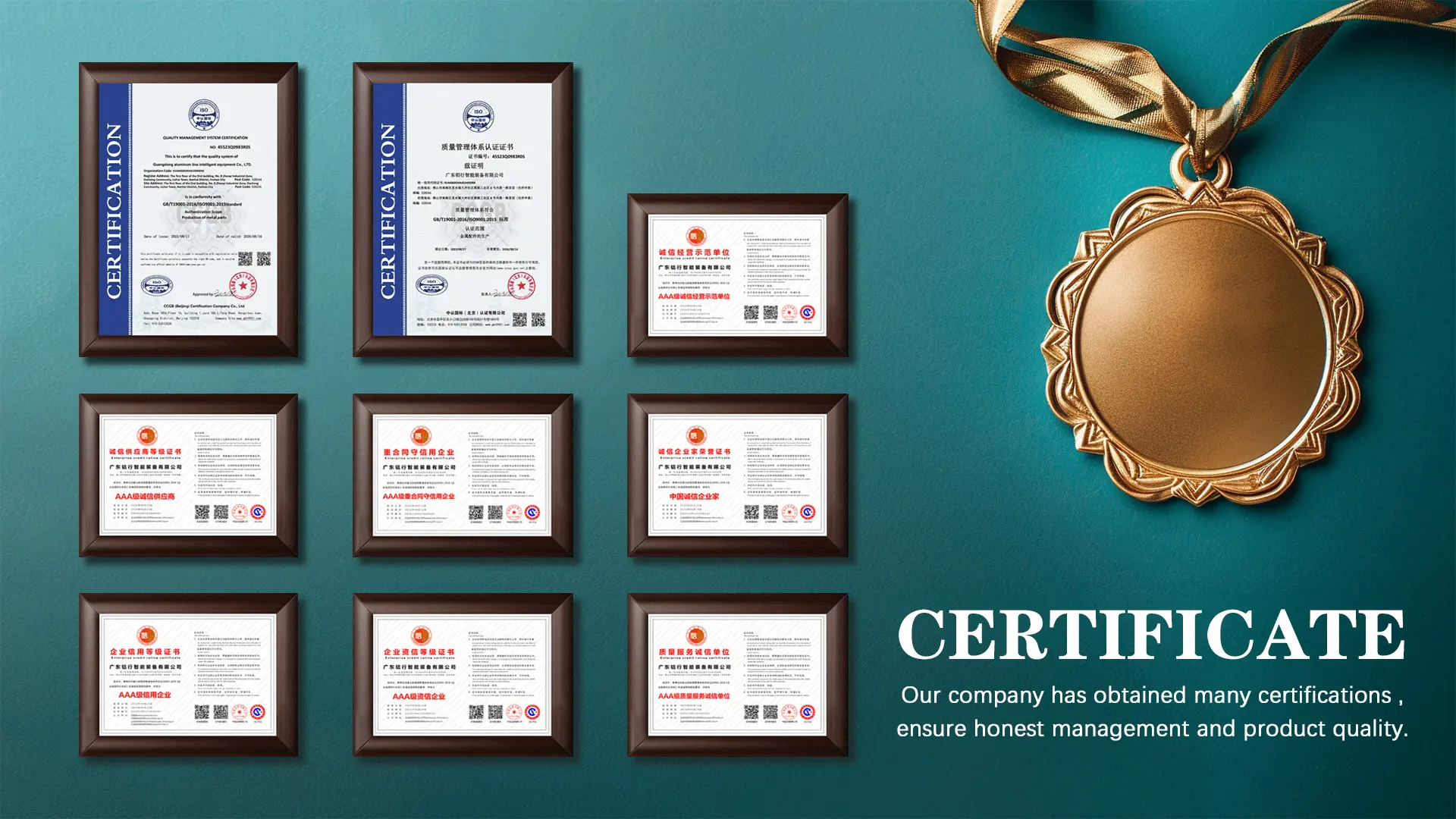
Our commitment to quality is evident throughout the manufacturing process, from raw material inspection and strict extrusion control to packaging and shipping. This dedication has earned us recognition as a national excellent and honest enterprise, along with quality system certification in accordance with GB/T19001-2016/ISO9001:2015 standards.

We have obtained the "Special Aluminium Materials for Aerospace" Certificate, verifying our capability to meet strict mechanical and metallurgical tolerances.

Equipped to handle alloys from the 1xxx to 7xxx series, we manufacture profiles up to 1.2m wide or 28m long, allowing us to supply large structural frame elements.

Our engineering team has 15 years of technical experience. We review custom specifications to catch potential issues early, helping turn designs into practical products.
Max Extrusion Capacity
Max Section Width
Max Extrusion Length
Engineering Experience
How our heavy-duty profiles are integrated into high-stress infrastructure projects globally.
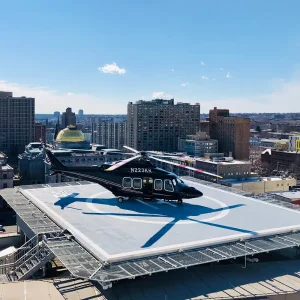
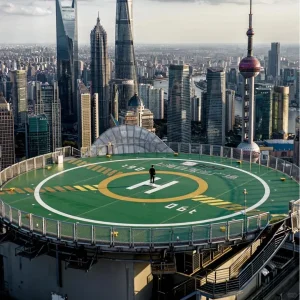
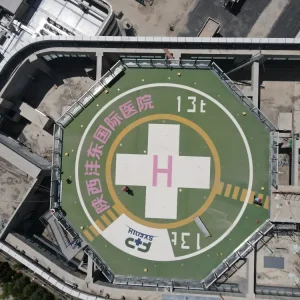
Rooftop helipads require high strength combined with low dead weight to minimize structural load on the building. Our 6000-series structural frames provide the necessary load capacity for emergency and commercial aviation operations.
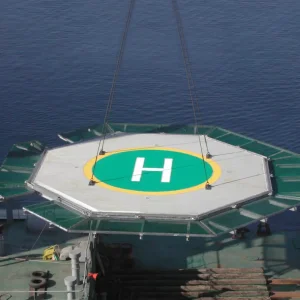
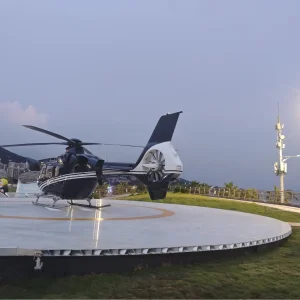
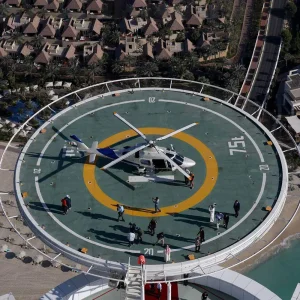
Ship deck helipads are exposed to persistent salt water, wind, and movement. Using seawater-resistant alloys (5xxx and 6xxx series) with anodized surfaces protects the framing from premature structural failure due to corrosion.
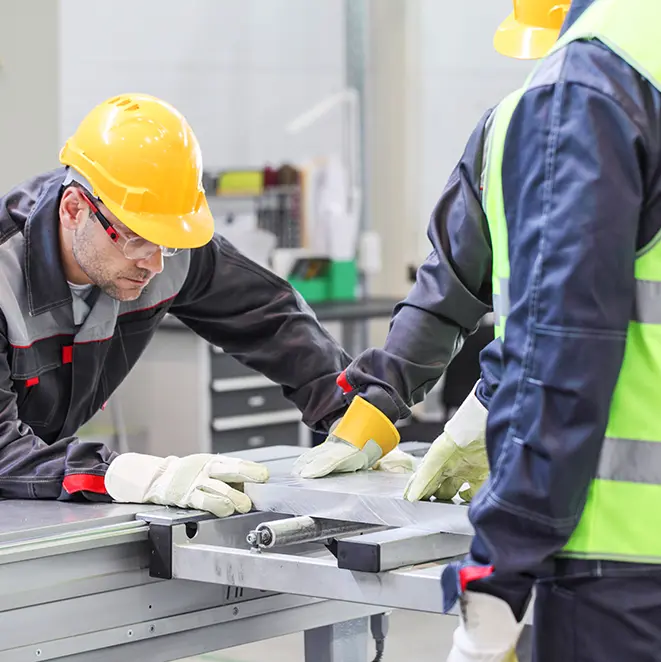
Heavy machinery and robotic cells require precise, straight profiles for linear guide systems. Our profiles are extruded under tight tolerances to ensure flat, stable frames that reduce wear on moving automated components.
Detailed engineering answers regarding alloy performance, manufacturing limits, and custom ordering details.
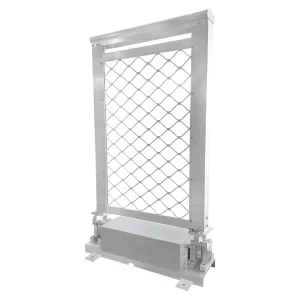
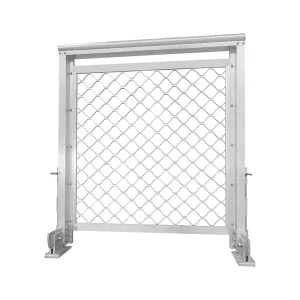
Engineered framing systems, safety netting, and specialized profiles for aviation and rooftop helipads.
 LvXing