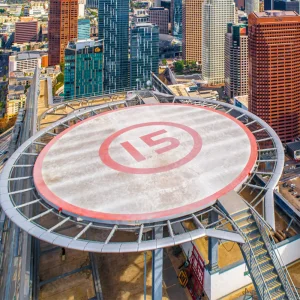
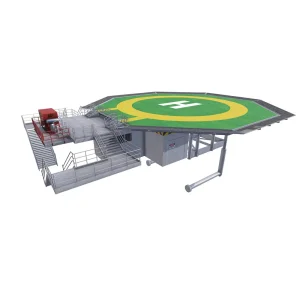
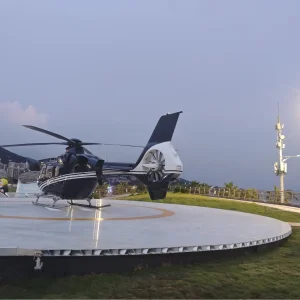
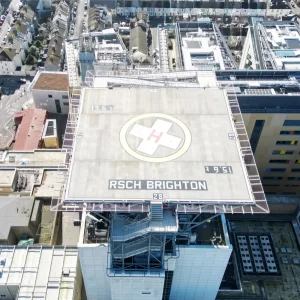
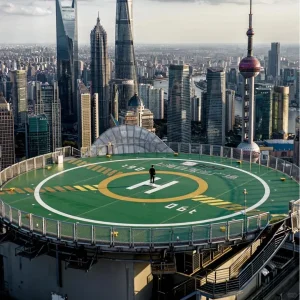
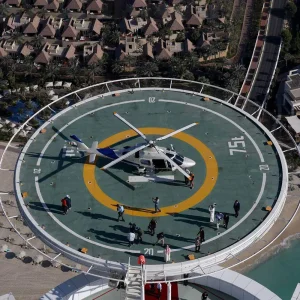
In modern high-density urban development, skyscrapers are no longer merely architectural icons; they are dynamic centers for aviation, emergency rescue, and executive transport. Rooftop helipads play a vital role in these operations, serving as the primary transport nodes. The safety of these elevated helicopter landing pads relies on highly specialized safety systems, specifically customized tall building helicopter landing nets (perimeter safety nets). These nets are engineered to prevent personnel and critical equipment from falling over the edges of elevated landing decks.
The global demand for heliport landing nets has surged alongside the construction of skyscrapers, high-density hospital networks, and offshore facilities. According to aviation safety guidelines like CAP 437 (Standards for Offshore Helicopter Landing Areas) and FAA Advisory Circulars, all elevated helidecks must install robust safety nets around their perimeter. These nets must be designed to withstand extreme wind loads, severe corrosion, and impact forces without creating a trampoline effect that could bounce objects back onto the deck.
“Elevated helipads require uncompromising engineering margins. The safety perimeter net is the final line of defense against catastrophic falls, requiring specialized design, exceptional alloy choice, and precision manufacturing.”
As urban air mobility (UAM) and eVTOL (electric vertical take-off and landing) aircraft transition from design to reality, high-rise buildings are upgrading their infrastructure. A key challenge is developing lightweight, low-maintenance, and ultra-durable perimeter safety nets that integrate seamlessly with advanced aluminum deck systems. Selecting high-grade aluminum alloy profiles and custom-tensioned mesh is essential to ensure long-term integrity and safety.
Established in 2015 and located in Foshan City, Guangdong, LvXing Intelligent Equipment Co., Ltd. is a specialized manufacturer of high-strength aluminum alloy structural products and customized helideck safety systems. With a highly experienced research and development team, we transform complex structural concepts into practical, certified realities that meet strict structural criteria.
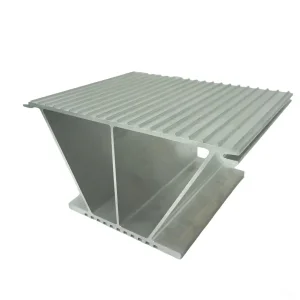
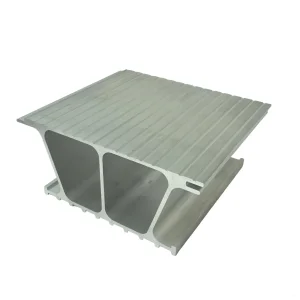
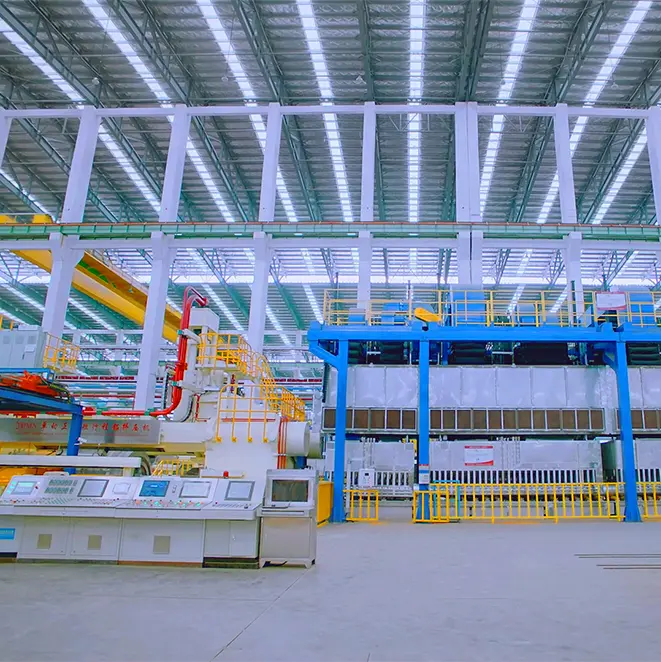
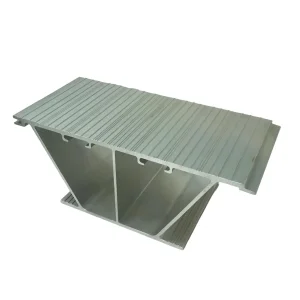
Our operation is powered by a strategic partnership with premium Fenglu Aluminum. Utilizing heavy-duty extrusion lines ranging from 800T to 20,000T, we process alloys across the 1xxx, 2xxx, 3xxx, 5xxx, 6xxx, and 7xxx series. Our facility produces shaped aluminum products with cross-sectional widths up to 1.2 meters and lengths up to 28 meters, allowing us to build joint-free structural spans for helipad platforms and perimeter frames.
A closer look at how we utilize material science, extrusion technology, and engineering experience to build helideck safety nets.
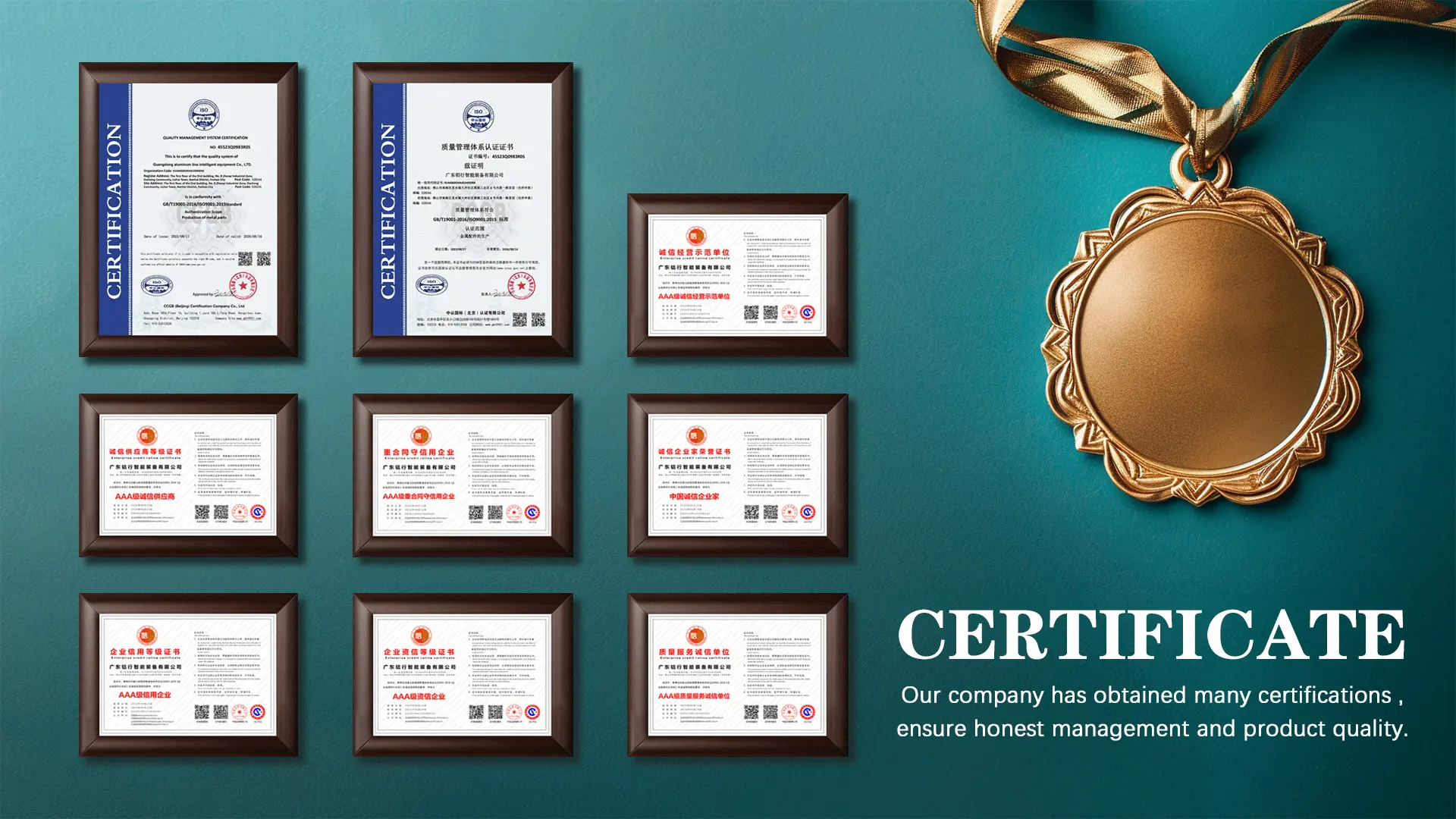
We hold the "Special Aluminium Materials for Aerospace" Certificate. This ensures our raw materials meet safety and structural requirements for aviation applications.
Utilizing extrusion lines from 800T to 20,000T, we manufacture components in 6061-T6, 6082-T6, and other alloys, supporting profiles up to 1.2m wide and 28m long.
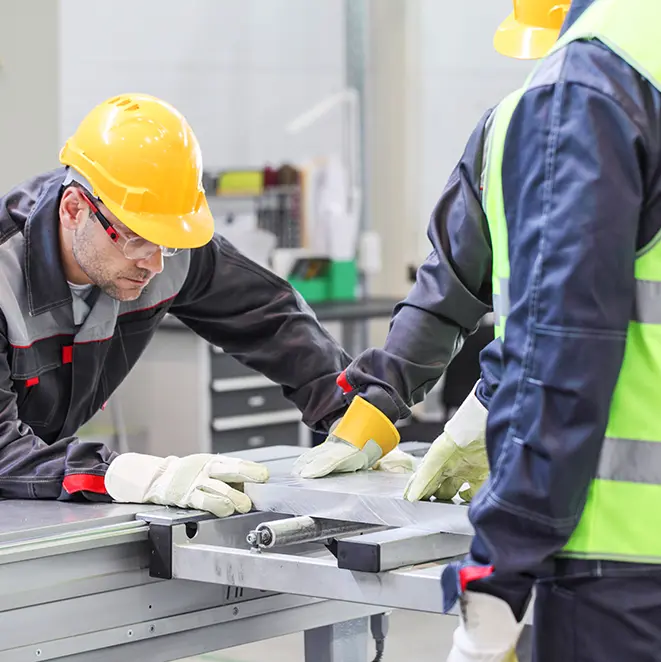
Our experienced technicians identify design risks early and optimize structures to ensure our systems align with project specifications.
Based in Foshan, Guangdong, the global capital of aluminum fabrication, LvXing utilizes a fully integrated ecosystem. This geographic location allows us to deliver optimized performance, quality, and competitive lead times.
Proximity to key aluminum smelting and extrusion networks guarantees high-grade raw materials with traceable alloy certifications, minimizing raw material transit times.
Our in-house design engineering, mold manufacturing, and testing facilities reduce custom tooling cycles from months to just 2-3 weeks.
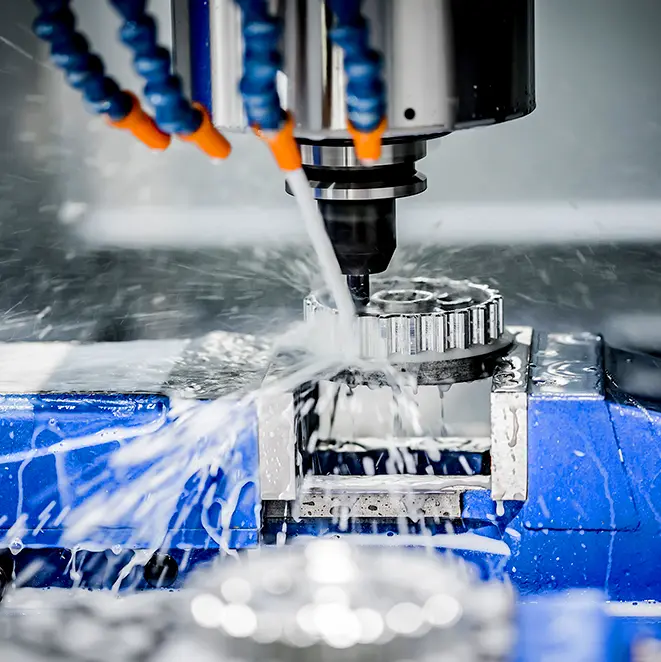
We utilize multi-axis CNC machining centers to drill, cut, and process components. This maintains high tolerances for quick, hassle-free installation on-site.

Tall building helicopter landing nets are not uniform; they must be engineered to match the specific microclimate, structural parameters, and building codes of their location. Below, we break down the three primary installation scenarios where our systems excel:
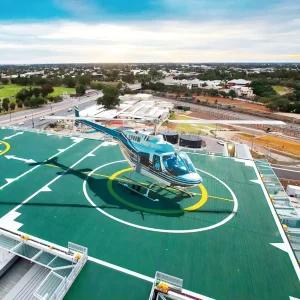
Urban high-rise helipads are subject to intense micro-climatic wind effects, specifically aerodynamic turbulence and updrafts caused by building geometries. The safety net frame must be designed with an aerodynamic profile to avoid generating additional wind shear. For these applications, we utilize 6082-T6 structural grade aluminum alloys, extruded to form aerodynamic brackets. These structures support a flexible stainless steel or polymer-coated aluminum wire net that absorbs impact without adding excessive load to the building's edge structure.
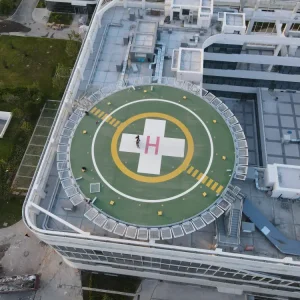
In medical emergency services (HEMS), fast and safe patient transfers are critical. Perimeter nets on hospital rooftop helipads must prioritize safety, stability, and ease of maintenance. The frame must be designed to be completely flush with or just below the landing pad surface. We supply specialized non-glare, safety-coated aluminum nets that prevent reflections from interfering with pilots using Night Vision Goggles (NVGs), ensuring safe operations at all hours.
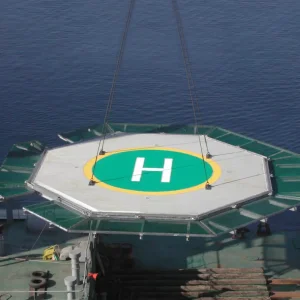
Coastal and marine environments present severe corrosion challenges due to salt spray, humidity, and constant moisture. Traditional steel nets quickly corrode, compromising safety. LvXing designs and manufactures perimeter nets utilizing specialized marine-grade alloys, such as 5xxx and 6xxx series aluminum, paired with high-micron anodizing. This eliminates the risk of galvanic corrosion and significantly reduces maintenance costs over a long service life.
Our aluminum profiles are extruded using high-tonnage machinery to ensure consistent material density and structural integrity. Whether you require standard modular landing deck frames or customized, complex perimeter nets for unique architectural designs, our engineers will deliver tailored solutions that meet your exact specifications.

The urban aviation sector is evolving rapidly. The rise of eVTOL aircraft for urban passenger and cargo transport is reshaping how buildings design and construct landing facilities. These advancements require next-generation rooftop safety structures:
Modern skyscraper landing nets are evolving from passive barrier systems into smart, monitored safety solutions. By embedding fiber-optic or piezo-resistive tension sensors within the aluminum support frame, building monitoring networks can track tension levels and structural integrity in real-time. This provides automated alerts if the net system suffers damage from an impact or extreme weather.
As buildings scale higher, minimizing dead load on top-level structures is a key priority for structural engineers. Heavy, galvanized steel frames are increasingly replaced by high-strength, lightweight aluminum alloys. Our customized aluminum profiles reduce structural weight by up to 50% compared to traditional steel, without compromising load-bearing capacity.
In multi-use architectural designs, landing pads often need to adapt to different uses. Foldable or retractable perimeter net systems, powered by motorized actuators integrated into our custom-designed aluminum hinges, allow the net to fold flat when the pad is not in use. This preserves the building's aesthetic profile while maintaining immediate deployment readiness.
For procurement officers, structural designers, and general contractors, sourcing helicopter landing nets requires careful consideration of structural and material criteria. We recommend verifying the following points before final selection:
| Technical Parameter | Recommended Specification | Engineering Purpose |
|---|---|---|
| Aluminum Alloy Grade | 6061-T6, 6082-T6, or 6005A-T6 | High tensile strength, structural load bearing, wind load resistance. |
| Anodizing Thickness | Class I (Minimum 18-25 Microns) | Corrosion prevention in coastal, marine, or industrial smog environments. |
| Dynamic Impact Test | Exceeds 125kg Drop Test (from 1m height) | Ensures the net system absorbs impact without failing or bouncing objects. |
| Regulatory Compliance | CAP 437 / ICAO Annex 14 / FAA AC 150/5390 | Guarantees regulatory compliance for international aviation inspections. |
Comprehensive technical answers to common queries from engineers and procurement managers.
When manufactured using marine-grade anodized aluminum (6082-T6 or 6061-T6), the structural service life of the frame and brackets exceeds 25 years. The mesh itself, whether made of stainless steel wire or coated aluminum, is designed to require minimal maintenance in typical rooftop environments.
CAP 437 requires that safety nets extend at least 1.5 meters outward from the edge of the landing platform. The net must not rise above the level of the deck to prevent hazard risks, and must have a slope angle inclined slightly upward to catch falling objects securely.
Yes. With our 800T to 20,000T extrusion lines and in-house tooling facility, we produce custom aluminum profiles up to 1.2m wide to match circular, octagonal, or irregular multi-sided helipad designs.
Aluminum provides an optimal strength-to-weight ratio, reducing the load on skyscraper edges by up to 50% compared to structural steel. Additionally, aluminum self-passivates, generating a natural oxide layer that prevents corrosion without requiring constant repainting.
Yes, our manufacturing facility operates under the GB/T19001-2016/ISO9001:2015 quality management systems. We provide material mill test certificates (MTC), thickness certifications, and load test compliance documentation for all shipments.
Components are wrapped in protective non-scratch film, bundled with reinforced packing strips, and placed in structural wooden crates. This ensures our anodized and machined profiles arrive free from surface scratches or transport damage.
 LvXing