Engineered to deliver exceptional wind load tolerance, maximum structural durability, and precision mechanical operations.
The global construction paradigm is shifting rapidly towards high-performance building envelopes. In this context, doors and windows for aluminum profile sliding systems are no longer treated as simple mechanical divisions; they are complex thermal, structural, and acoustic barriers. Rapid urbanization, coupled with aggressive net-zero emissions policies globally (such as the EU’s Energy Performance of Buildings Directive and US state-level Title 24 mandates), has elevated high-performance sliding systems to a core design prerequisite.
Architects are pushing the limits of glass-to-wall ratios. Minimalist, ultra-slim profile sliding systems require structural aluminum alloy frame profiles that possess high moment of inertia and bending resistance to withstand extreme atmospheric forces. By utilizing structural grade 6000-series and 7000-series aluminum alloys, fabricators can engineer sliding systems with large spans, ensuring uninterrupted vistas while maintaining dynamic structural safety.
“The modern architectural demand is clear: minimize visible profile sightlines, optimize thermal efficiency down to Passive House standards (U-values below 0.8 W/m²K), and design configurations capable of weathering Category 5 hurricanes.”
Furthermore, the integration of automation and smart hardware in sliding systems is altering the mechanical profile design. Internal motor drives, magnetic levitation sliding tracks, and heavy-duty concealed rollers necessitate larger, highly precise profile cross-sections with complex interior geometries to accommodate electronics and heavy loads without sacrificing thermal breaks.
Forging the Future of High-Performance Aluminum Extrusion Technologies Since 2015
Established in 2015 and located in Foshan City, Guangdong (the heart of China's aluminum manufacturing corridor), LvXing Intelligent Equipment Co., Ltd. boasts a highly skilled research and development team with extensive industrial engineering experience. We leverage exceptional technical expertise to effectively transform customer designs and custom sketches into robust structural realities, consistently meeting and exceeding precise regulatory requirements.
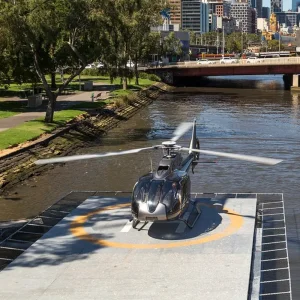
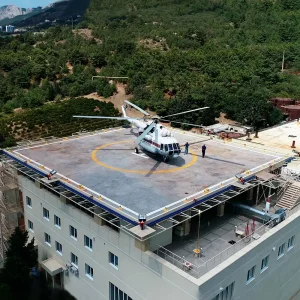
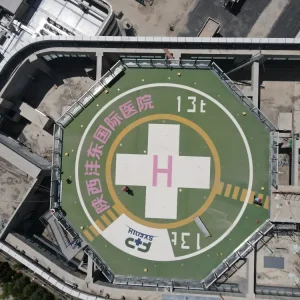
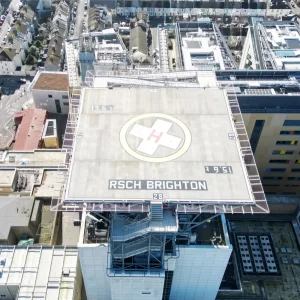
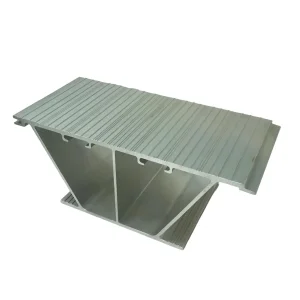
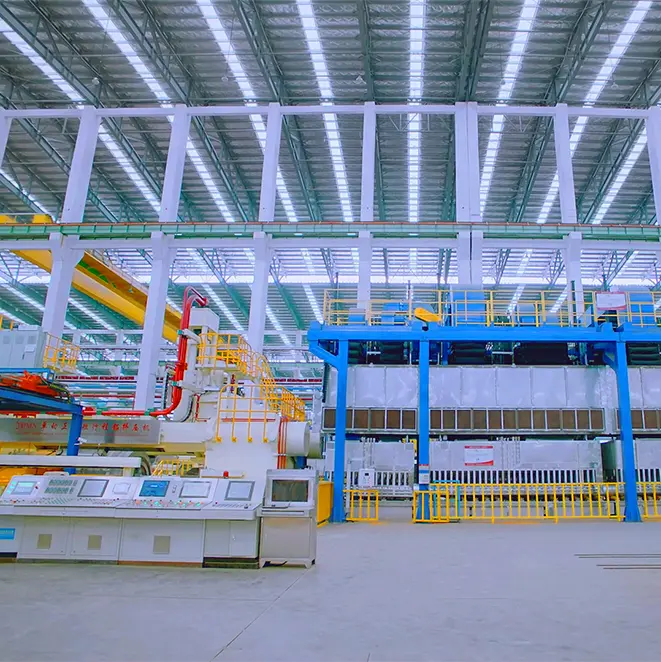
We utilize premium Fenglu aluminum, universally recognized for its purity, metallurgical consistency, and mechanical reliability. Our raw material profiles are processed across advanced extrusion lines ranging from 800T up to a monumental 20,000T press capacity. This extensive capacity enables us to seamlessly process alloys across the 1xxx, 2xxx, 3xxx, 5xxx, 6xxx, and 7xxx series. We specialize in producing complex, custom-shaped products with section dimensions of up to 1.2 meters in width and 28 meters in length. Due to their strict mechanical tolerances and surface quality, our products are widely deployed in aerospace, military defense, medical devices, architectural helipads, and specialized industrial sectors.
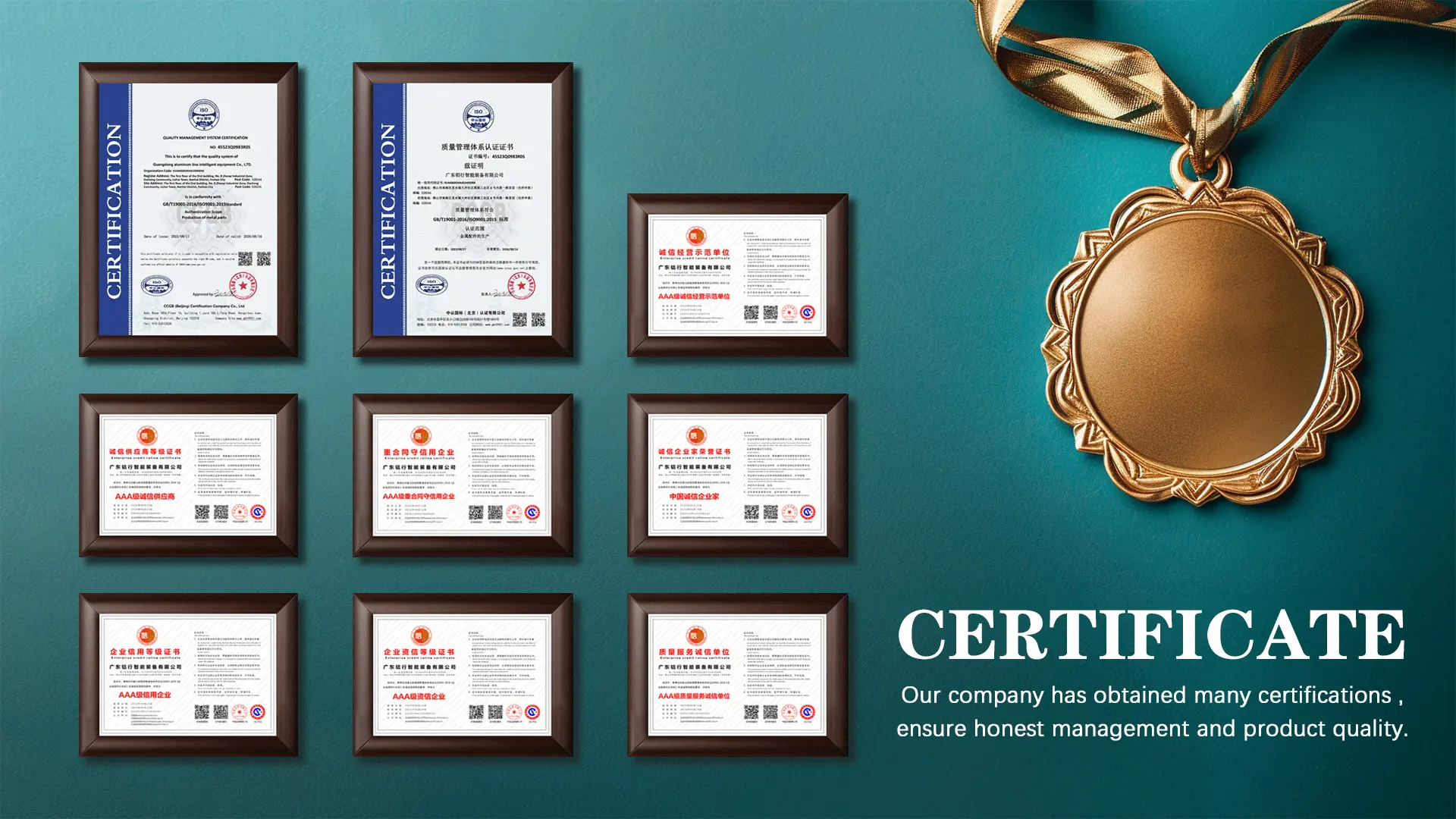
Our commitment to manufacturing excellence is evident through every stage of our supply chain: rigorous raw billet testing, high-precision extrusion tooling fabrication, multi-stage quality control, custom maritime-grade packaging, and optimized logistics workflows. This systematic approach has earned us recognition as a national honest enterprise, alongside certifications under the GB/T19001-2016 / ISO9001:2015 quality management standards.
Why global contractors and architectural manufacturers partner with Lvxing.
We have obtained the prestigious “Special Aluminium Materials for Aerospace” Certificate. Our manufacturing plant adheres to standard flight safety-grade material tracking and alloy formulation controls.
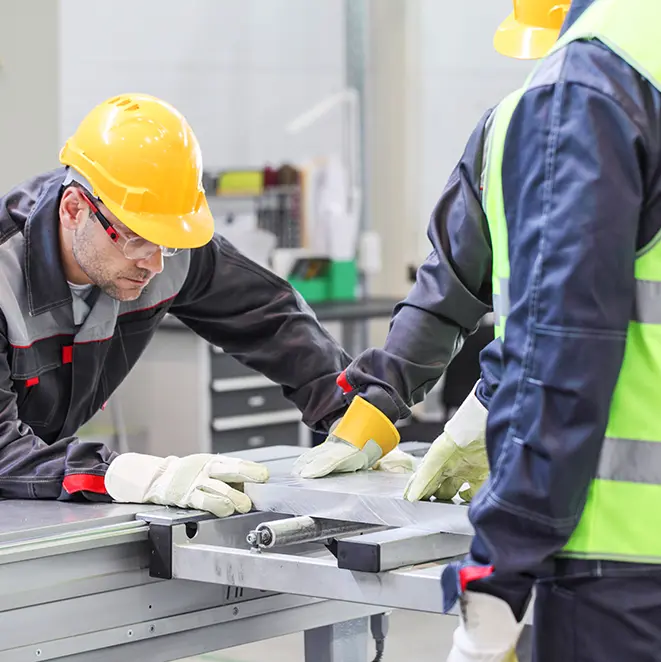
Utilizing high-grade Fenglu raw materials combined with 800T to 20,000T extrusion lines. We process specialized alloys (1xxx to 7xxx series) up to 28 meters in length with tight dimensional tolerances.
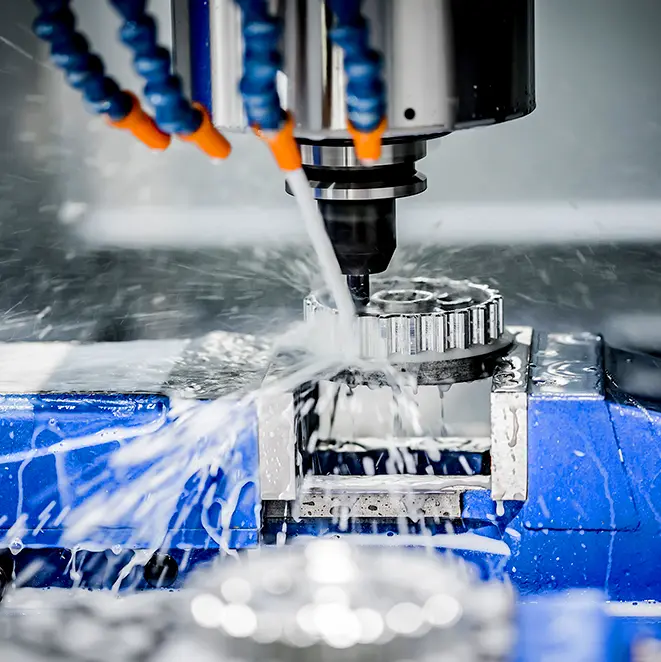
Our engineering team has 15 years of industry experience. We review client drawings, address design flaws, optimize wall thicknesses, and refine alloy properties for real-world projects.
Purchasing agents and developers face volatile raw material markets, strict emissions regulations, and lead time constraints. High-performance sliding door and window systems require profiles that do not warp under high thermal stress (such as direct sunlight on dark-anodized facades) and prevent moisture ingress during intense monsoon seasons.
Global procurement teams must match local codes. For example, North American markets frequently require compliance with AAMA/WDMA/CSA 101/I.S.2/A440 and Florida Product Approval for hurricane zones. Meanwhile, European markets require CE markings indicating compliance with EN 14351-1. These certifications depend directly on the structural composition, tensile strength, and extrusion tolerance of the aluminum profiles used. Choosing the wrong alloy or sub-standard heat treatment can result in system failure, leading to costly site rectifications and legal liability.
Foshan's industry cluster delivers significant manufacturing advantages. By integrating alloy refining, extrusion die engineering, multi-axis CNC milling, and advanced surface coating (anodizing, PVDF, and electro-coating) into a single localized manufacturing hub, Lvxing Intelligent Equipment reduces supply chain lead times. Our integration of Industry 4.0 automation ensures that our custom extrusion lines run with minimal deviation, guaranteeing uniform quality across large product batches.
| Alloy & Temper | Tensile Strength (MPa) | Yield Strength (MPa) | Elongation (%) | Primary Architecture & Industrial Application |
|---|---|---|---|---|
| 6063-T5 | ≥ 150 | ≥ 110 | ≥ 8 | Standard residential sliding frames, lightweight partition doors, decorative trims. |
| 6063-T6 | ≥ 205 | ≥ 170 | ≥ 8 | Commercial high-rise curtain walls, high-wind load sliding patio doors, heavy sash frames. |
| 6061-T6 | ≥ 265 | ≥ 240 | ≥ 8 | Structural connector brackets, high-stress architectural frames, heavy-duty track guides. |
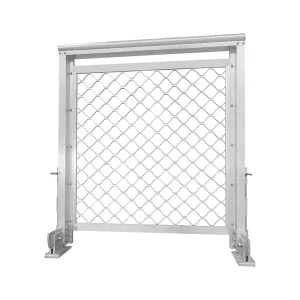
| 7075-T6 | ≥ 540 | ≥ 480 | ≥ 5 | Aerospace structural components, military applications, high-impact helipad safety nets. |
Architectural aluminum profiles must be tailored to their environmental conditions. Our structural sliding profiles are engineered to operate in challenging climates and specialized applications, maintaining dimensional stability and operating smoothly under continuous load.
Coastal developments face high atmospheric chloride concentrations that accelerate galvanic corrosion. Standard aluminum finishes can pit and fail within years. Lvxing's custom profiles use premium Fenglu alloys with sea-grade chemical control, combined with Qualicoat Class 2 or Class 3 PVDF coatings, protecting coastal sliding door systems from corrosion.
Skyscrapers experience localized structural movements and wind pressure variations. The sliding frames must absorb deflection without cracking or popping the insulated glass units. By engineering profiles with deep-pocket glazing channels and utilizing high-yield 6061-T6 thermal break connectors, we ensure that structural sliding units remain weathertight during wind load deflections.
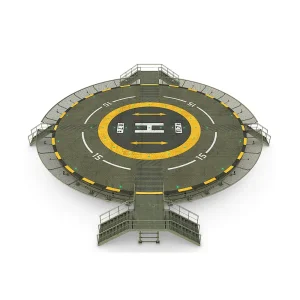
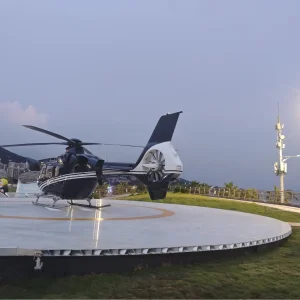
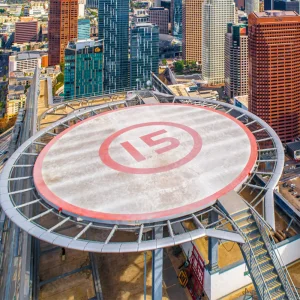
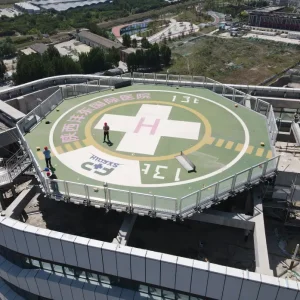
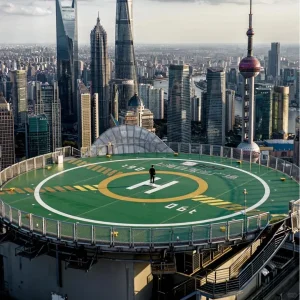
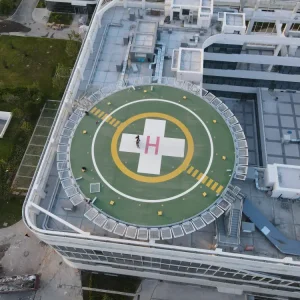
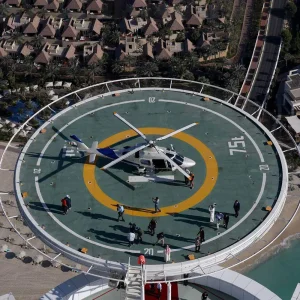
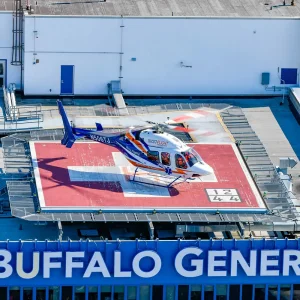
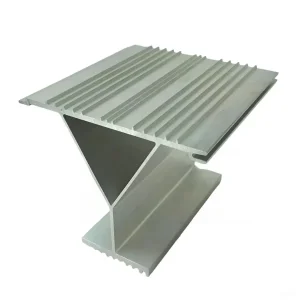
Beyond doors and windows, our heavy-duty structural profiles are used in specialized applications like hospital rooftop helipads, urban skyscraper helidecks, and perimeter safety nets. These profiles utilize structural 6000 and 7000 series aluminum to absorb dynamic helicopter impact loads, resist high exhaust temperatures, and withstand high-altitude weathering.
Technical answers to help engineers, fabricators, and procurement agents select the right materials.
High-load aviation profiles and structural frames engineered for commercial rooftops and heavy industrial applications.
 LvXing