Explore our leading selection of safety products certified for commercial, maritime, military, and rescue flight deck installations.
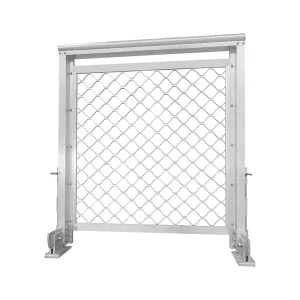
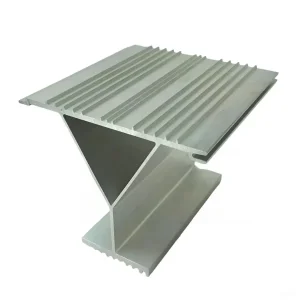
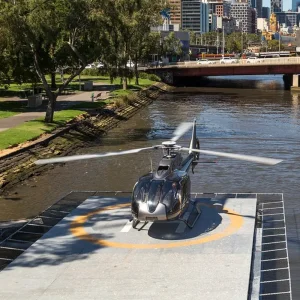
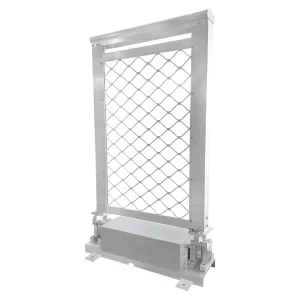
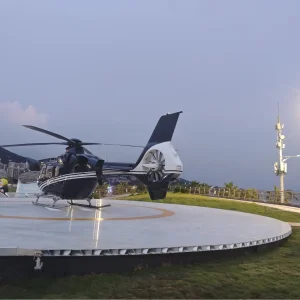
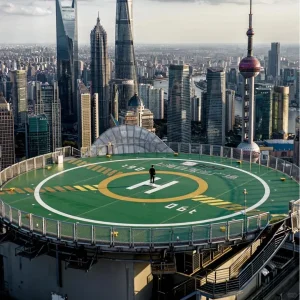
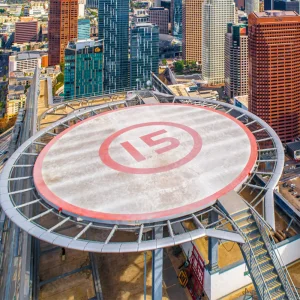
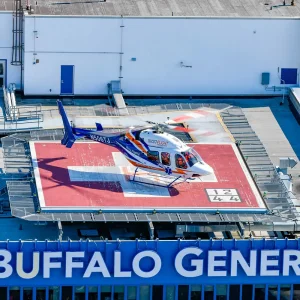
In offshore maritime environments, commercial rooftops, and remote emergency installations, the helicopter landing area (helideck) represents one of the most critical and hazardous operations zones. The safety perimeter surrounding these decks is designed with a singular, vital function: to catch personnel or equipment displaced from the platform without presenting a hazard to the aircraft itself. In accordance with CAP 437 (Standards for Offshore Helicopter Landing Areas) and international regulations like ICAO Annex 14, standard safety nets must meet rigorous mechanical, chemical, and design protocols.
Historically, landing platforms utilized synthetic rope or mild-steel chain-link nets. However, modern engineering standards mandate structural aluminum alloy frameworks paired with either specialized high-tensile 316 stainless steel cable systems or aluminum mesh safety screens. These materials offer unprecedented resistance to the combined stressors of harsh marine salinity, ultraviolet (UV) radiation, severe wind loads, and thermal variance.
The primary governing regulation, CAP 437, mandates that helideck perimeter safety nets must be sloped upward and outward at an angle, extending at least 1.5 meters from the edge of the landing platform. The net system must be designed to withstand an impact test of at least 122.5 kg dropped from a height of 1 meter (simulating a falling crew member), without demonstrating failure in either the mesh body or the anchoring structure. Furthermore, the net must not have a "trampoline effect," which could bounce a falling person back into danger or off the edge entirely.
Lvxing’s engineering division employs finite element analysis (FEA) to simulate these dynamic load conditions, validating the structural integrity of our proprietary extrusion profiles and custom tension systems before physical prototyping occurs. By using premium aluminum alloys such as 6061-T6 and 6082-T6, we achieve optimal strength-to-weight ratios that simplify offshore installation procedures while ensuring life-saving performance.
Max Extrusion Press
Years Tech R&D Experience
CE & ISO9001 Compliance
Average Operational Life
LVXING, SPECIALIZES IN HIGH-PERFORMANCE ALUMINUM SOLUTIONS FOR AEROSPACE, MARINE, AND STRUCTURAL INFRASTRUCTURE.
Established in 2015 and located in Foshan City, Guangdong, LvXing Intelligent Equipment Co., Ltd. boasts a skilled R&D team with extensive experience. We leverage exceptional technical expertise to effectively transform customers' ideas into reality, consistently meeting their precise requirements.
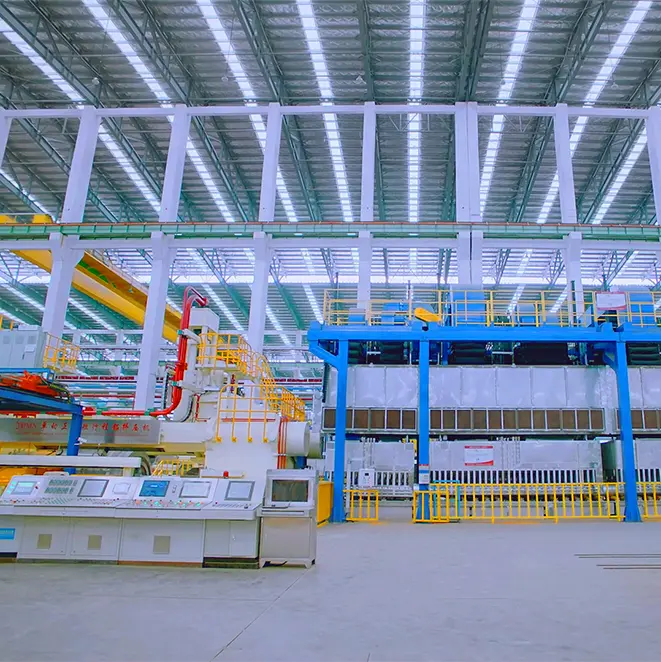
We utilize premium Fenglu aluminum, offering a diverse range of profiles for flexible applications. Our extrusion lines, ranging from 800T to 20,000T, accommodate alloys 1xxx, 2xxx, 3xxx, 5xxx, 6xxx, and 7xxx, allowing us to produce shaped products with section dimensions up to 1.2 meters in width and 28 meters in length. These products are recognized for their precision and meticulous processing, finding broad application in aerospace, military, medical, and industrial sectors.
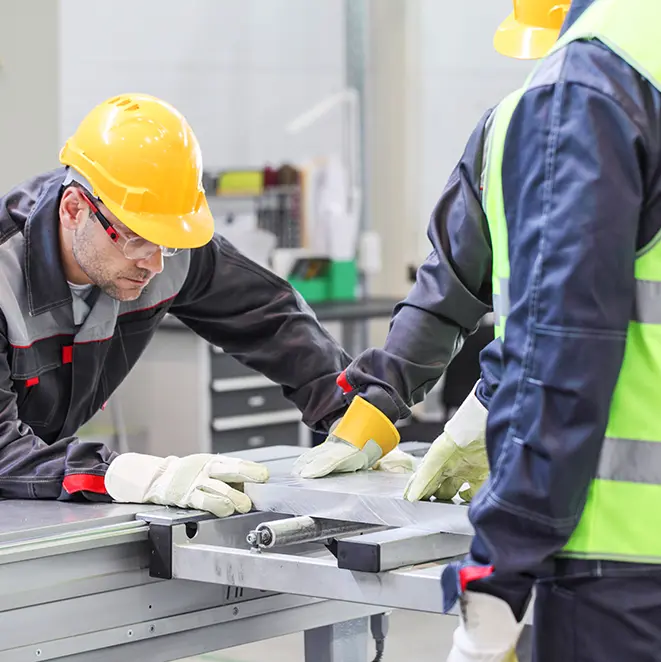
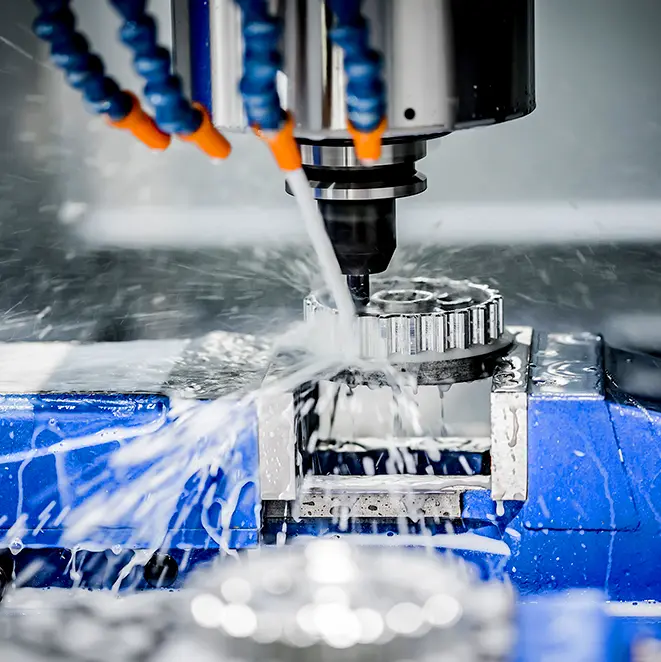
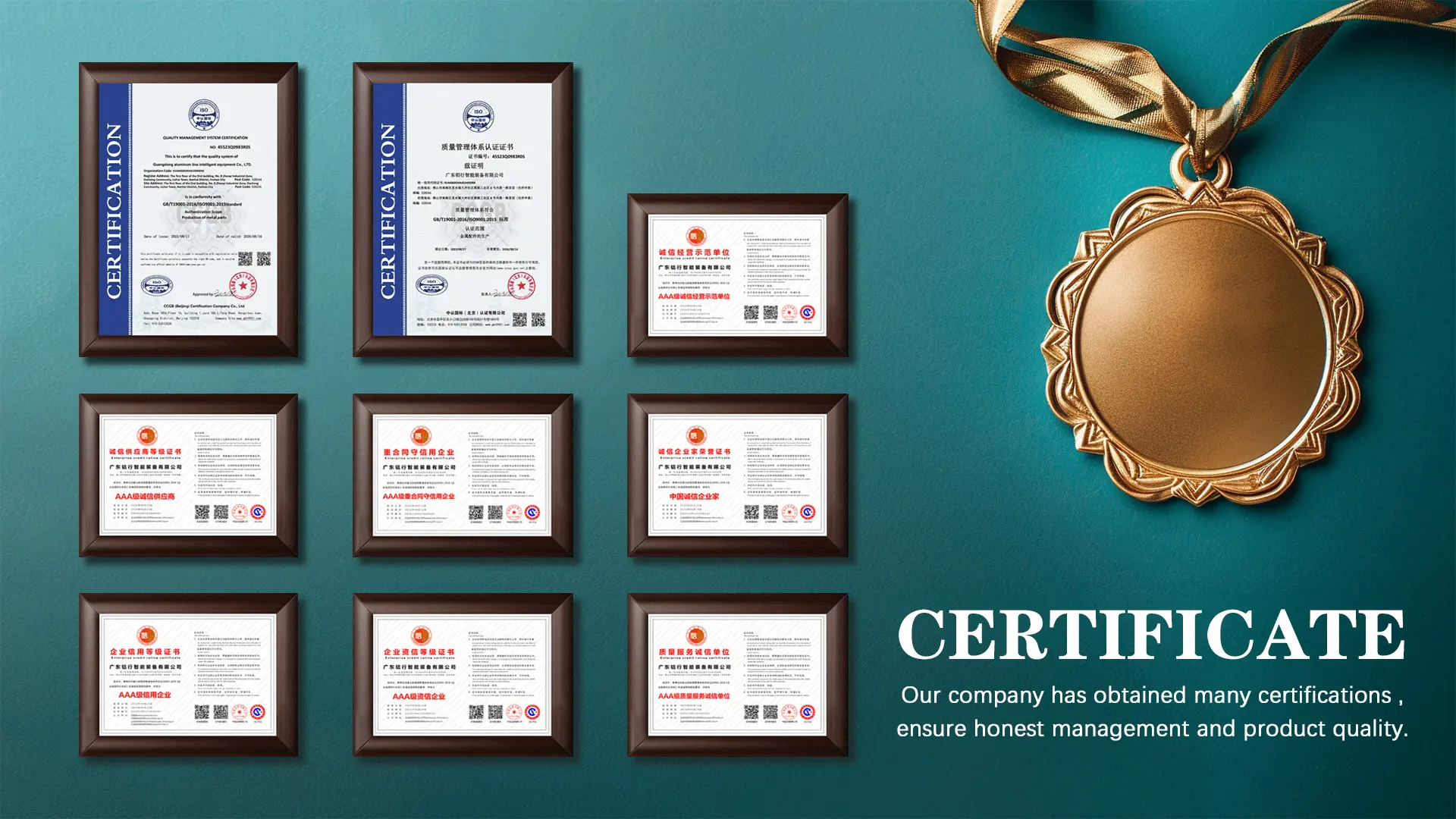
Our commitment to excellence is evident throughout the manufacturing process, rigorous quality control, thorough packaging, and efficient shipping procedures. This dedication has earned us recognition as a national excellent and honest enterprise, along with quality system certification in accordance with GB/T19001-2016/ISO9001:2015 standards.
We aspire to be your trusted business partner and warmly invite you to visit our factory.
Why marine and aerospace contractors worldwide choose Lvxing structural safety systems.



Insight into why Chinese factories like Lvxing lead global production in aluminum safety systems.
Operating within Foshan, the epicenter of global aluminum metallurgy, allows Lvxing to source raw materials from premier partners like Fenglu Aluminum. This localized supply chain minimizes transit degradation and lowers costs while maintaining traceability certificates for every batch.
Our access to heavy-tonnage hydraulic presses ranging up to 20,000T allows the extrusion of massive, single-piece structural members. This reduces the number of weld joints, significantly mitigating potential failure points on platforms subjected to high vibration and dynamic stress.
By utilizing aerospace-grade 6xxx series alloys and anodizing profiles to standard marine specifications (exceeding 20 microns in thickness), Lvxing guarantees defense against the highly aggressive salt-spray environment typical of deepwater installations.
How our custom-manufactured safety nets and aluminum profiles are deployed across distinct industries.
Offshore drilling rigs and production platforms demand highly durable solutions. Lvxing designs manual and electric retractable perimeter nets that fold away during complex crane lifting operations, while meeting tough maritime certifications (such as Lloyd's Register and DNV-GL).
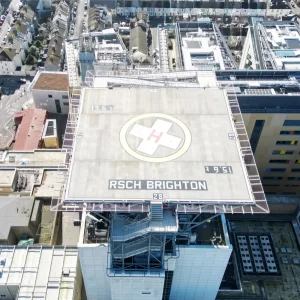
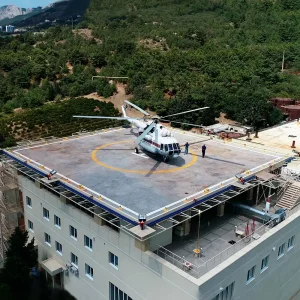
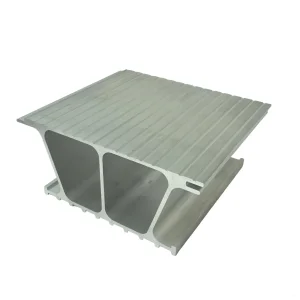
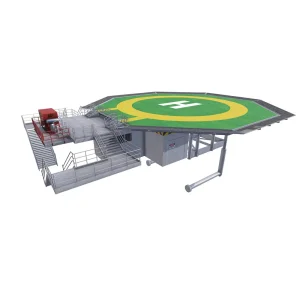
Rooftop installations in major city centers face strict wind load parameters and weight limits. Our high-strength, lightweight aluminum helipad profiles reduce building loads while ensuring passive safety containment that blends seamlessly with architectural designs.
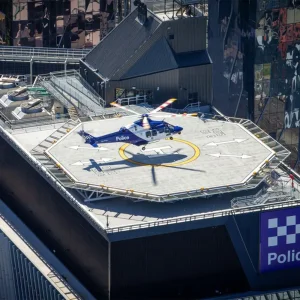
Every second counts during emergency medical service (EMS) landings. Our CE-certified emergency helipads are engineered for low maintenance and 100% reliable functionality under all weather conditions, facilitating safe patient transfer without structural risk.
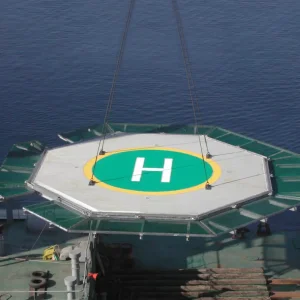
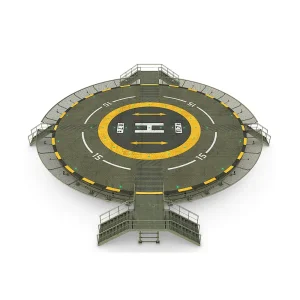
Luxury vessels and defense warships require custom round or specialized geometry helipads. We offer customized ship deck helipad solutions that minimize wave-induced vibrations and incorporate highly polished corrosion-resistant wire mesh.
International engineering contractors (EPCs) and operators prioritizing long-term asset integrity must analyze structural variables during procurement. Essential criteria for helideck perimeter safety net bidding include:
The helipad sector is shifting toward smart, automated containment configurations. These trends include:
Integrated Landing Assistance: Safety nets are increasingly outfitted with structural health monitoring sensors that record tension loss, notifying maintenance crews when replacement or adjustments are required.
Drone Integration and Vertiports: As eVTOL (electric Vertical Takeoff and Landing) aircraft develop, structural landing pads must accommodate heavier single-point loads and multi-directional safety mesh configurations to protect ground crews during high-frequency urban rotations.
Expert technical insights regarding helideck safety net manufacturing, installation, and regulation.
The primary standards are CAA CAP 437 (Standards for Offshore Helicopter Landing Areas) and ICAO Annex 14 Volume II. These frameworks stipulate that safety nets must extend at least 1.5 meters from the deck edge, slope slightly upward, and have a non-trampoline characteristic to capture personnel safely.
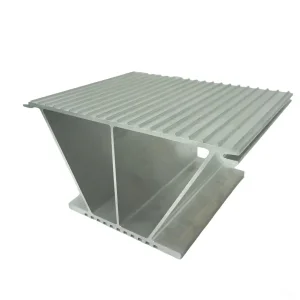
Aluminum alloy (specifically 6000 series) offers an optimal balance of structural strength, low weight, and corrosion resistance. Synthetic nets degrade rapidly under UV exposure and are susceptible to sparks or heat, while full stainless steel structures are heavy and costly. Aluminum allows for extrusion profiles that lower weight and ease installation on offshore rigs.
We perform physical drop tests where a 122.5 kg load is dropped from a height of 1 meter onto the center of the mesh section. Additionally, we conduct computer-aided finite element analysis (FEA) to confirm that the aluminum profiles and mesh elements do not experience permanent plastic deformation.
Our anodized 6xxx aluminum frames and marine-grade 316 stainless steel mesh systems are engineered to last over 25 years with minimal maintenance, even in C5-M high-salinity zones. Regular inspection for tension limits is recommended.
Yes. Leveraging our 15-year engineering team and heavy extrusion facilities in Foshan, we produce custom round helipads, polygonal hospital configurations, and collapsible frameworks tailored to specific architectural drawings.
Factory-direct structural elements and custom landing pad designs tailored to international aviation specs.
 LvXing