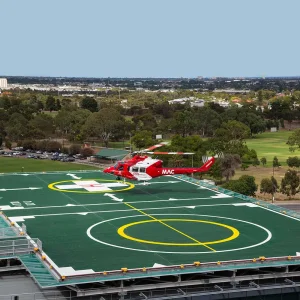
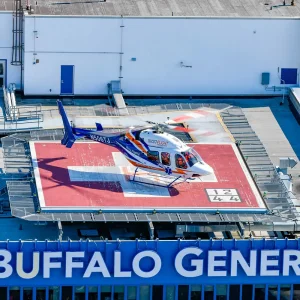
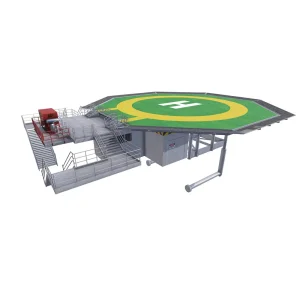
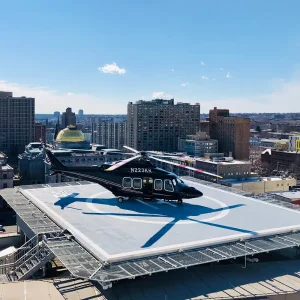
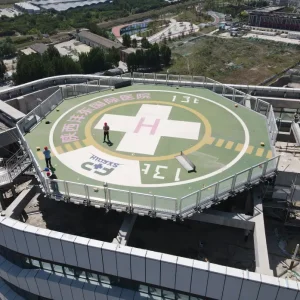
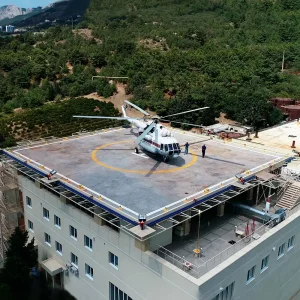
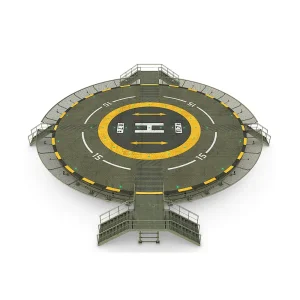
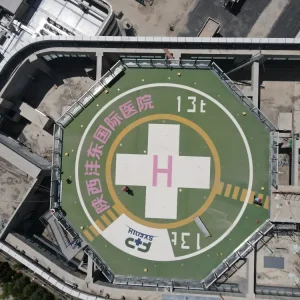
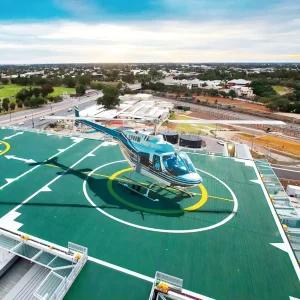
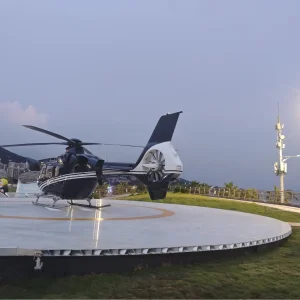
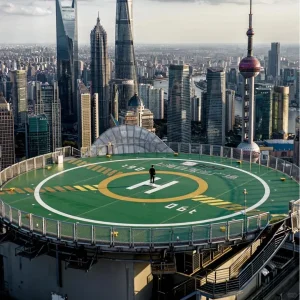
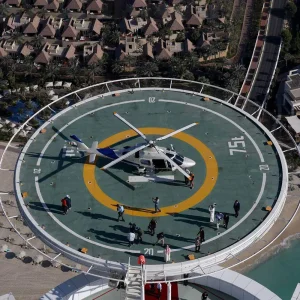
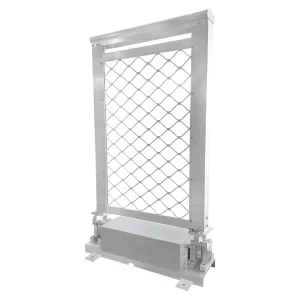
In modern aviation architecture, particularly within medical facilities, offshore oil and gas rigs, superyachts, and skyscraper platforms, helipad safety is paramount. The helipad perimeter safety net serves as a critical fail-safe layer designed to catch personnel, equipment, or debris in the event of an accidental fall. It acts as an energetic deceleration barrier that works reliably under harsh aerodynamic conditions and strong offshore winds. Far from being a simple wire grid, a professional helipad perimeter safety net is a heavily engineered safety system that must comply with strict national and international aviation codes, including the Federal Aviation Administration (FAA) AC 150/5390-2C, the International Civil Aviation Organization (ICAO) Annex 14, and CAP 437 Standards for offshore landing decks.
This comprehensive technical white paper analyzes the materials, manufacturing processes, local compliance frameworks, supply chain economics, and selection processes for safety net procurement. As a leading specialized manufacturer, we explore how combining high-grade marine aluminum alloys with advanced structural engineering ensures that helidecks remain operational, resilient, and safe over decades of continuous exposure.
Established in 2015 and located in the industrial manufacturing hub of Foshan City, Guangdong Province, LvXing Intelligent Equipment Co., Ltd. is a leading manufacturer specializing in customized structural aluminum profiles, helideck perimeter systems, and high-performance helipad components. Backed by a highly skilled R&D team with extensive metallurgy and industrial design experience, we transform complex customer specifications into high-precision structural products.
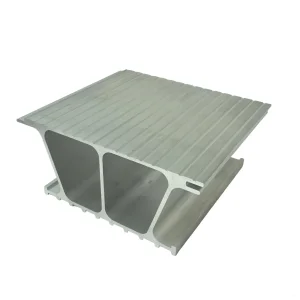
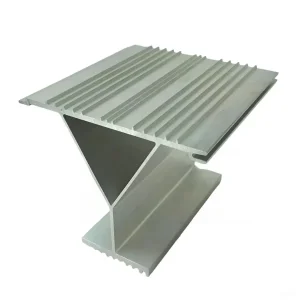
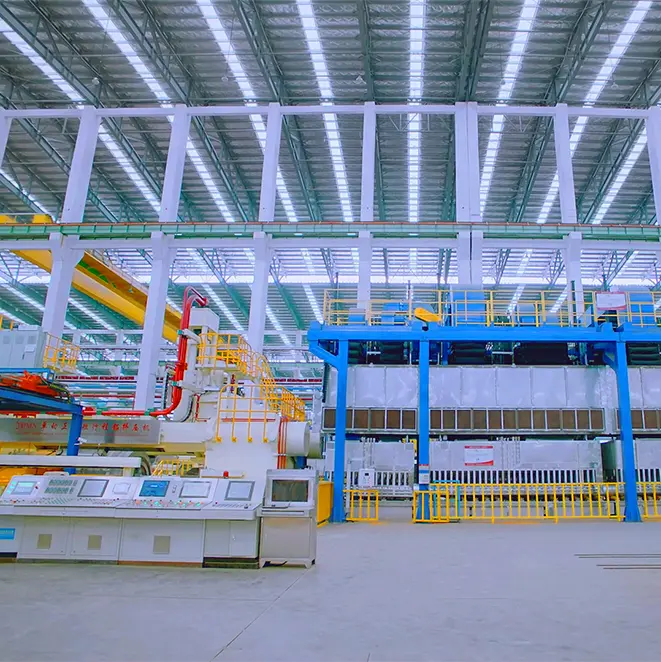
Our manufacturing facility utilizes premium-grade Fenglu aluminum, a globally renowned brand known for its exceptional raw alloy purity and consistent structural integrity. Our extrusion production lines range from 800T to a massive 20,000T, enabling us to handle alloys across the 1xxx, 2xxx, 3xxx, 5xxx, 6xxx, and 7xxx series. This allows us to produce shaped products with section dimensions up to 1.2 meters in width and continuous extrusion profiles up to 28 meters in length. These products are widely deployed in high-performance sectors such as aerospace, defense, medical infrastructure, marine engineering, and heavy industrial machinery.
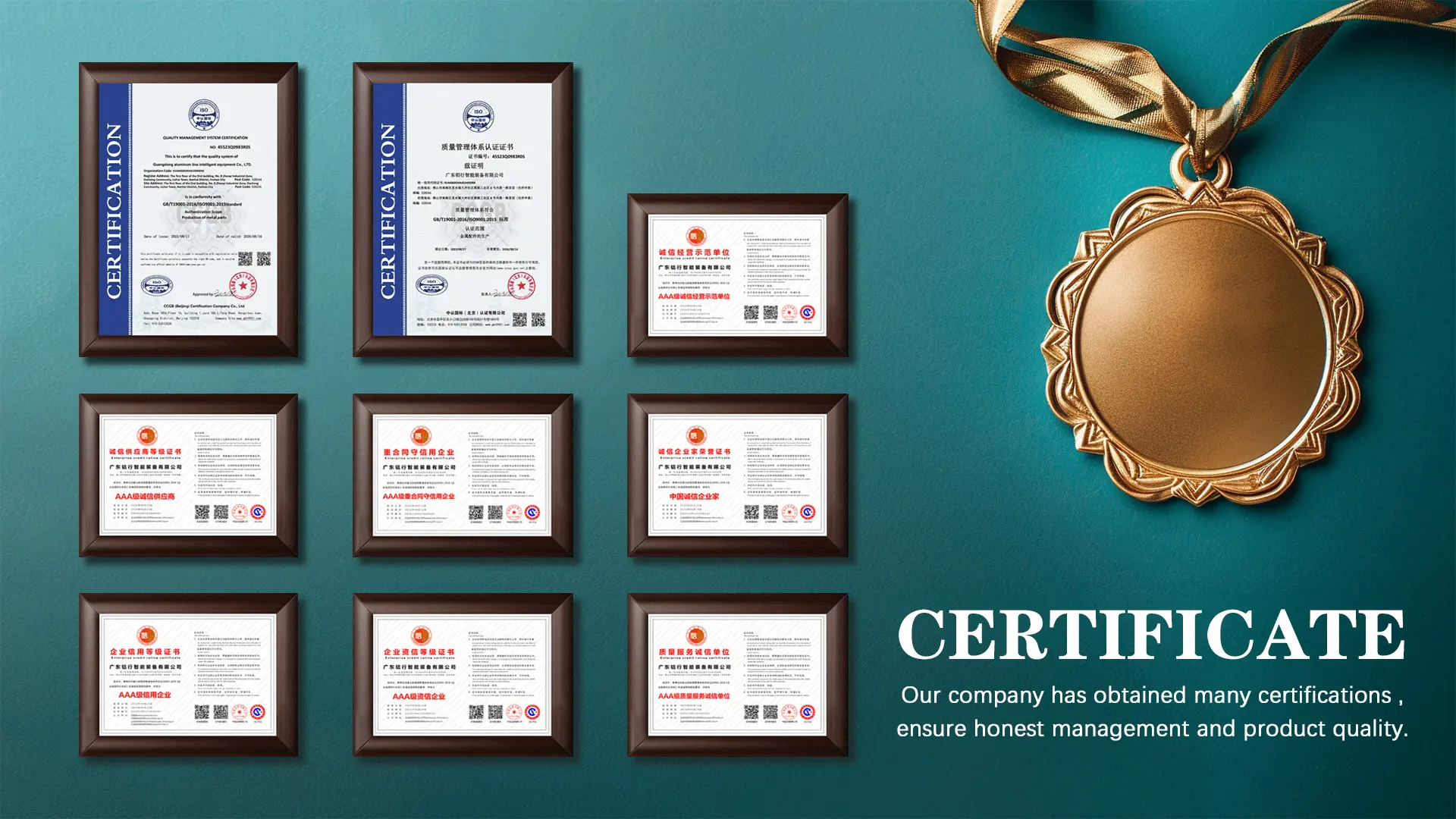
Our commitment to excellence is reflected in our rigorous quality control system, heavy protective packaging, and reliable shipping networks. These standards have earned us recognition as a national honest enterprise, verified by our quality system certifications in accordance with GB/T19001-2016/ISO9001:2015 standards.

Aerospace Grade Materials: We have successfully obtained the prestigious "Special Aluminium Materials for Aerospace" Certificate, certifying our metallurgy capability to construct high-strength, high-ductility frames for safety applications.
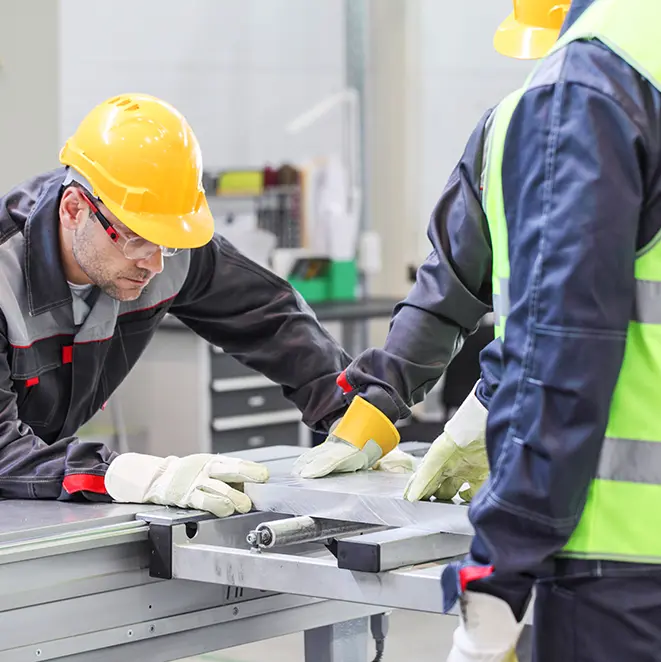

Heavy Scale Extrusion: Utilizing premium Fenglu aluminum profiles with extrusion presses from 800T to 20,000T, we manufacture structural alloy components across series 1000 through 7000 up to 1.2m wide or 28m long.
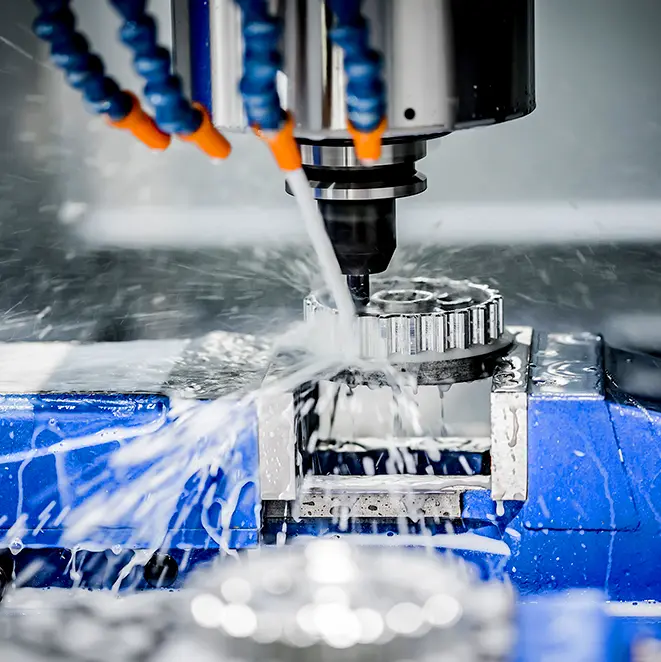

15 Years Expert R&D: Our specialized technical team averages 15 years of helideck profile engineering experience. We help clients optimize structural profiles to resolve mechanical issues before fabrication begins.
A primary challenge in global aviation construction is aligning with localized regulatory frameworks. Different jurisdictions enforce distinct requirements for safety net testing, dimensions, and materials. Helideck perimeter nets must be flexible but taut enough to prevent the classic trampoline effect, which could bounce a falling person back off the edge. At the same time, they must not act as a rigid surface that could cause severe injury upon impact.
To address this, our perimeter safety nets are certified to meet major international standards:
For US-based and domestic heliports. Specifies that perimeter safety nets must be at least 1.5 meters (5 feet) wide, with a slope rising upwards from the landing deck edge, and capable of supporting a static load of 250 lbs per square foot.
The standard for offshore oil platforms and maritime vessels. CAP 437 requires perimeter safety nets to be 1.5 meters wide, made of non-friable materials, and designed to withstand a dynamic drop test of 125 kg from a height of 1 meter.
Ensures every structural component undergoes verified testing processes. This certification guarantees traceability from the raw ingot level to the finished anodized profile, simplifying local building approvals.
Our global engineering department provides personalized, project-specific support. We translate native CAD designs, perform wind shear calculations, and configure attachment brackets to fit local structural constraints. This ensures that the installation is code-compliant from day one.
Sourcing helipad safety systems from our factory in Foshan, China, offers distinct advantages by leveraging an established industrial ecosystem. Foshan is the world’s leading hub for aluminum extrusion, metallurgy, and industrial hardware processing. This concentration of expertise allows us to optimize manufacturing cycles, secure high-grade raw materials, and lower production costs.
Key advantages of our vertical supply chain integration include:
Industrial procurement teams, engineering contractors, and shipyard builders require more than off-the-shelf products; they need reliable long-term performance, traceable quality control, and simple installation steps. Our helipad safety systems are designed to address these core demands:
| Procurement Requirement | Technical Feature & Solution | Enterprise Value |
|---|---|---|
| Extreme Durability | Stainless Steel 316 wire mesh combined with Anodized Marine Aluminum 6063-T6 frames. | Resists harsh maritime environment salt spray; minimum 15-year operational lifespan. |
| Weight Reduction | All-aluminum alloy design is up to 60% lighter than traditional steel frame safety nets. | Reduces stress on cantilevered supports and deck structural brackets, ideal for retrofits. |
| Impact Resistance | Designed to absorb over 2.3 kilojoules of impact energy, preventing trampoline rebound. | Ensures falling personnel are safely caught without rebounding off the platform edge. |
| Low Maintenance | Modular frame structure with corrosion-resistant tensioning elements. | Individual panels can be inspected and replaced within minutes, reducing maintenance downtime. |
Helipad safety technology is evolving beyond static barriers. Today's commercial, residential, and offshore designs prioritize low-maintenance systems, smart integration, and adaptable structural frames.
Key technological trends driving the industry include:
Where clearance is required during non-flight periods, motorized retractable safety nets can be raised or lowered automatically, controlled directly from the airfield lighting or building management system.
Modern safety nets frequently incorporate waterproof LED perimeter lighting systems directly into their frame profiles. This enhances deck boundary visibility for pilots during low-visibility or night landings.
To align with global green building standards like LEED, our structural profiles are manufactured using 100% recyclable aluminum alloys, minimizing the carbon footprint of airport developments.
Helipad safety solutions must be tailored to their specific operational environments. Our engineering division customizes safety systems for a wide range of installation scenarios:
1. Rooftop Medical & Emergency Helipads: Hospital helipads require highly reliable, low-maintenance safety nets that do not obstruct roof drainage or generate wind noise. Our lightweight aluminum designs install cleanly alongside existing building facades.
2. Offshore Platforms & Drilling Rigs: Exposed to constant salt spray, heavy wind loading, and extreme temperature changes, marine installations depend on our specialized 316 stainless steel mesh and anodized aluminum profiles to prevent galvanic corrosion.
3. Skyscraper Rooftops & Commercial Hubs: Urban commercial helipads face strict local building codes. Our safety systems combine aesthetic appeal with structural performance, ensuring building safety without compromising architectural design.
In standard coastal environments, our high-purity anodized marine-grade aluminum (6000 series alloy) combined with 316 stainless steel wire mesh typically provides an operational lifespan exceeding 15 to 20 years. Minimal maintenance is required, generally consisting of basic periodic cleanings and visual inspections.
We test our safety nets to meet CAP 437 and FAA guidelines using a specialized test rig. This involves dropping a 125 kg (275 lbs) test weight (simulating a human torso) from a height of 1 meter onto the center of the mesh panel. The system must successfully absorb the impact energy without structural failure or permanent deformation of the frame.
Yes. Our in-house engineering team works directly with client CAD designs to customize panel dimensions, mounting bracket designs, and frame angles. This ensures the safety net integrates cleanly with the helipad structure and handles localized wind-load conditions.
Depending on order volume and customization requirements, standard production runs take between 4 to 6 weeks. Simple, standard-profile configurations can be delivered faster, leveraging our stock of pre-extruded Fenglu aluminum profiles.
 LvXing