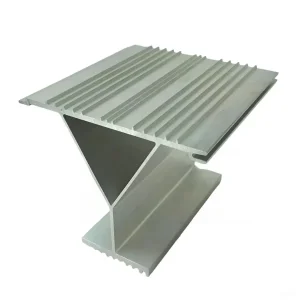
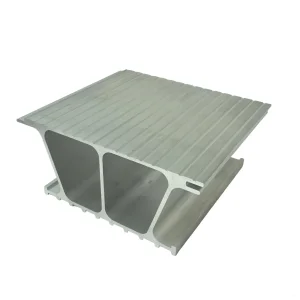
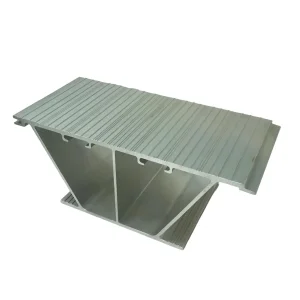
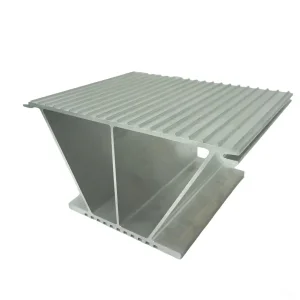
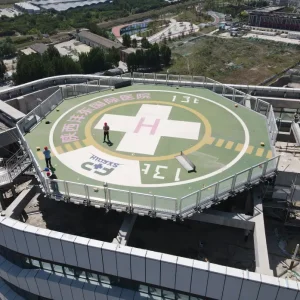
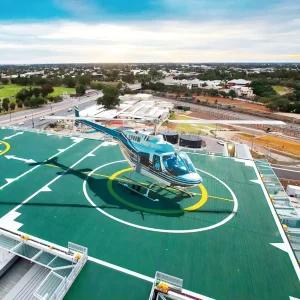
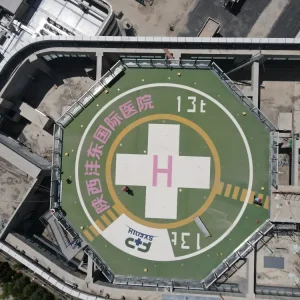
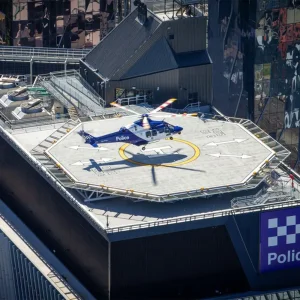
Precision-extruded interlocking deck profiles engineered for rapid assembly and extreme structural integrity.
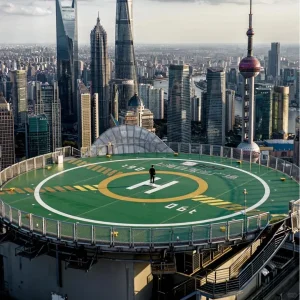
The Philippines is witnessing an unprecedented infrastructure expansion. From the vertical growth of high-rise commercial centers in Metro Manila (BGC, Makati, and Ortigas) and Metro Cebu, to maritime exploration in the West Philippine Sea and critical emergency response networks in the typhoon-prone Visayas region, high-integrity helicopter landing facilities have transitioned from luxury additions to mandatory civic and commercial requirements.
Developing structural landing pads in the Philippines presents distinct engineering challenges. Projects must comply with the Civil Aviation Authority of the Philippines (CAAP) requirements while withstanding seismic forces (PHIVOLCS Zone 4 compliance) and super-typhoon wind velocities exceeding 300 km/h. Traditional heavy concrete pads impose immense dead loads on high-rise structures and corrode quickly in marine coastal air. This has driven the industry toward marine-grade extruded aluminum helipad profile systems.
Helipads must sustain two main load conditions: the static load of parked aircraft (and rescue operations) and the dynamic impact load of hard landings. Traditional structural design uses finite element analysis (FEA) to simulate a helicopter's landing impact (typically factored by 3.25x the maximum take-off weight (MTOW) to meet ICAO standards).
Coastal and offshore projects in places like Palawan, Batangas, and Cebu require careful material selection to prevent galvanic and pitting corrosion. Below is a structural alloy roadmap used in our extrusion lines:
| Alloy Grade | Temper | Yield Strength (Min) | Tensile Strength (Min) | Corrosion Resistance Rating | Typical Application |
|---|---|---|---|---|---|
| 6082-T6 | T6 | 260 MPa | 310 MPa | Excellent (Marine Grade) | Primary structural support beams & high-span deck profiles |
| 6061-T6 | T6 | 240 MPa | 290 MPa | Very High | Interlocking deck panels, perimeter safety frames |
| 6005A-T6 | T6 | 215 MPa | 270 MPa | Excellent (High Toughness) | Thin-walled complex hollow structural sections |
| 5083-H112 | H112 | 125 MPa | 275 MPa | Outstanding (Acid/Saltwater) | Offshore marine deck plating & sub-structure components |
By leveraging 6082-T6 and 6005A-T6 profiles, our helipad designs offer weight savings of up to 60% compared to reinforced concrete. This weight reduction directly translates to lower structural costs for high-rise buildings and offshore platforms. Our profiles also integrate non-slip ribbing, integrated drainage channels, and built-in conduit paths for landing lights, simplifying on-site assembly and reducing maintenance overhead.
Established in 2015 and located in Foshan City, Guangdong, LvXing Intelligent Equipment Co., Ltd. delivers engineered aluminum solutions globally.
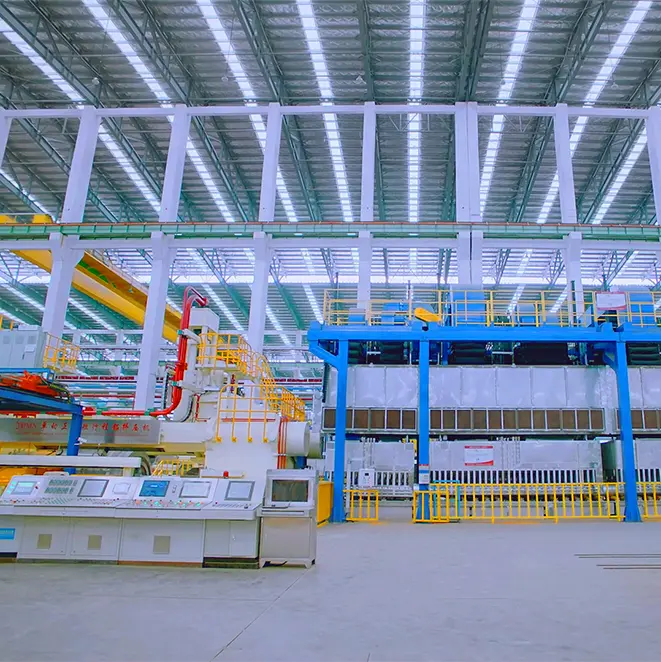
We utilize premium Fenglu aluminum, offering a diverse range of profiles for flexible applications. Our extrusion lines, ranging from 800T to 20,000T, accommodate alloys in the 1xxx, 2xxx, 3xxx, 5xxx, 6xxx, and 7xxx series. This allows us to produce shaped products with section dimensions up to 1.2 meters in width and 28 meters in length. These products are recognized for their precision and detailed processing, and are widely used in the aerospace, military, medical, and industrial sectors.
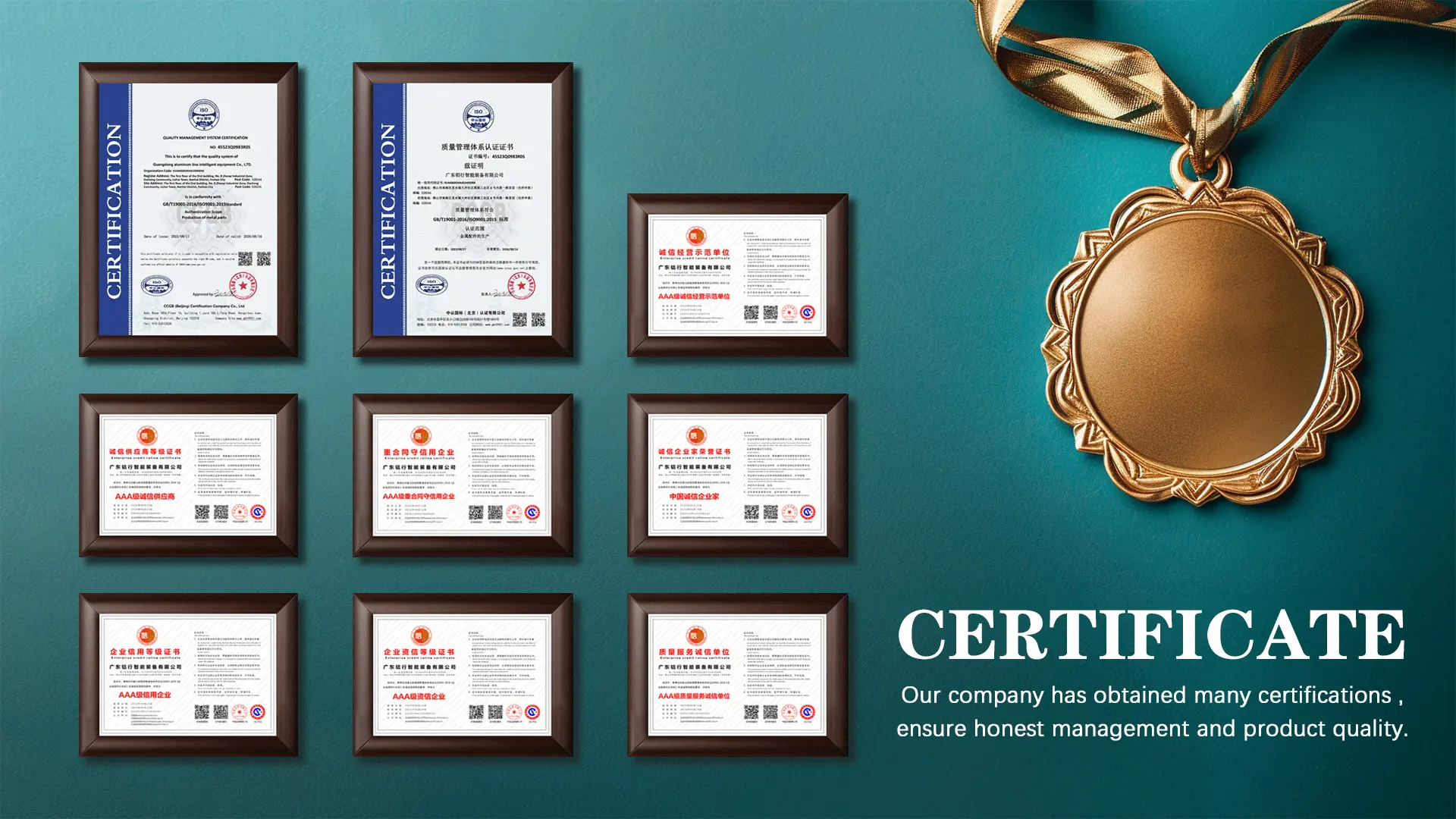
Our commitment to quality control spans the entire manufacturing process—from extrusion and surface finishing to packaging and shipping. This dedication has earned us recognition as an honest enterprise and quality system certification in accordance with GB/T19001-2016 / ISO9001:2015 standards.
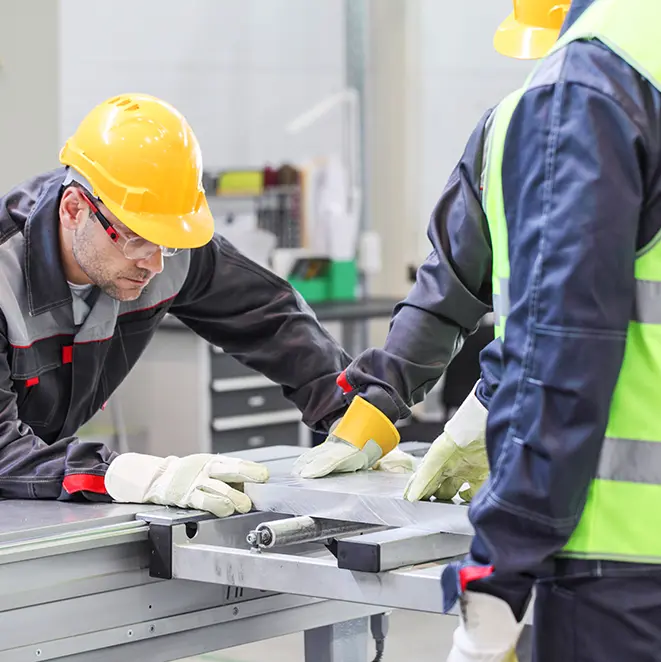
With an experienced R&D team, we transform complex customer requirements into reality. Our 15-year background in aluminum profile engineering helps us identify design challenges early, ensuring that every helipad deck profile system meets local civil aviation and international regulatory standards.

We have obtained the "Special Aluminium Materials for Aerospace" Certificate. This ensures our alloy compositions and extrusion processes meet the structural standards required for commercial and military aviation projects.

We utilize premium Fenglu aluminum raw materials. With extrusion lines ranging from 800T to 20,000T, we can manufacture complex hollow and solid profiles up to 1.2 meters wide or 28 meters long.

Our engineering team brings 15 years of practical industry experience. We review client drawings, identify potential structural issues, and offer designs tailored for high wind loads and seismic requirements.
Modern rooftop and marine-grade helipads are engineered systems rather than simple flat decks. Our solutions address the structural challenges of tropical environments:
Producing reliable aviation components requires precision and consistency. Based in Foshan, Guangdong—a global center for aluminum production—LvXing combines manufacturing capabilities with local supply chain integration:
Our raw material is sourced from Fenglu Aluminum, ensuring consistent chemical composition and mechanical properties. Our 20,000T extrusion press handles large-section profiles, reducing the need for longitudinal welding. This results in continuous, monolithic profiles that have higher fatigue resistance and fewer structural weak points.
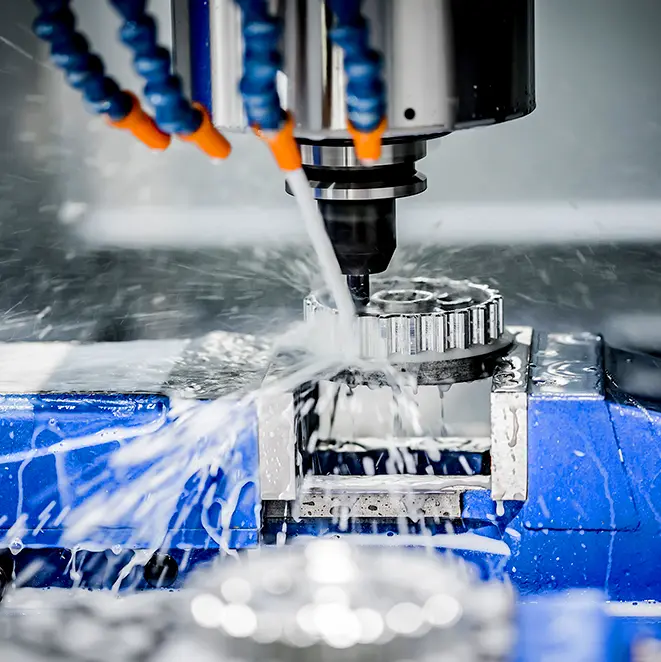
We control the production process from billet casting and extrusion to anodizing, CNC milling, and load testing. This integration helps us maintain competitive lead times and clear material traceability, ensuring compliance with global aviation standards.
Procuring helipad components requires compliance with international and local standards. We design and manufacture our products to help developers and engineers meet the relevant guidelines:
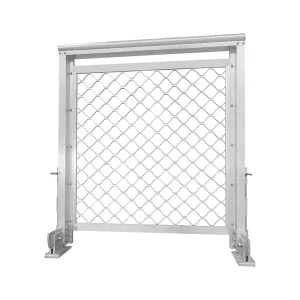
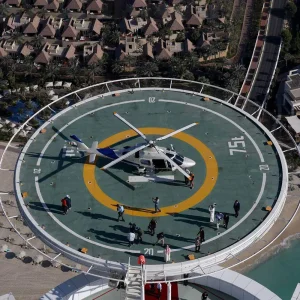
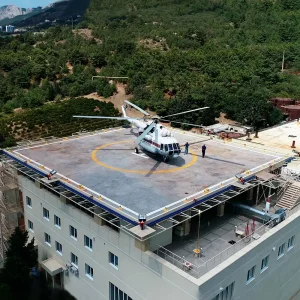
From heavy-duty skyscraper landing systems to perimeter safety nets, our certified range meets diverse project demands.
Common technical questions regarding structural design, material grades, and procurement for helipad profiles.
Connect with our technical design team to review structural drawings, request sample profiles, or request custom quotes for your next commercial, offshore, or municipal helipad project.
Request Technical Quote Now LvXing