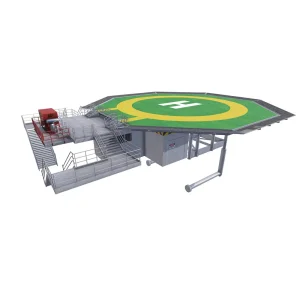
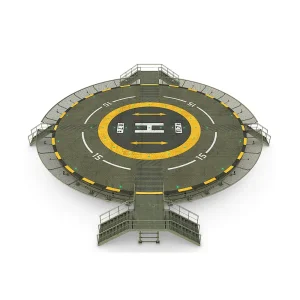
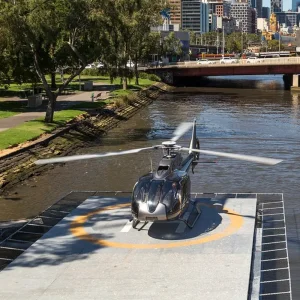
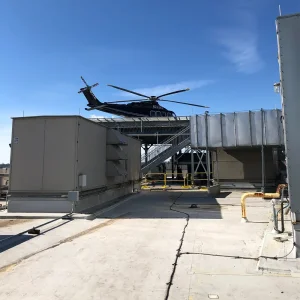
Explore our specialized product solutions certified for regional seismic requirements, civil aviation standards, and structural load constraints in the Mexico City Metropolitan Area.
As a dense, high-altitude metropolis situated in a high-seismic zone (Zone III), Mexico City (CDMX) presents unique challenges for structural aviation engineers. Rooftop heliports built upon high-rise office towers on Paseo de la Reforma, Santa Fe, and Polanco must adhere strictly to the Reglamento de Construcciones para el Distrito Federal. Under these regional guidelines, minimizing the static structural load of rooftop assemblies is imperative to reduce lateral seismic forces.
Traditional concrete or steel-decked landing pads impose immense weight penalties on skyscrapers. Structural aluminum profiles extruded from marine-grade alloys (specifically 6082-T6 and 6061-T6) offer an exceptional strength-to-weight ratio—saving up to 70% in structural weight compared to traditional construction materials. This dramatically lowers the building's structural reinforcement costs while complying fully with national civil aviation laws managed by the Agencia Federal de Aviación Civil (AFAC) and global frameworks set by ICAO Annex 14.
The global aviation infrastructure market has decisively transitioned from monolithic wet-pour concrete helipads to modular aluminum systems. Across the offshore drilling platforms in the Gulf of Mexico, commercial hospital rooftops in the EU, and defense installations globally, modular structural systems have emerged as the industry standard.
By utilising advanced extrusion technology, manufacturing facilities can pre-engineer large, interlocking panels that snap together using self-locking tongue-and-groove connections. This eliminates the necessity of field welding, reducing assembly times from months to weeks. The adoption of structural perimeter safety nets has simultaneously surged to comply with strict occupational safety rules (such as OSHA and international CE directives), securing personnel from high-altitude falls on perimeter platform edges.
"According to international aviation engineering data, aluminum-structured helipads reduce overall structural loads on skyscrapers by up to 70%, translating directly into millions of dollars saved in foundation and primary beam reinforcement."
Welcome to Lvxing: SPECIALIZES IN ALUMINUM SOLUTIONS.
Established in 2015 and located in Foshan City, Guangdong, LvXing Intelligent Equipment Co., Ltd. boasts a skilled R&D team with extensive experience. We leverage exceptional technical expertise to effectively transform customers' ideas into reality, consistently meeting their precise requirements.
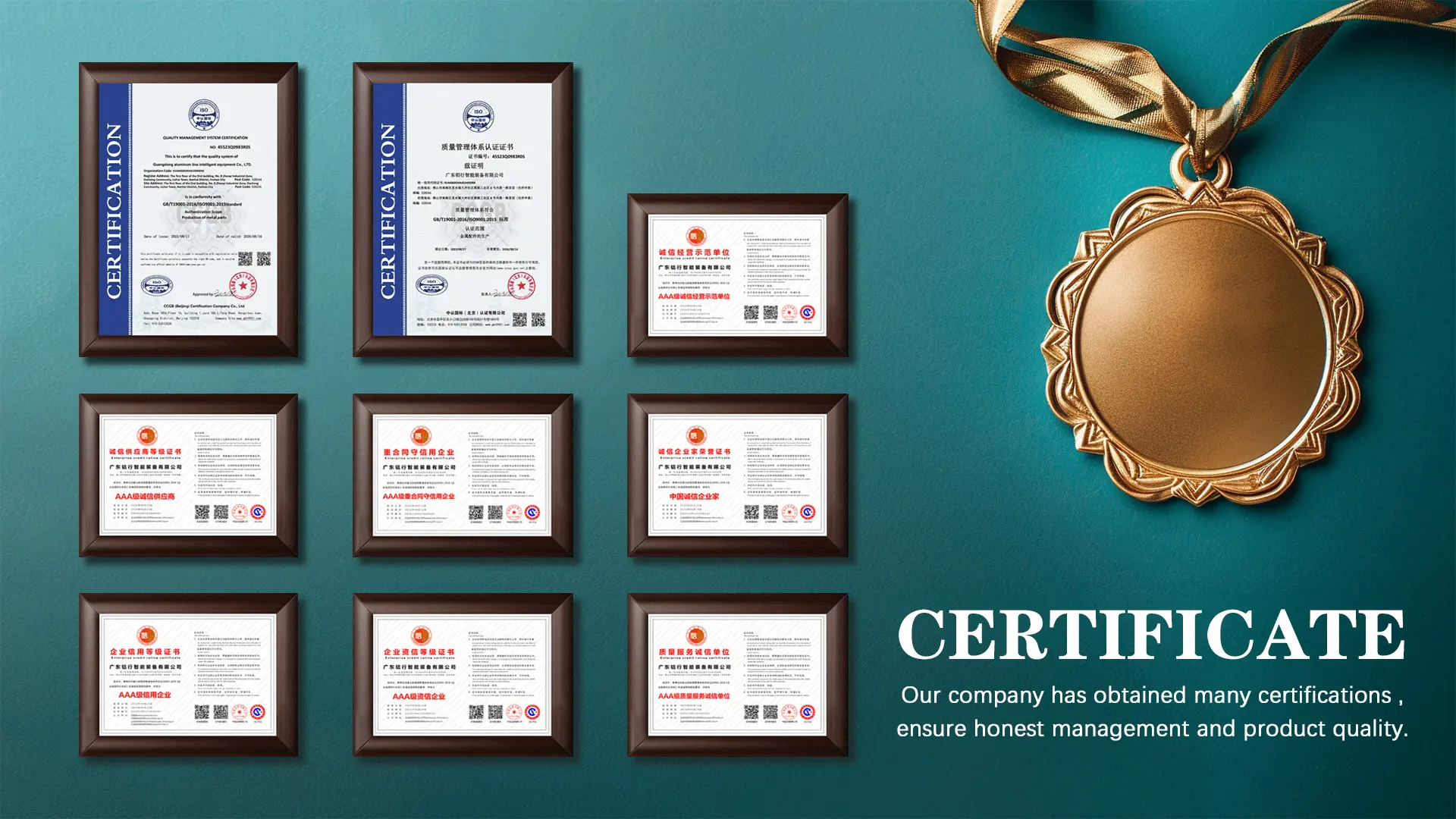
We utilize premium Fenglu aluminum, offering a diverse range of profiles for flexible applications. Our extrusion lines, ranging from 800T to 20,000T, accommodate alloys 1xxx, 2xxx, 3xxx, 5xxx, 6xxx, and 7xxx, allowing us to produce shaped products with section dimensions up to 1.2 meters in width and 28 meters in length. These products are recognized for their precision and meticulous processing, finding broad application in aerospace, military, medical, and industrial sectors.
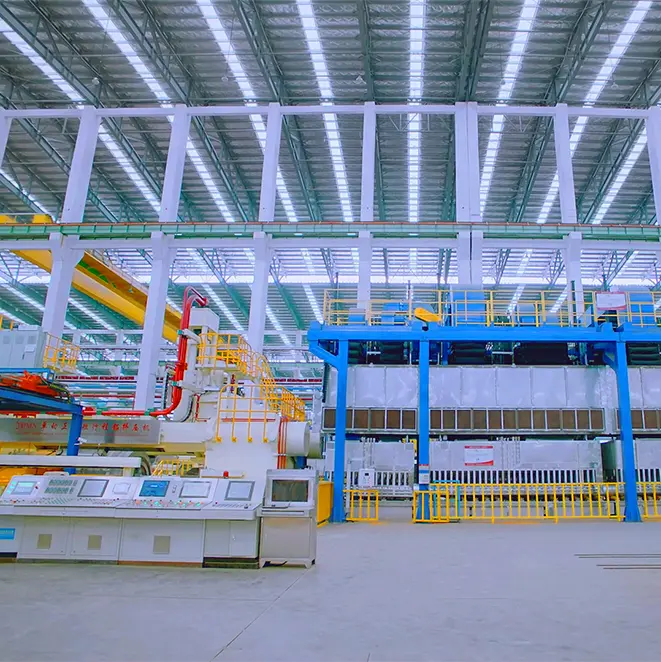
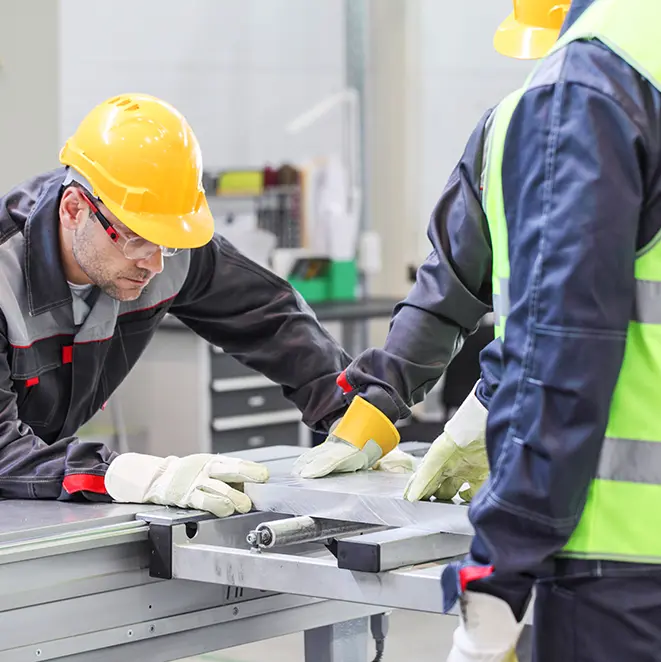
Our commitment to excellence is evident throughout the manufacturing process, rigorous quality control, thorough packaging, and efficient shipping procedures. This dedication has earned us recognition as a national excellent and honest enterprise, along with quality system certification in accordance with GB/T19001-2016/ISO9001:2015 standards. We aspire to be your trusted business partner and warmly invite you to visit our factory.



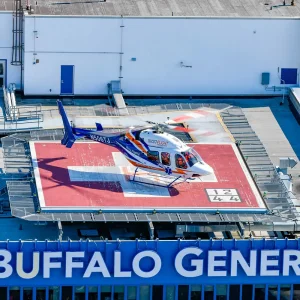
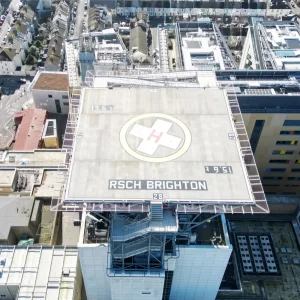
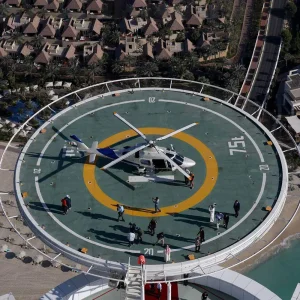
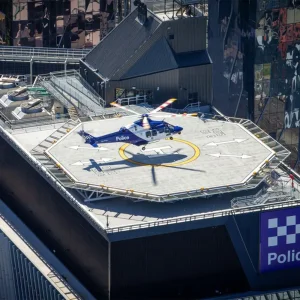
These high-tech landing systems are optimized for modern skyscraper tops, hospital roofs, and ship structures in the Central American transport hubs.
Why international engineering contractors and Mexican construction groups choose LvXing as their direct partner: our advanced manufacturing capabilities drive down costs while maintaining uncompromising aerospace-grade quality.
The fundamental key to structural aluminum manufacturing lies in extrusion tonnage capacity. At our Foshan factory, our state-of-the-art extrusion equipment ranges from 800T to 20,000T. This enables us to extrude wide-format multi-hollow profiles up to 1.2 meters in width and 28 meters in length. By reducing the number of joints in the landing platform, we increase structural rigidity, decrease leak potential, and speed up installations.
Furthermore, our strategic sourcing of premium Fenglu aluminum guarantees raw material compliance, which is critical for ensuring material traceability records requested by civil aviation authorities.
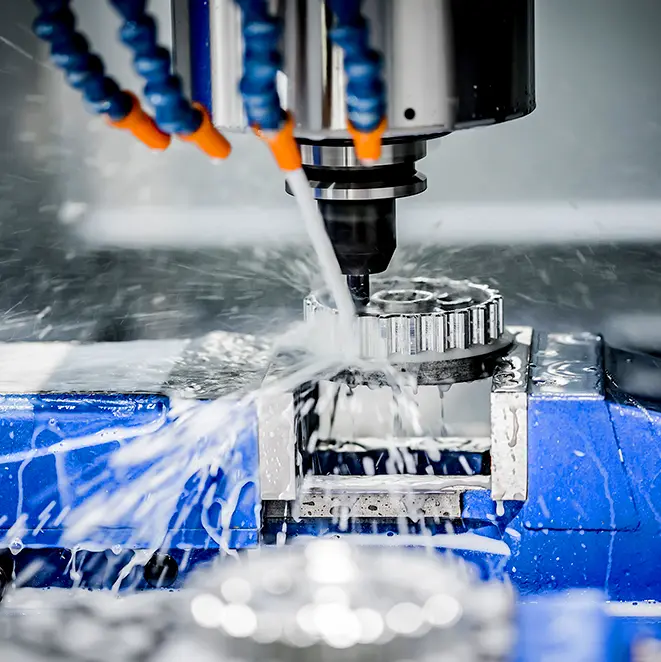
Direct-from-factory procurement from China offers a competitive pricing structure compared to local distributors in North or South America. By optimizing raw ingot processing and integrating CNC fabrication under one roof, we achieve significant cost savings.
Even when factoring in international freight logistics from China to ports such as Manzanillo or Veracruz, our total cost structure remains highly competitive, providing clients with superior savings on large-scale infrastructure projects.
Our custom-engineered modular systems are designed to address the specific performance criteria of critical urban landing platforms.
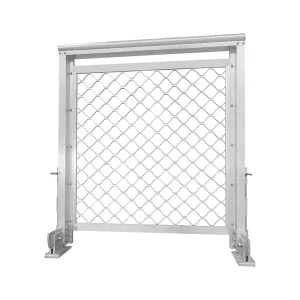
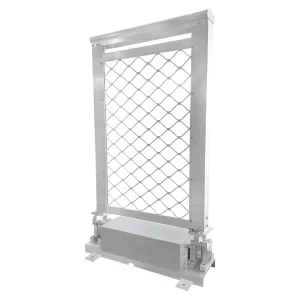
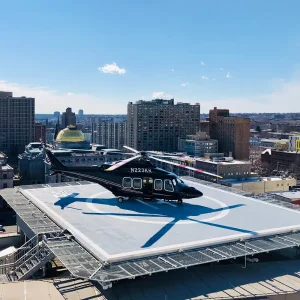
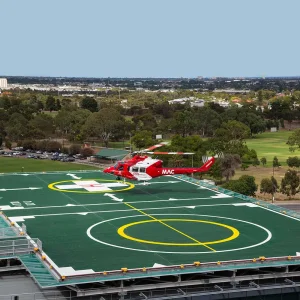
For critical medical transport hubs, minutes save lives. Rooftop hospital helipads require reliable drainage systems to prevent fuel fire spread and must minimize vibration transmission to the surgical theaters below. Our structural aluminum helipads integrate elastic damping isolators and CE-certified perimeter safety nets to safeguard medical staff during high-wind operations on narrow hospital rooftops.
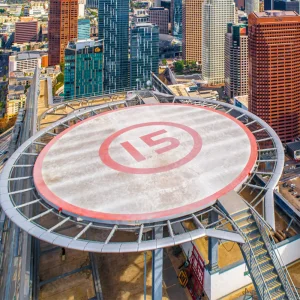
Paseo de la Reforma and Santa Fe towers demand lightweight architectural structures. The modular assembly of our interlocking profiles eliminates structural welding on active building rooftops. Combined with non-corrosive, marine-grade aluminum alloy nets, these assemblies withstand harsh high-altitude UV radiation and urban smog conditions, requiring zero post-installation maintenance.
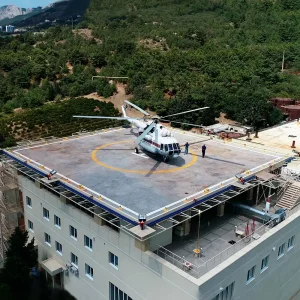
Heavy-duty municipal aircraft demand landing decks that can bear high dynamic impact loads. Our profile thicknesses and alloy selections (e.g., 6082-T6) are structurally engineered to handle helicopters weighing up to 15 tons (such as Mil Mi-17 or UH-60 Black Hawks utilized by Mexican civil forces). We provide the necessary stress analysis certifications to ensure regulatory compliance for local installations.
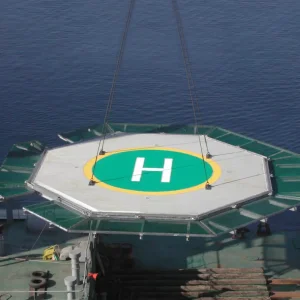
In addition to high-altitude land applications, we provide marine-grade aluminum helidecks for vessels operating in the Gulf of Mexico. These decks feature integrated safety nets designed to withstand saltwater exposure, preventing corrosion and ensuring long-term operational integrity.
Select from our full line of CE-certified emergency rescue systems, square and round profiles, and custom ship deck solutions.
To ensure aviation safety and compliance with international standards, landing decks must be engineered for extreme conditions.
Helipads must support both the static loading of parked aircraft and the high dynamic forces of hard landings. Dynamic design calculations must account for the helicopter's maximum takeoff weight (MTOW) multiplied by a dynamic factor (typically 1.5 to 2.0) to simulate emergency touchdown events, in accordance with ICAO Annex 14 and FAA AC 150/5390-2C.
Our 6082-T6 alloy profile exhibits a yield strength of at least 260 MPa and a tensile strength of 310 MPa, providing structural performance comparable to mild steel while reducing total deck weight by 65%.
Safety nets installed around elevated landing decks must extend outward by at least 1.5 meters to protect personnel. The net system must be designed to withstand a drop test of 100 kg dropped from a height of 1 meter without structural failure.
We manufacture perimeter safety nets using CE-certified grade 316 stainless steel wire or corrosion-resistant structural aluminum frames, ensuring durability in marine and coastal areas such as Veracruz, Tabasco, and Yucatan.
A transparent guide to project cost drivers for modular aluminum helipads and security net installations in Latin American ports and urban centers.
Modular components are packed flat into standard sea containers, reducing international transport costs compared to shipping pre-assembled steel frames. This flat-pack design ensures efficient delivery and storage prior to assembly.
With our manufacturing facility situated in Foshan, China, we coordinate directly with global freight forwards to arrange container shipping to Manzanillo or Veracruz, providing door-to-port logistics support.
Find answers to common technical, commercial, and logistical questions regarding aluminum helipad installations.
Contact our technical engineering department to discuss structural load calculations, alloy choices, compliance, and custom configurations.
Send Inquiry Now LvXing