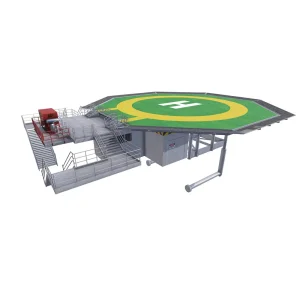
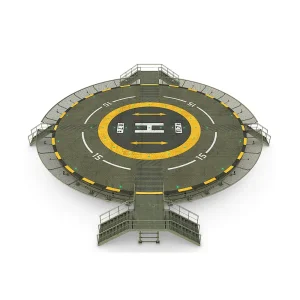
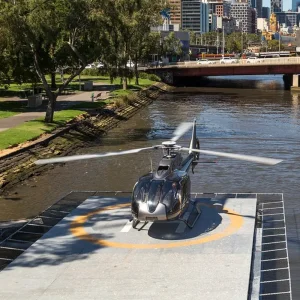
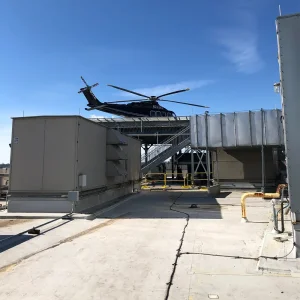
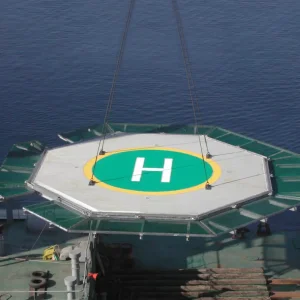
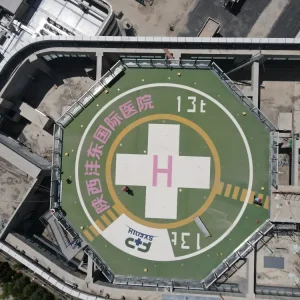
Engineered to meet Transport Canada civil aviation standards and offshore platform dynamic loads.
Established in 2015 and located in the industrial manufacturing hub of Foshan City, Guangdong, LvXing Intelligent Equipment Co., Ltd. has grown to become a global leader in high-precision structural aluminum profiles and integrated helideck safety systems. We boast an elite, multi-disciplinary R&D team with extensive experience in structural engineering, aviation safety regulations, and metallurgical technology.
We specialize in translating complex architectural concepts and demanding offshore specs into fully realized, certified products. By utilizing premium-grade raw materials, including world-renowned Fenglu aluminum billets, we ensure that every profile extruded exhibits superior mechanical properties, excellent dimensional tolerance, and outstanding corrosion resistance in harsh maritime and polar climates.
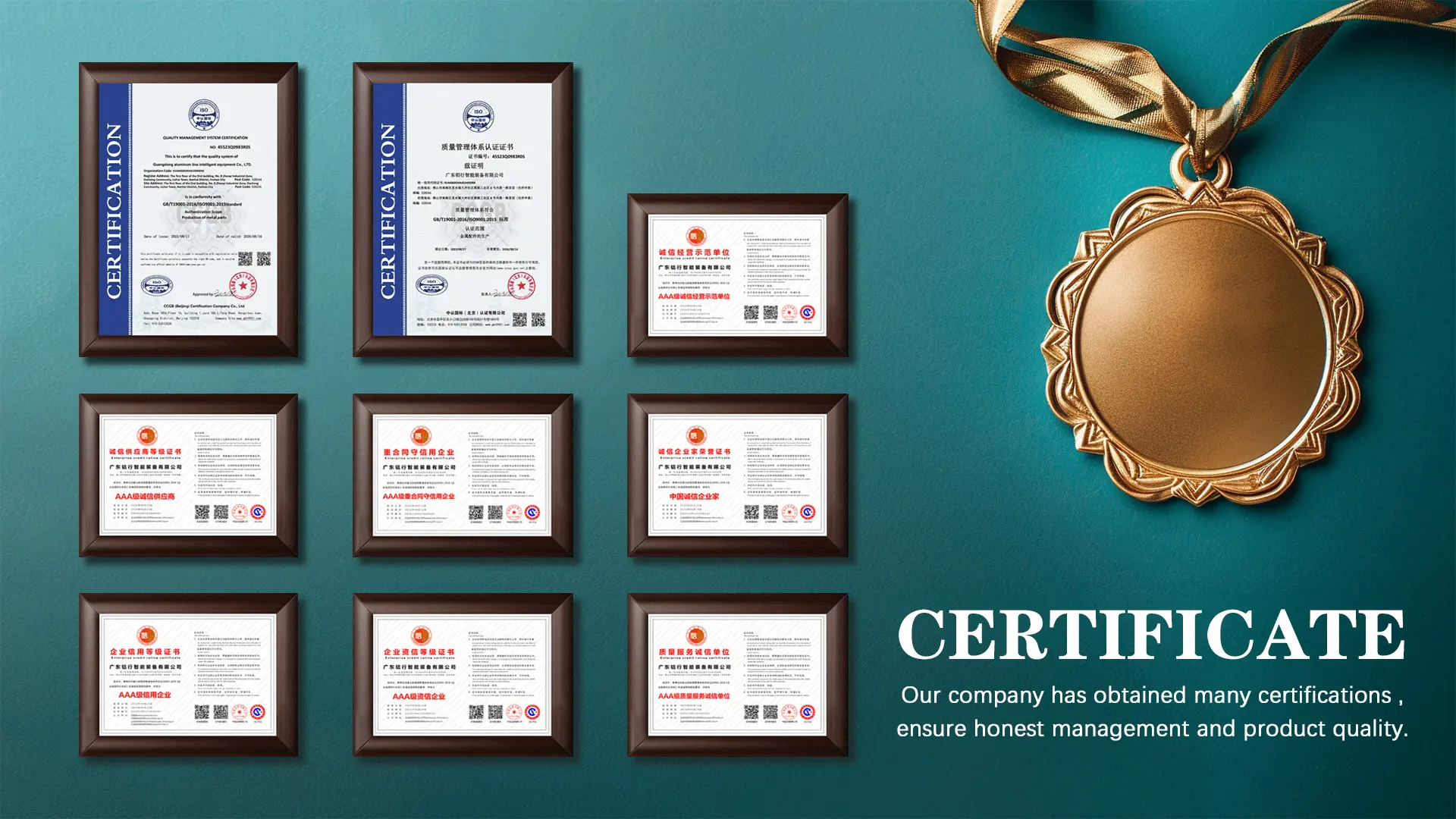
Our commitment to manufacturing excellence covers every phase from extrusion, aging treatment, precision CNC machining, surface finishing, and compliance drop-testing, through to safe packing. We hold certifications under GB/T19001-2016 / ISO9001:2015 standards, recognizing Lvxing as a national excellent and honest enterprise.
Maximum Extrusion Capacity
Profile Section Width Limit
Maximum Single-Piece Extrusion Length
Technical R&D Team Experience
Providing structural solutions that meet the requirements of aerospace, military, offshore oil and gas, and clinical medical rooftop installations.

We have obtained the prestigious “Special Aluminium Materials for Aerospace” Certificate, ensuring that our supply chain, structural traceability, and alloy compositions meet high safety standards.
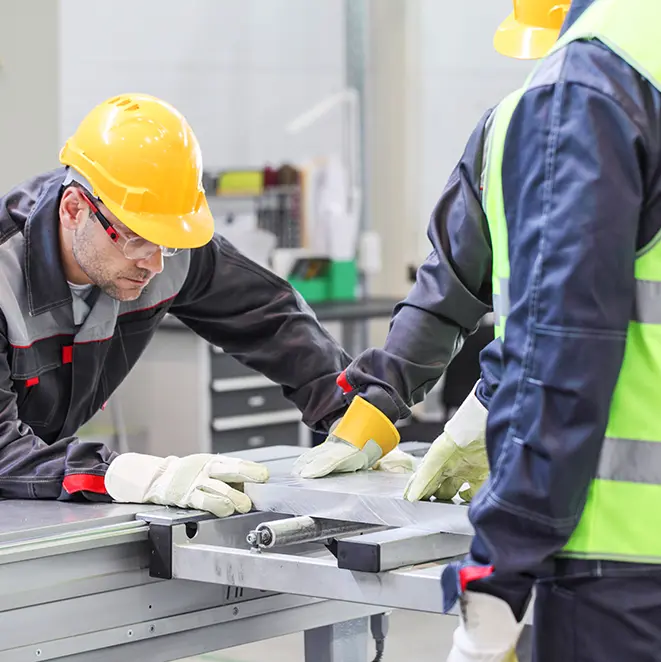

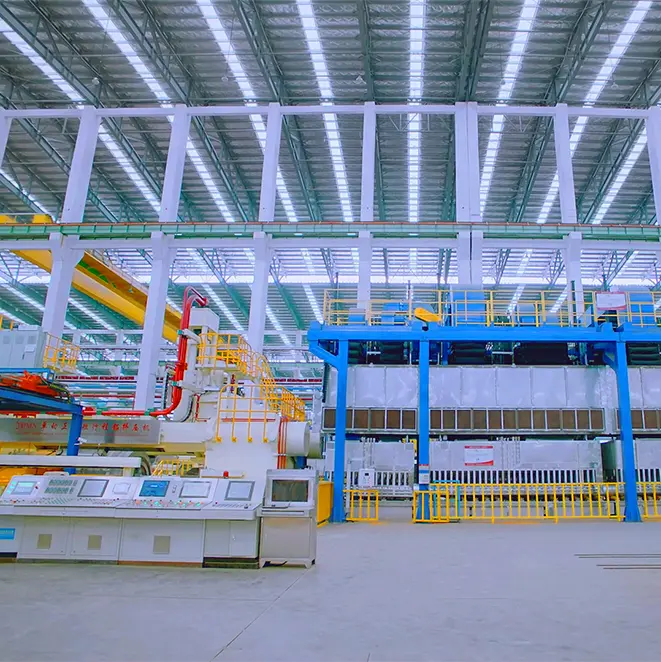
Utilizing premium Fenglu aluminum profiles. With extrusion lines from 800T to 20,000T, we manufacture alloys (1xxx to 7xxx series) up to 1.2m in width or 28m in length.

Our engineering team leverages years of design experience to review client requirements, proactively identify potential field challenges, and develop practical structural solutions.
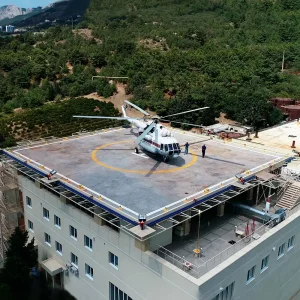
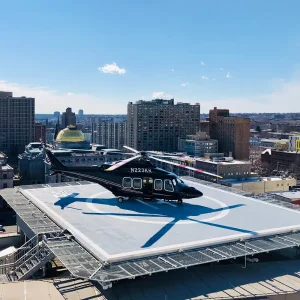
Canada's diverse geography—stretching from the high-density urban corridors of Toronto, Montreal, and Vancouver to the offshore oil fields of Newfoundland and Labrador, and the remote resource extraction sites of Nunavut—demands highly specialized infrastructure. In these regions, helipads act as critical links for search and rescue (SAR), emergency medical services (EMS), and industrial operations.
Conventional steel and concrete helidecks face structural degradation when exposed to Canada's intense freeze-thaw cycles, sub-zero temperatures, and coastal salt spray. At low temperatures, carbon steel becomes prone to brittle fracture. In contrast, structural aluminum alloys exhibit increased tensile strength and ductility in sub-zero environments, maintaining structural integrity at temperatures below -40°C.
Designed to handle high wind forces and heavy snow accumulation according to the National Building Code of Canada (NBCC).
We use 6000-series marine-grade aluminum alloys, which resist galvanic corrosion in North Atlantic marine environments without requiring painting.
All helidecks and heliports operating in Canada must comply with Transport Canada Civil Aviation Standards (TP 14371 - Heliport Standards and Recommended Practices) and the Canadian Aviation Regulations (CARs). These documents define the required physical characteristics, obstacle limitation surfaces, and structural load limits for helidecks, categorizing landing sites based on helicopter dimensions and Maximum Take-Off Weight (MTOW).
Lvxing's engineering team designs customized aluminum profiles to meet these structural specifications. Our modular helidecks are engineered to handle the dynamic impact forces of Category A helicopters (such as the Sikorsky S-92 or Leonardo AW101) during hard landings, using a structural safety factor of 1.5 times the MTOW in accordance with international safety guidelines.
A look at the raw materials, extrusion technology, and engineering standards behind our heavy-duty profiles.
Lvxing uses marine-grade structural aluminum alloys, primarily 6082-T6 and 6005A-T6. These magnesium-silicon-based alloys undergo heat treatment to optimize tensile strength, yield strength, and fracture toughness.
| Mechanical Property | Alloy 6082-T6 | Alloy 6005A-T6 | Alloy 6061-T6 |
|---|---|---|---|
| Yield Strength (Min) | 260 MPa | 215 MPa | 240 MPa |
| Tensile Strength (Min) | 310 MPa | 270 MPa | 290 MPa |
| Elongation at Break (Min) | 8% | 8% | 10% |
| Corrosion Resistance | Excellent (Marine) | Very Good (Atmospheric) | Excellent |
Alloy 6082-T6 is preferred for high-stress applications in northern Canada and offshore marine environments, as it offers the highest strength among the 6000-series alloys while maintaining high resistance to corrosion.
Our manufacturing plant features extrusion presses ranging from 800T to a heavy 20,000T unit. This capability allows Lvxing to produce wide-section multi-void profiles that simplify assembly by reducing the need for longitudinal welding.
By extruding interlocking deck profiles up to 1.2 meters wide, we minimize joint lines, which helps improve load distribution across the structure. Additionally, our processing lines accommodate profile lengths up to 28 meters, minimizing butt joints and structural weak points.
Lvxing utilizes Friction Stir Welding (FSW) to pre-assemble helipad deck panels. FSW is a solid-state joining process that avoids melting the metal, preventing the thermal distortion and loss of mechanical strength often associated with traditional MIG/TIG welding.
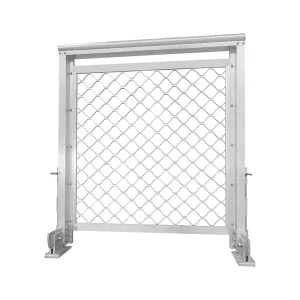
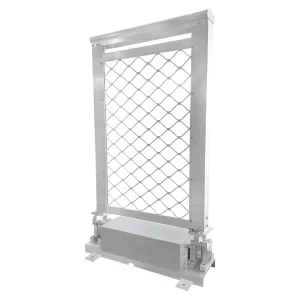
Safety nets installed around the perimeter of rooftop helipads and offshore helidecks are essential to protect personnel from falls. In compliance with CAP 437 and Transport Canada guidelines, these safety nets must extend at least 1.5 meters outward from the edge of the landing area. They are designed to slope slightly upward to contain falling hazards.
Lvxing offers both manual and motorized (electric) folding perimeter safety nets. Motorized units are designed for space-restricted urban rooftops or harsh offshore environments where ice build-up or heavy seas require retracting the net assembly when not in use.
Our safety net systems are engineered to withstand a dynamic drop-test impact of 2.25 kJ (representing a 100 kg mass dropped from a height of 2.25 meters) without structural failure. We construct the netting frames from corrosion-resistant 6061-T6 aluminum alloys and secure them with high-tensile 316 marine-grade stainless steel wire mesh.
How Lvxing manages international supply chains to deliver customized helipad solutions directly to site locations in Canada.
We collaborate with Canadian engineering firms to review building plans and local wind load requirements. Using Finite Element Analysis (FEA), we model simulated landing impacts to optimize profile geometry and choose the appropriate alloy temper.
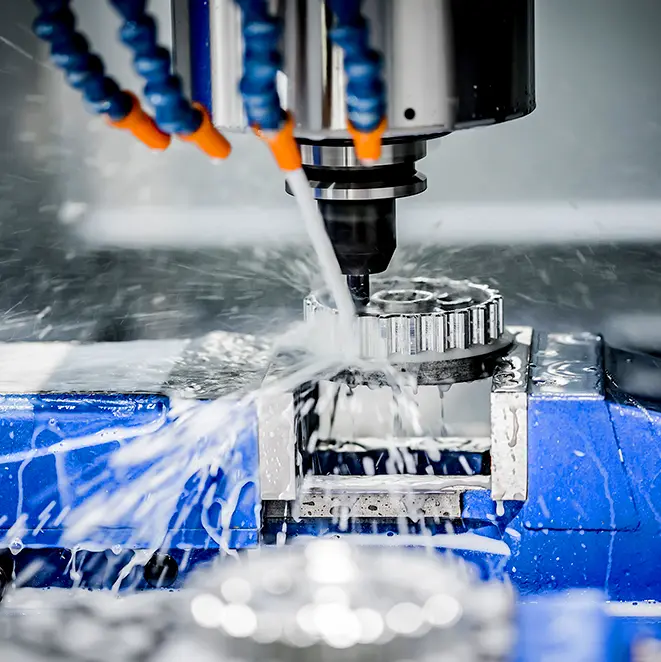
The profiles are extruded on our 20,000T line, followed by precision heat treatment and aging to establish stable T6 properties. Automated CNC centers then machine mounting interfaces, interlocking joints, and drainage channels.
We package components in ocean-safe crates to prevent mechanical wear and salt exposure during transit. We coordinate shipping to major Canadian hubs, including Vancouver, Montreal, and Halifax, and provide detailed structural assembly documentation.
Explore our full range of certified helipad products, modular framing profiles, and integrated safety mesh designs.
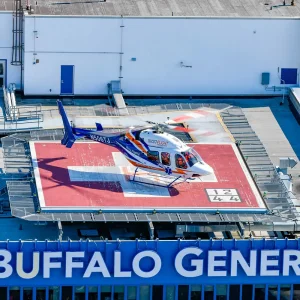
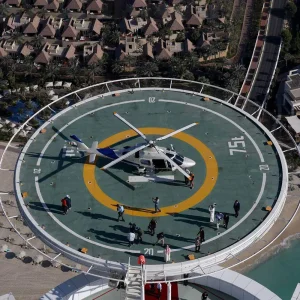
Key information regarding structural code compliance, low-temperature operations, safety net dynamic loads, and global procurement procedures.
Unlike structural carbon steel, which can experience ductile-to-brittle transition and fracture at temperatures below 0°C, aluminum alloys (such as our 6082-T6 and 6061-T6 profiles) maintain ductility and increase slightly in tensile strength in sub-zero environments. This property helps prevent cracking under cold-weather impacts.
Yes. Our engineering designs are aligned with the physical characteristics, clearance spaces, and structural design load specifications outlined in Transport Canada's TP 14371 (Heliport Standards). We collaborate with local Canadian engineers to review calculations for snow accumulation, wind loading, and dynamic landing impacts prior to manufacturing.
Our safety nets are designed to meet CAP 437 and British standard specifications. The structures are engineered to handle a dynamic impact load of 2.25 kJ. The frame is built from corrosion-resistant aluminum alloys, and we use high-tensile 316 marine-grade stainless steel wire mesh to resist degradation from atmospheric salt spray.
Friction Stir Welding (FSW) is a solid-state joining process that does not melt the aluminum. This minimizes structural distortion and limits the reduction in mechanical properties in the heat-affected zone (HAZ). As a result, the welded joint retains high structural strength without requiring post-weld heat treatment, which is beneficial for load-bearing aviation decks.
We provide full structural certification packages with every shipment. This documentation includes raw material mill test certificates (chemical composition and mechanical testing results), non-destructive testing (NDT) reports for welds, compliance drop-test certifications for safety nets, and ISO 9001:2015 quality conformance documentation.
Contact our technical team to request CAD drawings, raw material certificates, structural calculations, and a detailed price estimate tailored to your Canadian building project or offshore platform.
Send Inquiry Now LvXing