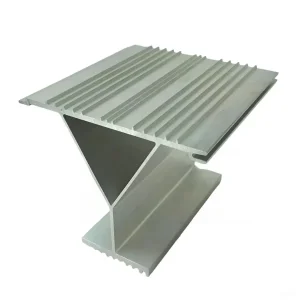
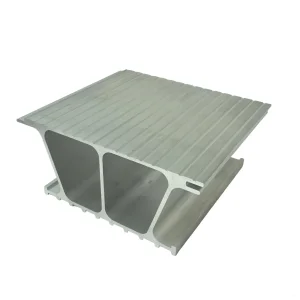
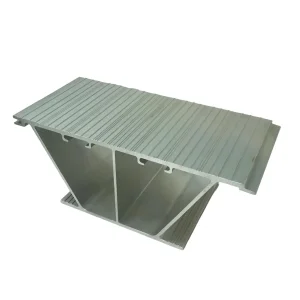
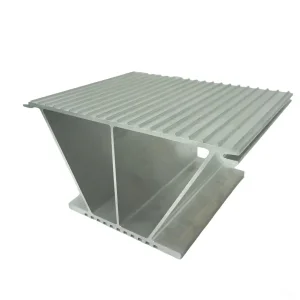
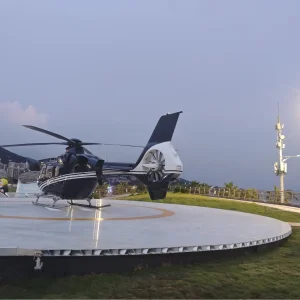
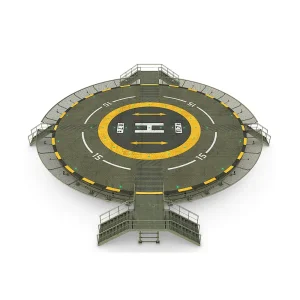
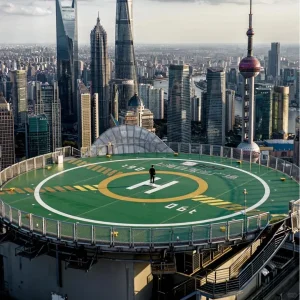
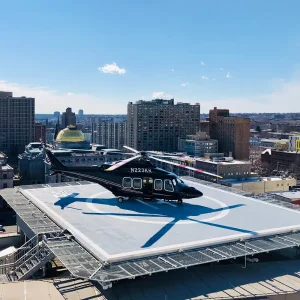
Engineered to withstand extreme environments, maritime corrosion, and dense structural loads.
South Korea’s unique landscape—marked by extremely dense metropolitan skyscraper zones in Seoul and Incheon, heavy offshore shipbuilding centers in Ulsan and Geoje, and critical emergency response demands across mountainous regions—requires structural materials of uncompromised excellence. The transition from heavy, high-maintenance steel or concrete helipads to lightweight, modular, and corrosion-resistant aluminum profiles is accelerating rapidly.
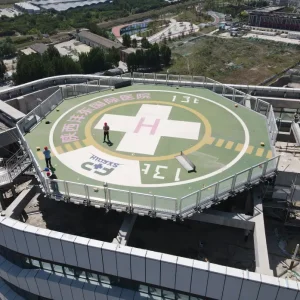
Aluminum profiles are crucial for rooftop helidecks on skyscrapers such as those in Seoul’s Gangnam and Yeouido districts. Concrete helipads impose massive gravity loads on building columns, requiring expensive structural reinforcement. In contrast, extruded aluminum reduces structural weight by up to 70%, offering dynamic energy absorption that is critical for building seismic safety and rooftop landing dynamics under high wind shear.
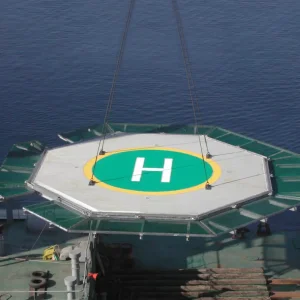
Furthermore, Korea’s status as a global shipbuilding and maritime nation drives consistent demand for helidecks on offshore drilling rigs, floating production storage and offloading (FPSO) units, and naval patrol vessels. These marine installations require compliance with global standards (like CAP 437) and rely on high-grade aluminum alloys (such as 6000 and 5000 series) to withstand continuous salt spray without structural degradation.
Established in 2015 and located in Foshan City, Guangdong, LvXing Intelligent Equipment Co., Ltd. boasts a skilled R&D team with extensive experience. We leverage exceptional technical expertise to effectively transform customers' ideas into reality, consistently meeting their precise requirements.
We utilize premium Fenglu aluminum, offering a diverse range of profiles for flexible applications. Our extrusion lines, ranging from 800T to 20,000T, accommodate alloys 1xxx, 2xxx, 3xxx, 5xxx, 6xxx, and 7xxx, allowing us to produce shaped products with section dimensions up to 1.2 meters in width and 28 meters in length. These products are recognized for their precision and meticulous processing, finding broad application in aerospace, military, medical, and industrial sectors.
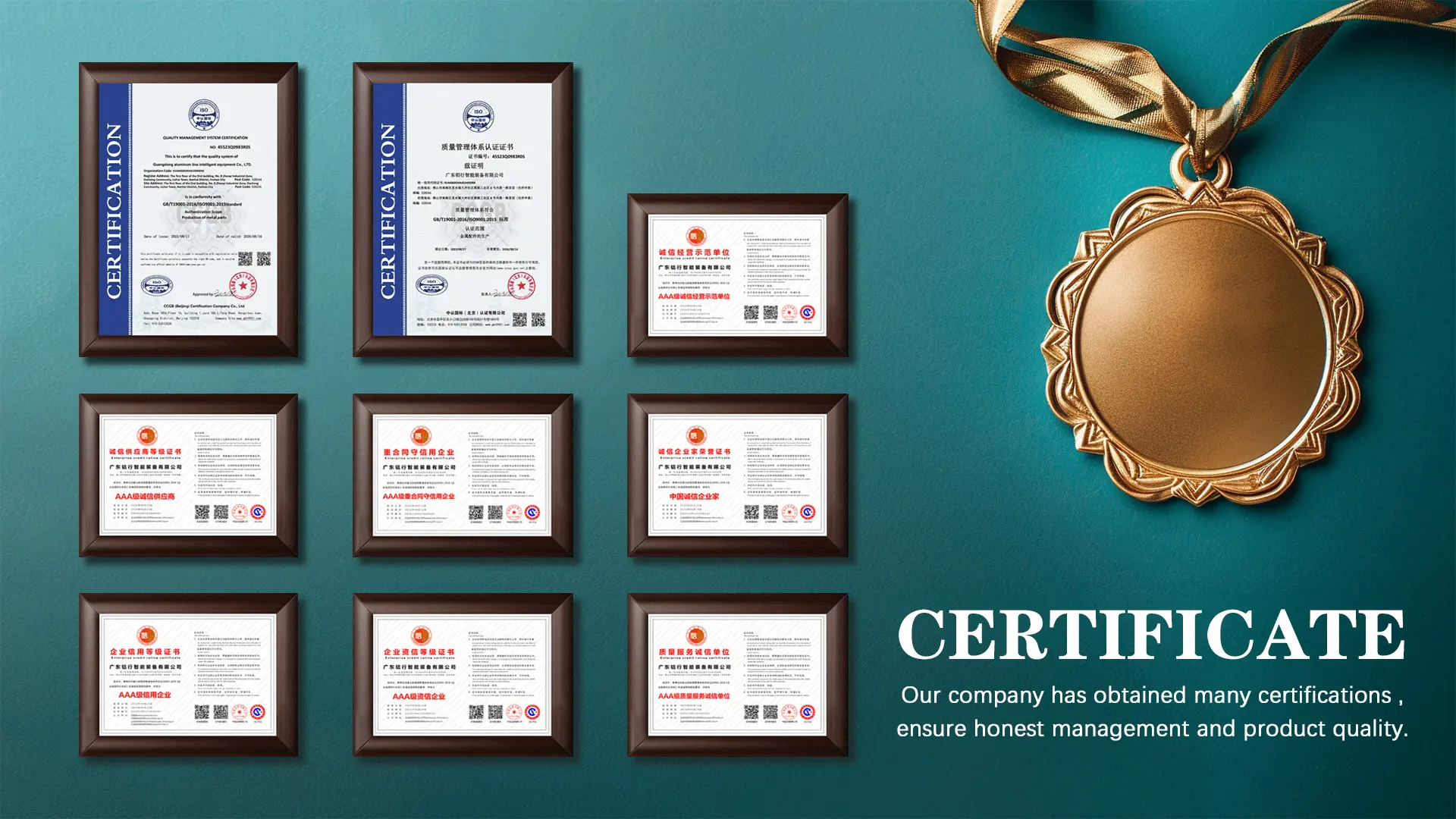
Our commitment to excellence is evident throughout the manufacturing process, rigorous quality control, thorough packaging, and efficient shipping procedures. This dedication has earned us recognition as a national excellent and honest enterprise, along with quality system certification in accordance with GB/T19001-2016/ISO9001:2015 standards.
We aspire to be your trusted business partner and warmly invite you to visit our factory.
Ensuring full alignment with South Korea's Aviation Safety Act and Ministry of Land, Infrastructure and Transport (MLIT) guidelines.
Every design is cross-analyzed to meet the strict helideck load requirements specified by the Korean Ministry of Land, Infrastructure and Transport (MLIT). This guarantees standard compliance for landing dual-rotor and heavy EMS helicopters.
Structural stress testing is performed via Finite Element Method (FEM) analysis to evaluate deflections and dynamic forces during impact landing, ensuring maximum structural integrity for landing pads situated in coastal offshore locations.
Our maritime aluminum helipads are designed in accordance with ICAO Annex 14, CAP 437 regulations, and classification societies (such as DNV, ABS, KR) for chemical tankers, offshore plants, and military corvettes.
Combining primary raw material cost-effectiveness with rapid maritime delivery to major Korean ports.
| Feature | Lvxing Custom Supply Chain | Standard Local Korean Suppliers | Project Value for Korean EPC Contractors |
|---|---|---|---|
| Extrusion Capabilities | Up to 20,000T press line; profiles up to 1.2m wide, 28m long. | Commonly capped at 8,000T; width limitations below 0.6m. | Minimizes joint welding, improving structural integrity and reducing installation time. |
| Raw Material Supply | Direct sourcing of premium Fenglu aluminum billets. | Dependent on imported billets, subject to local pricing volatility. | Stable pricing structures and consistent chemical composition across production runs. |
| Customization Scope | Integrated lighting tracks, safety net flanges, and custom anti-slip textures. | Modular setups with post-extrusion CNC milling additions. | Reduces secondary processing requirements on-site, decreasing overall project labor costs. |
| Logistics Timeline | Foshan to Incheon/Busan ports: 5 to 7 days direct shipping. | Domestic road transport: 1 to 2 days. | Short transit times make international sourcing practical for tight construction schedules. |
Proven excellence, raw extrusion power, and professional engineering support.
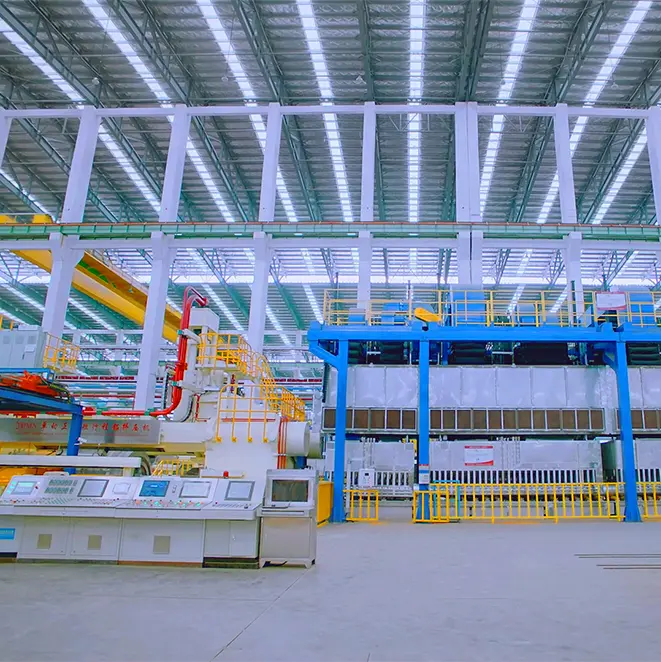

We have obtained the “Special Aluminium Materials for Aerospace” Certificate. This ensures our manufacturing processes and metallurgical standards satisfy the strict requirements of civil aviation and high-load military applications.
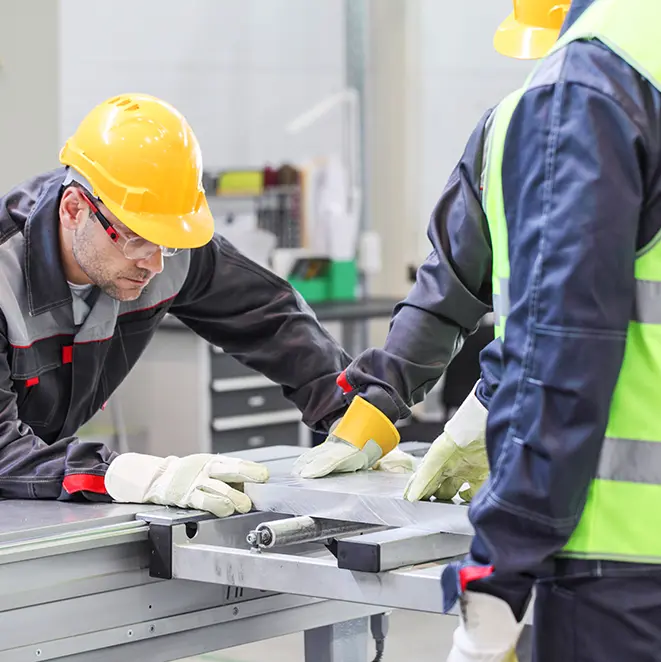

We provide and utilize high-quality Fenglu aluminum profiles. With extrusion lines ranging from 800T to 20,000T, we can produce alloys 1xxx, 2xxx, 3xxx, 5xxx, 6xxx, and 7xxx. We can manufacture fully shaped products with section dimensions up to 1.2 meters in width or 28 meters in length.
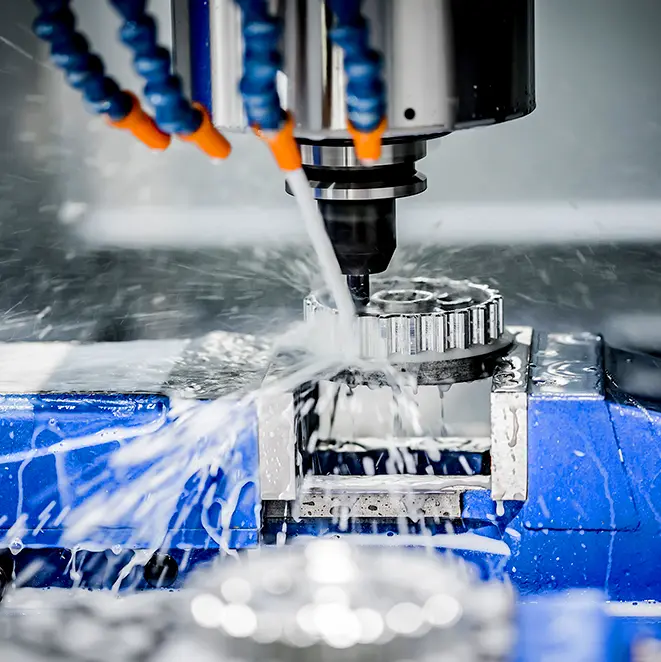

We have a team of technicians with 15 years of invaluable experience. Our deep understanding of customer requirements allows us to identify potential issues and offer practical insights, turning customer ideas into tangible products that meet specific needs.
Custom structural engineering for demanding environments and specialized use cases.
For skyscrapers in Seoul and Busan, our lightweight profiles reduce structural loads, enabling integration with active building HVAC, seismic damper systems, and drainage networks.
Constructed from marine-grade 6082-T6 and 5083 alloys, these decks resist seawater corrosion, and integrate friction-stir-welded safety nets and structural safety tie-downs.
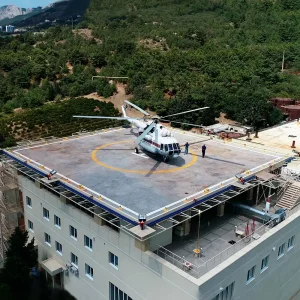
Designed for Korean medical institutions. These landing pads feature built-in heating channels to prevent winter icing, alongside integrated fire suppression capabilities.
In response to global sustainability mandates, structural aluminum is recognized as a green building material. It is fully recyclable, and its light weight reduces transport-related carbon emissions compared to concrete structures. Furthermore, the industry is transitioning toward modular pre-assembled helideck panels. Rather than performing complex on-site welding, engineers rely on interlocking profile systems that can be bolted together in days, reducing crane operational hours and simplifying project workflows.
Explore our complete range of certified profile assemblies, perimeter safety components, and customized decks.
Answers to crucial structural questions from engineering and procurement professionals.
 LvXing