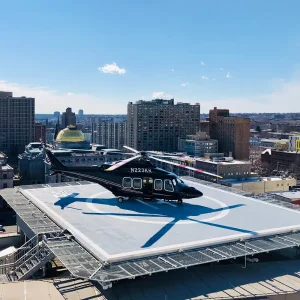
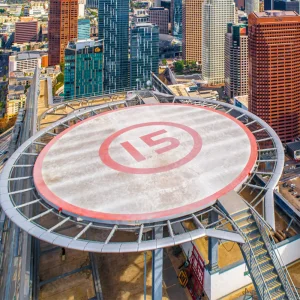
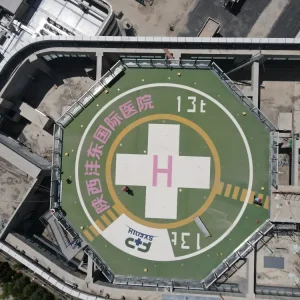
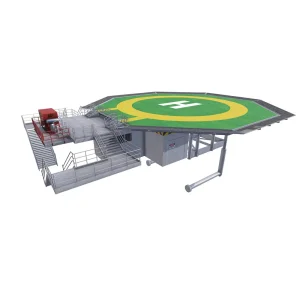
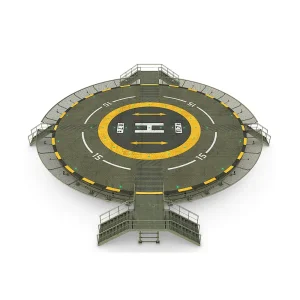
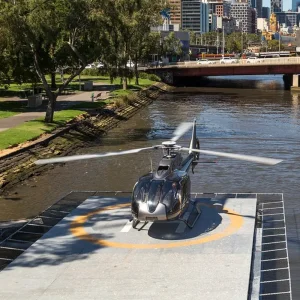
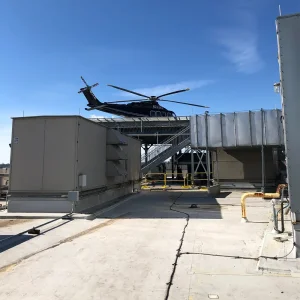
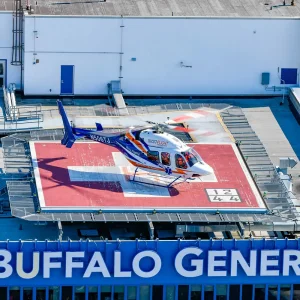
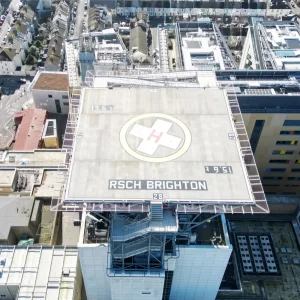
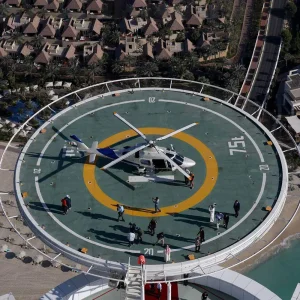
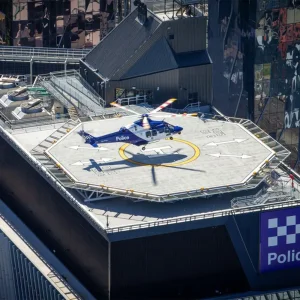
High-performance structural configurations engineered to optimize helipad safety parameters in compliance with CE standards.
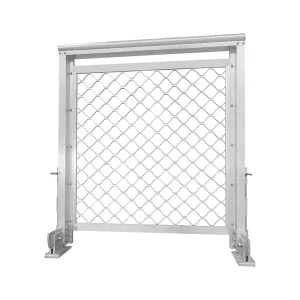
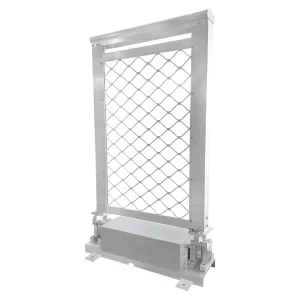
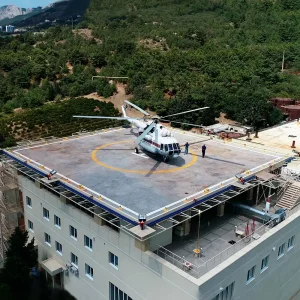
As one of the world's most densely populated metropolitan areas, Seoul presents distinct architectural and safety challenges for aviation integration. Urban verticalization, seen across Gangnam (GBD), Yeouido (YBD), and Central Business Districts (CBD), demands advanced, lightweight, and extremely durable structural helidecks. Modern rooftop helipads are no longer simple concrete pads; they are sophisticated, complex systems engineered using aircraft-grade aluminum alloys to minimize structural load while maximizing safety factor envelopes.
In Seoul, high-rise buildings over 11 stories are legally mandated to have emergency landing areas or heliports. This regulation has driven extensive demand for high-strength aluminum helidecks and safety mesh. Lvxing Intelligent Equipment provides the optimal choice, combining precision engineering with global delivery structures that seamlessly align with South Korea's stringent building codes and Korea Civil Aviation Association (KCAA) design mandates.
From medical emergency services (EMS) at top-tier university hospitals to high-load offshore vessel installations along the Incheon-Gyeonggi maritime corridor, our aluminum structures offer the structural integrity required to withstand the high wind shear, seismic dynamics, and intense winter freeze-thaw cycles characteristic of the Seoul metropolitan zone.
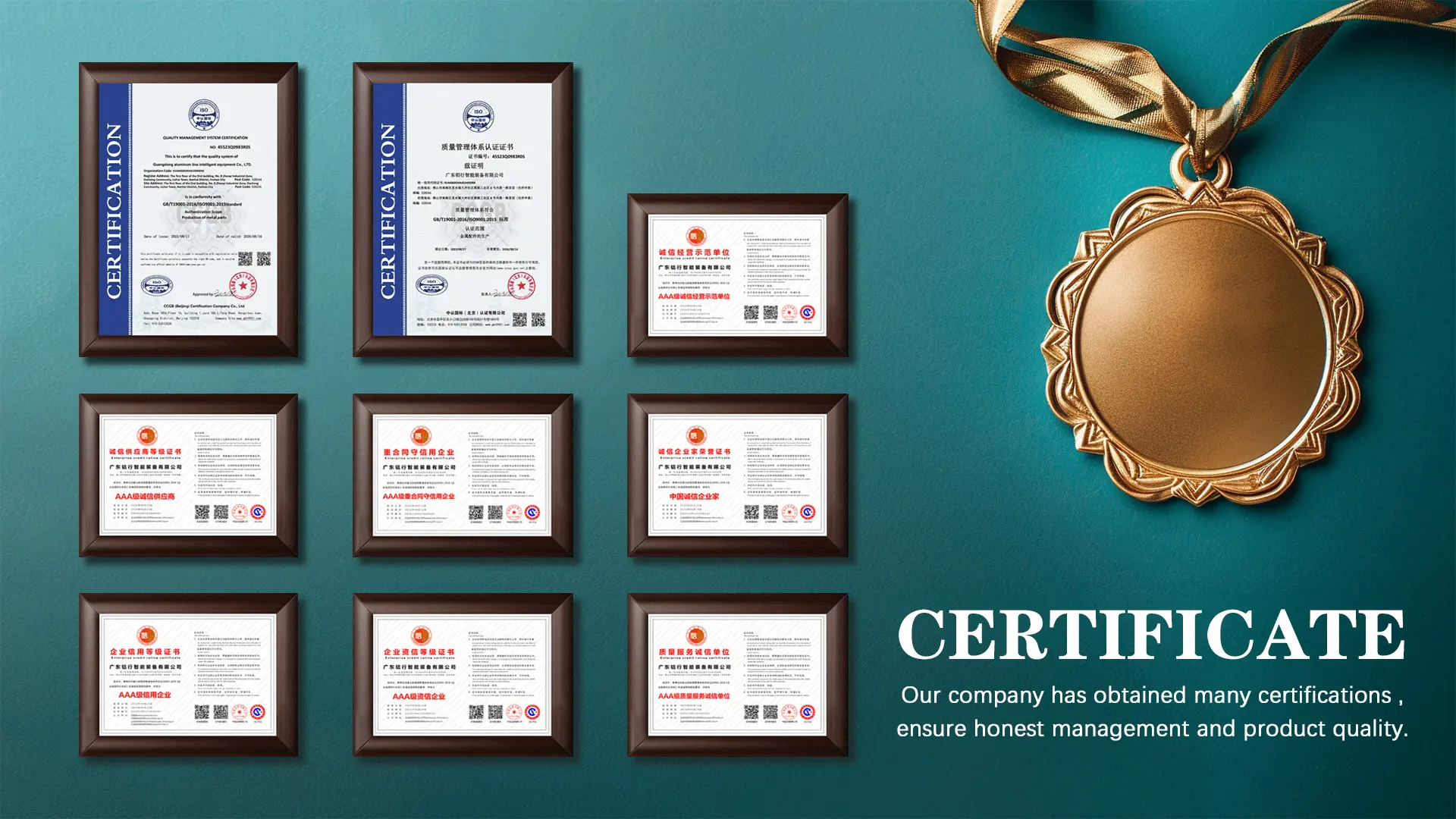
Exploring the metallurgical foundations and safety engineering protocols behind Lvxing’s proprietary helipad components.
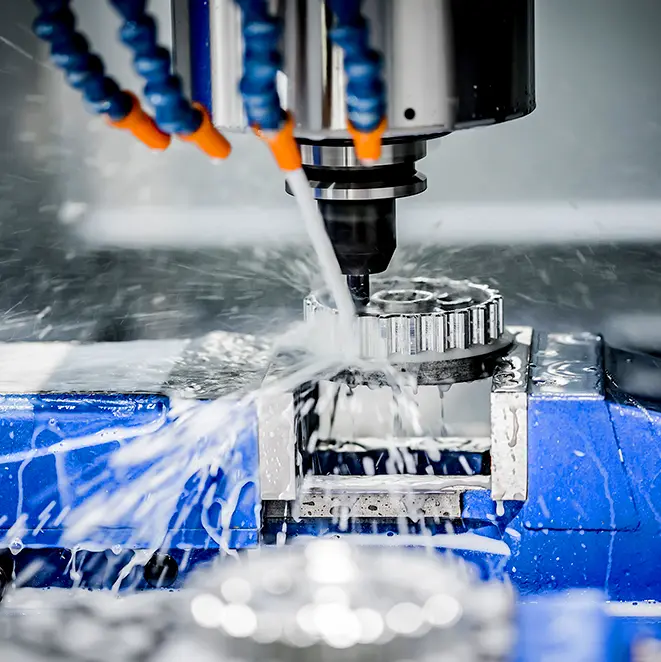
We source top-tier, certified Fenglu aluminum profiles. Utilizing structural extrusion lines ranging from 800T to 20,000T, we manipulate 1xxx, 2xxx, 3xxx, 5xxx, 6xxx, and 7xxx series alloys. For marine and rooftop helipads, 6005A-T6 and 6082-T6 are optimized to provide exceptional yield strength and superior corrosion resistance against atmospheric pollutants and oceanic salinity.
Our structures support configurations up to 1.2 meters in width and 28 meters in length in continuous, single-piece extruded profiles. By minimizing welds and mechanical joints, we prevent micro-cracking and distribute structural stress evenly, crucial for absorbing the cyclical impact loads of dynamic helicopter landings.
Our manufacturing and engineering facilities are certified to GB/T19001-2016/ISO9001:2015 quality management benchmarks. We hold specialized certificates for "Special Aluminium Materials for Aerospace", providing our partners in South Korea and globally with verified structural guarantees and reliable material tracking.
"Lvxing Intelligent Equipment's multi-layered system integration ensures that every rooftop helipad and associated perimeter safety net meets or exceeds international aviation directives, including CAP 437, FAA Advisory Circulars, and international CE certification requirements."
Engineered configurations developed for sensitive healthcare facilities, governmental institutions, and heavy marine ship decks.
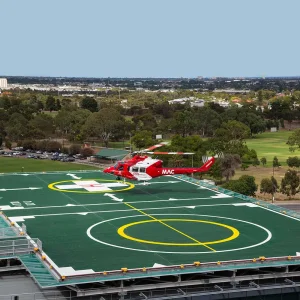
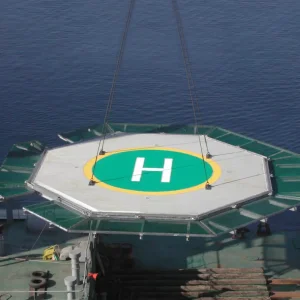
Demonstrated performance, capacity milestones, and international distribution reach.
Operating out of Foshan City, Guangdong, LvXing Intelligent Equipment Co., Ltd. has developed into a premier partner for safety-critical structural systems. By utilizing advanced production infrastructure and direct logistics to international hubs like Seoul-Incheon, we maintain complete control over raw material quality, testing verification, and supply chain timelines.
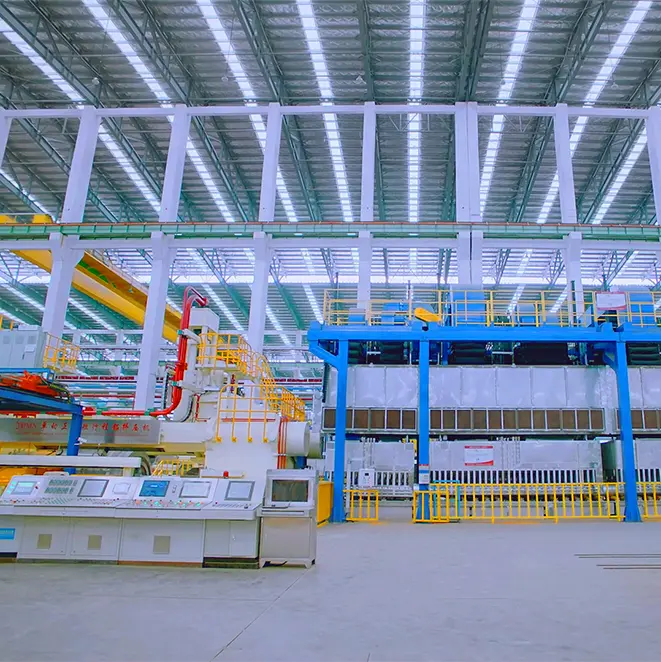
Established in 2015 and located in Foshan City, Guangdong, LvXing Intelligent Equipment Co., Ltd. boasts a skilled R&D team with extensive experience. We leverage exceptional technical expertise to effectively transform customers' ideas into reality, consistently meeting their precise requirements.
We utilize premium Fenglu aluminum, offering a diverse range of profiles for flexible applications. Our extrusion lines, ranging from 800T to 20,000T, accommodate alloys 1xxx, 2xxx, 3xxx, 5xxx, 6xxx, and 7xxx, allowing us to produce shaped products with section dimensions up to 1.2 meters in width and 28 meters in length. These products are recognized for their precision and meticulous processing, finding broad application in aerospace, military, medical, and industrial sectors.
Our commitment to excellence is evident throughout the manufacturing process, rigorous quality control, thorough packaging, and efficient shipping procedures. This dedication has earned us recognition as a national excellent and honest enterprise, along with quality system certification in accordance with GB/T19001-2016/ISO9001:2015 standards.
Technical capabilities and material expertise that differentiate Lvxing in the structural aviation market.
We have obtained the “Special Aluminium Materials for Aerospace” Certificate, ensuring that our structural alloys conform to safety-critical material requirements.
We provide and utilize high-quality Fenglu aluminum profiles. With extrusion lines ranging from 800T to 20,000T, we can produce alloys 1xxx, 2xxx, 3xxx, 5xxx, 6xxx, and 7xxx. We can manufacture fully shaped products with section dimensions up to 1.2 meters in width or 28 meters in length.
We have a team of technicians with 15 years of invaluable experience. Our deep understanding of customer requirements allows us to identify potential issues and offer practical insights, turning customer ideas into tangible products that meet specific needs.
Navigating global supply chain fluctuations requires strategic foresight and logistical resilience. For engineering firms and structural developers in Seoul, procurement from our specialized Foshan facility combines high-volume efficiency with strict local compliance. South Korea's proximity to Chinese shipping ports allows for quick transport times. Standard container freight from Guangdong (Shenzhen/Guangzhou ports) typically reaches Incheon or Busan within 3 to 5 days, facilitating precise, just-in-time construction scheduling.
By keeping core metallurgy and profile extrusion within our high-capacity Foshan facility, we leverage substantial raw material cost efficiencies. Working closely with industry-leading suppliers like Fenglu Aluminum allows us to maintain consistent material quality and hedge against price volatility in structural alloys. This operational setup translates directly into cost advantages for Korean project developers, without compromising on certifications, surface finishes, or dimensional tolerances.
A complete selection of safety mesh and structural deck products optimized for diverse installations across Seoul.
The Seoul Metropolitan Government is actively preparing for the integration of Urban Air Mobility (UAM) systems, aiming to introduce air taxis to ease city traffic congestion. Transitioning from traditional helipads to advanced multi-modal Vertiports requires updates in structural engineering and perimeter safety designs. Vertiports handle higher frequencies of takeoffs and landings, demanding increased fatigue strength and advanced shock absorption.
Lvxing’s engineering team is developing next-generation structural platforms featuring integrated smart technologies. Our technical roadmap focuses on the integration of dynamic sensor arrays directly into our aluminum profiles. These sensors track real-time load distribution, structural fatigue, and environmental conditions, reporting data back to building management systems. Additionally, automated electric perimeter safety nets are being designed to integrate with vertiport traffic control, deploying dynamically during landing phases and folding away during docking to keep airspace clear.
For colder climates like Seoul's winter season, we are developing integrated heating elements for our aluminum profiles. These heat-traced decks prevent ice accumulation, keeping emergency helicopter and UAM landing surfaces clear and operational year-round without the need for corrosive chemical de-icers.
Professional insights into the design, testing, and installation of our helipad safety products.
Connect with Lvxing’s technical engineering team to receive customized CAD layouts, load calculations, and competitive pricing for your project in Seoul or worldwide.
 LvXing