ENGINEERING THE FUTURE OF ELEVATED SAFETY

Helipad and Safety Nets Factory & Pricelist serving Austria

Get Technical Consultation & Pricelist

Whitepaper: High-Altitude Helicopter Landing Systems & Safety Net Design

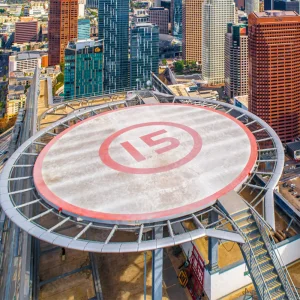
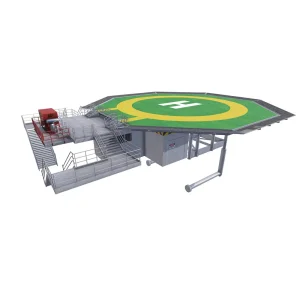
As helicopter transport dynamics evolve in Austria—spanning critical Alpine search-and-rescue (SAR) operations, medical emergency evacuations (EMS), and municipal rooftop infrastructure—the mechanical engineering of helipad landing systems must adapt to severe environmental stresses. Lightweight, high-strength aluminum alloy deck structures paired with custom-tensioned perimeter safety nets represent the state-of-the-art solution for high-load aviation operations in mountainous terrains and urban rooftops.

1. Austrian & Alpine Industrial Aviation Demands

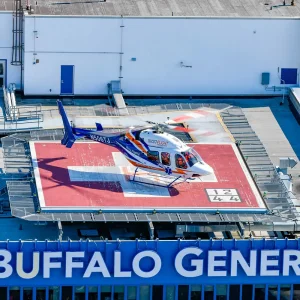
Helicopter landing platforms in Austria face some of the most rigorous operational conditions globally. With major search-and-rescue services (such as ÖAMTC Air Rescue) operating in mountain zones like Tyrol, Vorarlberg, and Salzburg, infrastructure projects must adhere strictly to Austro Control standards and European Aviation Safety Agency (EASA) Annexes. The key challenges in these regions include:

  • Severe Thermal Stress & Ice Loads: Helipads located on hospital rooftops or mountain rescue hubs must withstand heavy snowfall, ice accumulation, and sub-zero temperatures. Extruded aluminum profile decks allow for integrated sub-surface heating elements to melt ice instantly, ensuring operational readiness 24/7.
  • High Dynamic Impact Force: Heavy emergency response aircraft require landing structures capable of absorbing rapid dynamic load distributions. The high strength-to-weight ratio of high-grade 6xxx-series aluminum profiles is vital for these conditions.
  • Corrosion Resistance in Sub-zero Environments: Exposure to de-icing salts, humidity, and constant freeze-thaw cycles demands materials with superior chemical stability. Marine-grade anodized aluminum alloys outperform traditional steel and concrete installations, minimizing maintenance lifecycles.

2. Global Market and Technology Trends

Globally, the aviation sector is transitioning toward Urban Air Mobility (UAM) and eVTOL (electric Vertical Takeoff and Landing) vehicles. This shift demands lighter, modular, and pre-engineered helipad solutions that can be quickly deployed on existing structures without requiring significant reinforcement. Pre-fabricated modular aluminum decks are replacing traditional poured-in-place concrete due to their weight reduction of up to 70%. Additionally, the demand for green building practices has driven the adoption of highly recyclable materials like aluminum, aligning with the European Union's circular economy goals.

3. Metallurgical & Mechanical Excellence: Extrusion Profile Systems

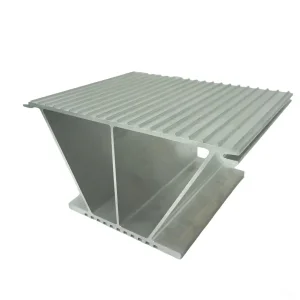
Lvxing Intelligent Equipment utilizes state-of-the-art extrusion technology to manufacture structural profiles tailored for aviation decking. The structural performance of our profiles relies on precise alloy composition:

Alloy Grade Yield Strength (MPa) Tensile Strength (MPa) Key Application Area
Alloy 6082-T6 ≥ 250 ≥ 290 Heavy-duty structural load-bearing beams and support structures in Alpine zones.
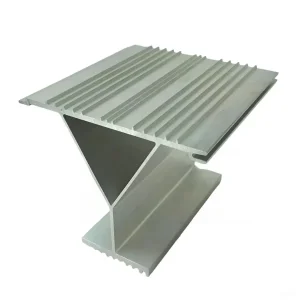
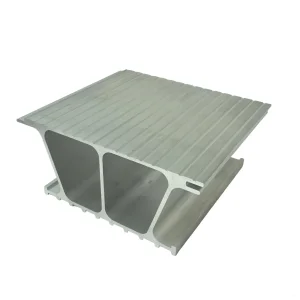
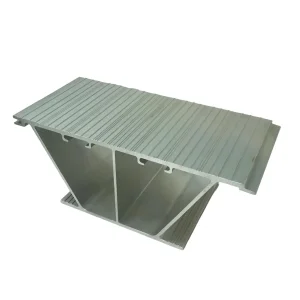
Alloy 6005A-T6 ≥ 215 ≥ 270 Main deck interlocking hollow profiles for optimized weight-to-stiffness ratio.
Alloy 6061-T6 ≥ 240 ≥ 260 Perimeter safety frames, structural walkways, and integration brackets.

4. Safety Net Systems: The Dynamic Perimeter Guard

Helipad safety nets are not merely secondary structures; they are life-saving perimeter protection systems that must comply with ICAO Annex 14 and FAA AC 150/5390-2C. Our high-performance mesh nets feature:

  • Stainless Steel & Aluminum Wire Mesh: Utilizing grade 316 stainless steel wire combined with structural aluminum frames ensures maximum tension and corrosion resistance.
  • Dynamic Drop Test Compliance: The safety nets are designed to absorb drop test impact forces of 100 kg dropped from a height of 1 meter without structural failure or permanent deformation.
  • Optimized Slope & Angle Layout: Placed at a downward and outward angle of 1.5 meters from the landing platform, these nets intercept personnel and debris without interfering with flight pathways.

5. The Technological Roadmap & Advanced Integration

Modern architectural and aviation projects require smart helipad systems. The integration roadmap for high-altitude Austrian helipads involves:

  • Integrated Heating System (De-icing): Interlocking aluminum profiles are fabricated with internal channels designed to house glycol-based or electric heat-tracing loops to prevent ice accumulation.
  • Embedded LED Lighting Systems: Flight paths and platform boundaries are marked by perimeter lights directly integrated into the aluminum extrusion profiles, maintaining flush surfaces to avoid landing gear hazards.
  • Sustainable Life Cycle Engineering: Our modular decks can be completely disassembled and recycled, providing a zero-waste architectural option for municipal upgrades.

Technical Capabilities

Factory Location: Foshan City, Guangdong, China

Extrusion Capabilities: 800T to 20,000T presses

Alloy Specialization: 1xxx, 2xxx, 3xxx, 5xxx, 6xxx, 7xxx Series

Max Profile Width: 1.2 meters

Max Profile Length: 28 meters

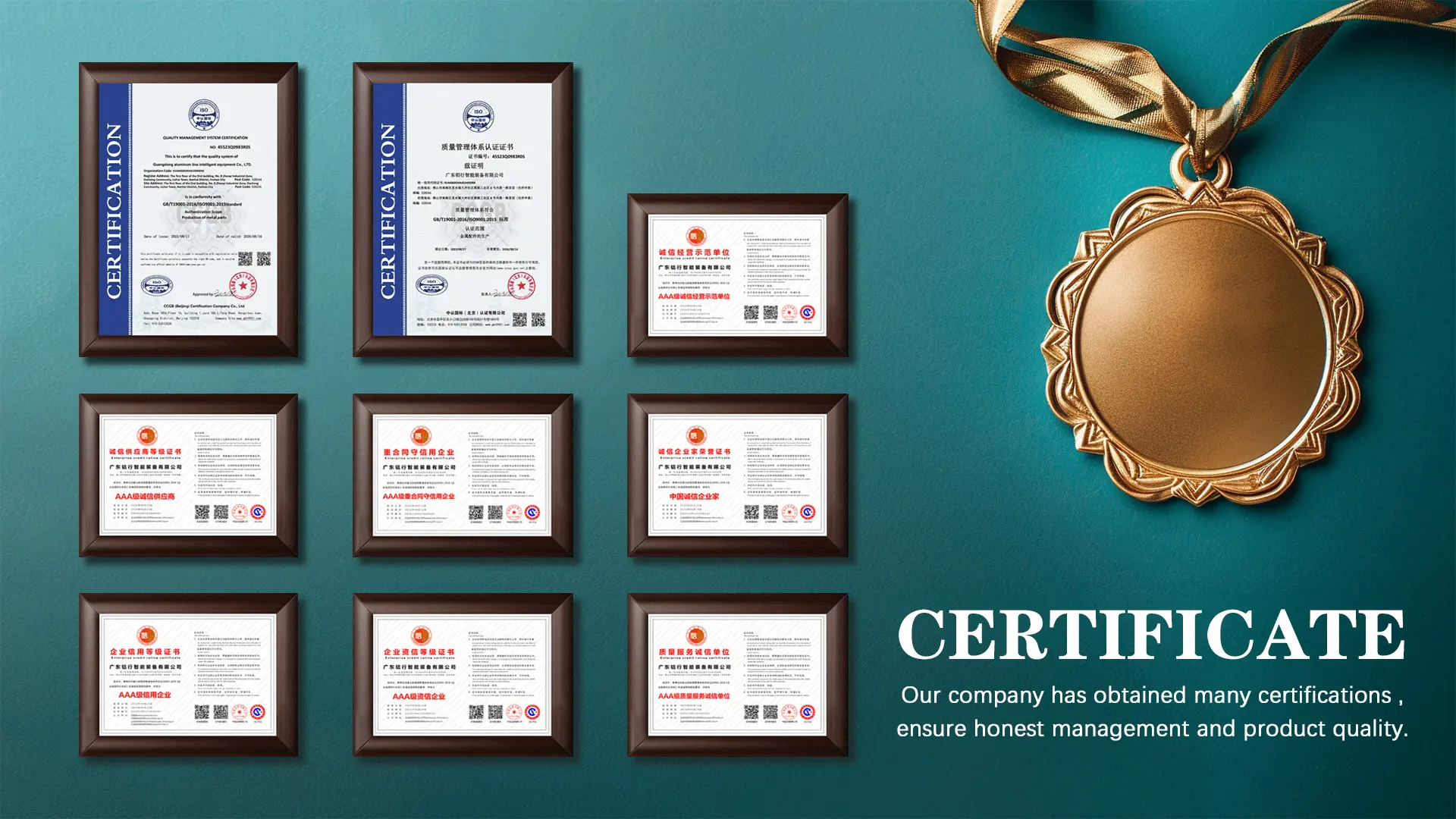
Quality Certification: GB/T19001-2016 / ISO9001:2015, CE Mark


Send Inquiry Now

Why Partner with Lvxing Intelligent Equipment

Translating engineering innovation into resilient physical aviation infrastructure.

Aerospace-Grade Certification

We hold the prestigious “Special Aluminium Materials for Aerospace” Certificate, guaranteeing that the alloys deployed in your Austrian helipad project meet strict global standards.

Industrial Scale Extrusion

Leveraging premium Fenglu aluminum raw materials and a press fleet from 800T to 20,000T. We produce complex structural shapes up to 1.2m in cross-sectional width and 28m in length.

15 Years of Technical R&D

Our dedicated design and engineering team works to convert custom concepts into reliable, wind-resistant structural components optimized for harsh mountain climates.
Lvxing Intelligent Production Base & Scale

20,000T

Max Extrusion Press Force

1.2m

Max Cross-section Width

15+ Yrs

Technical Expertise

ISO9001

Quality System Certification

Frequently Asked Questions (FAQ)

Essential answers regarding cost, technical compliance, and deployment in Austria.

What are the key benefits of using modular aluminum over concrete helipads in Austria?
Aluminum helipads reduce structural weight by up to 70% compared to concrete, making them ideal for rooftop installations on hospitals and commercial buildings without heavy foundation reinforcement. Furthermore, aluminum offers rapid pre-fabricated installation, corrosion resistance, and integrated de-icing systems.
Does your factory certify products for European standards and EASA requirements?
Yes, our manufacturing facility operates under GB/T19001-2016 / ISO9001:2015 standards, and our helipad structural profiles and safety net systems are manufactured to align with CE certification standards, ICAO Annex 14 requirements, and CAP 437 regulations.
How do you handle heavy snow and ice loads for Alpine helipads in Austria?
Our profiles can be extruded with hollow chambers configured specifically for hydronic or electrical trace-heating lines. This allows for automated snow melting systems that keep the touchdown and lift-off (TLOF) area clear in alpine environments.
What is the standard delivery time and freight process to Austria?
For custom profiles, extrusion and fabrication typically take 4-6 weeks depending on project complexity. Shipping to Austria is handled via maritime freight to European hubs (e.g., Rotterdam or Hamburg) followed by direct overland transit to the site in Austria.
What type of safety net options are available?
We provide stainless steel wire mesh safety nets, marine-grade aluminum frame net assemblies, and nylon safety nets. All perimeter safety nets are structural grade and designed to satisfy drop impact rules defined by global civil aviation authorities.