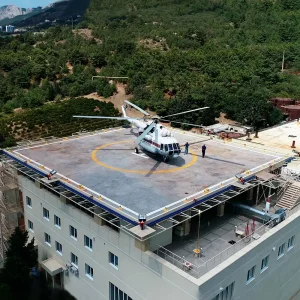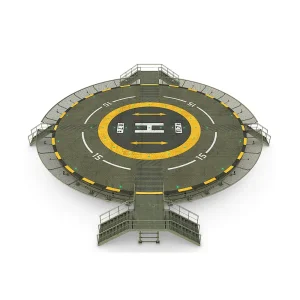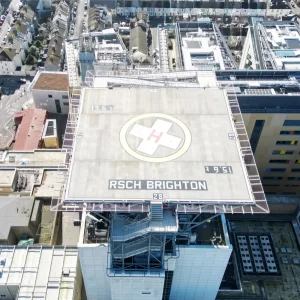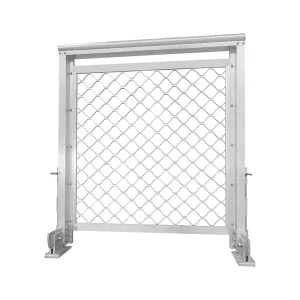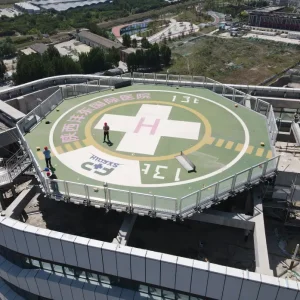
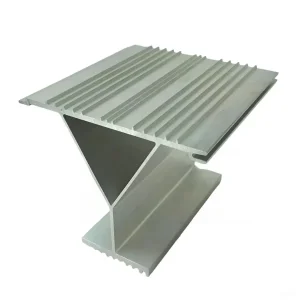
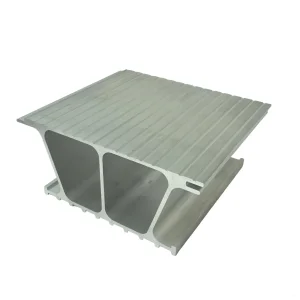
Premium architectural and safety solutions optimized for Doha's structural requirements, ranging from engineered geared hinges to helicopter safety nets.
Doha, the powerhouse of Qatar's economic growth, stands at the global crossroads of maritime shipping, oil and gas expansion (particularly the offshore North Field Expansion), and premium high-rise urbanization. As Qatar pushes forward with its National Vision 2030, the demand for safe, reliable, and corrosion-resistant helicopter landing decks (helidecks/helipads) has reached unprecedented heights.
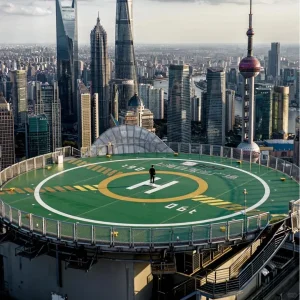
Operating in the Persian Gulf introduces unique challenges: extreme saline humidity, ambient temperatures regularly exceeding 48°C, sandstorm abrasion, and intense UV exposure. Helicopter platforms deployed on offshore drilling rigs, floating production storage and offloading (FPSO) vessels, and skyscrapers in the West Bay require specialized aluminum structural engineering and high-grade safety netting systems to survive this aggressive environment.
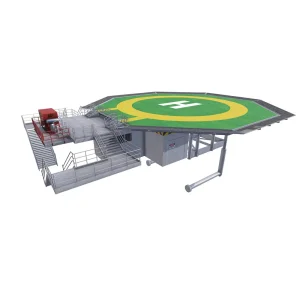
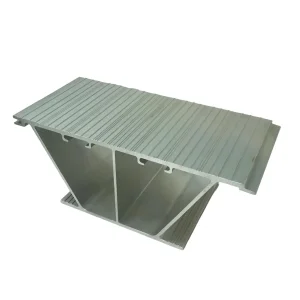
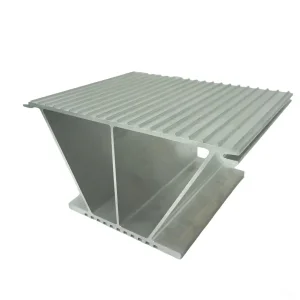
Our marine-grade structural aluminum helipads and perimeter safety nets are designed to meet these exact challenges. Engineered with advanced 6000-series alloy extrusions, our helipad structures provide the optimal balance of lightweight design and supreme structural load capacity, ensuring compliance with international regulations such as CAP 437 and ICAO Annex 14.
A comprehensive overview of global helipad engineering trends, standardizations, and localized Doha deployment requirements.
| Regulation Standard | Key Requirements | Doha Deployment Context | Material Specification |
|---|---|---|---|
| CAP 437 (Civil Aviation Authority) | Friction test compliance, perimeter safety nets, fire fighting integration, lighting. | Essential for offshore Qatari gas platforms and vessels. | Stainless Steel 316 / Marine-grade Al-alloy |
| ICAO Annex 14 Vol II | Heliport physical characteristics, obstacle limitation, design safety margins. | Applicable to Doha skyscraper rooftop commercial helipads. | Structural Aluminum 6082-T6 / 6061-T6 |
| ASTM B117 (Salt Spray Test) | Corrosion testing under highly concentrated saline environment. | Mandatory to combat the high salinity of the Arabian Gulf. | Anodized Aluminum / Electropolished SS316 |
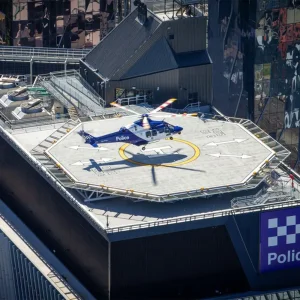
Historically, concrete and structural steel were the primary materials utilized for building helicopter landing decks. However, modern civil engineering has shifted heavily toward marine-grade structural aluminum. An aluminum helipad deck is up to 60% lighter than its concrete equivalent. On offshore structures, weight reduction directly translates to lower structural stress and cost-savings for the platform jacket. In urban environments, like Lusail and Doha, lightweight rooftop helipads allow developers to install landing areas on existing high-rises without expensive foundation reinforcements.
Furthermore, our aluminum systems offer zero maintenance costs over their operational lifecycle. Under the relentless Qatari sun and high-salinity air, steel requires constant paint touch-ups and rust mitigation. Our anodized aluminum profiles naturally form a protective oxide layer that resists aggressive atmospheric corrosion, ensuring a long-lasting, safe landing surface.
Combining world-class manufacturing capacities from Foshan with advanced global logistics to deliver precision-engineered systems directly to Doha.
LVXING, SPECIALIZES IN ALUMINUM SOLUTIONS.
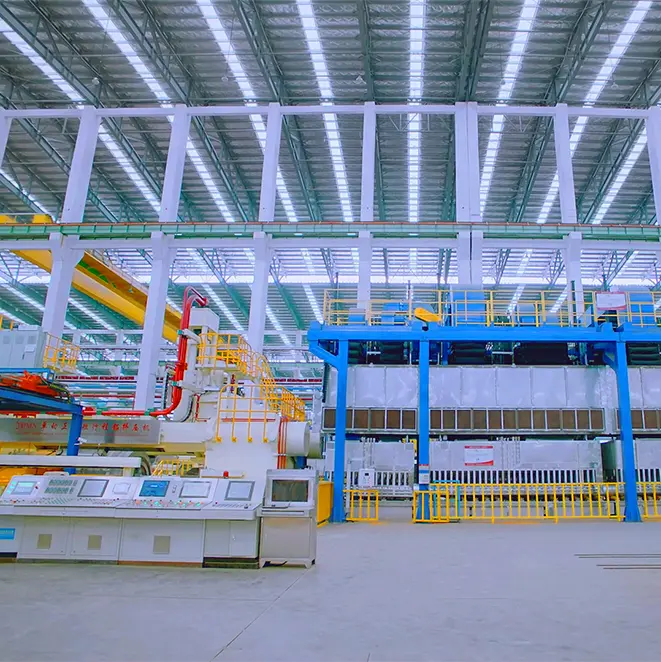
Established in 2015 and located in Foshan City, Guangdong, LvXing Intelligent Equipment Co., Ltd. boasts a skilled R&D team with extensive experience. We leverage exceptional technical expertise to effectively transform customers' ideas into reality, consistently meeting their precise requirements.
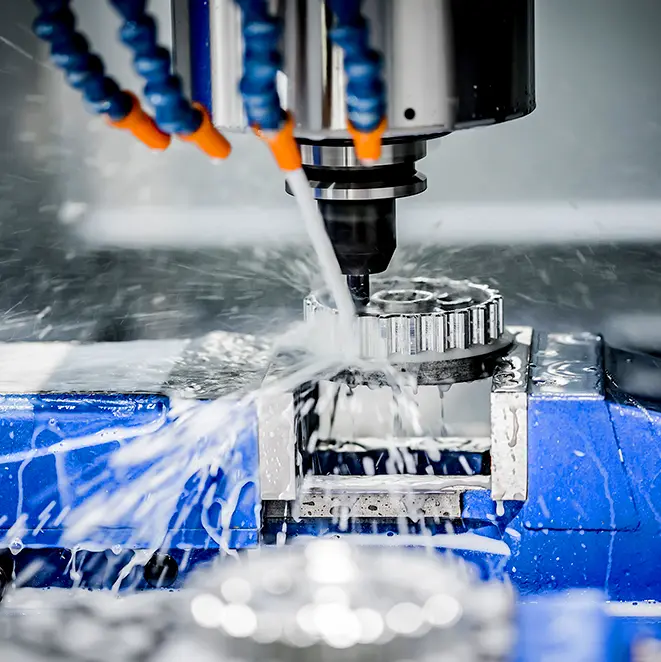
We utilize premium Fenglu aluminum, offering a diverse range of profiles for flexible applications. Our extrusion lines, ranging from 800T to 20,000T, accommodate alloys 1xxx, 2xxx, 3xxx, 5xxx, 6xxx, and 7xxx, allowing us to produce shaped products with section dimensions up to 1.2 meters in width and 28 meters in length. These products are recognized for their precision and meticulous processing, finding broad application in aerospace, military, medical, and industrial sectors.
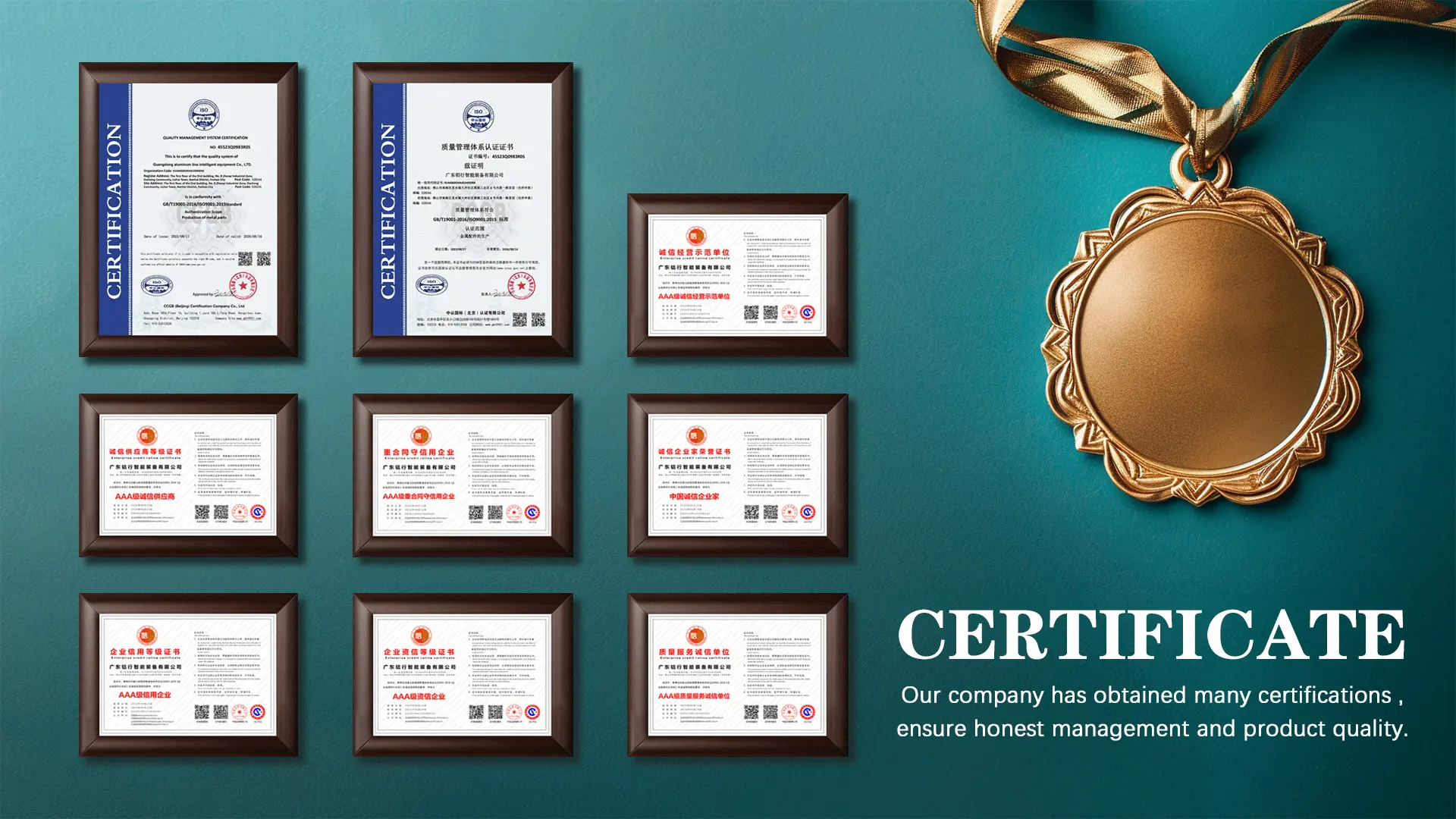
Our commitment to excellence is evident throughout the manufacturing process, rigorous quality control, thorough packaging, and efficient shipping procedures. This dedication has earned us recognition as a national excellent and honest enterprise, along with quality system certification in accordance with GB/T19001-2016/ISO9001:2015 standards.
We aspire to be your trusted business partner and warmly invite you to visit our factory.
We have obtained the "Special Aluminium Materials for Aerospace" Certificate, confirming our ability to supply raw materials built to withstand structural flight loads.
We provide and utilize high-quality Fenglu aluminum profiles. With extrusion lines ranging from 800T to 20,000T, we produce alloys in 1xxx, 2xxx, 3xxx, 5xxx, 6xxx, and 7xxx series, up to 1.2m wide or 28m long.
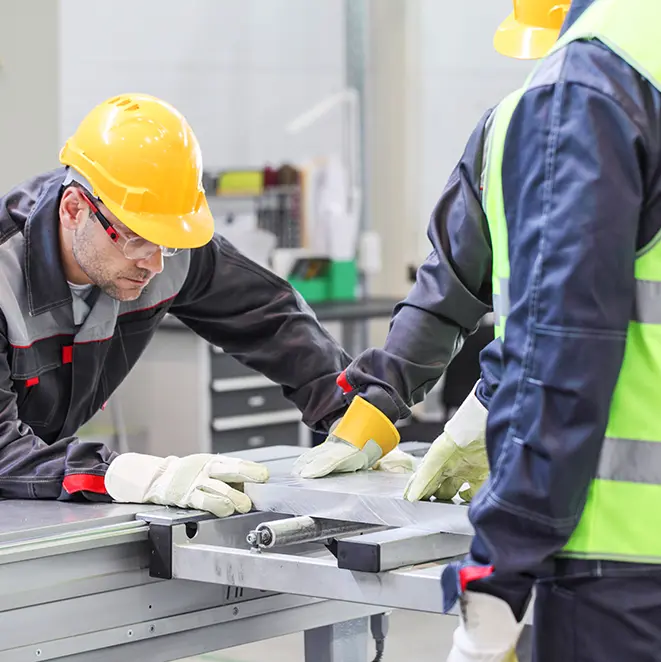
Our team of technicians possesses over 15 years of experience. We identify potential installation issues early and offer insights to realize customized shapes for challenging Doha projects.
Built on years of technical excellence, our aluminum infrastructure products serve international clients with reliable data metrics.
A critical safety feature of any offshore or rooftop landing zone is the Helideck Perimeter Safety Net. In Doha's maritime zones, safety nets are subjected to severe wind shear and continuous saltwater spray. According to CAP 437, these nets must extend at least 1.5 meters outward from the landing deck edge. They must not project above the deck level to avoid striking helicopter rotors, and they must have a slope profile designed to catch falling personnel securely.
Our perimeter safety nets utilize either high-tensile 316 stainless steel cable netting or structural aluminum framing systems. Designed to absorb kinetic impact energy during emergency scenarios, our safety nets are engineered to pass the mandatory 100 kg drop test from a height of 1 meter without structural failure. We manufacture both manual folding safety nets and motorized (electric) remote-control systems to allow fast operation during emergencies or maintenance windows.
Additionally, Lvxing provides integrated drainage options, non-slip friction surfaces, and specialized structural supports that accommodate lighting fixtures and fire-suppression equipment without compromising the structural integrity of the main aluminum helideck.
Essential industry questions answered directly by our senior structural engineering team.
Yes. All our structural helipads and perimeter safety nets (both manual and electric options) are designed, manufactured, and tested to meet international civil aviation guidelines including UK CAA CAP 437, ICAO Annex 14 Vol II, and offshore marine standards. Certification documents are supplied with each procurement batch.
We utilize high-grade Fenglu aluminum alloys (principally 6000-series structural alloys) treated with advanced surface anodizing or specialized marine powder coating. These treatments ensure a natural resistance to atmospheric corrosion in highly saline coastal environments like Doha, bypassing the rust risks associated with traditional steel.
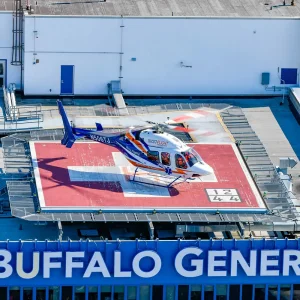
Manual perimeter nets require ground crews to fold them down for flight operations and lock them back up manually. Electric motorized safety nets allow the flight tower or vessel control room to remotely retract or deploy the perimeter nets using integrated actuators, increasing safety and operational speed on offshore platforms or hospital rooftops.
Lvxing offers end-to-end supply chain integration. From our Foshan factory, structural helipad packages are crated securely in modular panels to fit standard sea freight containers. We coordinate directly with Doha logistics agents for delivery to Hamad Port, offering full customs clearance documentation and structural assembly guidance upon arrival.
Explore our full catalog of CE-certified solutions, industrial components, and high-performance building systems tailored for Doha projects.