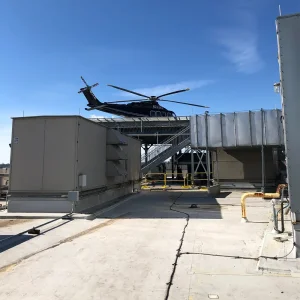
Premium aluminum helideck nets and structures manufactured in compliance with international aviation safety regulations.
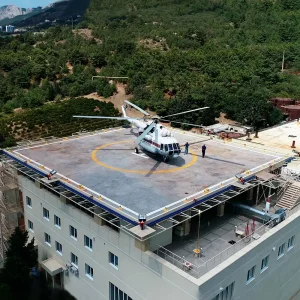
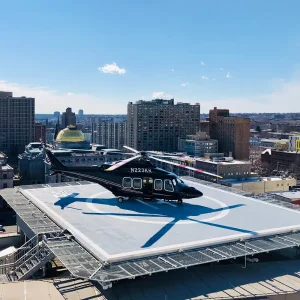
Lesotho occupies a unique geographical position as the only country in the world situated entirely above 1,400 meters in elevation. With average heights exceeding 2,160 meters and peaks soaring up to 3,482 meters in the Maloti and Drakensberg ranges, regional helicopter operations are vital for survival, industrial transport, and search-and-rescue services.
High-altitude conditions create demanding aerodynamic environments: reduced air density reduces rotor efficiency, necessitating longer landing runs and larger, more stable helideck platforms. Furthermore, the extreme alpine weather—ranging from sub-zero winter temperatures, severe snow accumulation, to intense solar ultraviolet radiation—degrades standard construction materials rapidly.
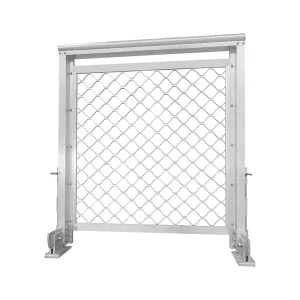
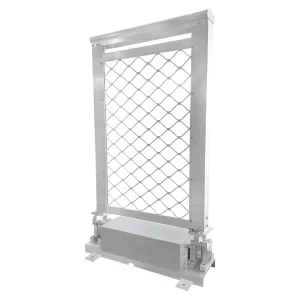
Lvxing’s structural aluminum helipad systems and stainless steel/aluminum wire perimeter mesh safety nets are custom-engineered for these demands. Unlike conventional concrete helipads, which suffer from moisture absorption and catastrophic freeze-thaw cracking at high altitudes, our modular aluminum platforms expand and contract without compromising structural integrity. Our safety nets comply with International Civil Aviation Organization (ICAO) Annex 14 standards, providing critical edge protection for ground crews and emergency personnel operating in high-wind conditions.
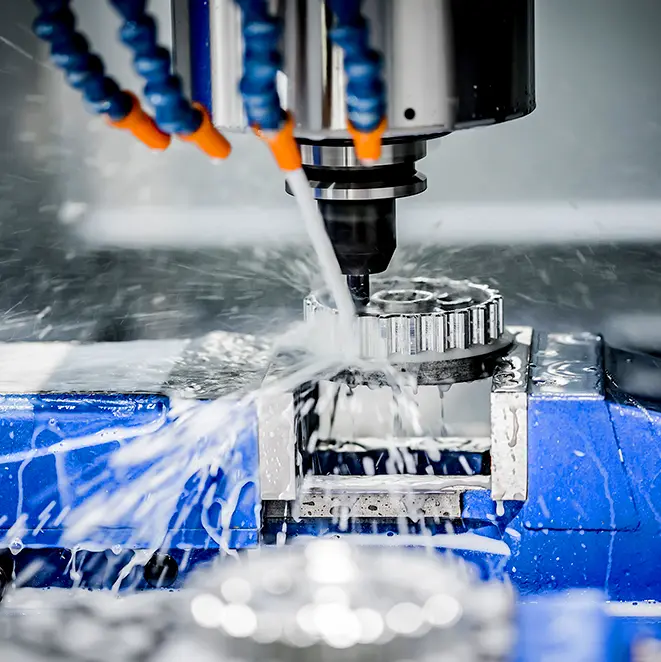
Harnessing world-class manufacturing infrastructures to deliver aviation-grade structural components.
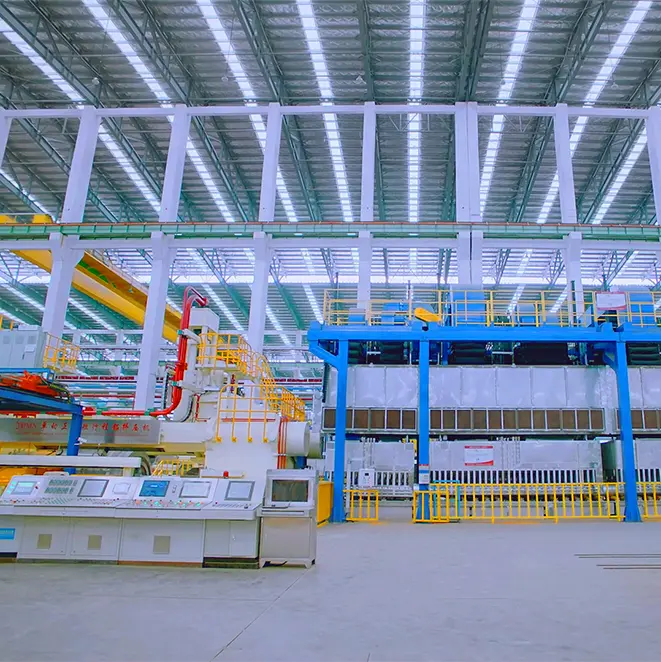
We source premium Fenglu aluminum profiles. Utilizing advanced extrusion lines ranging from 800T to 20,000T, we manufacture components in 6000 and 7000 series alloys. This provides high strength-to-weight ratios essential for rooftop structures and offshore vessels.
Our capabilities allow us to extrude complete single-piece structural shapes measuring up to 1.2 meters in width and 28 meters in length. This significantly reduces weld joints and structural weak points on helidecks, improving service life in alpine environments.
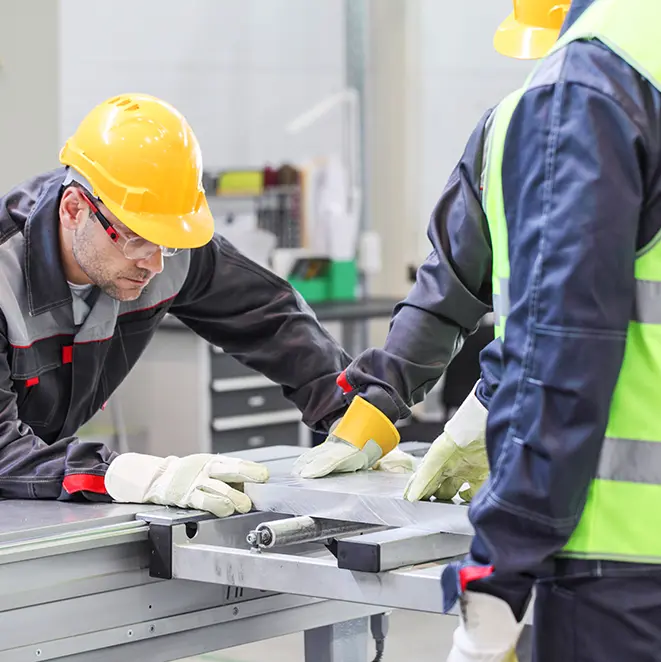
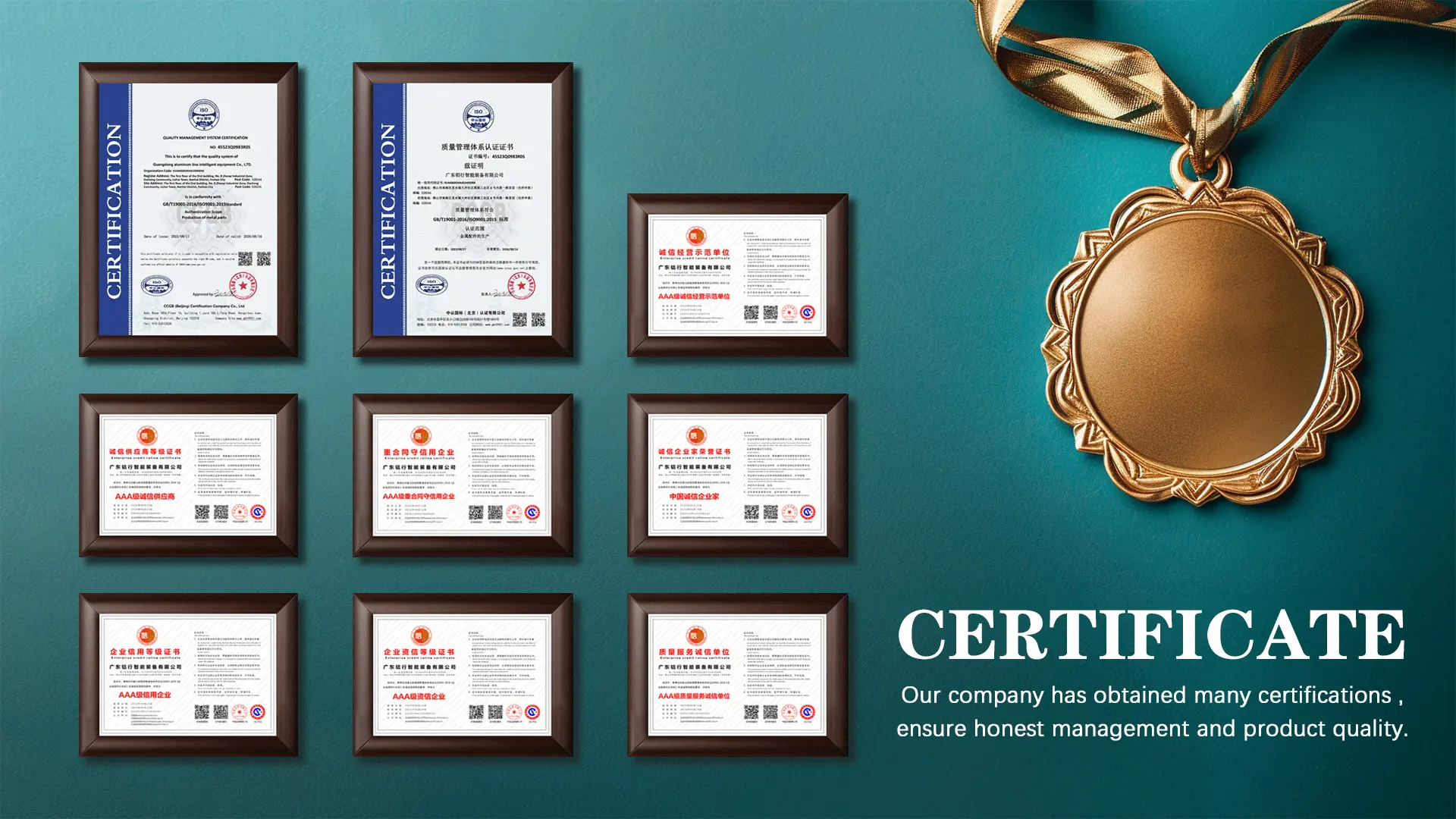
Lvxing is certified under national standards (GB/T19001-2016/ISO9001:2015). We hold the specialized "Special Aluminium Materials for Aerospace" certificate, confirming that our processing meets demanding aviation specifications.
Specifically developed to absorb impact loads and resist environmental degradation.
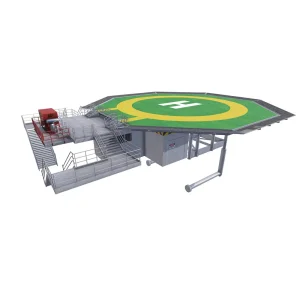
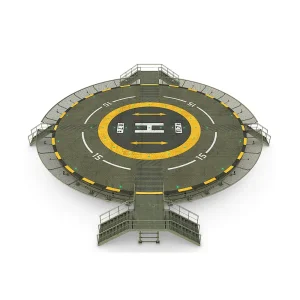
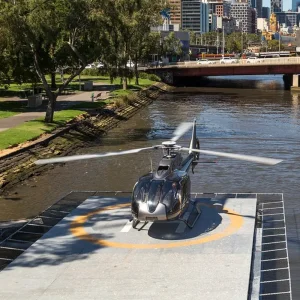
Procuring heavy industrial structures across international boundaries requires robust logistical execution. Lvxing optimizes the delivery process by offering a direct containerized shipping model from our main factory in Foshan City, Guangdong, to Southern African hubs.
Integrated Transit Route: Large-scale aluminum helidecks are packaged in specialized ocean freight containers and shipped from Shenzhen or Guangzhou ports to Durban Port, South Africa. From Durban, the cargo travels via secure land freight through established border gates (primarily Maseru Bridge or Maputsoe/Ficksburg) straight to Lesotho. By pre-fabricating our systems as modular, bolt-together segments, we eliminate the need for heavy site welding, significantly reducing local assembly costs and import delays.
Our export services include complete custom clearance document support, test certifications, and installation assembly instructions. This helps projects in remote districts like Mokhotlong, Qacha's Nek, or Thaba-Tseka proceed smoothly without delays.
Any helipad serving commercial, medical, or mining activities must follow strict international safety codes. These regulations specify that the deck perimeter must be fitted with safety netting that extends at least 1.5 meters outward. The net must be sloped slightly upward (approx. 10 degrees) and be capable of catching a 100 kg fall without tearing or causing a rebound effect.
Our aluminum and marine-grade stainless steel safety net frames are designed to absorb energy. In harsh high-altitude regions where UV radiation can degrade nylon nets within months, our metallic solutions offer a design life of over 25 years.
General pricing indicators for budget estimation. Specific quotes depend on wind loads, site elevation, and size requirements.
| System Component | Material Specification | Compliance Standards | Estimated Price Range (USD) |
|---|---|---|---|
| Modular Helideck (Alu 6082-T6) | Width: Up to 1.2m profiles, thickness engineered per load rating. | ICAO Annex 14, CAP 437 | $180 - $350 per sq. meter |
| Manual Safety Perimeter Net | Framed Al/SS mesh, 1.5m projection, energy absorbing. | CE, CAP 437 Section 3.4 | $85 - $150 per linear meter |
| Automated Safety Net (Electric) | IP67 weatherproof drive motors, automated deployment. | CE, ATEX Zone 1/2 Certified | $280 - $480 per linear meter |
| LED Helipad Light Systems | Boundary lights, floodlighting, wind cone indicators. | FAA, ICAO compliance | $4,500 - $12,000 per set |
Established in 2015 and located in Foshan City, Guangdong, LvXing Intelligent Equipment Co., Ltd. boasts a skilled R&D team with extensive experience. We leverage technical expertise to help realize customers' ideas, consistently meeting their precise requirements.
We utilize premium Fenglu aluminum, offering a diverse range of profiles for flexible applications. Our extrusion lines, ranging from 800T to 20,000T, accommodate alloys 1xxx, 2xxx, 3xxx, 5xxx, 6xxx, and 7xxx, allowing us to produce shaped products with section dimensions up to 1.2 meters in width and 28 meters in length. These products are recognized for their precision processing, finding broad application in aerospace, military, medical, and industrial sectors.
Our commitment to quality is evident throughout the manufacturing process, rigorous quality control, thorough packaging, and efficient shipping procedures. This dedication has earned us recognition as an honest enterprise, along with quality system certification in accordance with GB/T19001-2016/ISO9001:2015 standards.
We aspire to be your trusted business partner and warmly invite you to visit our factory.



Browse our certified helipad deck profiles and safety nets developed for diverse municipal, defense, and maritime requirements.
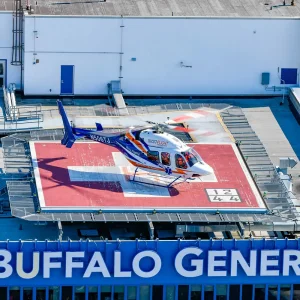
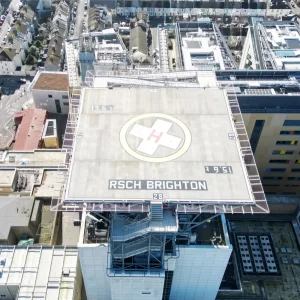
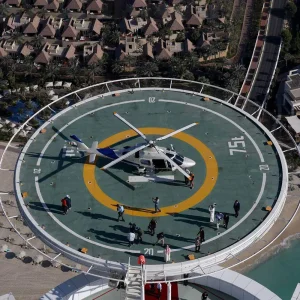
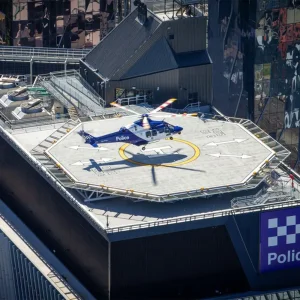
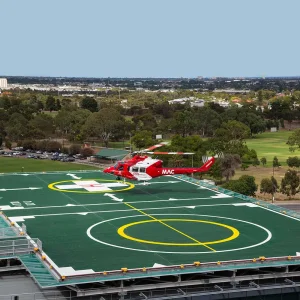
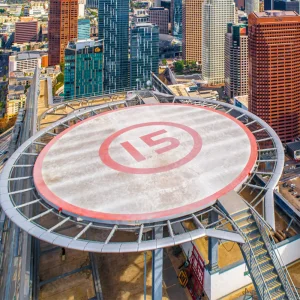
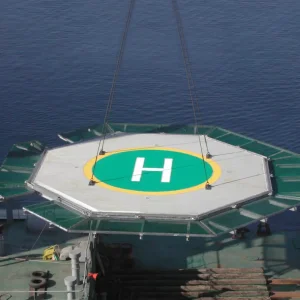
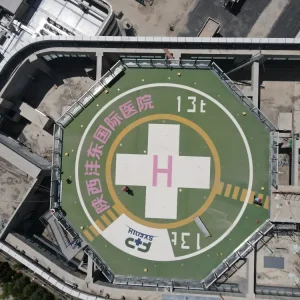
A typical architectural layout blueprint displaying structural load points and perimeter safety support framing.
Find answers to common questions about high-altitude helipads and regulatory compliance.
At high altitudes (above 1,500m), freezing winter temperatures cause moisture in concrete to freeze and expand, leading to cracking and structural degradation. Aluminum (such as 6000-series alloy) is immune to freeze-thaw damage and remains ductile at sub-zero temperatures. Additionally, modular aluminum components weigh up to 70% less than concrete, making them easier to transport to remote mountain sites and install without needing massive cranes.
Under Civil Aviation Authority guidelines (CAP 437), helideck safety nets must extend at least 1.5 meters from the edge of the landing area. The netting must rise slightly above the level of the deck (approximately 10 degrees) to prevent personnel from falling. It must be made from non-fraying, UV-resistant material (such as marine-grade stainless steel or corrosion-resistant aluminum mesh) and be capable of safely absorbing a fall without causing injury.
Low air density at high elevations reduces helicopter engine power and rotor lift. As a result, helicopters require larger landing areas to maneuver safely in gusty wind conditions. We collaborate with project engineering teams to adjust the dimensions of the helideck (referred to as the "D-Value") to accommodate larger helicopter types, such as the AgustaWestland AW139 or Bell 412, which are commonly used for high-altitude medical evacuation and search-and-rescue.
Standard fabrication takes 30 to 45 days, depending on custom drawing requirements. Ocean transit from Shenzhen/Guangzhou ports to Durban Port takes approximately 20 to 25 days. Road transport and customs clearance at the Maseru Bridge or Ficksburg border post add another 5 to 7 days. Total project timeline from design approval to delivery at site in Lesotho is typically 65 to 80 days.
 LvXing