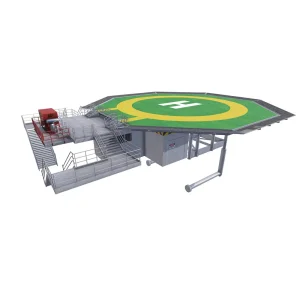
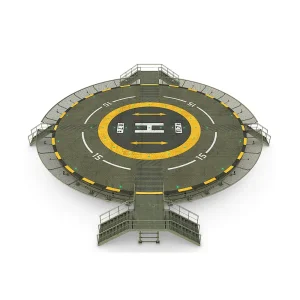
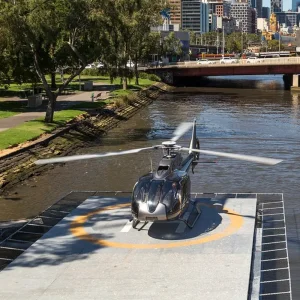
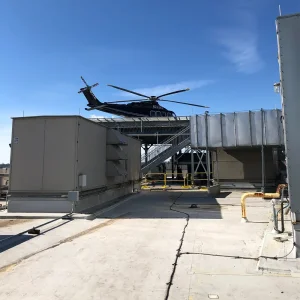
Explore our premium core line of heliport components, precisely manufactured to handle Melbourne's distinct wind patterns and coastal marine environments.
Melbourne, Victoria, represents one of the fastest-growing commercial and industrial hubs in the Southern Hemisphere. As high-rise commercial structures rise in the Melbourne Central Business District (CBD) and complex healthcare facilities like the Melbourne Health Precinct expand, the demand for helicopter landing sites (HLS) has surged. Developing rooftop, offshore, or ground-level helipads in Victoria requires strict adherence to regulatory protocols and physical engineering parameters to ensure absolute safety during emergency medical services (EMS), search and rescue (SAR) missions, and corporate transit operations.
In Australia, civil aviation infrastructure design is regulated by the Civil Aviation Safety Authority (CASA). Helipad design and compliance fall under CASR Part 139 (Aerodromes) and the associated Civil Aviation Advisory Publication (CAAP) 92-2(1) (Guidelines for the establishment and use of helicopter landing sites). In particular, helideck perimeter safety nets must meet exact tension, drop test, and dimension criteria. According to international standards such as CAP 437 (Standards for Offshore Helicopter Landing Areas) and CASA guidelines, perimeter safety nets must be installed around all raised landing decks to prevent staff and crew from falling. These nets must project outwards by at least 1.5 meters from the deck edge, tilt upwards at approximately 10 degrees, and demonstrate the strength to absorb significant impact velocities without failing or creating a trampoline effect.
Melbourne's coastal geography—flanked by Port Phillip Bay and exposed to the high-velocity, salt-laden winds of the Bass Strait—creates an aggressive corrosive environment (Class C4/C5 atmospheric corrosivity). Traditional steel-reinforced concrete or carbon steel helidecks degrade rapidly under constant marine aerosol exposure, requiring extensive maintenance, rust scraping, and repainting. To address this, modern engineering projects in Victoria are shifting toward marine-grade aluminum alloys, such as 6082-T6 and 6061-T6. Aluminum naturally forms a protective oxide layer that resists chloride-induced pitting, ensuring structural integrity for over 30 years without chemical treatments.
When engineering rooftop helidecks for skyscrapers in Melbourne CBD or offshore support vessels (OSVs) operating in the Tasman Sea, structural weight reduction is critical. An aluminum modular helideck reduces the dead load by up to 60% compared to a concrete equivalent. This significantly reduces the structural reinforcement needed for the building or vessel superstructure, cutting overall project CAPEX.
Furthermore, extruded aluminum plank systems feature integrated channels for drainage and safety components. These interlocking profiles allow for rapid assembly, reducing on-site construction time in urban environments. The high thermal conductivity of aluminum also makes it easier to integrate automated deck heating and de-icing systems—vital for addressing the frosty winter mornings in Victoria's alpine and southern coastal zones.
Procuring raw and fabricated structural aluminum elements from a localized domestic supply chain can lead to high costs and extended lead times. Utilizing China’s advanced aluminum industrial clusters, specifically in Foshan City, Guangdong, provides Melbourne developers with a highly competitive option. Chinese factories leverage massive industrial infrastructure, including heavy extrusion presses ranging from 800T to 20,000T, which are rarely available in smaller manufacturing markets.
These massive presses allow for the production of wide, single-piece profiles (up to 1.2 meters wide and 28 meters long). By minimizing the number of longitudinal welds, this process optimizes structural load path distribution. Working with an ISO9001:2015 certified Chinese manufacturer with experience in aerospace and marine alloys ensures that every profile meets strict international structural codes, including the Eurocode 9 (design of aluminum structures) and Australian Standards AS/NZS 1664.
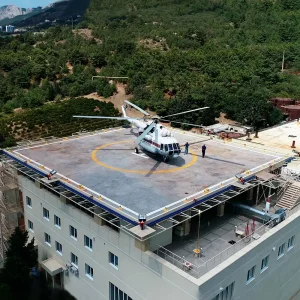
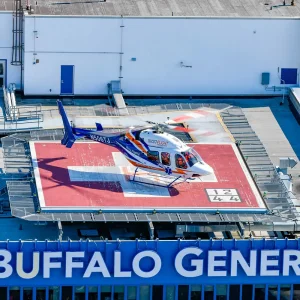
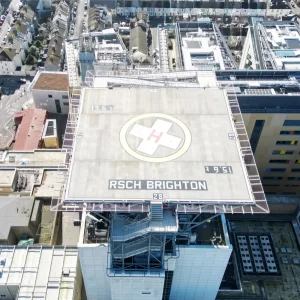
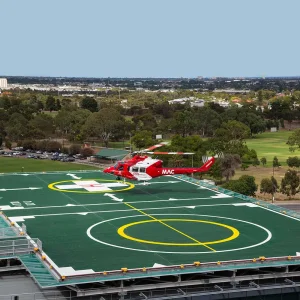
Providing critical, lightweight landing pads for EMS helicopters. The non-magnetic properties of aluminum ensure zero interference with sensitive hospital diagnostic equipment.
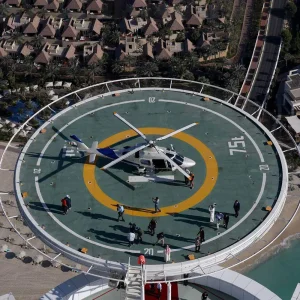
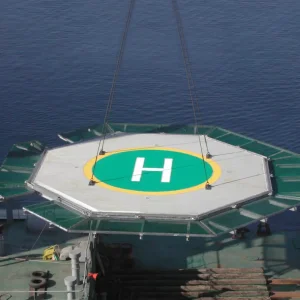
Engineered to withstand harsh marine salt environments, extreme thermal fluctuations, and heavy deck-impact forces in offshore energy fields.
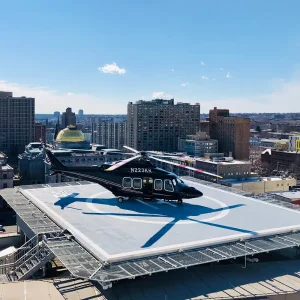
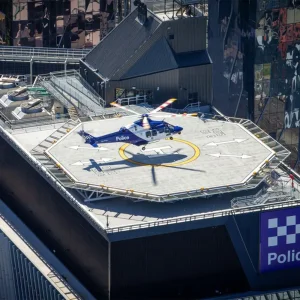
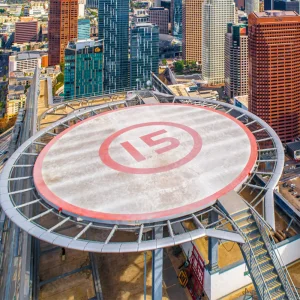
Designed for architectural integration, low-vibration load transfer, fire safety systems, and automated perimeter safety net deployment.
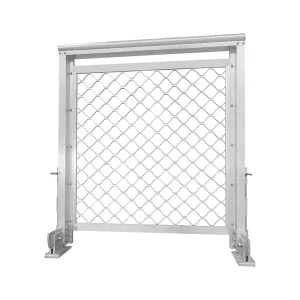
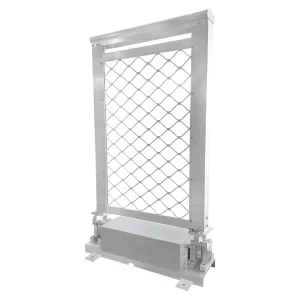
A perimeter safety net is not simply a containment barrier; it is an active life-saving system designed to absorb kinematic energy during a fall. In offshore gas rigs and high-rise CBD buildings, wind speeds can exceed 100 km/h. Standard wire meshes can vibrate, suffer fatigue, or create unsafe aerodynamic vortexes. That is why CAP 437 regulations specify that the safety net must not project above the level of the landing area, preventing it from presenting a hazard to helicopter operations.
LvXing’s perimeter safety net frames are fabricated using high-grade structural aluminum, which is light enough to allow for rapid hinge operation (for manual or motorized folding systems). The mesh is woven from high-tensile stainless steel 316 wire or premium marine-grade aluminum wire, ensuring high tensile strength, elasticity, and corrosion resistance. Every safety net design undergoes rigorous drop testing, involving a 122 kg solid mass dropped from a height of 1 meter to simulate a human fall. The system must capture the load safely, without tearing the mesh or causing structural failure in the attachment brackets.
Established in 2015 and located in Foshan City, Guangdong, LvXing Intelligent Equipment Co., Ltd. is a trusted partner for engineered structural aluminum helideck and safety systems.
At LvXing, we believe that turning complex engineering concepts into highly functional realities requires deep technical expertise, advanced material science, and a robust manufacturing infrastructure. That is why we utilize premium Fenglu aluminum, offering a diverse range of extruded profiles to provide flexible solutions for helipads, marine terminals, and aviation support facilities worldwide. Our extrusion capacities range from 800T to 20,000T, allowing us to process alloys across the 1xxx, 2xxx, 3xxx, 5xxx, 6xxx, and 7xxx series. We produce shaped profiles with cross-sectional widths up to 1.2 meters and continuous lengths up to 28 meters, minimizing structural weld requirements.
Our commitment to quality is evident throughout the manufacturing process, from raw billet sourcing to strict quality control checks, packaging, and shipping. This dedication has earned us recognition as a national excellent and honest enterprise, along with quality system certification in accordance with GB/T19001-2016/ISO9001:2015 standards.
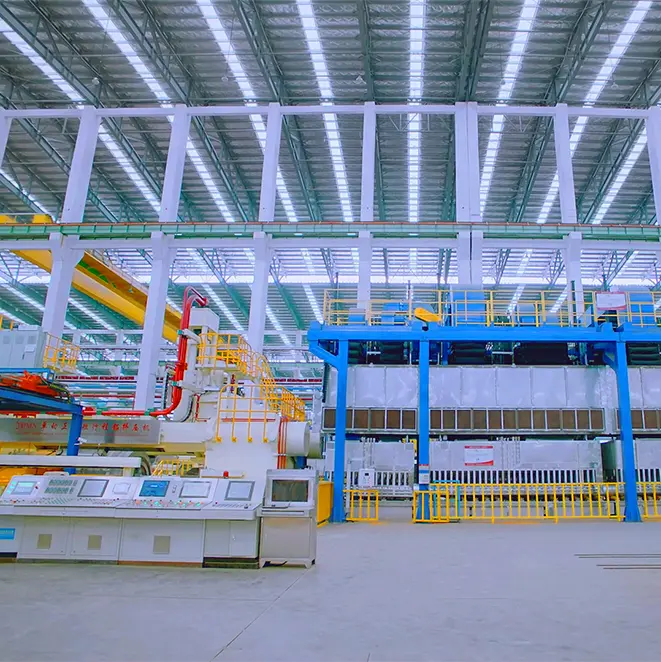
We have obtained the “Special Aluminium Materials for Aerospace” Certificate. This credential guarantees that the raw materials and structural profiles we supply for your Melbourne helideck systems comply with global aerospace engineering tolerances.

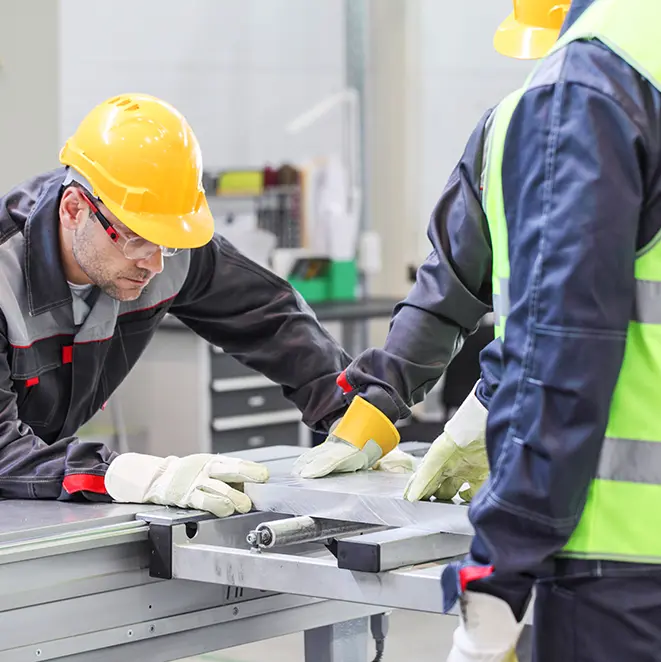
We provide and utilize high-quality Fenglu aluminum profiles. With extrusion lines ranging from 800T to 20,000T, we can produce alloys 1xxx, 2xxx, 3xxx, 5xxx, 6xxx, and 7xxx. We can manufacture fully shaped products with section dimensions up to 1.2 meters in width or 28 meters in length.

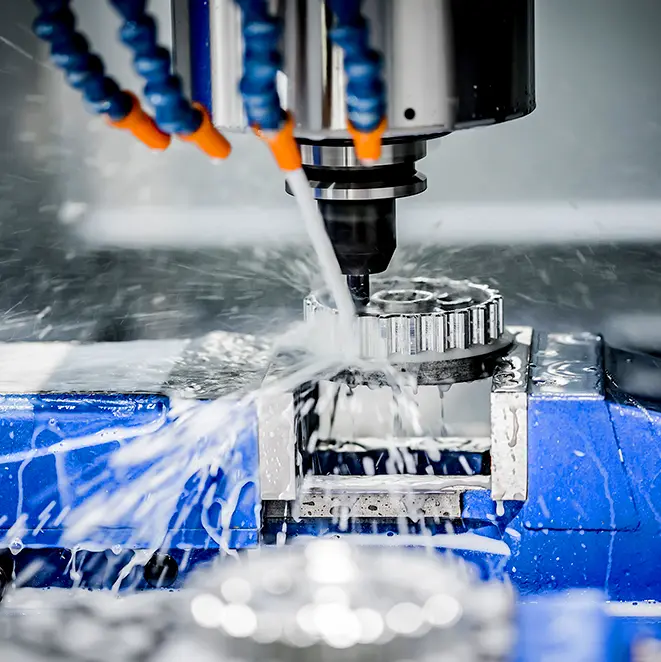
We have a team of technicians with 15 years of invaluable experience. Our deep understanding of customer requirements allows us to identify potential issues and offer practical insights, turning customer ideas into tangible products that meet specific needs.

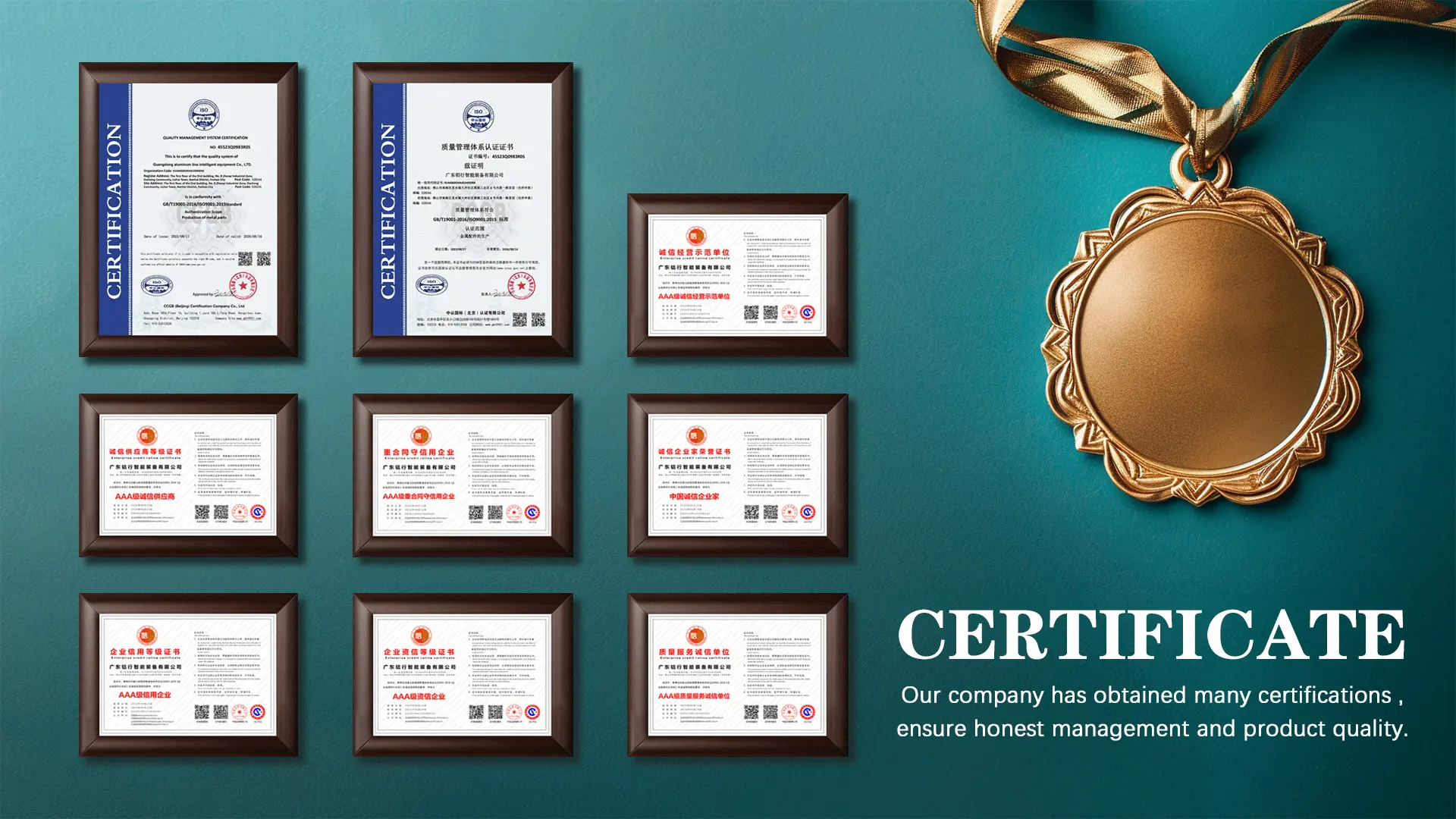
Browse our extensive selection of CE-certified helideck systems, safety nets, and architectural structures designed for medical, commercial, and offshore applications.
Get answers to common technical, regulatory, and procurement questions regarding aluminum helipads and perimeter safety systems in Victoria.
Connect with our structural engineering team today. We provide detailed static and dynamic structural calculations, custom CAD layouts, and transparent factory-direct pricing.
 LvXing