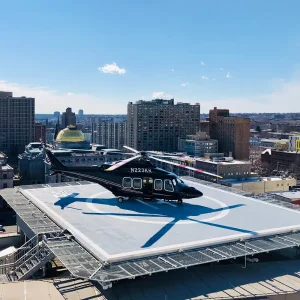
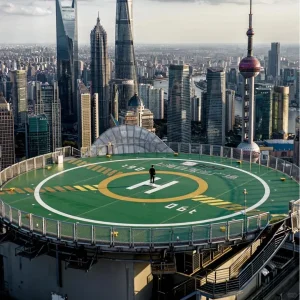
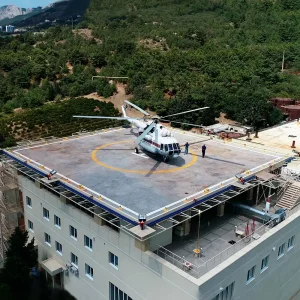
Explore our core line of CE certified aluminum structural systems designed for commercial and emergency landing operations.
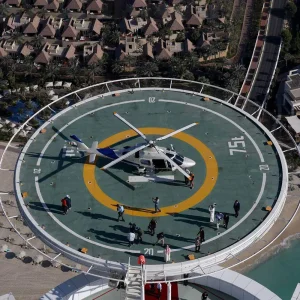
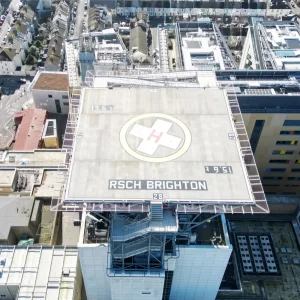
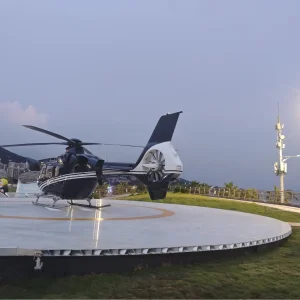
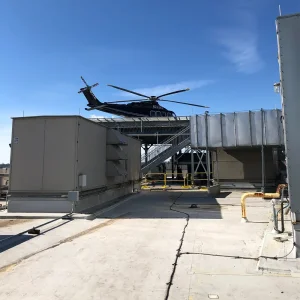
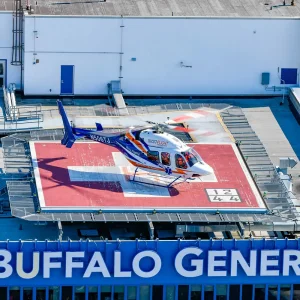
As urbanization intensifies and skyscrapers scale new heights, rooftop helipads have transitioned from luxury amenities to critical infrastructure. Modern commercial high-rises, trauma-one hospitals, and corporate headquarters utilize helicopter landing areas for rapid transit, medical evacuation, and disaster management. Consequently, the global procurement demand for specialized, high-durability safety components has surged.
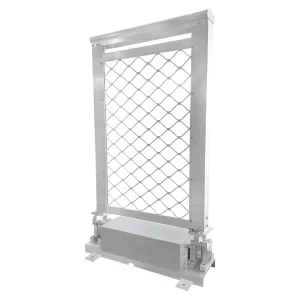
Helicopter landing safety nets deployed on tall buildings face dynamic stresses unlike marine or onshore equivalents. They must withstand high wind shear, extreme thermal expansion, and localized vertical impact forces without imposing excessive dead loads on the building’s structural frame. Standardizing on CE-certified perimeter safety nets and lightweight aluminum profiles is no longer optional; it is an absolute necessity for global compliance, structural longevity, and life-safety insurance.
Architects, structural engineers, and general contractors look for suppliers capable of offering bespoke manufacturing that respects strict localized building codes, international aviation standards (ICAO Annex 14, CAP 437), and precise mechanical load constraints.
How Lvxing leverages heavy industrial metallurgy and precise structural engineering to build next-generation safety platforms.
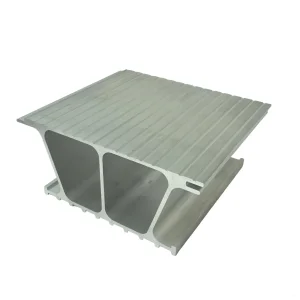
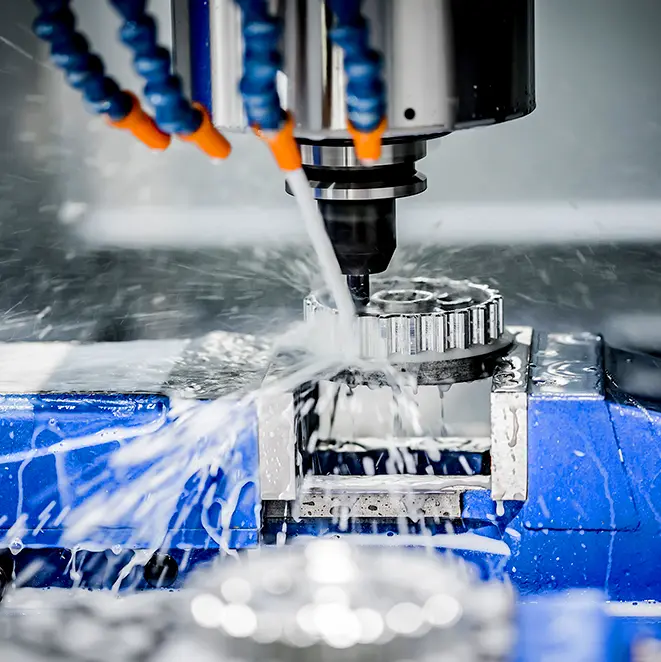
Utilizing marine-grade 6000 and structural 7000 series aluminum alloys from premier suppliers like Fenglu. Processed on extrusion lines ranging from 800T to 20,000T to guarantee grain uniformity, high yield strength, and structural integrity.
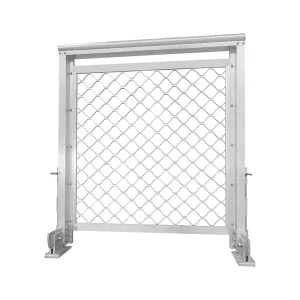
Perimeter safety nets are engineered using lightweight, high-tensile mesh systems. Our designs utilize flexible, corrosion-resistant frames that deform plastically under accidental load to absorb energy, preventing rebound or structural snap-back.
Strict verification of materials according to European standards (EN 1999 for aluminum design). Systems undergo finite element analysis (FEA) and dynamic drop testing (200kg kinetic test) to guarantee failsafe perimeter operation.
Established in 2015 and located in Foshan City, Guangdong, LvXing Intelligent Equipment Co., Ltd. boasts a highly skilled R&D team with extensive experience. We leverage exceptional technical expertise to effectively transform customers' complex ideas into reliable, structural realities, consistently meeting precise architectural and safety requirements.
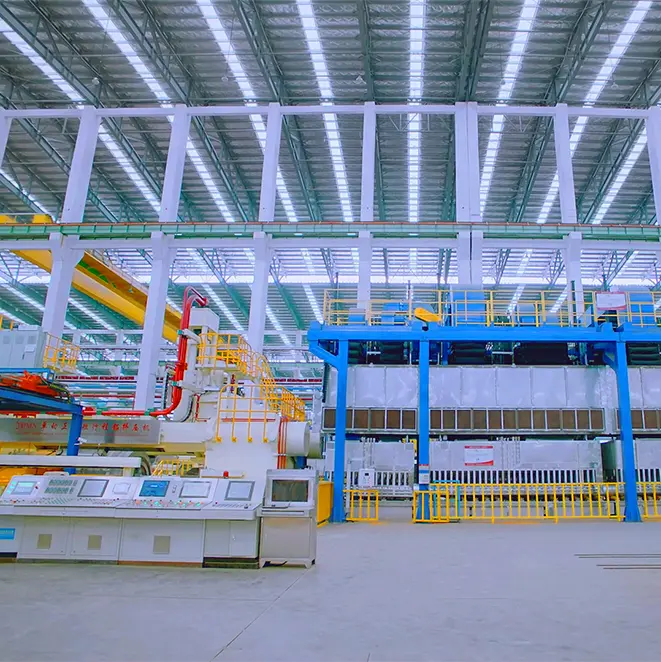
We utilize premium Fenglu aluminum, offering a diverse range of profiles for flexible structural applications. Our extrusion lines, ranging from 800T to 20,000T, accommodate alloys 1xxx, 2xxx, 3xxx, 5xxx, 6xxx, and 7xxx. This allows us to produce shaped products with section dimensions up to 1.2 meters in width and 28 meters in length. These finished profiles are recognized globally for their precision and meticulous processing, finding broad application in aerospace, military, medical, and specialized industrial sectors.
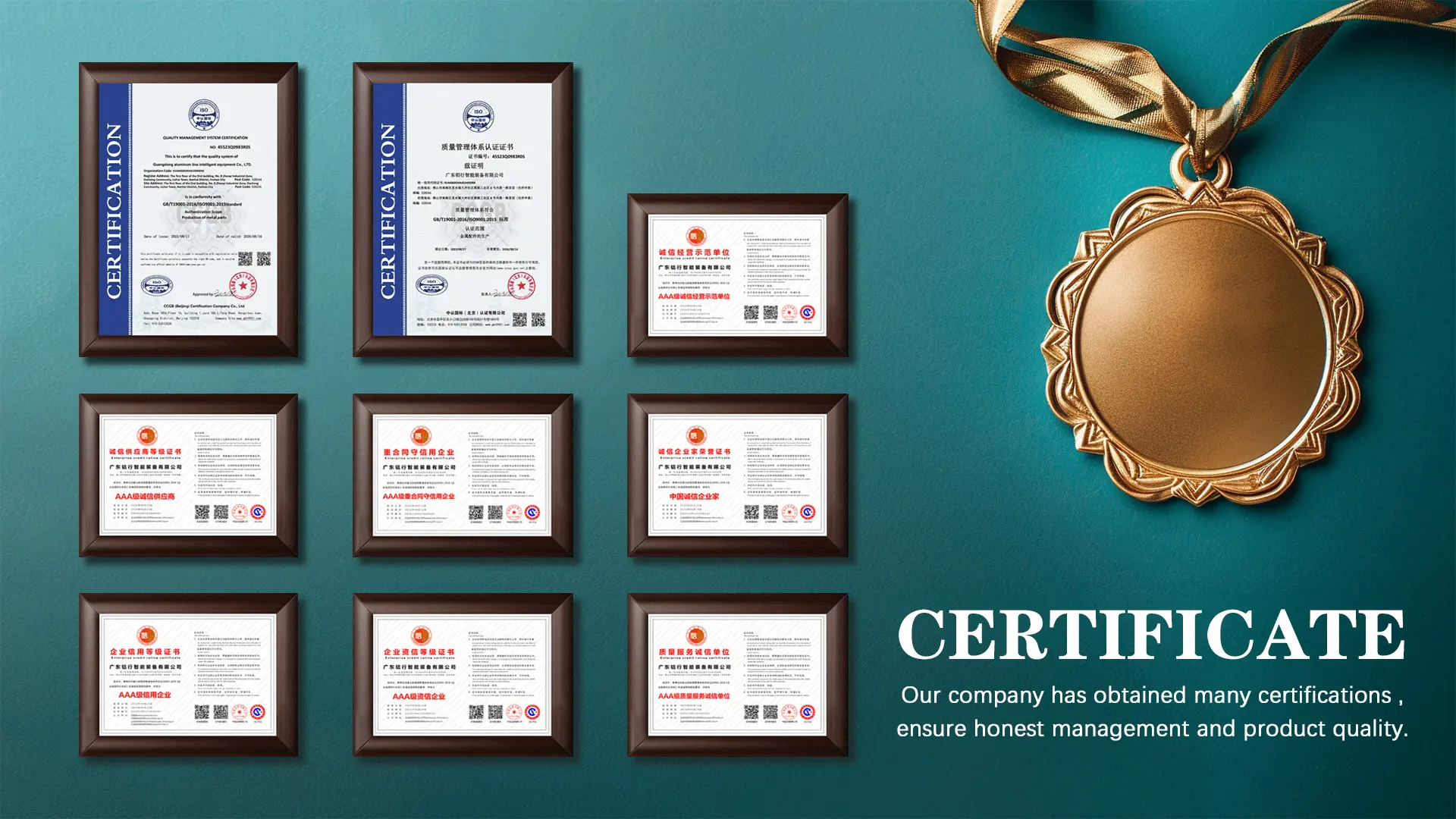
Our commitment to safety is evident throughout the manufacturing process, rigorous quality control, thorough export packaging, and efficient shipping procedures. This dedication has earned us recognition as a national excellent and honest enterprise, along with quality system certification in accordance with GB/T19001-2016/ISO9001:2015 standards.
Uncompromising quality from extrusion to engineering support.

We have obtained the "Special Aluminium Materials for Aerospace" Certificate, verifying our metal processing meets extreme performance parameters.

We utilize premium Fenglu aluminum profiles. With extrusion lines from 800T to 20,000T, we produce alloys 1xxx-7xxx up to 1.2m in width or 28m in length.

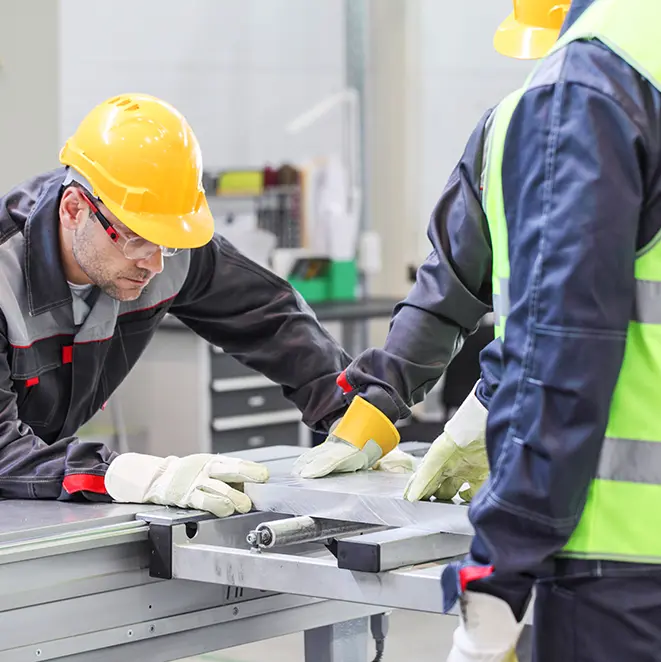
Our technical team possesses 15 years of experience. We analyze customer specifications, anticipate compliance requirements, and build exact customized systems.
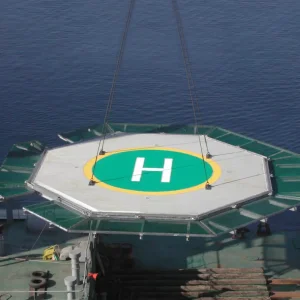
In high-density urban environments, installing a helideck involves complex multi-disciplinary coordination. A helideck is not merely a flat roof landing platform; it is an active safety structure containing mechanical drainage systems, firefighting apparatus, structural deck support, lighting, and passive perimeter fallback protection.
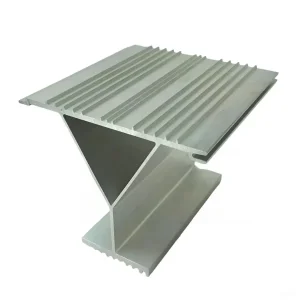
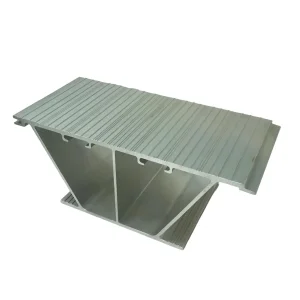
Traditional concrete helipads impose excessive vertical dead loads on modern structural frames. Lvxing’s engineered aluminum structural profiles reduce the structural dead load by up to 60% compared to concrete. This allows structural engineers to reduce column and foundation sizes, delivering significant cost savings on skyscrapers and retrofitted buildings.
Our profiles allow integrated surface channels for fuel drainage, preventing hazardous runoffs during unexpected landing accidents. The anti-slip ribbed configuration increases landing safety during rain, snow, or high wind events, ensuring that helicopter rotors gain immediate and secure friction upon touchdown.
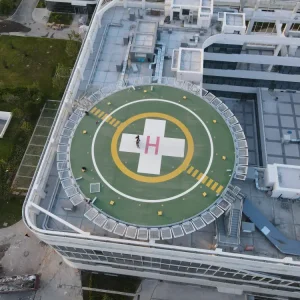
Perimeter nets must hang outwards and upwards to capture personnel or equipment if they slide off the landing deck. With manual or automated/electric motorized deployment configurations, our safety net systems are engineered for ease of maintenance, cleaning, and rapid fire-suppression access.
We calculate the localized architectural wind turbulence to design the profile thickness and spacing, minimizing updraft risks.
Using our 20,000T press, profiles are extruded to lengths up to 28 meters to reduce field welding and maximize joint strength.
Surfaces undergo deep anodization (20+ microns) for lifetime atmospheric corrosion resistance prior to export shipment.
Technical insights regarding design, standards, and material specifications for structural helicopter safety nets.
Select from our structural components, heavy-duty profiles, and rooftop installation packages.
 LvXing