Discover our industrial-grade extruded components, customized architectural profile variants, and integrated structural assemblies engineered for maximum durability.
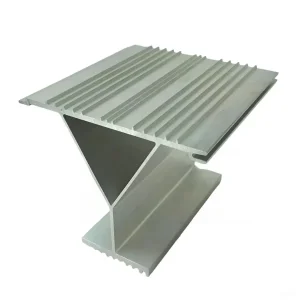
Modern structural designs demand architectural elements that combine minimal visual obstruction with extreme load-bearing capacities. The manufacturing of aluminum profiles for sliding doors has transitioned from producing standard trim extrusions to engineering complex, structural framing systems. These frameworks must withstand high dynamic wind pressures, prevent thermal bridge energy losses, and maintain tight alignment tolerances under heavy cyclic loads.
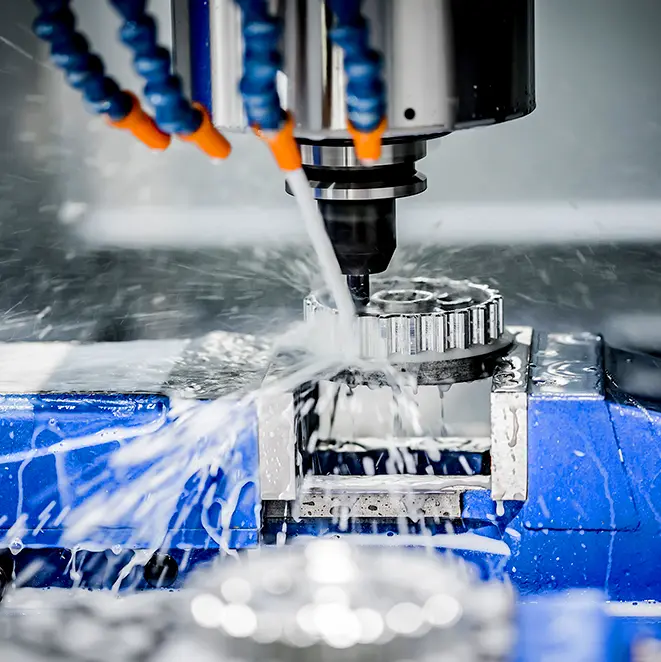
At LvXing Intelligent Equipment Co., Ltd., we utilize a combination of structural material physics, automated extrusion controls, and certified surface treatments to manufacture high-performance architectural systems. Operating from our industrial production hub in Foshan City, Guangdong, we manage all fabrication stages internally—from alloy homogenizing and die design optimization to precision CNC machining. This ensures our profiles meet the structural limits required by international building regulations.
Selecting the correct alloy chemical makeup dictates the success of large-scale sliding door systems. For standard residential and commercial fenestrations, 6000-series aluminum alloys (primarily 6063 and 6061) serve as the structural backbone. The integration of Magnesium (Mg) and Silicon (Si) within the aluminum matrix creates an intermetallic Magnesium Silicide (Mg₂Si) phase. When heat-treated, this phase significantly strengthens the profile through precipitation hardening.
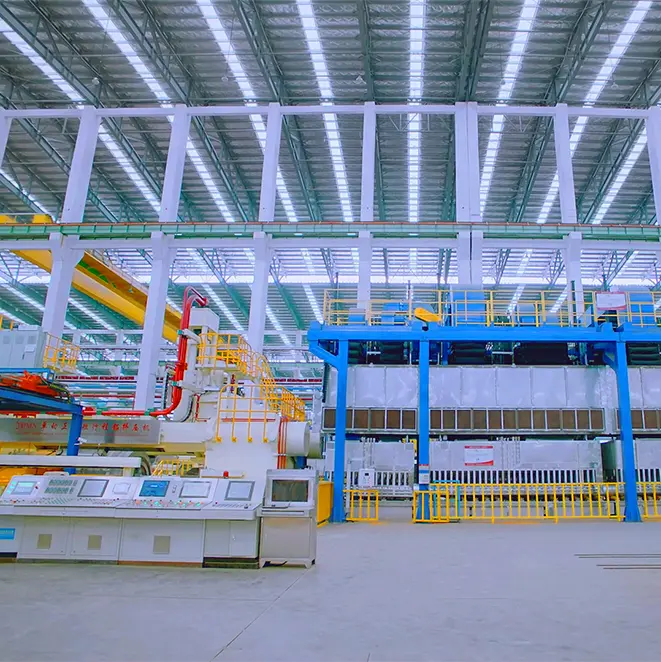
LvXing Intelligent Equipment Co., Ltd. utilizes an optimized manufacturing infrastructure in Foshan, the global hub for aluminum extrusion. Our facility is equipped with automated extrusion systems ranging from 800T to 20,000T capacity. This equipment allows us to extrude custom shapes up to 1.2 meters in section width and 28 meters in continuous length.
Equipped with 800T to 20,000T hydraulic press systems, supporting a wide range of profile sizes with consistent dimensional tolerances.
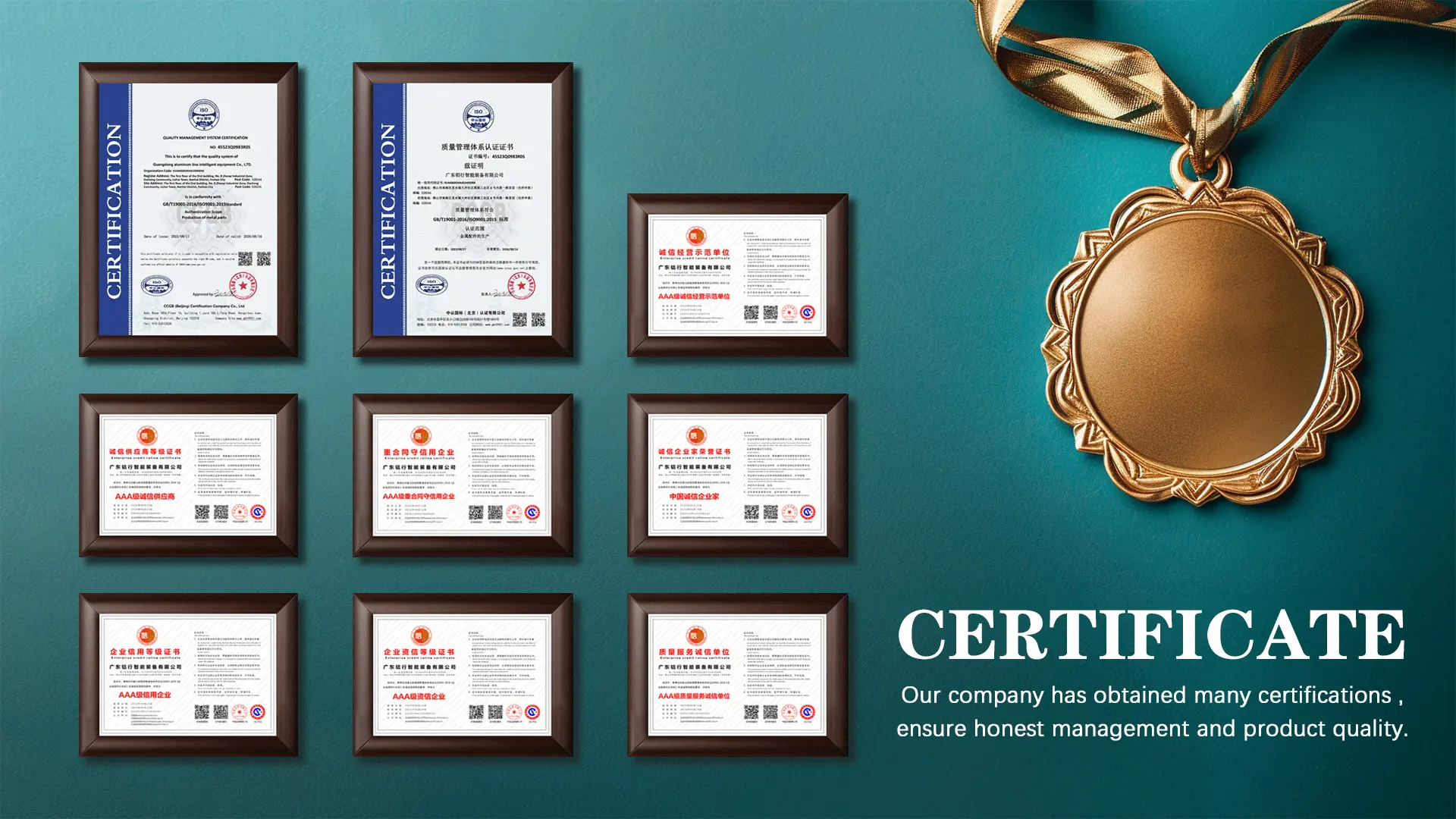
Holding the "Special Aluminium Materials for Aerospace" certificate, validating our high-precision casting and tempering standards.
Our engineering team reviews custom component profiles to optimize weight-to-strength ratios and simplify field installation.
By sourcing raw material from premium suppliers like Fenglu Aluminum, we maintain a consistent chemical profile. This consistency reduces surface defects and avoids crystallographic variations that can lead to micro-cracking during CNC fabrication. Our factory operates in compliance with GB/T19001-2016/ISO9001:2015 quality management frameworks, ensuring full material batch traceability.
| Alloy Series | Key Alloying Elements | Tensile Strength (MPa) | Architectural & Structural Application |
|---|---|---|---|
| 6063-T5/T6 | Mg (0.45-0.9%), Si (0.2-0.6%) | 186 - 240 | Residential sliding doors, slimline patio profiles, thermal break window frames. |
| 6061-T6 | Mg (0.8-1.2%), Si (0.4-0.8%), Cu | 290 - 310 | Heavy-duty commercial storefront structures, structural framing, high-wind curtain walls. |
| 6005A-T6 | Mg (0.4-0.8%), Si (0.5-0.9%), Mn, Cr | 270 - 290 | Structural industrial sliding systems, heavy impact gates, railway and marine frames. |
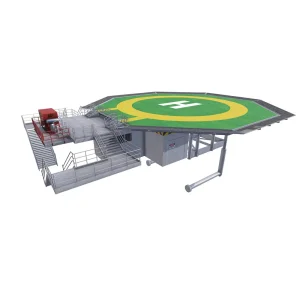
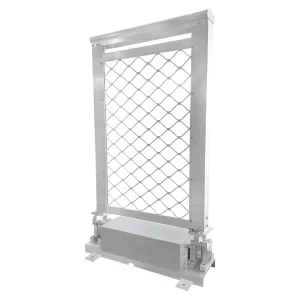
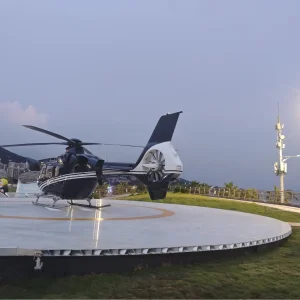
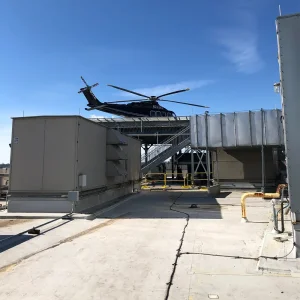
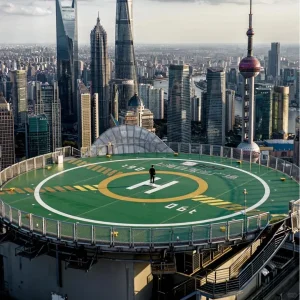
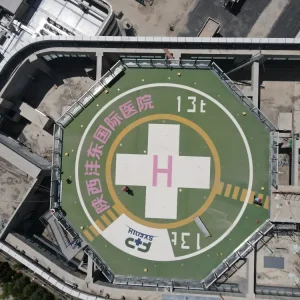
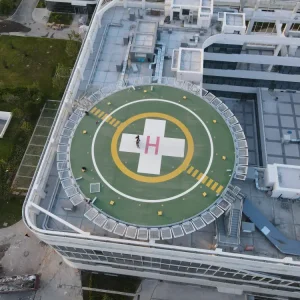
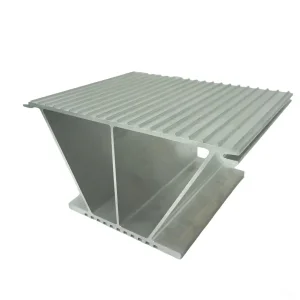
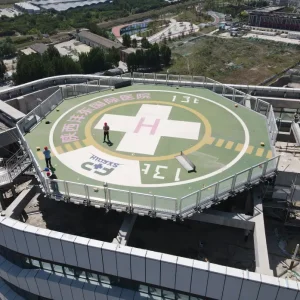
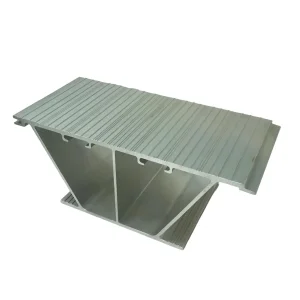
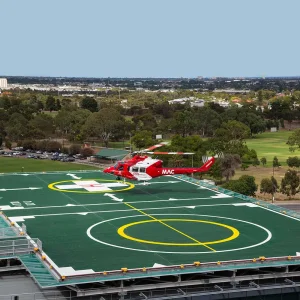
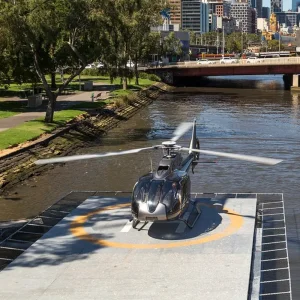
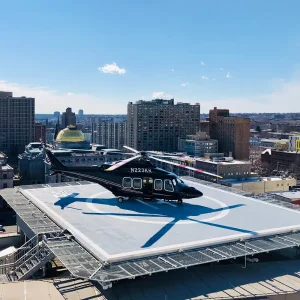
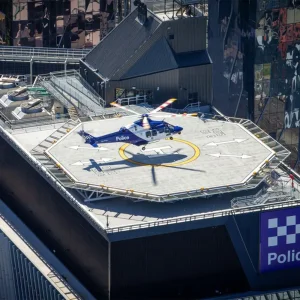
| Specialty Alloys | Custom (1xxx, 2xxx, 5xxx, 7xxx) | Up to 540 | Aerospace structural profiles, safety netting supports, and maritime helideck structures. |
Modern window and door system design is driven by two main trends: maximizing glass surface areas using ultra-slim sightlines, and meeting strict thermal performance standards. Achieving both requires a departure from standard, single-material aluminum extrusions.
Because raw aluminum has high thermal conductivity (approx. 160 W/m·K), it requires a structural barrier to prevent heat transfer. Modern sliding door profiles use multi-chambered polyamide strips reinforced with 25% glass fiber (PA66-GF25). These strips are mechanically crimped between the interior and exterior aluminum sections.
This design lowers the overall frame thermal transmittance (Uf-value) to below 1.6 W/(m²·K). It also matches the thermal expansion rate of aluminum, preventing structural warping or delamination when exposed to large temperature swings.
Sliding doors are often installed in high-exposure coastal areas and urban environments with high pollution levels. We use three main surface treatment techniques to protect the profiles:
Procuring custom architectural profiles internationally requires careful coordination of design drawings, material standards, and compliance certifications. International projects must meet specific national codes:
Our manufacturing processes align with key international standards to ensure seamless integration on site:
We support global clients through dedicated technical services:
Established in 2015 and located in Foshan City, Guangdong, LvXing Intelligent Equipment Co., Ltd. builds on a foundation of precision engineering and advanced material processing. We utilize premium Fenglu aluminum to offer a diverse range of profiles for flexible applications. Our extrusion lines, ranging from 800T to 20,000T, accommodate alloys 1xxx, 2xxx, 3xxx, 5xxx, 6xxx, and 7xxx. This allows us to produce shaped products with section dimensions up to 1.2 meters in width and 28 meters in length. These products are recognized for their precision and meticulous processing, finding broad application in aerospace, military, medical, and industrial sectors.

We have obtained the "Special Aluminium Materials for Aerospace" Certificate, proving our capability in high-grade structural metallurgy.

With extrusion lines from 800T to 20,000T, we manufacture products up to 1.2m wide or 28m long across alloys 1xxx to 7xxx.

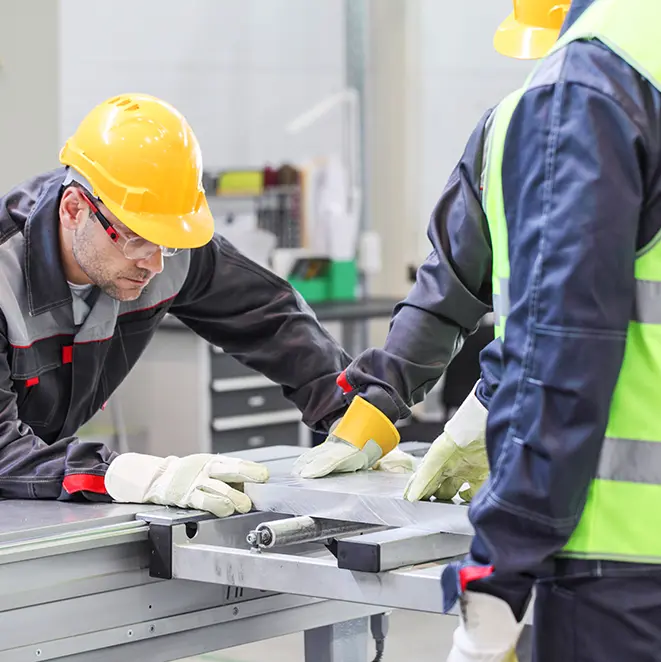
Our team of technicians has 15 years of experience, turning custom concepts into products that meet strict engineering requirements.
We recommend aluminum alloy 6063 (usually in T5 or T6 temper) for typical sliding patio doors. 6063 provides a smooth surface finish, extrudes into complex shapes easily, and offers high corrosion resistance. For large, heavy-duty commercial sliding door installations or high-wind environments, alloy 6061-T6 is preferred because of its higher yield and tensile strength.
A thermal break splits the aluminum frame into interior and exterior sections, joining them with a low-conductivity material (usually glass-fiber reinforced polyamide strips, PA66-GF25). This barrier blocks the flow of heat, significantly lowering the overall frame U-value and helping prevent interior condensation.
Using our heavy-duty extrusion presses (up to 20,000T capacity), we can manufacture profiles with cross-sectional widths up to 1.2 meters and continuous lengths up to 28 meters. This capability allows us to produce large structural shapes and safety platform frameworks.
For coastal applications, we recommend marine-grade Qualanod-certified anodizing (minimum 20–25 microns) or Qualicoat Class 2/3 powder coatings. These treatments provide long-term resistance to salt water spray, humidity, and UV damage.
Yes. Our engineering department can design custom extrusion dies based on your CAD or BIM drawings. We run flow simulations to verify metal distribution and optimize structural performance before machining the tooling.
Explore our specialized high-capacity structural profiles, helipad platform systems, and safety mesh assemblies manufactured to aerospace standards.
 LvXing